Grief and Mystery: The Unsolved Murder of Ann Harmeier, Part Two
After years of research into the unsolved 1977 murder of Indiana University student Ann Harmeier, LP contributor Diane Walker might have found the identity of an individual, not previously named publicly, who initial investigators suspected may have committed the crime.

Editor’s note: This story contains descriptions of graphic violence and sexual assault. Reader discretion is advised.
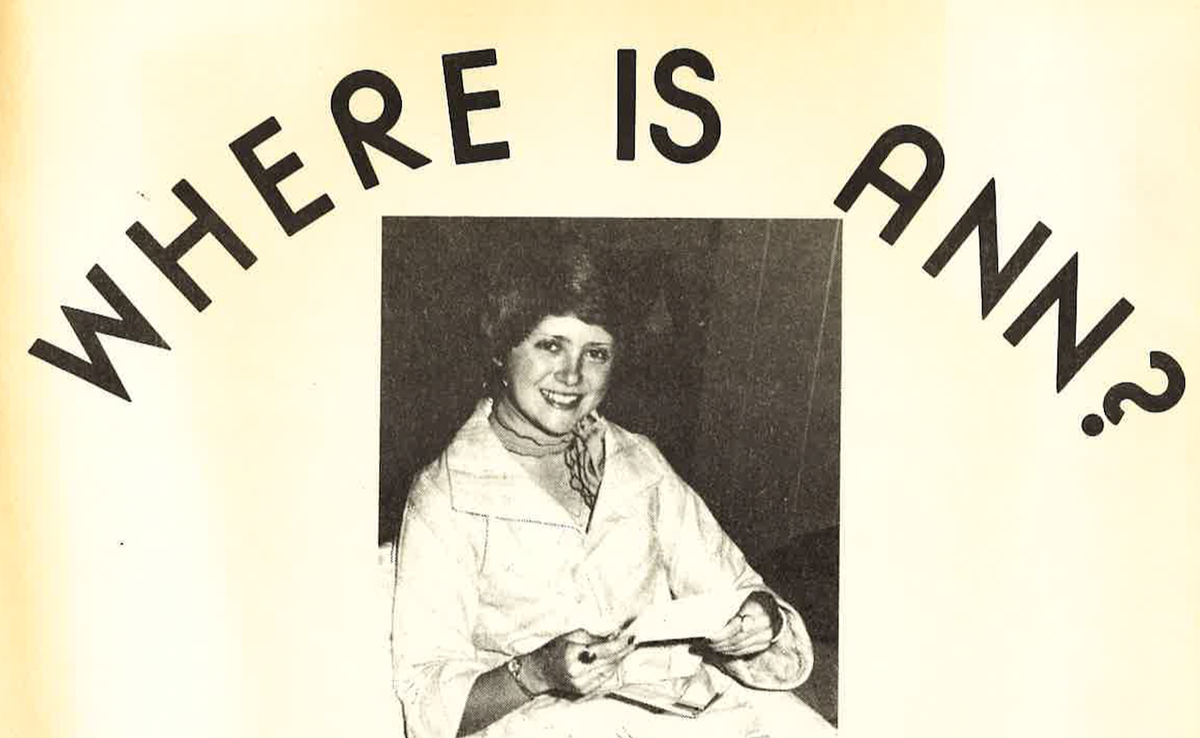
Shortly after the beginning of the 1977 fall semester at Indiana University, 20-year-old student Ann Harmeier was murdered while returning to campus from her home in Cambridge City, Indiana. LP contributor Diane Walker, like many people who grew up in Cambridge City in the 1970s, still wonders about Ann’s unsolved murder. So she started searching. This two-part series reveals Walker’s years-long research scouring court records, newspapers, and other documents, and her in-person conversation with a potential suspect currently serving time for other crimes. You can read part one here.
In response to Walker's inquiry whether there are new suspects or lines of investigation, the Indiana State Police says there is no additional information to release publicly at this time.
Retired Indiana University psychology professor James Allison conducted extensive research in the 1990s and wrote a manuscript about Ann Harmeier’s murder. The manuscript captures valuable information from Indiana State Police investigators who have since died.
Allison conducted a personal interview with Indiana State Police Detective Bud Allcron in August 1993, when Allcron was the only detective still assigned to Ann Harmeier’s case. Allcron told Allison about his prime suspect in Ann’s death, a man who’d been employed at a sawmill in Crawford County, Indiana. The suspect had a half-brother who lived nearby, and the two often visited their mother in Indianapolis. Although Allcron didn’t give Allison the suspect’s name, he told Allison that the suspect had since been convicted of the rape and murder of two young women in Kentucky.
Former ISP Lieutenant Merle McKinney interviewed Allcron’s suspect at the Kentucky State Reformatory in La Grange in the 1980s. In September 1993, McKinney told Allison he also “favored this suspect” in Ann’s murder, in part because the man had reportedly strangled one of his victims with a tourniquet.
Allison wrote:
On the day of Ann’s disappearance [the suspect and his half-brother] had just concluded one of their visits [at their mother’s house in Indianapolis] and were headed back to Kentucky on S.R. 37 south. They had traveled north to Indiana by means of separate vehicles, a VW Beetle and a motorcycle; as the motorcycle broke down in Indianapolis, both were in the VW on south 37. Their VW rang a bell as the kind of car the Egbert Road witness had mentioned under hypnosis. The police were able to place the suspect in the general vicinity of the murder at the right time, but no closer to the specific spot than 15 miles.
Allcron’s and McKinney’s suspect was serving two life sentences in Kentucky for crimes similar to Ann’s murder: abduction, rape, and murder by strangulation, with no attempt to hide the bodies of his victims.
“Only when his frightened wife fingered the suspect were the two Kentucky murders solved,” Allison wrote of the Kentucky suspect. “He denied any connection with Ann Harmeier, and told police he would not confess even if he were guilty of her murder.” Allcron told Allison in their 1993 interview that he believed the suspect refused to confess because his mother would be harassed if he admitted killing an Indiana woman.
As for the half-brother who’d been with the suspect during the drive back from Indianapolis, “The brother volunteered to subject himself to a polygraph test,” wrote Allison, “but tore loose from the machine when the questions began to touch upon Ann Harmeier.”
The internet didn’t have many resources available to Allison when Allcron and McKinney told him details about the Kentucky suspect. But research on newspapers.com gave me the name of the suspect with search terms pulled from Allison’s book.
A two-time convicted murderer
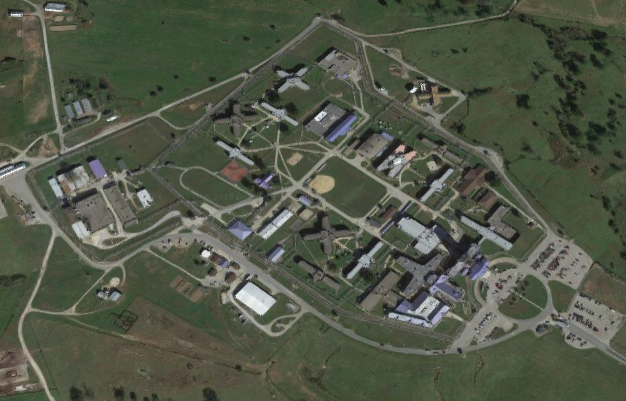
Vance Devon Young spent decades at the Kentucky State Reformatory, a medium security prison. (He was recently moved to Little Sandy Correctional Complex in Elliott County, Kentucky.) He’s 72 years old. Parole was denied him three times, and in 2004 he was ordered to serve out his life sentence.
I was in Tennessee for a family funeral when I found Young’s name online at 2 a.m., and I decided to stop at the Kentucky State Archives on the drive back to Bloomington. I felt lucky to find Young’s court file, since it was the last file in the last batch of court records transferred to the Archives from Bullitt County, where Young committed the murders. According to the file, Young was arrested in late 1977. He confessed to robbing, raping, and killing 23-year-old Patricia Ann Craighill on June 30, 1976, and 20-year-old Eula Jane Bayer on August 13, 1976. Both women had been strangled. Young dumped both of the women’s bodies in Bullitt County, where he’d killed them and where he was then living.
Young pleaded guilty to these murders in May 1978, perhaps to avoid the death penalty. The U.S. Supreme Court had removed its stay against the death penalty for Kentucky in 1976.
In August 1976, before he was arrested for killing Patricia and Eula, Young robbed and kidnapped a 17-year-old girl at knifepoint, who ultimately escaped. He pleaded guilty to that crime after being convicted of the murders. According to his court file, Young had a prior conviction in 1971 for “detaining a female.”
The Kentucky court records for the murder convictions noted that Young had moved to Indiana from Kentucky and had been working at the sawmill in Crawford County, Indiana. Young was an Indiana native, and his mother lived in Indianapolis. The report listed several half-brothers as members of his family. According to Gibson Circuit Court records, Young and one of those half-brothers, Timothy Laswell, had been arrested and charged on August 15, 1977, for robbing a man at knifepoint in Princeton, Indiana, a month before Ann was killed.
Conversation with an ex-wife
Young told an investigator in 1978 that he’d been separated from his wife until September 1977, when they reconciled, and that she had since filed for divorce. It was a long shot, but I contacted Young’s ex-wife to see if she remembered Young and his half-brother visiting their mother in Indianapolis in September 1977. I told her that the police thought her ex-husband might be responsible for the murder of a woman in Indiana that month.
She knew exactly what I was referring to and repeated a conversation that she’d overheard. I’ll call her “Donna” to protect her privacy.
“We were separated at that time, and he [Young] was living in Indiana,” said Donna in her soft Southern accent. “He didn’t live in Kentucky.” I asked her if she remembered him traveling with a brother to see their mother around September, and she said, “Yes. It was Timothy Laswell.”
Donna remembered her ex-husband telling Laswell: “If the police question you about it, tell them we went the other way.” Donna said she didn’t know what they were talking about, but she knew it was significant because of how Laswell reacted.
“His brother turned white. And Vance told him, ‘Don’t worry, just keep your cool, and just don’t say nothing,’” Donna continued. “‘Just tell ’em we went on a different road.’”
In the recording of our phone call, I can hear my breathing and my voice turn shaky. “So that sounds like they were coming back from Indy on State Road 37?” I asked.
“Yeah,” Donna said.
Donna pinpointed the month when she overheard this conversation as September or October 1977, because she had called Young to tell him that their 14-month-old daughter had had a stroke and might not survive. He grabbed the opportunity to move back in with her because he’d lost his job.
Young was “just an angry, mean person,” Donna told me. She said he’d beaten her repeatedly. She said he’d also beaten both of her parents, putting her mother in the hospital. “Finally, I just couldn’t take it anymore.” Donna had children with Young, and she said she felt that leaving him was the only way to protect those kids.
“I was afraid that something had happened,” Donna said. “That it might belong to someone who … he had hurt. Maybe killed.”
Based on the overheard conversation between Young and Laswell, she figured that the two men were in trouble with the police in Indiana. “But I don’t know whether [Laswell] would have had anything to do with it, or whether he was just with Vance when Vance done something. I don’t know.”
Laswell was short and stocky and he “wobbled when he walked” because of a childhood injury to his legs, Donna told me. While Young had dark hair and a moustache, Laswell was blond.
But as to whether Laswell or Young had a VW Bug, Donna couldn’t say. Young had a “big old car” whose color and model she couldn’t remember. Young and Laswell had been driving a 1968 Chevrolet when they committed the armed robbery in Princeton, according to newspaper reports.
Was there anything else she thought might be relevant?
“When he came back, [Young] was cleaning out the trunk of his car, and there was some women’s jewelry in it,” Donna said. She asked him about it, and he said it was in the car when he bought it. Donna kept the jewelry — she thinks it might have been earrings and a bracelet — and then gave it to the Kentucky police when Young was arrested. But she doesn’t know what happened to it or whether police linked it to any of his known victims.
“I was afraid that something had happened,” she said. “That it might belong to someone who … he had hurt. Maybe killed.”
Donna turned Young in for the murders of the two Kentucky women after he admitted them to her. He was arrested on November 9, 1977.
I thought Donna was a very brave person, and I told her so.
“Well….” She paused, then continued. “If he done anything else, I’d like for people to find out about it, and know what happened to their loved ones.”
Visiting Vance Young
Thinking how Ann must have felt during her last hour of life, about what law enforcement suspected Vance Young might have done, conscious of the effect her terrible death had on friends, family, and her mother, I was expecting Young to be Charles Manson. Evil. Crazy. Manipulative. What I got was someone who could’ve passed for a Hoosier grandpa — except he was in a medium-security prison, serving life sentences for the rape and murder of two young women.
Visitation instructions on the prison website forbid visitors to wear clothing that “unduly exposes the shoulders, chest, back, stomach, midriff or underarms.” No leggings. No hem or pant lines more than four inches above the knee, no transparent or tight clothing. Closed-toe, closed-heel shoes. I found all of these directives intensely creepy, and put off the visit as long as I could. Prison regulations also required several steps with precise scheduling; to my surprise, any emailed questions I had were answered quickly by prison staff, once even with a smiley face emoji.
The Kentucky State Reformatory has barbed wire and guard towers, but it’s set among beautiful, rolling countryside. I checked in with my driver’s license, not being allowed to carry anything in with me. The guards were professional and respectful, and the full-body scan I underwent was less invasive than airport security. Inside the mass visitation room, several men in tan jumpsuits were sitting with one or two visitors at clear plastic tables placed judiciously apart. There were only two men in the room who looked above middle-age, and Young was one of them.
Young looked older than 71, white-haired and slumped. He wore glasses with heavy black frames. When I walked in and recognized him from his Kentucky Department of Corrections photo, I raised a tentative hand in greeting, and he smiled and raised his hand back.
I had had to write a letter to Young so he could approve me as a prison visitor. I agonized over what to say to him in that letter and eventually tried to appeal to the reported vanity of serial murderers. I wrote I was investigating the murder of Ann Harmeier and had read in a book that Young had used a tourniquet in his crimes. Since this is an unusual method, I wrote he might have insight that could help me.
I had given up hearing from Young when, two months later, he replied, in a hand-written letter which began, “Surprise!” He apologized for being slow to respond, explaining he’d been sick. “I would be more than willing to help you in any way I can. I am sure her [Ann’s] family would like to have some final closure and I can understand that.”
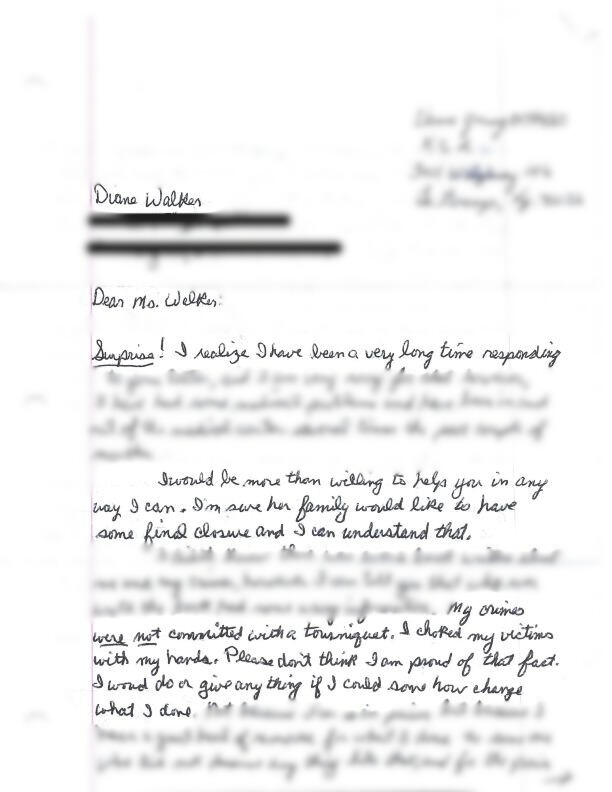
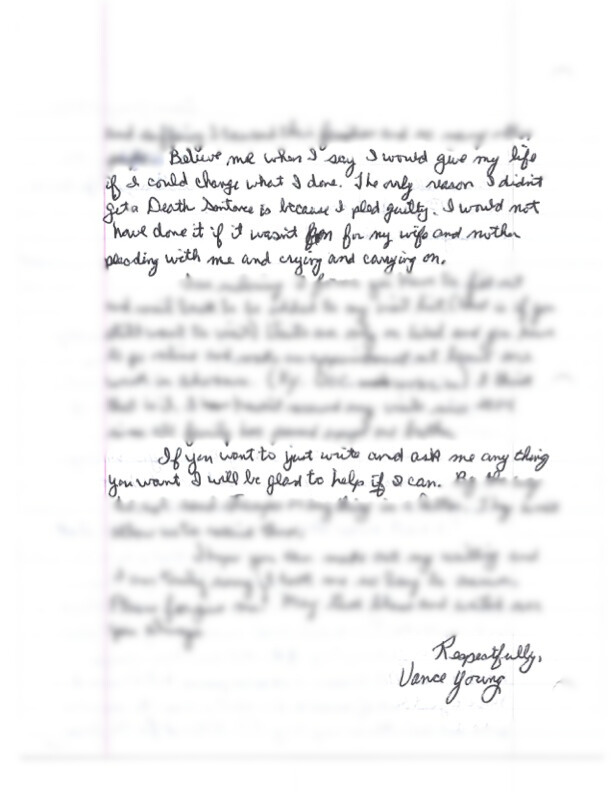
Vance Young wrote a two-page letter to reporter Diane Walker, in which he expresses his willingness to answer whatever questions she may have. | Photo by Diane Walker
Young wrote he had not committed his crimes with a tourniquet: “I choked my victims with my hands. Please don’t think that I am proud of that fact.” He expressed remorse in the letter and said he wished he would have taken the death penalty. He had pleaded guilty instead because of “my wife and mother pleading and crying and carrying on.” Having talked to his ex-wife, I doubted that, but Donna might have felt differently 40-odd years ago.
I wanted to build rapport with Young so he’d talk. I needn’t have worried. Young said he hadn’t had a visitor since 2004, so he gabbed away about his conversion to Jesus Christ and the evangelical radio program he’d broadcast from the prison in the early 1980s. He said he’d been uncontrollable before his religious conversion; he talked about his four years in the Kentucky State Penitentiary, a maximum-security prison, and the fights he’d started there. He said that even before he’d gone to prison for two rapes/murders, “My mother always said she thought she’d get a call one night saying I was dead.”
Young’s father had a very different concern. Young said he hadn’t seen much of his father; court records said Young had been raised by his stepfather. “He came to see me in prison twice,” Young said of his biological father. “There wasn’t a prison that could hold him, and he offered to help me escape.” Young seemed proud of his father, which I found at odds with Young’s acknowledgement that he had been too wild in his younger years. It wouldn’t be the only seemingly contradictory thing Young would say.
At about that point in our conversation, a man who later identified himself to me as Mormon lay clergy approached our table and gave me $5, saying he thought it would be nice if I could buy snacks from the vending machines in the visitation room “for your loved one.” This was kind, but he really had the wrong end of the stick.
After buying Young a pepperoni Hot Pocket, Fanta, and peanut butter crackers, I thought it was time to talk frankly. I did not ask him directly if he killed Ann. But I believe he knew that I had not come just for his “insight” into the crime, as I’d called it in my letter. As soon as I brought up Ann’s murder, he segued immediately into explaining why he could not have been Ann’s killer.
Young said that police had come from Indiana to see him “three or four times” and told Young that if he confessed to killing Ann, they’d arrange it so that he didn’t serve any more time than he already was. “And that’s illegal!” Young said, seeming affronted. I didn’t know he’d been visited by Indiana law enforcement more than once. Senior Judge Thomas Gray and another former Morgan County prosecutor I interviewed told me that ISP Lieutenant Merle McKinney and an ISP officer made a trip to a Kentucky prison to interview a suspect in Ann’s death. Neither could remember the suspect’s name, and each mentioned only one trip from McKinney.
On the third police visit, Young said he suddenly remembered he had an alibi for when Ann was murdered. He said he told them he had gone to Indianapolis to see his mother but wrecked his motorcycle in Indianapolis before he could return home. He spent a day in the hospital with an injured arm, and then he stayed in Indianapolis for an all-night poker game. He suggested I check the hospital records. I didn’t because they wouldn’t have survived since 1977.
Ann was killed on a Monday morning, and it was only on the third visit from law enforcement that Young remembered he had an alibi? To me, this seemed unlikely. He didn’t tell me how he got home from Indianapolis. But Young seemed to be unwittingly confirming what police had told James Allison, that while the brothers went to Indianapolis separately by motorcycle and car, the motorcycle was incapacitated and the two returned home from Indianapolis together in the VW Bug.
Young also told me seeming contradictions about his brother Laswell. He told me the police suspected Laswell had helped to kill Ann, but he couldn’t have, according to Young. Young said that Laswell’s legs were “crippled” — as Donna had said — and his brother also had upper-body impairment.
Yet in Princeton, Indiana, about a month before Ann was killed, Laswell was arrested, along with Young, on a charge of armed robbery against an adult man. Laswell pleaded guilty to a reduced charge of theft by threat on January 4, 1978. Armed robbery charges against Young were dismissed, possibly because Young was jailed in Kentucky on November 10, 1977.
Young also said his brother couldn’t have been with him at the time of Ann’s death because Laswell was in jail. But court records show that Young and Laswell were arrested hours after the robbery in August. Laswell’s bond on this charge was set at $4,000. When Laswell was sentenced by the Gibson County judge, he was given credit for 15 days of jail already served, 12 of which Laswell served between his conviction and sentencing. The jail time he was credited means that Laswell was released three days after he was arrested on August 15, 1977, well before Ann’s disappearance on September 12, 1977.
I later found another possible discrepancy in the letter Young had written to me, in which he said that he choked his two victims with his hands. After I visited Young, I found a Louisville Courier-Journal report from August 19, 1976: “One policeman who had seen the body said it appeared to him that [Eula Bayer] had been strangled with a piece of clothing. He also said he saw what appeared to be two puncture wounds, one under the right arm and the other in the chest.” Unlike Young’s other victim, Patricia Craighill, who had been found weeks after her murder, Eula’s body was found only five days after her death.
Despite the remorse he expressed in his letter to me, Young said toward the end of the visit that he regretted pleading guilty to the murder of “those girls” — he never called Eula and Patricia by their names. He said there were no fingerprints, nothing left at the scene, no clues. He said three times during the visit that he pleaded guilty because his family begged him not to risk the death penalty with a trial. Each time he said this, he added another female relative — wife, mother, then sister — who was “carrying on” for him not to risk his life.
I told him that DNA had advanced, and now, even though many years had passed, touch DNA from a suspect could be recovered from bodies that had even been left in the elements. For once, Young was quiet. He stabbed a bit of food with his plastic fork. Then he changed the subject, and the hour-long visit was over.
Does it fit?
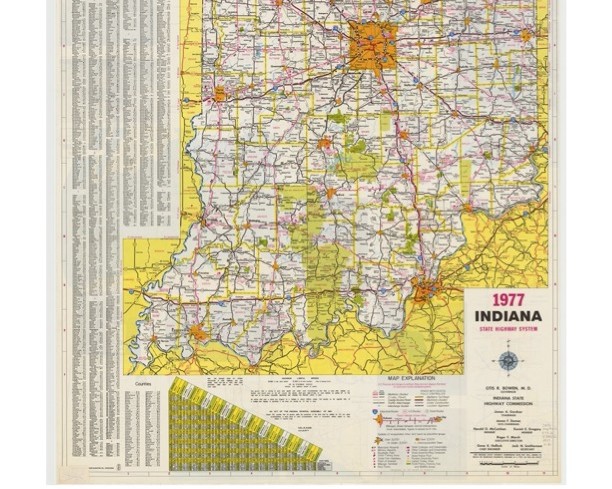
Young’s ex-wife Donna said that the two brothers had traveled together south from Indianapolis in September 1977, and that Young told Laswell to tell police who may question them that they had gone “the other way,” visibly upsetting Laswell. According to Young’s Kentucky court records, their mother’s address was the near west side of Indianapolis. When I looked at a 1977 highway map, I saw that S.R. 37 was the most direct route back to Young’s residence in Taswell, Indiana, less than 25 miles south of Paoli. Traveling I-65 or S.R. 135 for part of the way would have taken them miles out of their way.
I could not verify that either Laswell or Young had a VW Bug like the one remembered by the witness on Egbert Road, as described in Allison’s manuscript.
In 1977, Young was 24 and Laswell 21. Unlike his brother, Laswell was never convicted of anything as serious as rape or murder. While not all court records are online, aside from the Princeton armed robbery, I found convictions for Laswell for theft, drugs, and drunk driving. But he wasn’t arrested in Indiana after 2004, and he died in early 2022.
In asking whether it fits that Young might have murdered Ann, with Laswell’s possible assistance or cover, I am speculating. I’m also aware that given my relationship with Ann’s mom and the deep, sad, and lasting impression Ann’s murder left on me as an adolescent, I’m prone to confirmation bias because I want so badly for her death to have a solution.
The following are only theories, based on questions I’ve asked myself about what happened to Ann. For example, why Ann, careful and conscientious, might get in a car with two men.
I think it’s possible that she could have been abducted against her will, covertly enough that drivers passing noticed nothing untoward.
Young’s confession to the Kentucky rape/murders said that he robbed the victims using a knife, and the Princeton armed robbery with Laswell had been committed with a knife. When Ann’s body was found, her bank book and jewelry she often wore, a necklace with a cross and a POW bracelet, were scattered near her purse, which might suggest it had been searched. Eula’s checkbook and personal items were also found near her body.
It would have been very risky to abduct Ann at knifepoint on a busy highway. But Young’s pattern of behavior told me he was a risk taker. After his 1976 kidnapping of the young girl in a Kentucky parking lot, newspapers reported that eyewitnesses had seen him approach a different woman in her car with his knife drawn. When she wouldn’t let him into her car, he then walked about 50 yards across the lot to the young girl as she was getting into her car. Young forced the girl into the vehicle, got behind the wheel, and drove away. She later escaped unharmed. Patricia Craighill had also last been seen in a movie-theater parking lot.
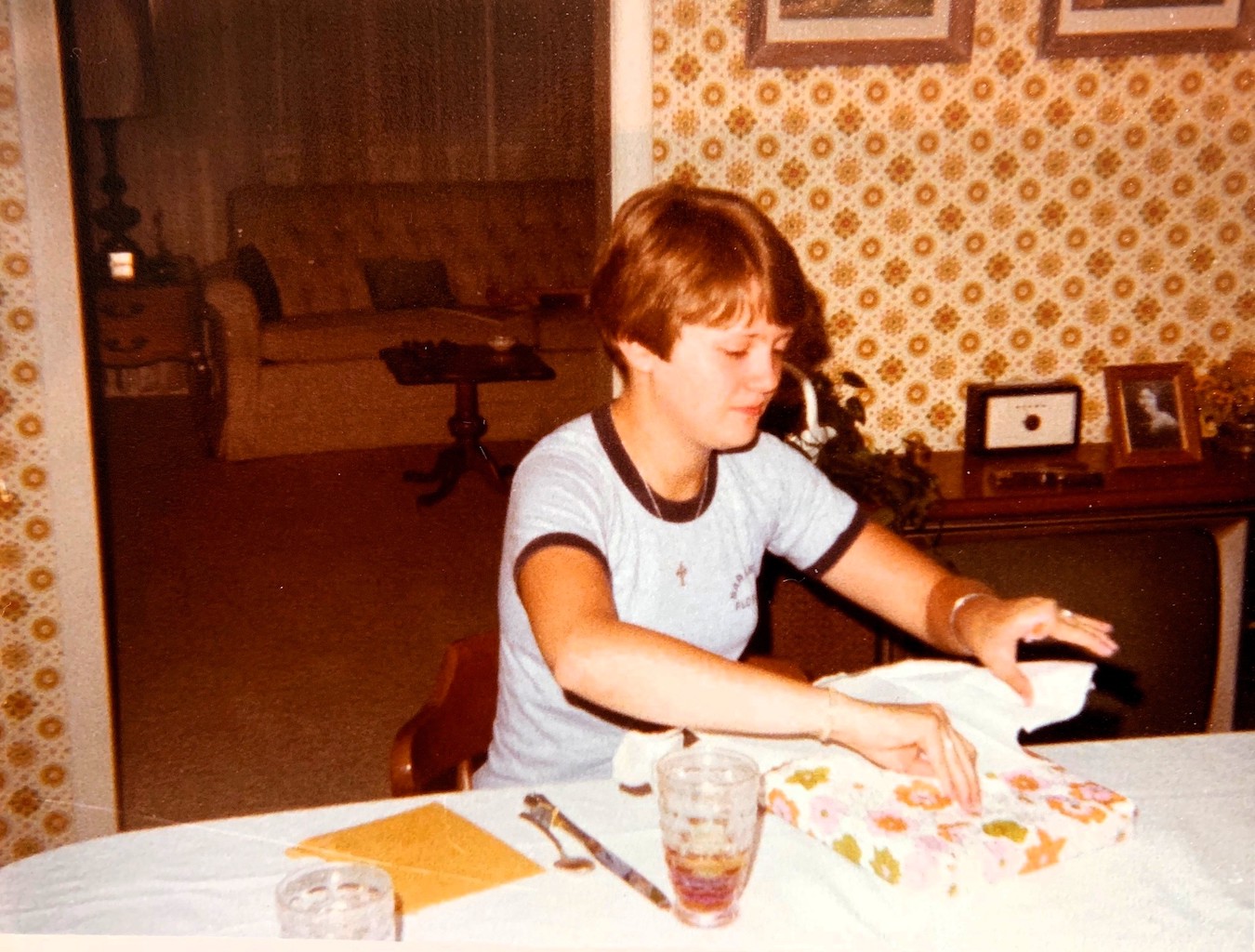
Another lingering question: If Young abducted Ann, why would the witness have seen only a blond man in the VW Bug on Egbert Road, beating a woman, instead of dark-haired Young?
According to the conversation that Young’s ex-wife overheard, Young seemed to be coaching Laswell as to what to say if he was questioned by police. Allison was told that when the suspect’s brother was subjected to a lie detector test, he tore away from the machine when questioned about Ann. Laswell’s only known violent crime was robbing a man at knifepoint with his brother — far less violent than what happened to Ann.
Though I can only speculate, I think it’s possible that Young left Laswell in the car alone with Ann, who fought for her life. Then at some point, Laswell left Ann alone with Young in the cornfield, and picked his brother up afterward.
It’s unfortunate that I couldn’t tie either man to a VW Bug, because the model of the car has significance apart from being seen by the witness. According to the Indianapolis Star, police technicians found “narrow tire tracks in the sod waterway leading to the death scene.”
The tracks had been there too long to pull a tread pattern. They might not have even been made the day of the crime, except that the spot was so remote and untraveled. But according to Mario Wengefeld, who has worked at Volkswagen since 2011, “For old Beetles it was usual to drive with 5.6-inch [wide] tires. Sometimes maybe even smaller.” Most passenger-car tires are 7 to 9 inches wide.
Given Young’s crimes, I think that if he’d been driving on S.R. 37 and had seen Ann in her vulnerable state, he could have been tempted to hurt her. But more information is needed.
Will we ever know?
Former ISP Detective Jerry Conner told me forensic evidence from Ann’s case has been tested throughout the years. He wouldn’t elaborate because the case is still open, so I found an expert who could tell me if DNA evidence might be recoverable.
The anniversary of the murder & sexual assault of Ann Harmeier, a 20 year old IU student, is September 12th. ISP Detectives are actively working to solve this 43 year old cold case. If you have any information, please call 812-332-4411 Tips can remain anonymous #WhoKilledAnn pic.twitter.com/Z2j6YQNVaP
— Sgt. Kevin Getz (@ISPBloomington) September 11, 2020
Ann Harmeier’s murder case remains unsolved, and the Indiana State Police have continued seeking the public’s help for tips, as shown in this 2020 Twitter post.
Dr. Tracey Dawson Green is a professor of forensic science and chair of the Department of Forensic Science at Virginia Commonwealth University. She has written more than 25 peer-reviewed articles for publication. She and her team invented a device to automate processing for DNA, so that testing can be expedited in hundreds of thousands of backlogged cases.
Dawson Green told me the best possibility for recovering DNA would be to try to extract touch DNA from Ann’s shoestrings, which were used to bind and strangle her. “Ligatures of any kind are very commonly used to identify suspects,” she explained. “People routinely test samples that were potentially in contact with the suspect, and they do that all the time, without hesitation, and with great success.”
All of us leave DNA on items that we touch. The amount varies, depending on the person and whether someone has washed their hands recently or someone was sweating when they touched something.
“The question is the passage of time — have [items of evidence] been preserved, were they commingled with other items, or were they individually preserved,” Dawson Green noted. “In the ’70s, it wasn’t super-uncommon for [investigators] to collect a bunch of stuff and throw it all in a box.”
Exposure to the elements, especially to water, also adds complications. September 1977 was dry, but three inches of rainfall were recorded in Martinsville on October 1, more than two weeks before Ann’s body was found in a cornfield. If the ligatures were submerged, said Dawson Green, DNA could’ve been diluted but still possible to find because “the substrate of the shoelaces is a good one. … It’s not a smooth surface, so it will hold on to the cellular material a little bit better.”
DNA could be collected by swabbing several large areas of the shoestrings and combining the swabs to obtain more DNA. Dawson Green said she also thought it likely that law enforcement had collected skin cells from under fingernails, because in 1977 these could have been used to identify a killer’s blood type.
I didn’t ask Young if he would contribute a DNA sample. If police were visiting him in the early 1980s, they likely didn’t have the technology, because DNA wasn’t used in criminal cases in the U.S. until 1987. But Young does have a surviving son.
If it were possible to compile a DNA profile — and it didn’t match Young’s — it would be entered into the Combined DNA Index System (CODIS), a nationwide database maintained by the FBI, to see if there’s a match. The profile would then be run through state databases of unknown perpetrators, convicted offenders, and, in some states, arrestee profiles. The lab that extracted the profile would then handle confirmation procedures, including confirming matches from known and unknown samples and notifying law enforcement agencies about the matches, so these agencies can coordinate on next steps.
Most state law enforcement labs outsource this work to private DNA labs. Because it’s expensive, a victim’s family is sometimes expected to pay for the tests. But it remains possible, said Dawson Green.
“I don’t want to give you false hope — anything that’s 40 years old is a toss-up — but to say it’s impossible would be completely erroneous. You can see hundreds of examples in the literature, thousands, where older and more-compromised samples have yielded very good results,” she emphasized. “Our methods have come far, in the last five years even. There’s a lot more we can do with a lot less DNA, and with a lot more challenged or compromised DNA.
“But time is not our friend here.”
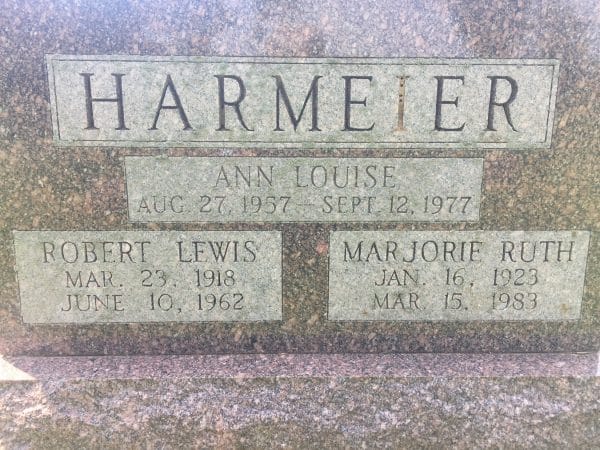
I think a lot about time with Ann’s case, how it was in the years immediately after she was killed, how in losing one person, a whole world was destroyed for so many, in particular her mother. That destruction rippled out to others: a cousin, friends, her community, people like me. Now that more than 48 years have passed since Ann was murdered, I can see that while time cauterizes some wounds the pain hasn’t gone away. None of Ann’s lifelong friends from Cambridge City would talk with me for this article because losing Ann in that way was so painful. I don’t blame them.
I think about the fact that 2025 would have been Ann’s 50th high school reunion in Cambridge City. I picture what she would’ve been like at this homecoming: I picture a warm, confident woman, who’s grown to resemble her mother more. I see her greeting old friends with hugs, with a partner who adores her and squeezes her shoulder affectionately and smiles when Ann tells a story about growing up. I see Ann talking about the family she created with that partner, and recounting the pleasure she’s had in her career, honing and sharing her brilliance and talents. I see her being excited to see others and listening happily as she hears about their lives.
All of the life I’m imagining could’ve been real because Ann had so much love and promise. I hope that justice happens, that not so much time has passed so that finding her killer is impossible.
But I don’t know that closure is completely possible for a case like Ann’s. Justice is essential, for her killer to know he’s not escaped and so he pays his price. But also just so that people know what happened. Without knowing whom to hold accountable, I feel like the people who knew and loved Ann are forced to remember her death first, and how it happened. Not the fact of her life and how Ann Harmeier was. That is a cruelty in itself.
Knowing would bring some peace. Regardless, Ann is missed. And loved. And remembered.