Flock Cameras in Bloomington: What They Are and What’s at Stake for Local Governance
Nicole Bennett explains what Flock cameras are and what we can document about Bloomington’s implementation.

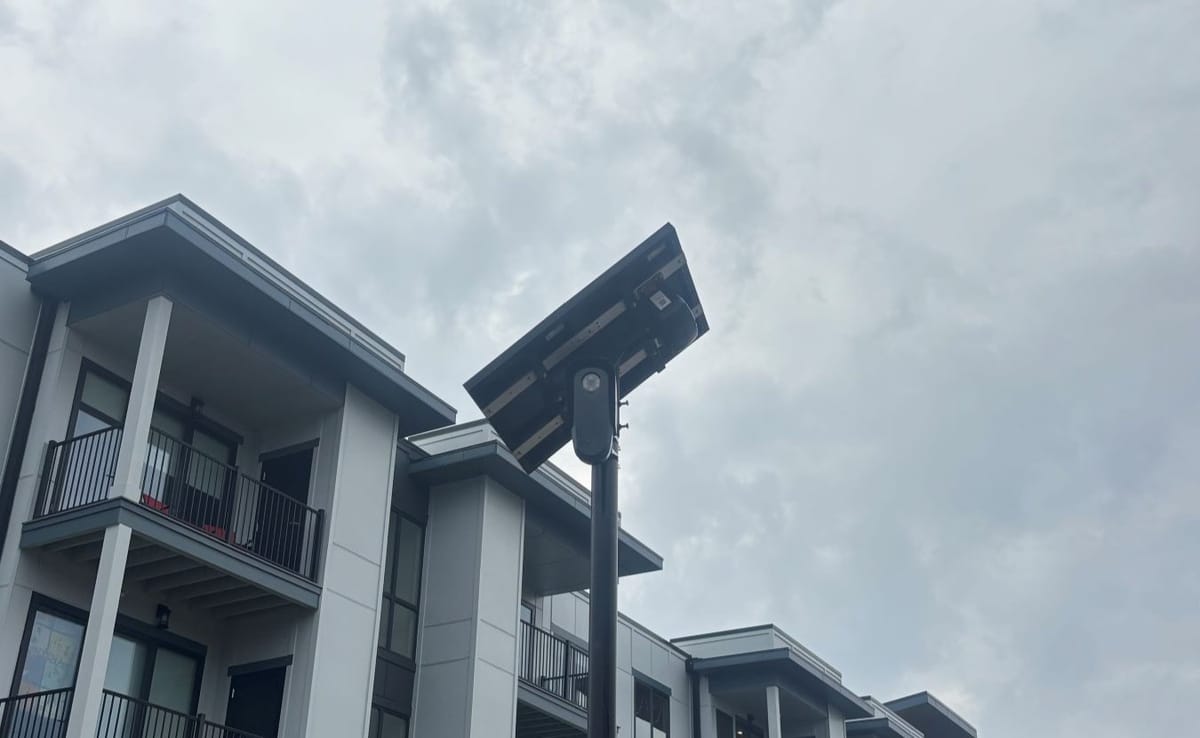
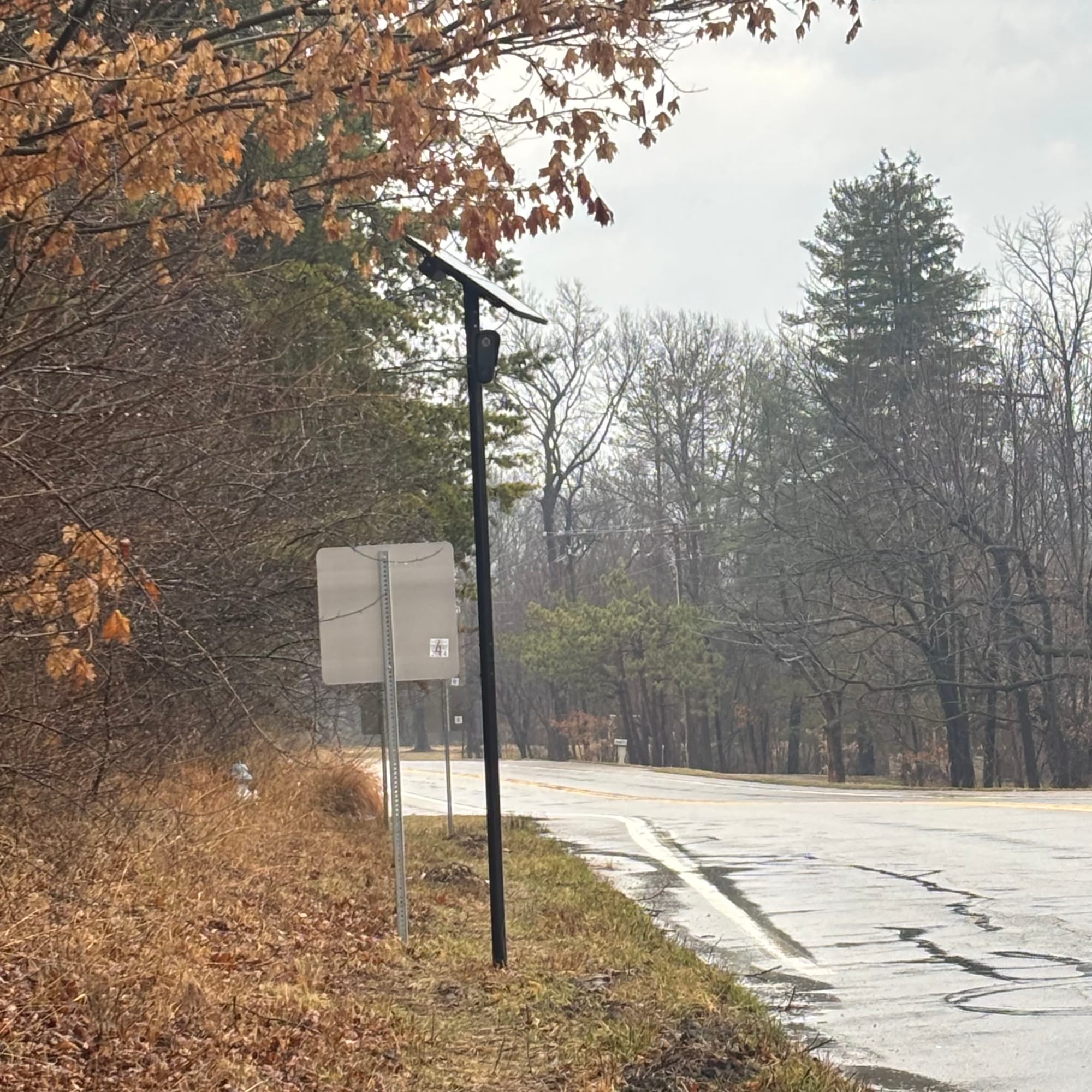
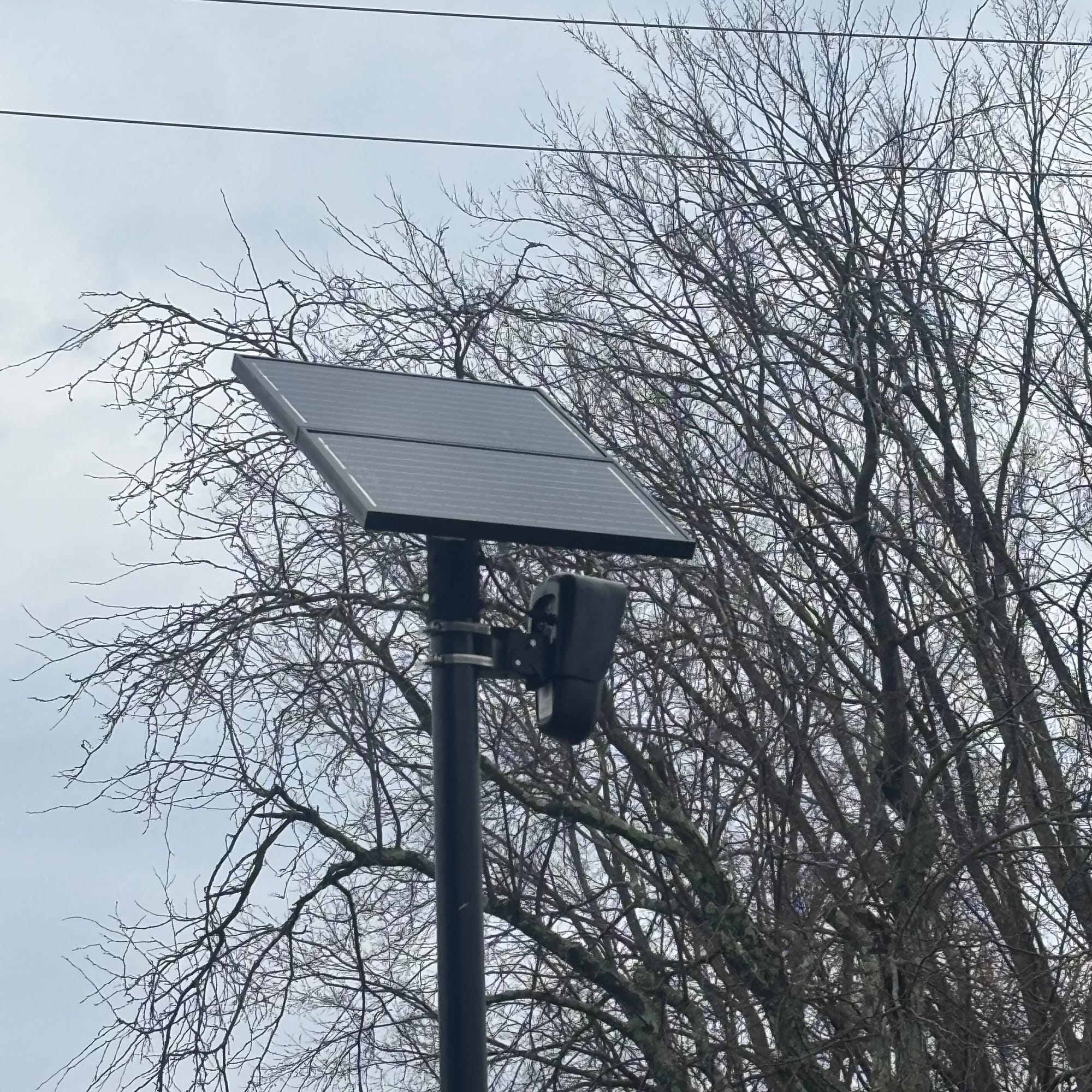
On an ordinary drive through Bloomington, it’s easy to miss the small, boxy cameras perched on poles or traffic infrastructure — until you learn what they do. These are not just cameras in the everyday sense. They are part of a growing class of automated license plate reader (ALPR) systems. ALPRs capture images of vehicles, extract data from them, and make that information searchable. This also enables information sharing across jurisdictions and time.
In Bloomington, Flock Safety’s ALPR system has become a flashpoint. In early 2026, hundreds of residents gathered outside City Hall, calling for the City to end its contract with the company. Bloomington’s debate is intensifying partly because other municipalities have publicly ended contracts with Flock, pointing to concerns about data control and trust. Protestors tied the technology to broader fears about surveillance and federal immigration enforcement. The Mayor has publicly said the City plans to meet with Flock administrators and that preventing inappropriate access, including by ICE, must be a priority. Bloomington’s City Council leadership and members have also entered the debate, pushing for clarity and transparency.
Sources indicate that Bloomington Police Department has acquired 40 ALPRs, the Monroe County Sheriff’s Department has eight ALPRs, the Indiana University Police Department has six ALPRs, and the Ellettsville Police Department has two ALPRs. The City of Bloomington alone has spent at least $236,829.68 on Flock contracts and products through January 2026.
What are Flock cameras?
Flock Safety is a private company based in Atlanta, Georgia, that sells license plate reader camera systems and related software and tools to neighborhoods, businesses, schools, and law enforcement. In practical terms, a typical Flock ALPR camera is designed to capture images of passing vehicles. Flock then extracts information from both the license plate and the vehicle itself, and uploads records to a searchable database. Authorized users across the “National LPR Network” can search by time, location, plate, or vehicle description. So, for example, if there's a speeding vehicle, a hit-and-run accident, or another illegal activity caught on camera, law enforcement agencies can use the database to help track down vehicles and drivers.
Flock’s own product marketing emphasizes that its products build a “public safety technology ecosystem.” But a critical part of understanding the system is that it creates structured data records of vehicle movements, which can later be searched, filtered, and linked to other investigations. And there's concern those records could become a source of information for other, less benign purposes that constitute, at the very least, an invasion of privacy.
It’s not just license plates
One reason Flock has drawn so much attention is that the system supports searches beyond entering a full license plate number. BloomDocs is a public document repository, which is a project of B Square Bulletin. In a Bloomington Police Department order form for the system posted on BloomDocs (dated late September/early October 2025), a FlockOS Features & Description table lists the ability to search by time and location, by license plate lookup, and by a Vehicle FingerprintTM that includes “vehicle type, make, color, license plate state, missing/covered plates, and other unique features like bumper stickers, decals, roof racks.”
That’s a meaningful shift in surveillance capability. Even if someone doesn’t know a license plate number, the system can still help locate vehicles that match a description, such as a “red SUV with roof rack, damaged bumper, and a National Park bumper sticker,” in a particular area during a specific time window.
Hotlists and real-time alerts
ALPR systems commonly use hotlists, meaning lists of plate numbers associated with vehicles of interest. That could include stolen vehicles, missing persons alerts, wanted suspects, and other categories that law enforcement agencies track. When a plate that appears on a hotlist is detected, the system can generate an alert.
In Bloomington’s 2025 order form, Flock lists real-time National Crime Information Center (NCIC) alerts and unlimited custom hot lists among the included features. The FBI’s NCIC is a widely used law enforcement database.
Default retention often looks like 30 days
Data retention — in this case, how long sightings are stored — matters because it determines whether the system functions mostly as a short-term investigative tool or as something closer to a longer-term archive of movement.
Flock uses a 30-day retention model, with the option to extend it to up to one year, depending on the jurisdiction where the camera operates. The Bloomington Police Department order form includes a Retention Period: 30 Days. Even a 30-day window, however, can be powerful when searches can be done across jurisdictions and when multiple agencies participate.
A short history of ALPRs and why they spread
Automated license plate readers sit at the intersection of two older technologies: photography or video capture of vehicles in public and optical character recognition (OCR), which converts images of letters and numbers into text.
The International Association of Chiefs of Police (IACP) summarizes ALPRs this way: They capture an image of a plate, convert it into characters using OCR, compare it against one or more databases, and alert officers when a vehicle of interest is detected.
Several trends drove ALPR adoption. Cheaper cameras and storage made it easier to record huge volumes of data. Improved OCR and machine learning made extraction more accurate and useful. And networked databases enabled sharing hits and sightings across agencies.
The result is a system that can quickly capture the plates of thousands of cars. The National Conference of State Legislatures (NCSL) notes that ALPR devices can be mounted on police cars or fixed infrastructure and can capture thousands of plate images.
Agencies often justify ALPRs by pointing to common uses like recovering stolen vehicles, locating missing persons, and identifying suspects or witness vehicles in time-sensitive investigations.
Bloomington Police Chief Mike Diekhoff has argued locally that Flock cameras have helped solve serious crimes, including murders and a rape.
The persistent controversy: location data at scale
Privacy concerns arise because ALPRs don’t just record that a plate exists; they record where and when it appeared. When you combine many cameras over time, you can infer patterns: commutes, visits to clinics or religious sites, attendance at protests, and social relationships.
A University of Michigan policy memo describes ALPRs as surveillance technology that can alert law enforcement in real time or provide information on past movements, and it notes that communities increasingly adopt policies to limit potential harms.
In Indiana, scholarship has specifically flagged the tension between fast-growing ALPR deployment and privacy protections. An Indiana Law Review article notes rapid expansion of ALPRs across the state in recent years.
Who uses Flock in the Bloomington area?
Bloomington’s debate is not happening in a vacuum. The clearest picture is that multiple agencies in and around Bloomington use Flock, and there is evidence that the system enables data-sharing beyond city boundaries.
The Atlas of Surveillance is a well-regarded national dataset tracking police technology from the Electronic Frontier Foundation. Searching for “Bloomington, Indiana,” reveals that several local agencies are listed as operating Flock Safety ALPRs as of September 2025. The list includes the Bloomington Police Department with 40 ALPRs, the Monroe County Sheriff’s Department with eight ALPRs, the Indiana University Police Department with six ALPRs, and the Ellettsville Police Department with two ALPRs. Atlas also lists ALPR use by Indiana University’s Office of Parking Operations, which is a separate, non-police use case.
These figures matter because Bloomington residents often experience this as “Bloomington’s cameras,” but operationally, it may be a regional ecosystem.
For instance, Bloomington is included in a statewide document — the Pittsboro Police Department Indiana - Flock Safety Shared Devices List — obtained by EFF via public records. The data is dated 9/11/2025.
Screenshots from that list show “Bloomington IN PD” with 39 cameras, and “Bloomington IN PD (FLEX)” with one camera, totaling 40 devices and matching Atlas’s Bloomington PD number. The same shared-device list also includes entries for the Monroe County IN Sheriff’s Office (seven cameras plus one FLEX), Indiana University PD (four cameras plus two FLEX), and Ellettsville PD (two cameras).
The existence of a cross-agency sharing list underscores that ALPR data can travel across agencies and jurisdictions through Flock’s platform.
How many cameras are actually “up” in Bloomington right now?
Public reporting offers multiple counts depending on the timeframe and what is being counted. Atlas and EFF-linked documents indicate 40 Bloomington Police Department devices as of September 2025. Indiana Public Media reported in February 2026 that Bloomington has 27 of these cameras, citing DeFlock, a volunteer mapping project. The Indiana Daily Student referenced 40 cameras as of September 2025.
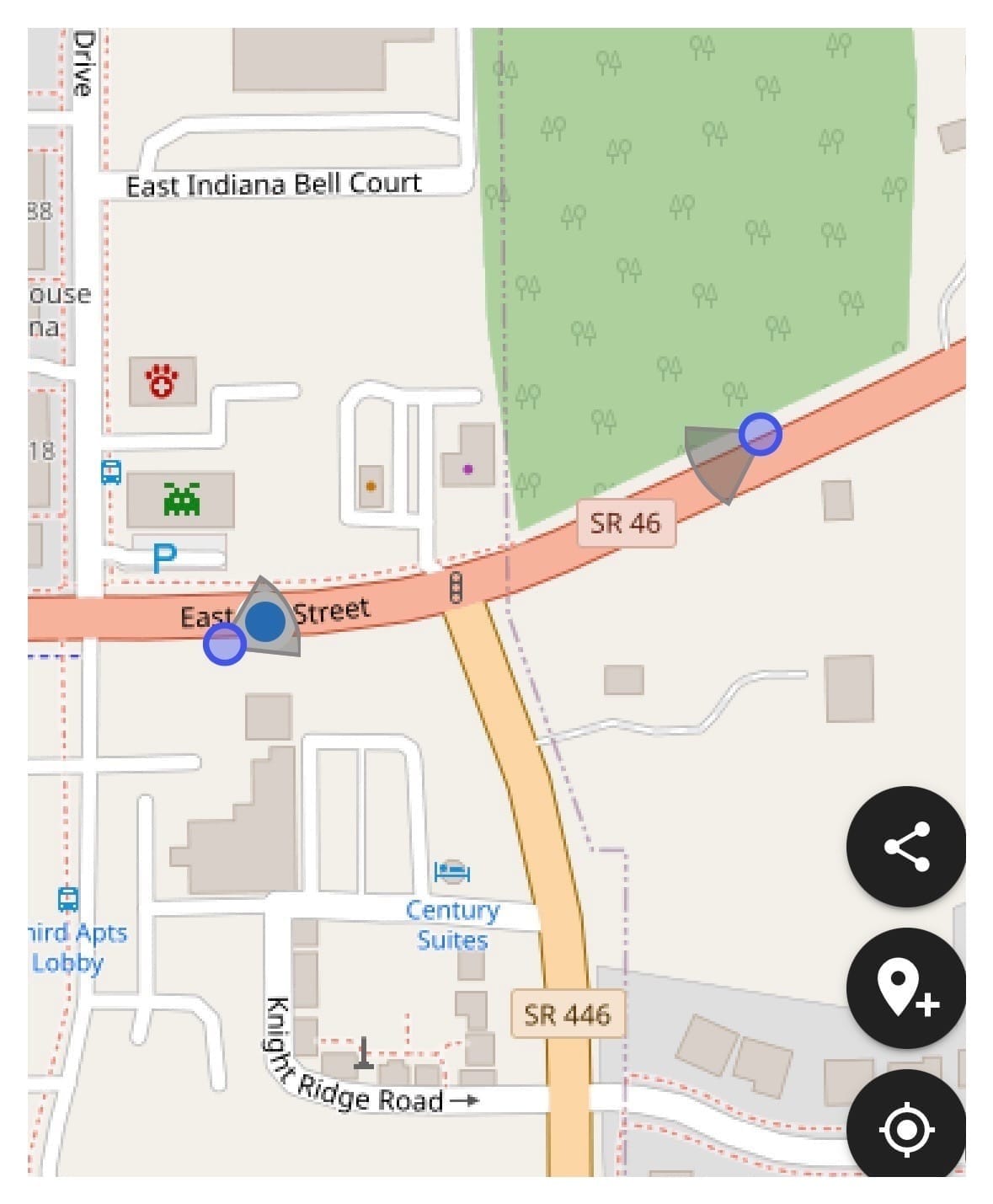
This isn’t just a trivia dispute. Different counts can reflect the difference between cameras owned by Bloomington Police Department versus cameras that are accessible through a broader network; cameras purchased versus currently deployed; fixed versus mobile or portable units; or cameras operated by private entities but visible to police via community network access.
Bloomington has a substantial ALPR presence, yet the public still lacks a single, authoritative, publicly maintained inventory explaining what is deployed, where, and under what access rules.
Contracts and spending: what Bloomington’s records show
A major piece of the Bloomington story is not only the cameras themselves, but how the City has financed and structured its relationship with Flock.
BloomDocs includes a spreadsheet-style export of Bloomington checkbook data showing payments to “Flock Group INC (Flock Safety).” The entries include both Police and HAND (Housing and Neighborhood Development) payments.
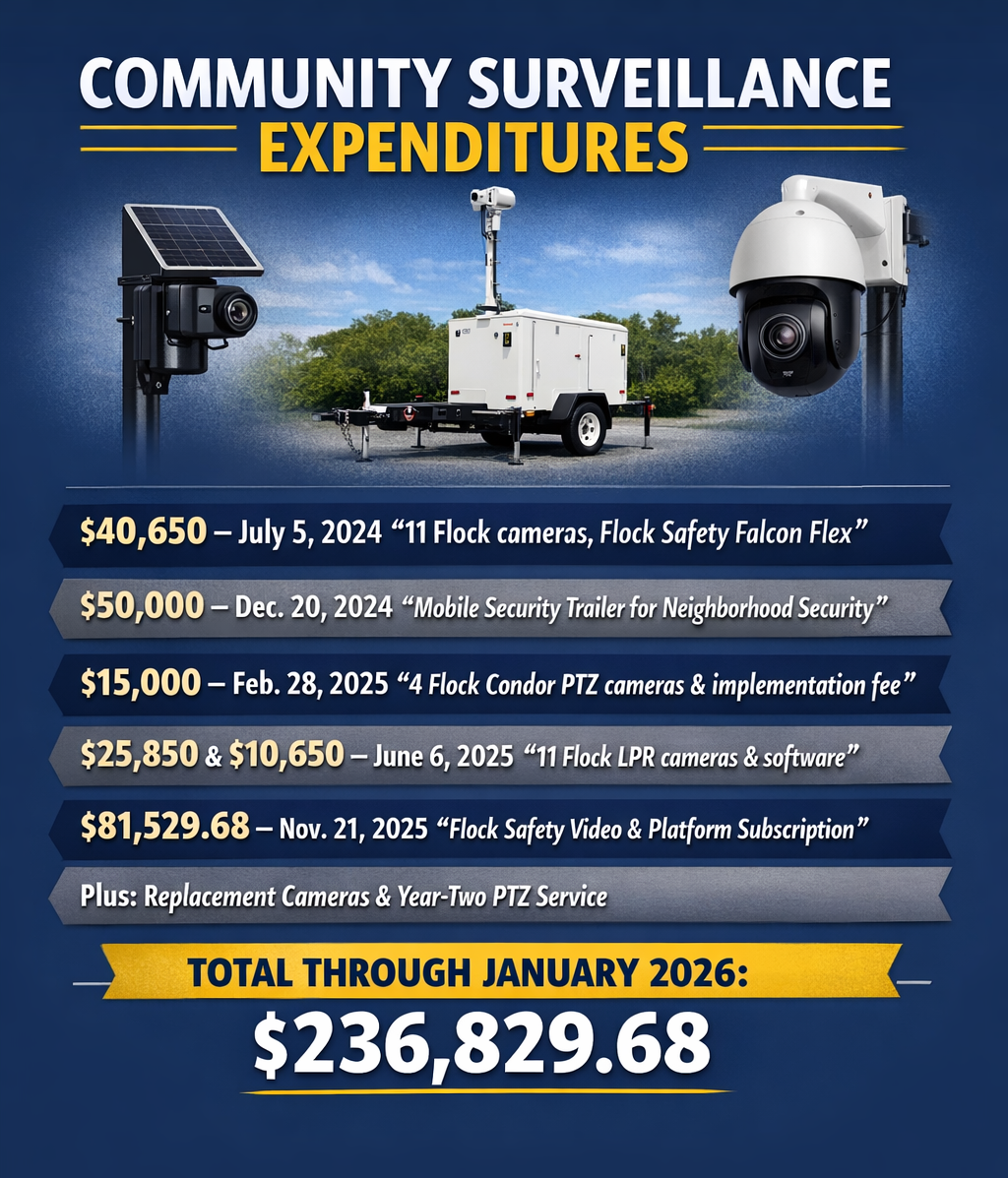
Two things stand out in these records. First, Bloomington’s spending appears to include both ALPR (“Falcon”) cameras and other Flock video products, such as “Condor PTZ” and the “Mobile Security Trailer.” Second, one payment is explicitly tied to federal equitable sharing and asset forfeiture funds, meaning money local law enforcement receives from federal agencies, often from the proceeds of seized assets in joint investigations, which returns a portion of forfeited property to participating state and local agencies for law-enforcement purposes. This raises governance questions of its own about what oversight mechanisms apply when surveillance infrastructure expands through these revenue streams.
On top of this, the October 2025 order form for IN – Bloomington PD lists an initial term of 24 months, annual billing, a retention period of 30 days, and a contract total of $180,000, with $90,000 due at contract signing and an indicated discount line.
The same document’s feature table highlights “nationwide network” and “law enforcement network access,” underscoring how a local procurement decision can plug Bloomington into a much larger system of access and interoperability.
Transparency fights over redactions and missing agreements
Bloomington’s relationship with Flock has also been shaped by public records battles. The B Square Bulletin reports that Bloomington released an unredacted $50,000 mobile trailer contract only after repeated requests, and that a broader “umbrella” agreement referenced by the City remained undisclosed at the time of reporting.
A public records request document posted on BloomDocs shows an explicit attempt to obtain complete, unredacted copies of Bloomington’s agreements with Flock and to challenge broad redactions under Indiana’s public records law (APRA).
These disputes are part of the local governance story. Surveillance systems are often thought of as operating on the streets. However, they are more deeply woven into our community, operating through contracts, exemptions, procurement pathways, and the administrative choices that determine what the public can see.
The protest and the political response
In late January 2026, a protest of about 300 people outside Bloomington City Hall called for the City to end its Flock contract during a snow-covered gathering featuring anti-ICE posters and concerns about potential cooperation. The B Square Bulletin estimated the crowd at around 700.
This has pressured local officials to respond publicly and has elevated the issue from a discussion of police technology to a debate over what kind of city Bloomington wants to be.
In a January 2026 virtual town hall covered by the Indiana Daily Student, Mayor Kerry Thomson said it was the City’s intention “to ensure that law enforcement, including ICE, cannot access our data under any circumstances.” In a video posted shortly after, Thomson said the City had scheduled a meeting with Flock administrators in the second week of February, framing it as a response to residents raising concerns.
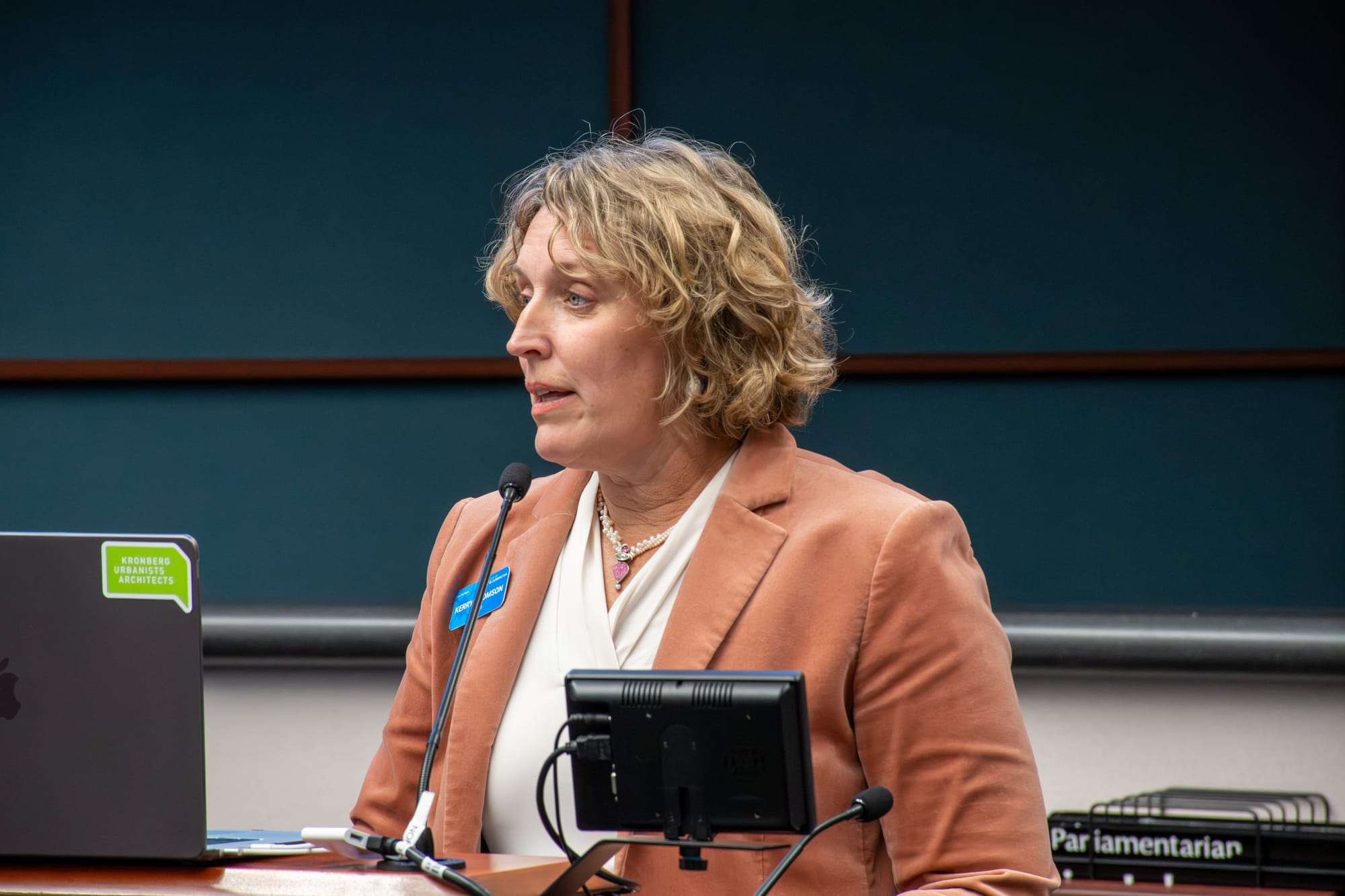
Even if one accepts the Mayor’s intent at face value, the hard question is how intent becomes enforceable policy when a system is built around network access and sharing.
City Council President Isak Nti Asare posted a statement emphasizing the need for clarity, drawing on his own professional background studying how emerging technologies can “concentrate power.” This matters because it suggests that at least part of Bloomington’s elected leadership sees the issue as structural and not merely a policing tactic, but a governance choice about power, legitimacy, and accountability.
Councilmember Isabel Piedmont-Smith sent the Mayor a letter advocating for ending Bloomington’s relationship with Flock and laying out requested actions, including public disclosure of camera locations, data-sharing arrangements, and limits on access.
Chief Diekhoff has acknowledged the risks but defended Flock as useful technology. Indiana Public Media also reported his claims that the cameras helped solve major crimes.
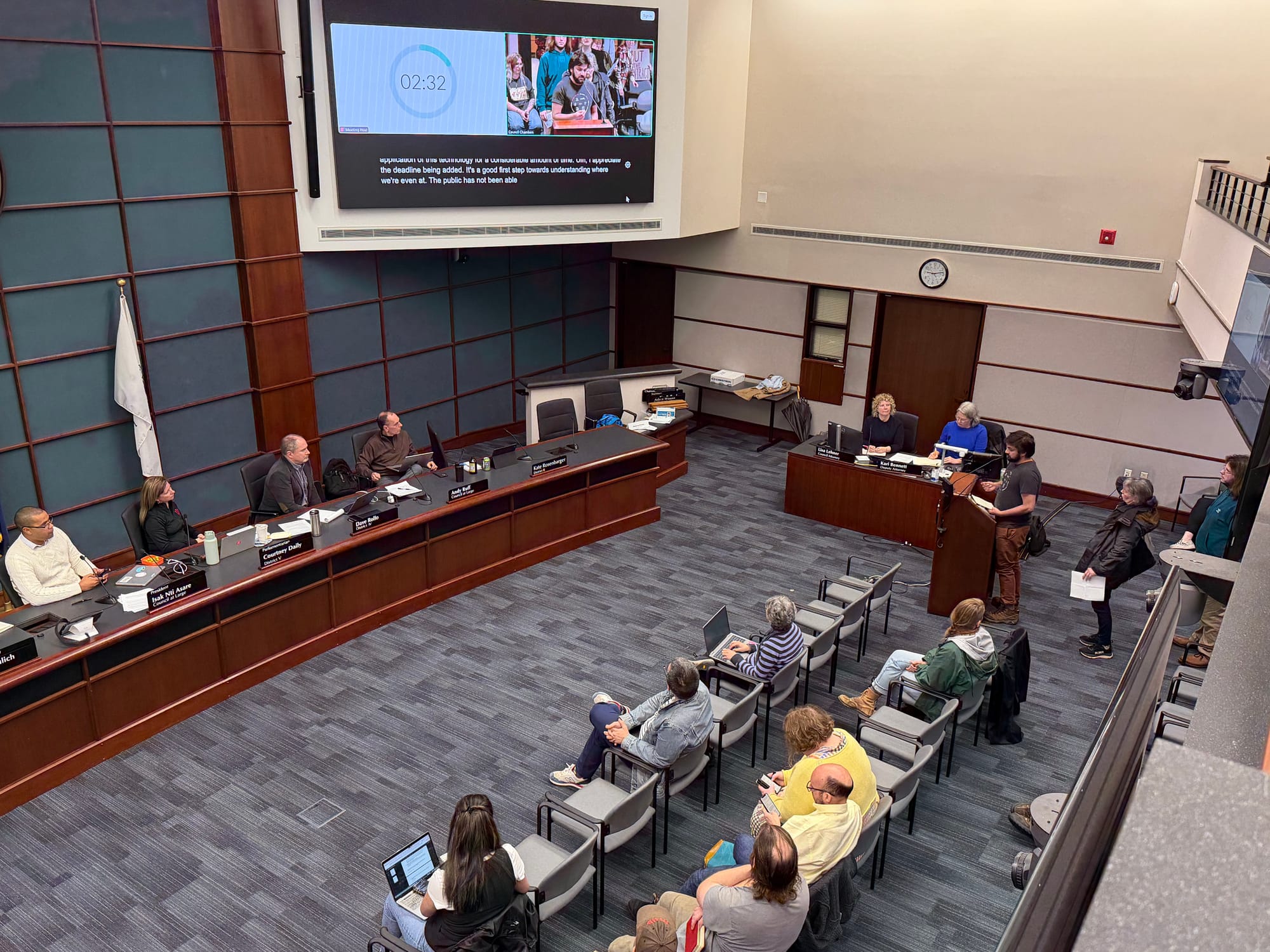
On March 4, 2026, Bloomington’s City Council unanimously (9–0) adopted Resolution 2026-04, which creates an immediate transparency-and-limits framework for the City’s Automated License Plate Reader (ALPR) program and sets up a public review process. The resolution (sponsored by Councilmember Isak Asare) directs the Mayor’s Office and the Chief of Police to deliver a plain-language public briefing on Bloomington’s ALPR program, including the City’s contracts and how the system is used. It also calls on the Mayor to pause any expansion of the ALPR program until that briefing is completed. Council members adopted an amendment setting a six-week deadline for the administration to provide the requested information, effectively putting the program on a short clock for public accounting and clarifying what data is collected, who can access it, how it’s shared, and what guardrails exist (or don’t).
Local government now sits between several competing pressures. Police are arguing for investigative value, residents and advocates are warning about surveillance, sharing, and abuse, and elected officials are trying to define what oversight is possible and what is politically acceptable.
Bloomington isn’t alone: what other cities’ Flock decisions reveal
One reason Bloomington’s debate is intensifying is that other municipalities have publicly broken with Flock over control of data or trust.
Cambridge, Massachusetts, terminated its contract after Flock technicians installed two cameras “without the City’s awareness,” which the City described as a material breach of trust. Evanston, Illinois, deactivated its Flock cameras and issued a termination notice after an Illinois audit and Flock’s admission that it failed to establish distinct permissions and protocols while running a pilot with “federal users.” Senator Ron Wyden has publicly criticized Flock’s protections as insufficient and described the company as deceiving law enforcement customers about sharing with DHS and other federal agencies.
This is not to say Bloomington’s system is identical to Cambridge’s or Evanston’s, or that Bloomington has experienced the same incidents. But these examples illustrate why local assurances, like “we won’t share with X,” are often not enough for public trust. People want guarantees grounded in enforceable technical controls, contracts, audits, and transparent policies.
From cameras to “governance by database”
This is where my research comes in. A traditional camera records footage that, in theory, someone has to watch. An ALPR system records database entries that can be queried in seconds: show me every time this car appeared, show me all cars matching this description, alert me when a hotlist plate appears.
That shift changes governance in multiple ways. Speed and scale become default, meaning surveillance moves from selective and reactive to continuous and searchable. Rules become embedded in software settings, because what counts as a “justified search,” who can search, what gets shared, and what gets retained can be encoded in configurations that the public may never see. And power becomes networked, meaning local data can become regional or national, even if local politics remain municipal.
The Bloomington Police Department order form’s descriptions of “nationwide network” and “law enforcement network access,” alongside “vehicle fingerprint search,” are not just technical features. They are governance features.
Even when no one calls it “AI,” ALPR systems govern through automated pathways. A camera captures a plate, software extracts characters and attributes, the system compares the record to hotlists, alerts are generated or not, and officers act on alerts.
Each step can embed assumptions, including how accurate optical character recognition (OCR) is, which hotlists are used, and how partial matches are handled, and those assumptions can have real consequences. That’s why debates about ALPRs are not only privacy debates. They are also debates about how suspicion is generated, who is made visible, which communities bear the risk of error, and what oversight exists when a system expands quietly.
Bloomington’s decision point
Bloomington’s Mayor and City Council now face a question bigger than any single technology vendor: Do we want public safety infrastructure that works primarily through networked surveillance data, and if so, what democratic controls are strong enough to make that compatible with Bloomington’s values?
That can’t be answered only by the claim that cameras help solve crimes, even if that claim should be taken seriously. It also can’t be answered only by concerns that the system could help ICE, which sits at the intersection of fear, inference from national patterns, and questions about safeguards. It requires governance.
If the City continues using Flock, the debate will increasingly turn on oversight and transparency. Based on the available documents and reporting, Bloomington residents can reasonably press for answers on inventory, locations, access, sharing settings, auditing and reporting, policy, procurement transparency, and cost-benefit analysis.
Inventory questions include how many Flock devices are owned, deployed, and active, and which are fixed versus FLEX versus trailers, especially since counts vary across sources.
Location questions include where cameras are placed and what criteria were used, whether traffic volume, crime data, neighborhood requests, or other considerations. Access questions include which agencies and personnel can search Bloomington data and how credentials are managed.
Sharing settings matter, too: is Bloomington participating in cross-jurisdiction sharing, and under what rules? The existence of shared-device documentation suggests broad network interoperability. Audit and reporting questions include how often searches are audited and whether the City publishes aggregate statistics, like number of searches, reasons, and outcomes.
Policy questions include whether there is a written policy defining permissible uses and prohibiting certain uses, such as protest monitoring, immigration enforcement assistance, or searches without case numbers.
Procurement transparency remains a live issue, including what agreements exist beyond the trailer contract and what redactions are justified under APRA. And cost-benefit questions remain central: what is the measured impact, what alternatives were considered, and at what cost?
A major concern raised by Bloomington residents and some council members is that Flock ALPR data could become more consequential and harder to firewall from immigration enforcement if Indiana’s SB 76 tightens or expands legal expectations that local entities cooperate with federal immigration authorities. In the March 4 council meeting debate, Councilmember Hopi Stosberg explicitly connected her shift in position on Flock to SB 76, warning that the cameras’ benefits look different when state law is moving toward mandating cooperation with federal immigration officers.
SB 76 is framed by statehouse coverage and bill summaries as strengthening Indiana’s “anti-sanctuary” regime by discouraging local limits on immigration enforcement and increasing pressure on cities and public institutions to align with federal enforcement requests. In that context, critics argue that a tool designed to rapidly locate and track vehicles, especially one that can plug into broader sharing networks, creates a capacity problem.
Even if Bloomington leaders say they don’t intend to support immigration enforcement, state-level mandates and interagency practices could make ALPR data more likely to be drawn into immigration-related investigations or information-sharing over time.
What this moment reveals
Flock cameras are easy to describe as a public safety tool: license plate readers that help solve crimes. They are also easy to describe as a surveillance system: a networked database of vehicle movements. In truth, they are both, and that dual character is why Bloomington is wrestling with them.
The question is how Bloomington makes decisions when the system is partly private, meaning it depends on a vendor-run platform; when the data may be networked and shared across agencies; when governance is partly technical through software features and access permissions; and when the public is only now learning the scope of the infrastructure around them.
Bloomington is an example of a broader pattern: the quiet normalization of systems that turn everyday life into searchable data, and the late-arriving scramble to build democratic oversight after the infrastructure is already in place.
The next chapter will likely be written in City Hall, in the Mayor’s negotiations, the Council’s public stance, and the City’s willingness to explain, not just reassure, how this system is governed.