
From Forest to Furniture: Sustainable Woodworkers Create Lasting Impressions
Replaceable furniture may be a modern convenience, but is it worth it? Woodworkers in and around Monroe County, who focus on sustainability and quality, say no. Read their stories. [https://limestonepostmagazine.com/from-forest-to-furniture]


It starts with a tree. One tall and straight tree, likely upwards of 50 years old. Perhaps this tree has lived in Indiana longer than the owner of the land where it grows. After 50 or more years with its roots in the Earth, a tree is selected, felled, and logged, then milled into boards and bought by woodworkers. From there, the tree is sanded and molded and glued and nailed and dovetailed and finished until it no longer resembles a tree but, rather, a piece of furniture. Perhaps you see this piece at an exhibition, like it, and decide to purchase it. You pay for it, have it transported, and now the tree has made its way into your home.
From forest to furniture, many hands work the trees around us. Indiana, with 95 percent of its forests comprising hardwood trees, is among the most prolific manufacturers of hardwood products in the United States, fabricating high-quality office furniture, cabinetry, veneers, and more. And Bloomington, whose Showers Brothers’ Furniture Factory once produced more than half the furniture in the country, is now a hub for craftsmen and craftswomen, with each set of hands bringing its own vision to a simple tree.
Deliberately or organically, they incorporate sustainability into their work and lifestyles. Get to know a few of those craftspeople below.
The Iron Roots Designs
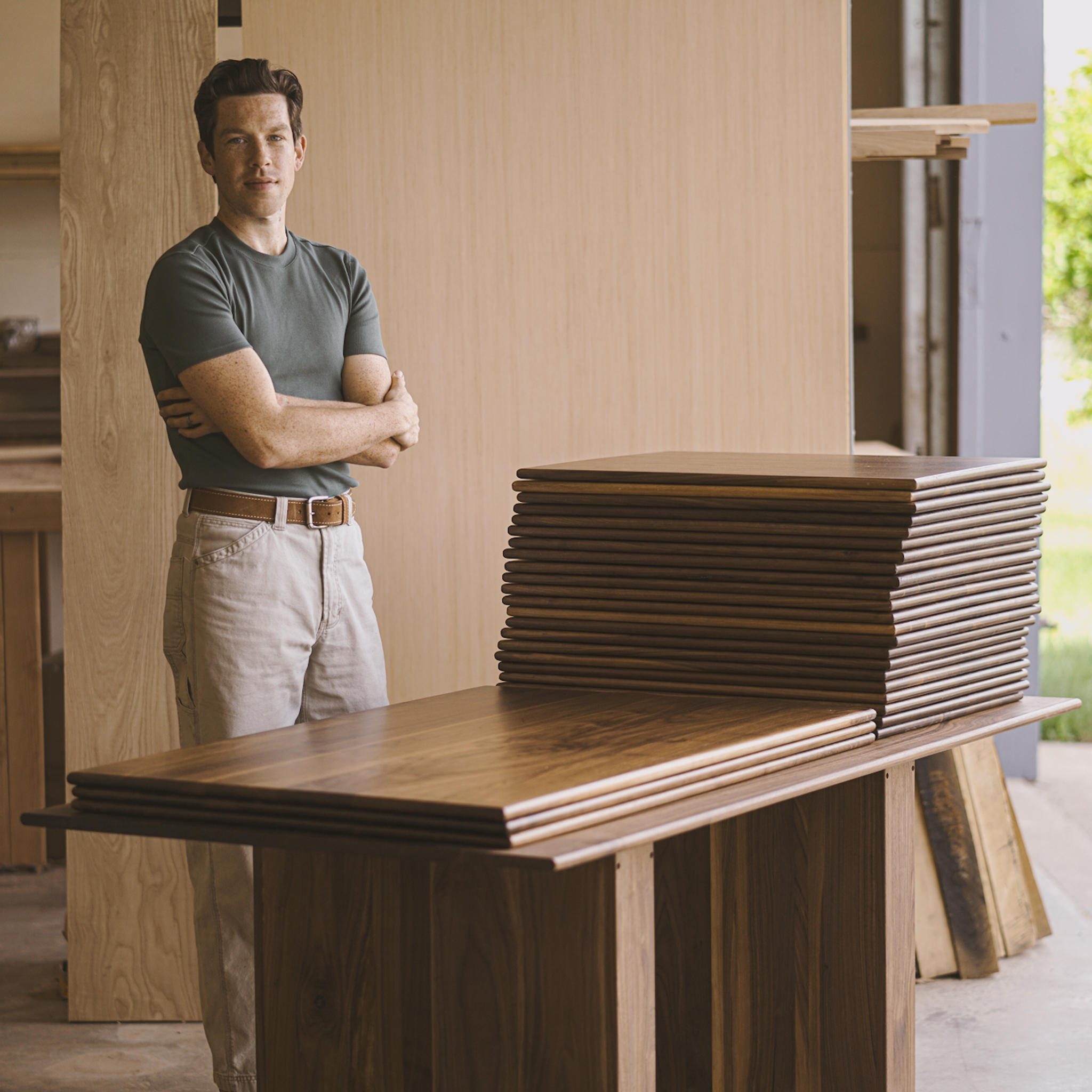
Meet Phillip Stone. He is the owner of a Bloomington-based minimalist furniture-design studio, The Iron Roots Designs. Stone began woodworking twelve years ago, when he got his first apartment in college. He viewed the apartment as a blank space to fill with items that reflected who he was. When shopping for furniture, however, he found the pieces he wanted were out of his price range.
“It was all like $3,000, and I had a Craigslist budget,” Stone says of the time. Looking for a creative outlet to counterbalance his “dull” summer internship, he decided to make the furniture himself, saying, “How hard could it be?”
It turned out to be harder than expected. Stone says, “I made a lot of mistakes. But I just kind of trial-and-errored in my basement. And, by the end of summer, I’d gotten most of my pieces — furniture pieces — built.”
He loved the feeling of creating something that wasn’t there before.
“These things exist now because I did some work; a good measure of my days. And so I continued my business degree, and I filled my apartment with things.”
When he had more wooden “things” than he had space for, Stone began selling furniture on Etsy. By the end of his college degree, he knew he wanted to pursue woodworking full time. Several moves from state to state, several workshop spaces, and twelve years later, Stone is happy to call Indiana home.
When living in California, Stone commuted roughly two hours roundtrip from home to studio. Living in Indiana, his commute is just twelve minutes, and he pays a fraction of the rent. With close proximity to his workspace and to the hardwoods he needs for his craft, Stone has already lowered his carbon footprint by living here. But he keeps sustainability in mind, and he takes steps to be as eco-friendly as possible.
“I build things out of wood, so I care about the earth. I want there to be trees. We need them. I’m also a human being, so I love a nice forest or river that isn’t full of sludge and stuff like that.”
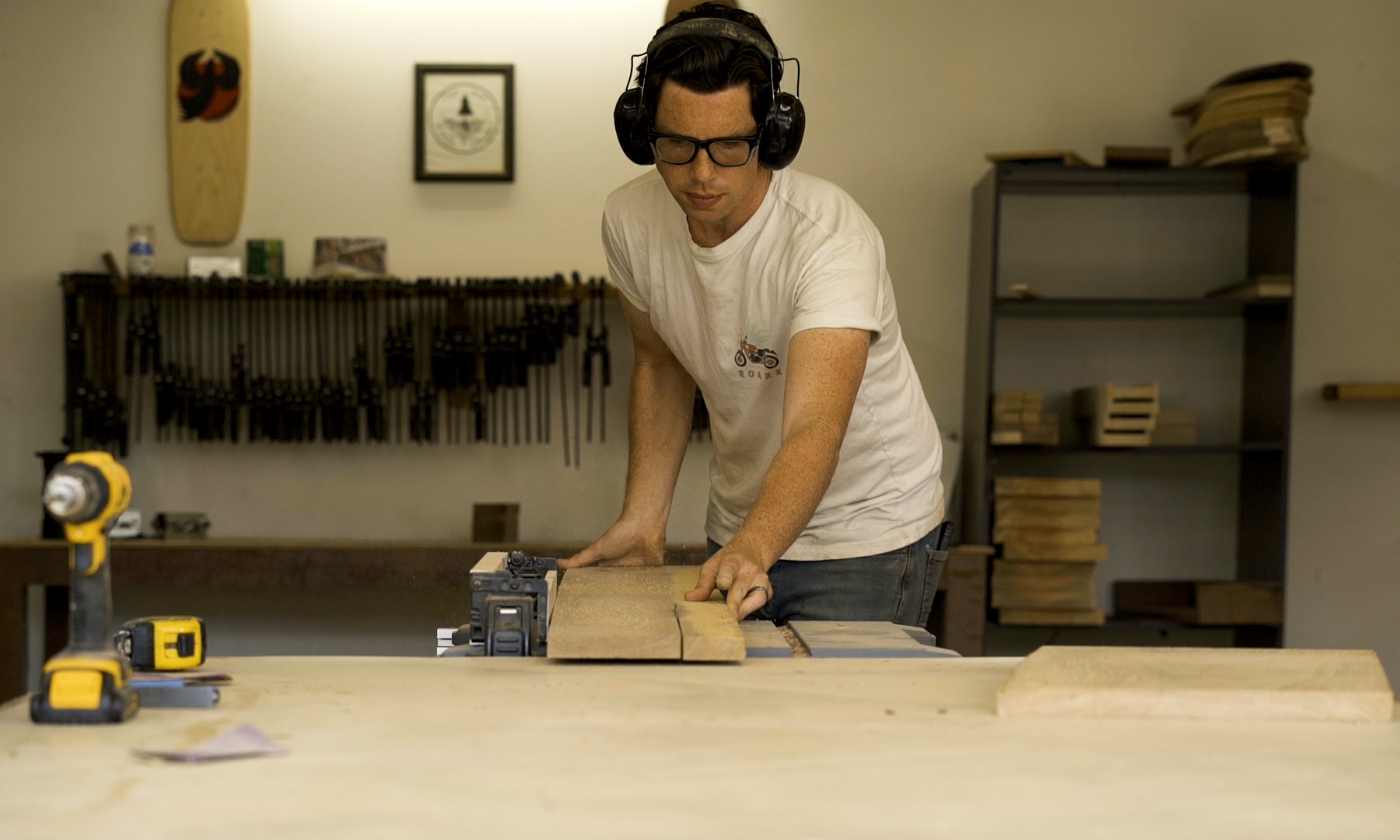
First and foremost, Stone uses zero-waste-woodworking techniques, which entail using as much of the tree in a project as possible. Any large wood scraps leftover, he either uses for small household projects like lighting mounts, mirror stands, and vase holders, or he sells to woodturners in the area for their projects. From there, Stone collects any small scraps to distribute to local nonprofits for campfires in the summer and warming families in need in the winter. He also gathers up all the sawdust in the studio to give to farmers as brown matter for their compost. Stone recycles as much as he can from his studio, even non-wood items. Any shipping materials that can be reused, he holds onto until he can find a purpose for them. He also is growing pollinator flowers around his building to support the local ecosystems.
“It’s tough to be in manufacturing and also do what you can to be sustainable, because making things requires using an excess. So, you know, you can’t make an omelet without breaking eggs. I’m trying to compost the eggshells.”
Siosi Design
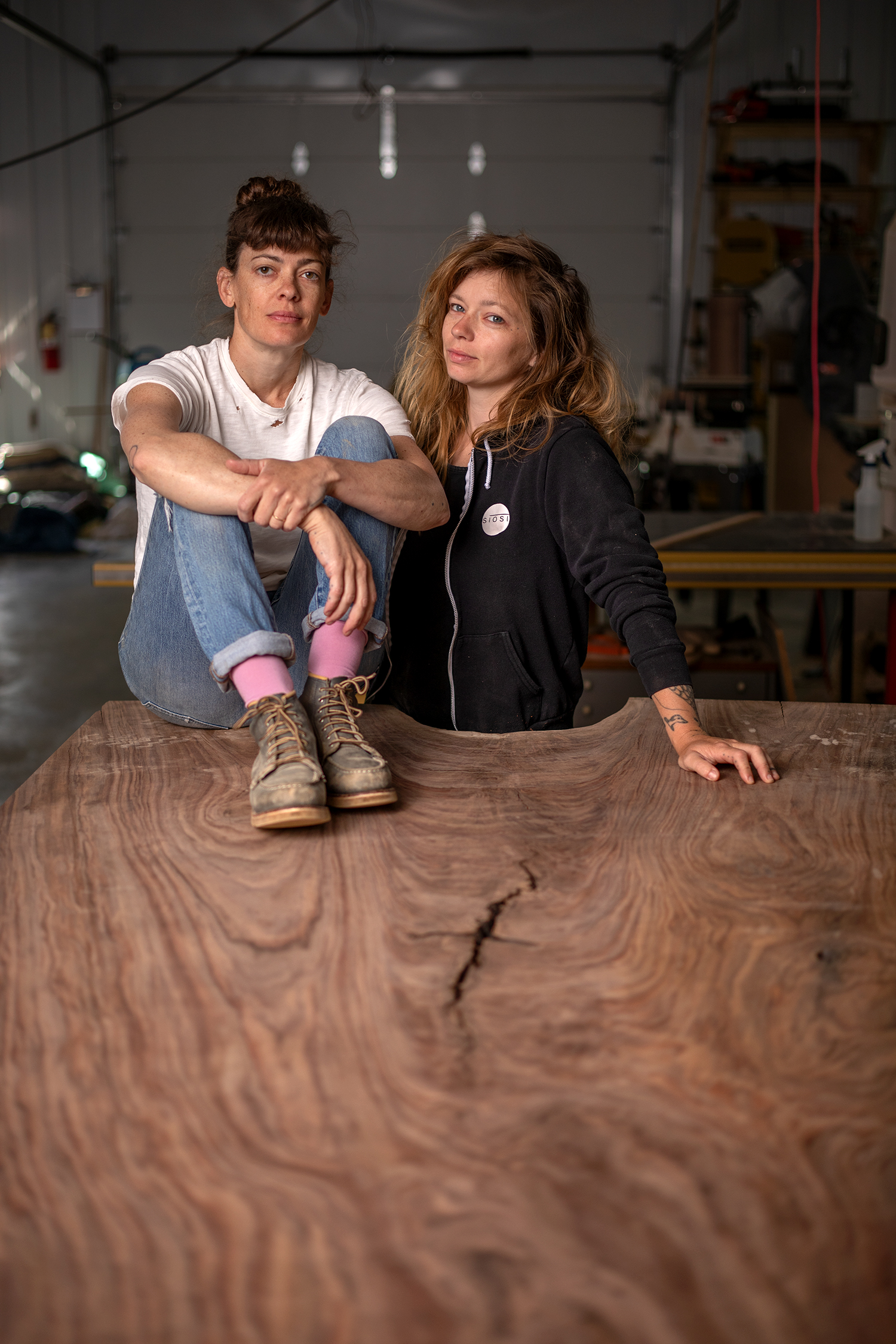
Two women in love with wood, the land, and each other have created a woodworking studio that incorporates their values into their work. Audi Culver and Ivy Siosi of Siosi Design had different paths into woodworking but are now forging their own path together.
Culver found her way to wood through the world of photography. In 2009, she began her MFA in photography, with a side of curiosity about wood. She spent eight weeks “demystifying” the power tools in the IU woodshop and fell in love with the craft.
“I saw a throughline between woodworking and photography,” Culver says. “Though very different processes, there’s a balance of technicality and art; you need to understand the fundamental characteristics of wood in order to make furniture. And it’s crucial to understand how your camera functions before you can think critically about light and composition.”
Growing up in a family with few resources, Siosi found that necessity is the mother of invention. She would take items from curbsides and create something new from them, priding herself on her ingenuity.
Siosi says of her childhood, “A wonderful skillset was born out of those deficiencies.”
When she was 16, Siosi’s family was approved for a Habitat for Humanity home, and she was “the sole contributor to the home’s sweat equity hours.” She went on to study art and car restoration and eventually made her way to Culver, and woodworking.
The pair now own 56 acres of land in Monroe County, where they not only maintain woodlands through Indiana DNR’s Classified Forest and Wildlands Program but also grow wildflower fields for butterflies, hope to foster bees, and have a pond. They recently planted 100 black walnut trees here, some of which will be harvested someday and some of which will be left to the wiles of nature.
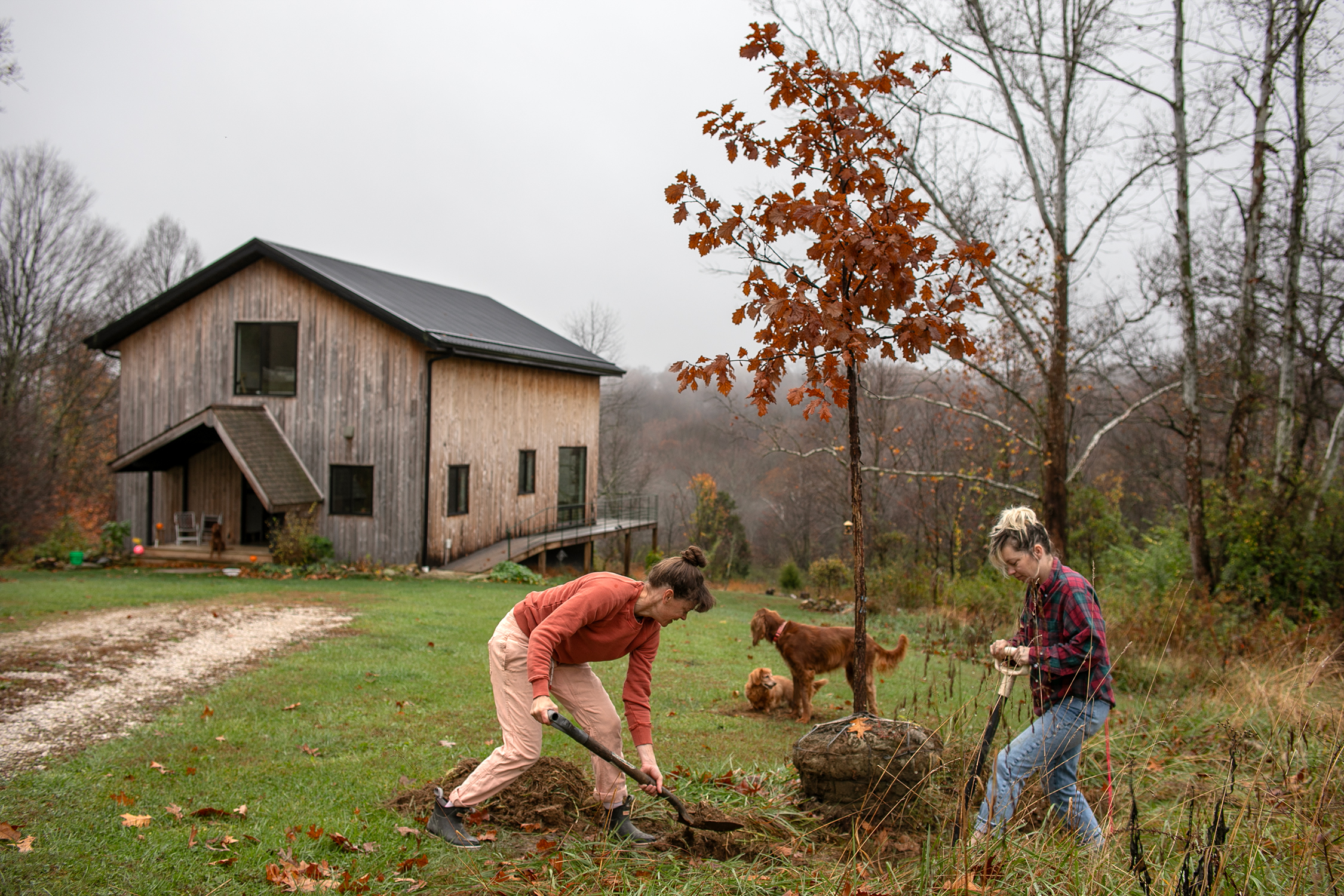
Culver spent a lot of time in nature growing up, and she says it has impacted her relationship with the world around her today. As a kid, she spent time in the woods, lakes, and ponds with her sisters, and their dad taught them about the bugs, birds, amphibians, and trees around them. Now that she owns land with Siosi, Culver says she has a deeper understanding of the impact of her craft.
“The responsibility to conserve feels real and heavy,” says Culver.
Siosi says the pair are very intentional about their investment of time into what they do. Without employees to pay or families to feed, they don’t take on jobs just to make money. They care about what they do, and they take breaks from it to care for themselves, their dogs, their land, and their community.
Siosi says, “We’re actually horrible at capitalism, and it’s tough sometimes, but the race for wealth means something different to us.”
Though their lumber comes from all over the States, Siosi Design uses only sustainably harvested wood. To them, this means mostly dead and dying trees, whose structural integrity is intact, but whose life is naturally ending. They are self-labeled “obsessed” and spend countless hours on each piece they make, until it’s perfect.
Hoosier Woodworks
Some local woodworkers have been practicing this craft for a long time, as in, their whole life. Roger Kugler, of Hoosier Woodworks, recalls learning to work with wood as a child in his grandfather’s shop. Growing up on a farm pushed him to work with his hands and entertain himself.
“I was blessed with self-reliance and hearing ‘No’ a lot,” Kugler says. “‘No, I’m not buying that for you. No, you can’t have that. No, we don’t have the money for that. You figure it out.’”
As a kid, Kugler looked up to his big sister’s husband, who was in the Navy, which Kugler was infatuated with. At age five, he decided he “needed” a toy fleet to play with, so he built his own out of wood scraps and nails. He reconstructed the Seventh Fleet in that first project, then recreated the Apollo Lunar Module with various materials he found around, and continued working on projects with his grandfather over time.
In high school, Kugler took shop class, in which he excelled. There, he learned more about wooden sailboats, which he’d always been interested in, and developed skill in mechanical drawing. His teacher, however, cautioned the class to not get too excited about a career in carpentry, as computers would soon take over the trade.
After high school, Kugler joined the Navy and spent eight years on the water, serving in attack submarines as well as on a frigate. After his service, Kugler worked in outdoor gear retail for fifteen years. Then, in a desire to be more involved at home, raising two kids with his wife, Carol, Kugler started his own business, Hoosier Woodworks, which he owns and operates to this day.
Hoosier Woodworks does some custom furniture as well as repair work. But what makes Kugler’s business stand out from the crowd is his continued connection to the Navy. While it may not be obvious at first glance, his passions shine through what he does.
One of Kugler’s primary projects is the flag cases he makes to honor his fellow veterans. The project started when someone wanted to commission a flag case for a friend who was dying of chemical poisoning he’d sustained while in Vietnam. While shopping for a flag case, everything they found was labeled “Made in Vietnam,” and they knew that wouldn’t do. Kugler produced a high-quality product, handmade in Indiana from local hardwood. The veteran who bought that case eventually passed away, and Kugler made one for him as well. From there, he sold more and more, opening an Etsy shop.
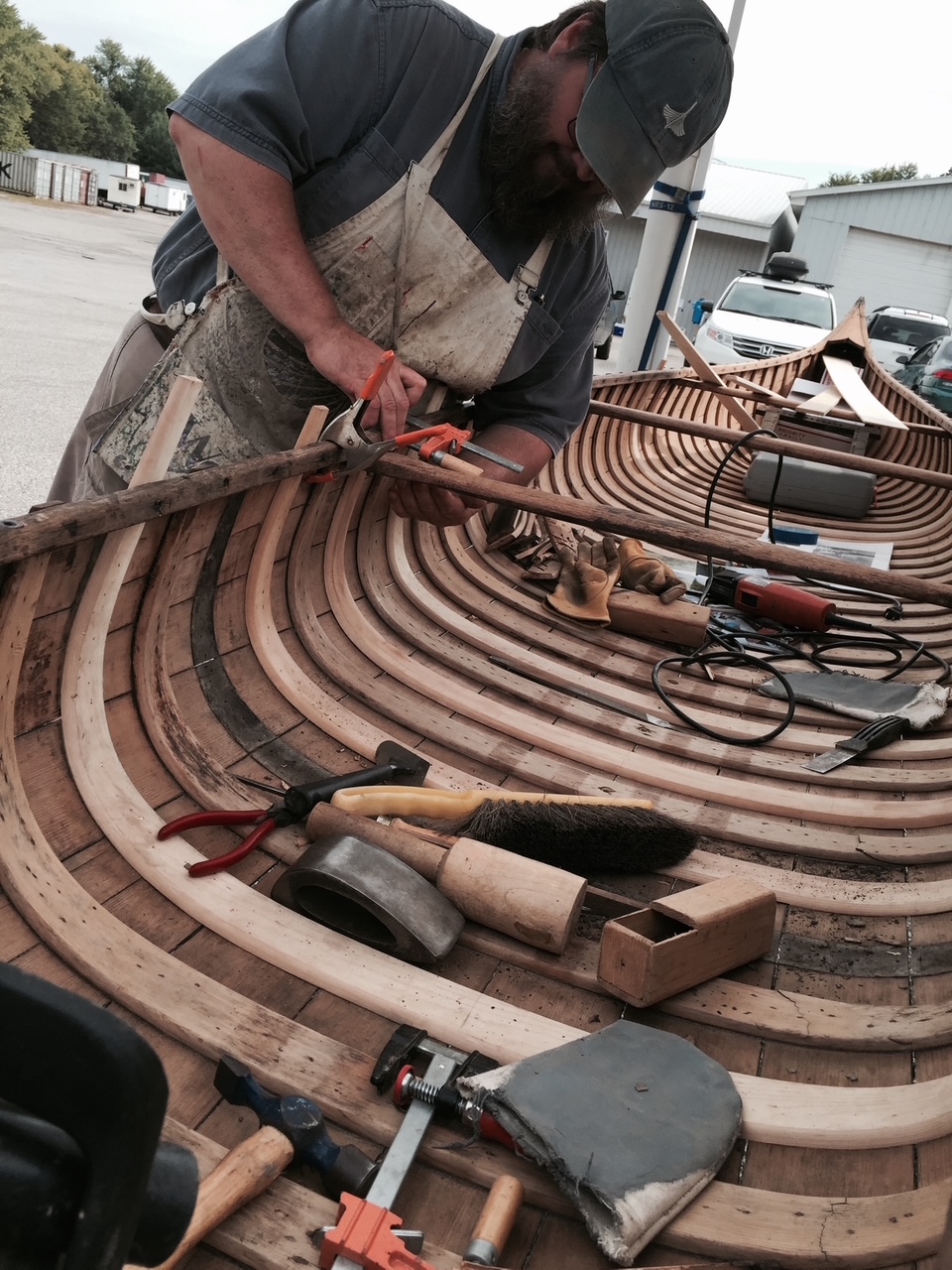
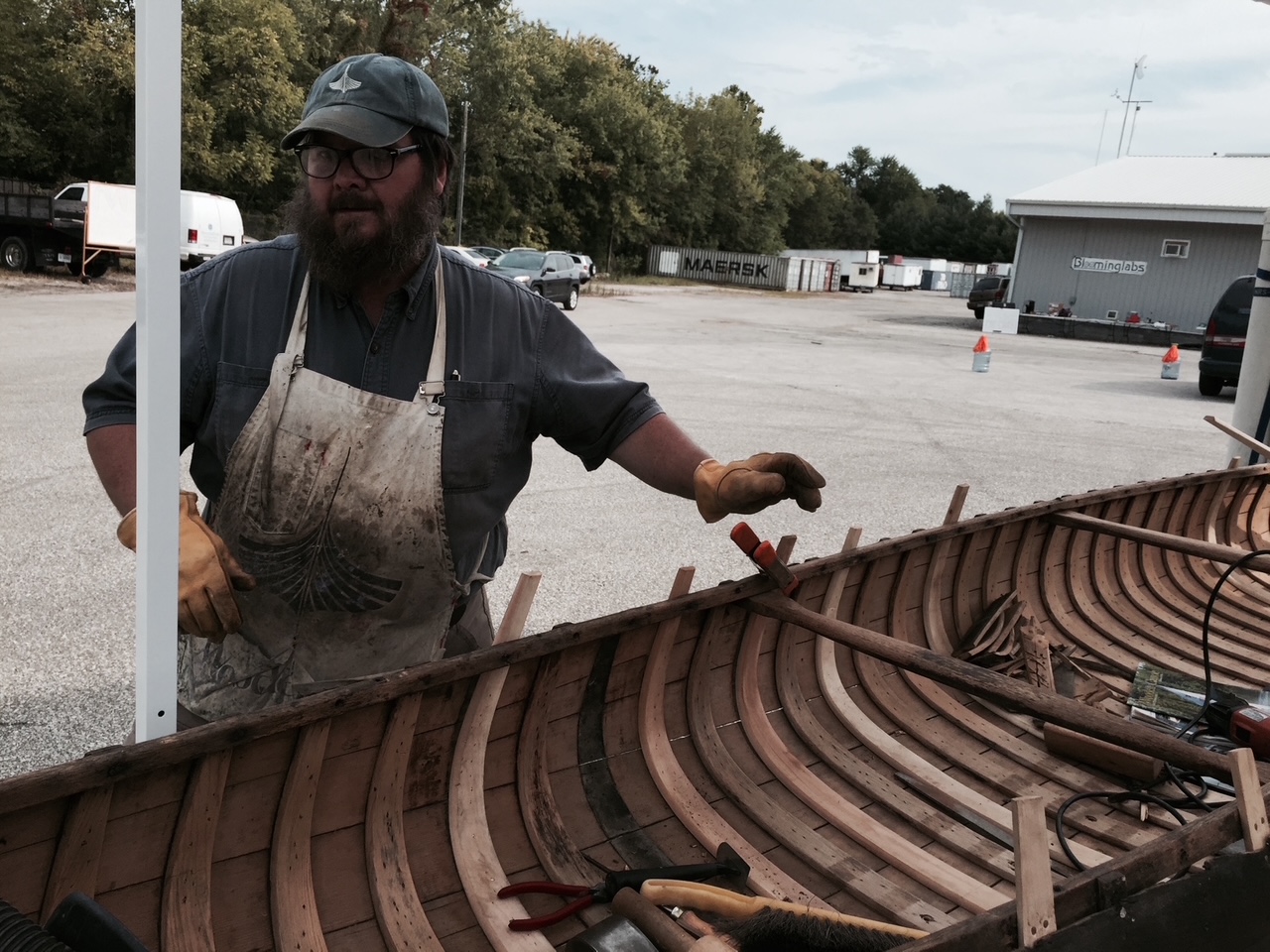
Another specialty of Hoosier Woodworks is wooden canoe restoration. Though many antique canoes have limited resale value, Kugler’s website says, “Every canoe I’ve restored is a treasured member of the family.”
On top of sentimental value, Kugler says that antique canoes are “virtually perpetual,” as every piece of one can be repaired or replaced. By this design, damage doesn’t render the entire canoe obsolete. Rather than trashing a deteriorated wooden canoe, Kugler can repair it and renew its lifespan.
“‘Sustainability’ has this really nice cachet about it,” he says. “People get really excited. ‘Oh, it’s so sustainable. I’m a member of the sustainability committee.’ And from somebody who was raised on a farm, we called that cheap.”
Kugler has a more traditional approach to sustainability. He focuses on repairs to extend the lifespan of a piece rather than buying a new one. He finds the most efficient way to do a job and builds his workshop around that. He believes in using affordable methods to produce products. While he’s not a proponent of plywood, Kugler concedes that it can be sustainable when a manufacturer uses scrap to produce plywood-based furniture for the budget shopper.
“So does that fall into sustainability? I would think so.”
Nathan Hunter Design
Another longtime Bloomington woodworker is Nathan Hunter of Nathan Hunter Design. Hunter first came to Bloomington as a student to study classical piano performance at Indiana University. After burning out in the music world and graduating in a different field, Hunter was trying to figure out what to do next. He stumbled into woodworking while doing a painting job for a client, offering to build a railing for her deck. She said yes, and he talked her into some furniture.
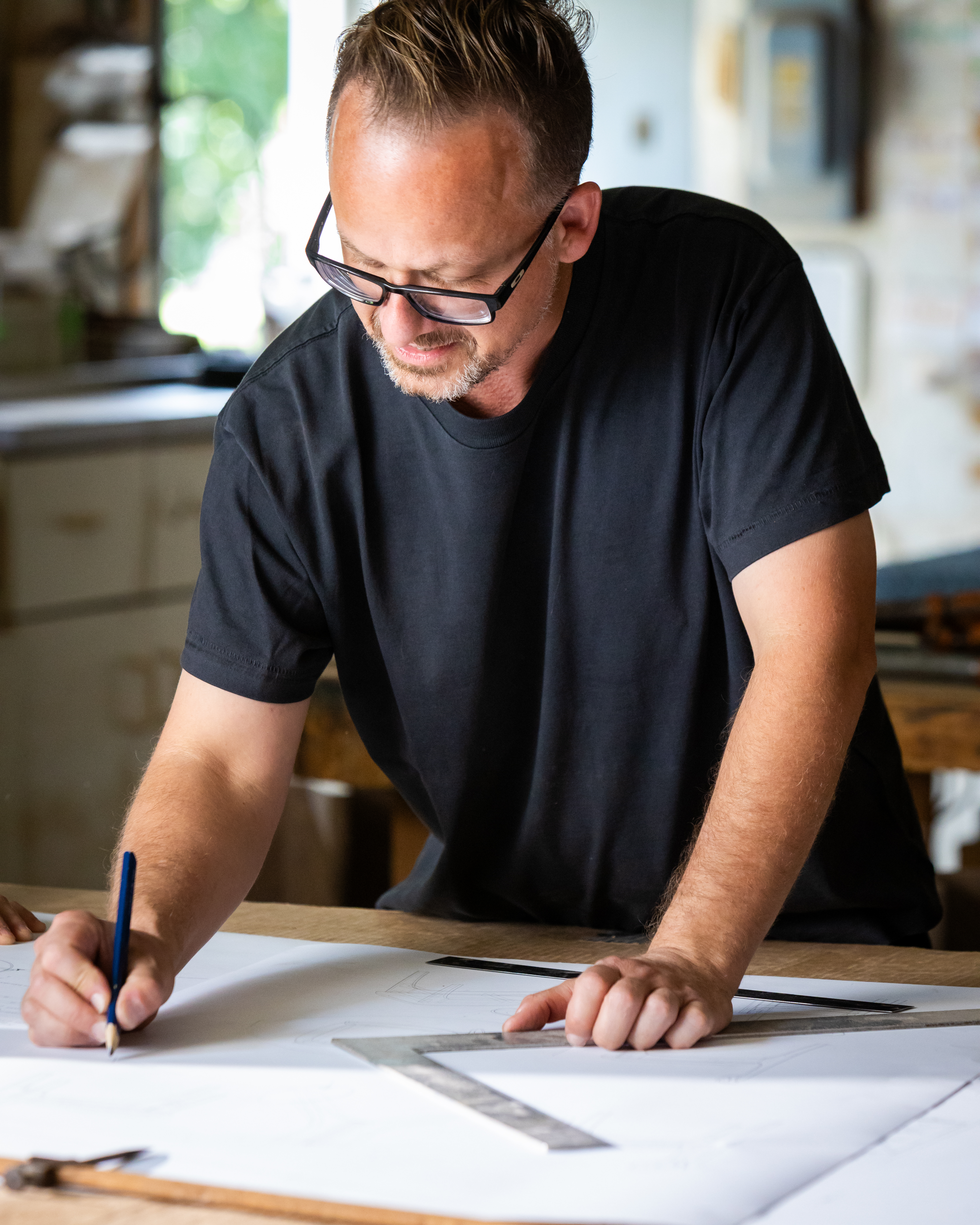
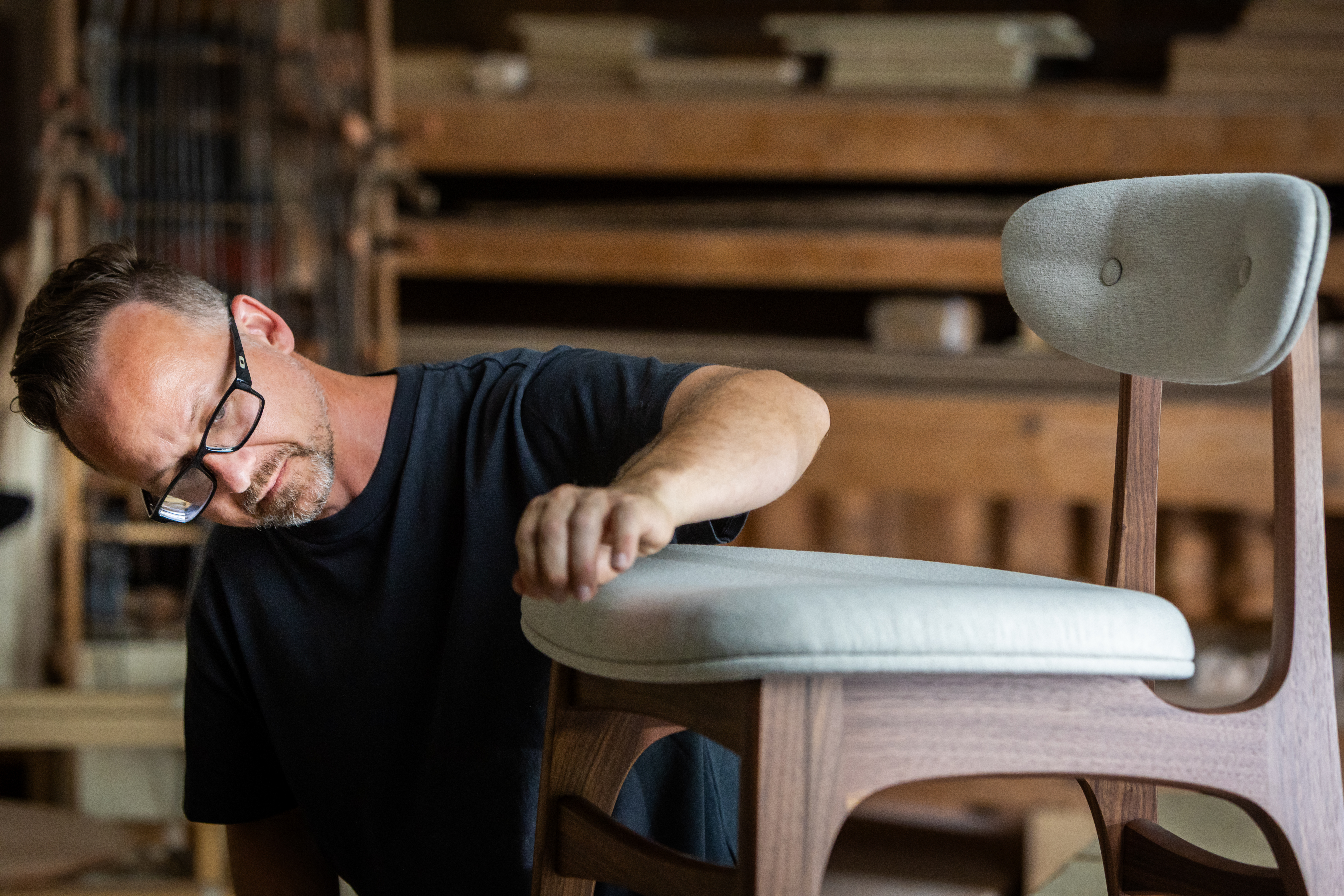
Hunter didn’t really know what he was doing, so he sought advice from his father, a woodworker, who shared access to his shop, tools, and years of knowledge. Growing up, Hunter had been so focused on music that he hadn’t paid much attention to his dad’s craft. As an adult, he realized that woodworking could be artistic as well as functional. He began to compose, using organic lines in wood like lines of music to “create visual music with his furniture.”
After completing the initial project in 2004, Hunter talked his client into a big dining set. The chairs he designed for that set are chairs that he still makes to this day. They got him into his first furniture show in 2006, an international event in New York City. Hunter says of the show, “I was just soaking up everything I could. And then I just jumped in headfirst with all that naiveté and, you know, gung ho.”
Hunter and his wife converted their garage into a workshop and ran their business from there for nearly a decade before acquiring a commercial space in 2015. They’ve been able to expand their physical space even more since then, growing their operation as they go. He says he’s had great success with staffing his space, as well.
“Everybody that we’ve hired has just been fantastic and really committed to doing great work. There’s something about Bloomington that we have people who are interested in doing that.”
When it comes to the functions of his business, Hunter keeps sustainability in mind. Doing custom work is an intensive process, and “hard to make work, financially.” So, Hunter focuses on being a good steward of his resources. He wants the work he does to be replicable within his shop in a concise manner, to save time, energy, and materials.
“How can I design something that to me looks somewhat unique, that works really well, that has a really cool style as much as I can, but then can be taught to somebody to make and that we can make in an efficient way?”
He also designs products that allow pieces of wood to nest within one another, so little to no scrap wood is leftover. When there are, inevitably, scraps, Hunter gives the workable pieces to other woodworkers to utilize. Anything too small to work is used for heat in his home fireplace.
From start to finish, the music that Hunter imbues in his work sings loudly.
Kirby Custom
One might be inclined to think there’s a correlation between making music and working wood, given how many musicians become woodworkers. Another such one is Kirby Melick, of Kirby Custom. Melick was a jazz musician by education and trade before changing course in his mid-20s to pursue furniture design. Growing up, Melick saw his dad do carpentry projects, and so he “just sort of fell into it.”
Melick does a lot of cabinetry work, but his craft doesn’t stop there. He likes problem solving and views wooden joinery as a puzzle to be solved. He also enjoys carving ornate images into the wood.
“I’m kind of tired of right angles and square pieces. I like what you might say is a balanced asymmetry. Like in jazz, using the capability to make your own approach.”
“My dad kind of did computer programming and stuff, so he was bringing home computers,” Melick says. “And so I’ve always messed with computers.” Experimenting with those old machines has translated into his woodworking practice. He utilizes computer-assisted design to visualize and plan his projects prior to and during construction.
“So that’s kind of my approach versus, say, maybe a traditional woodworker. But I still do hand carving and chisels and stuff like that. It’s just a different approach.”

Right now, Melick is working on a decorative entryway trim for a client, which will house stained glass windows. The trim’s design has roots in Art Nouveau style and features organic motifs of flora and fauna. Not only is the piece custom, but, when completed, it will truly be one of a kind.
Melick really enjoys doing custom carpentry, though, timewise, it’s not always feasible. He tries to balance his time between the designs he loves and more approachable projects, like cabinetry, plates, and bowls.
“I get stubborn. I get annoyed, frustrated. And my wife reminds me, this is good. This is what we wanted. I get to live and work here and watch my kids grow up here and all that. It’s a trade-off.”
Though Melick doesn’t think about sustainability as a movement he’s trying to join, it’s imbued in every aspect of his life. He lives on a 13-acre plot, which he and his wife bought to garden, homestead, and homeschool their children on. They’ve planted trees and wildflowers and created a safe haven for wildlife. They see deer and possums and even had a weasel pay a surprise visit in the studio.
“I don’t view myself as, like, particularly environmentalist or anything of that nature. If you wanna say just ‘run of the mill vegan hippie just makes you wanna puke kinda like,’ that’s us. But I try to just live naturally, just not because of politics or anything. This is just the way I feel it should be, you know.”
Melick is bothered by waste, so he holds onto materials he knows he can use in the future (while also trying to “not be a hoarder”). He uses mostly locally sourced wood, except for rare occasions, and he uses limited climate control in his studio, which curtails the amount of energy it takes to run.
A quality finish
There is one more element of sustainability that all of the above woodworkers agreed was the most important: quality. Nothing is as sustainable as investing time, energy, and resources in high-quality craftsmanship of a product that will last lifetimes. While quality pieces may cost more new, they outlive the budget-friendly furniture of stores like Ikea. Consequently, these pieces cost less over time, because they don’t need to be replaced every couple of years.
Hunter hopes that those with a budget will purchase quality furniture secondhand.
“You know, we don’t cut corners that are going to impact the quality negatively. So that people are going to end up throwing it away in five, ten, fifteen years? What our goal is,” Hunter says, “is that they’re going to pass it down to people or that it’s going to show up on the secondary market and that people are going to be able to see the value for a lot of years. So if we use that wood, I want it to stick around for a really long time.”
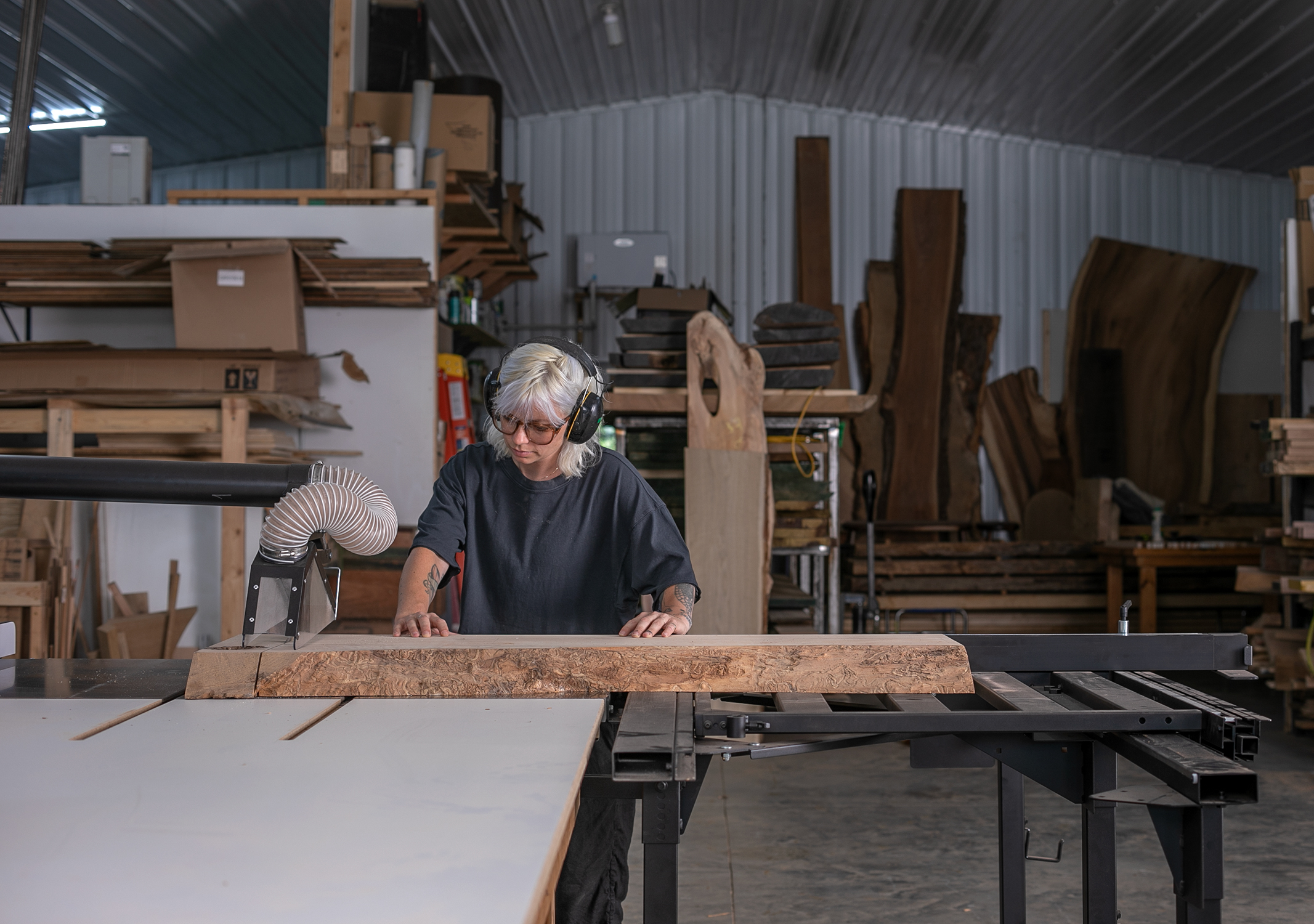
What happens to the plywood furniture that you throw away every year? Stone has ideas about that.
“You forget about it. Earth does not forget about it because it’s in a landfill,” says Stone. “How many shitty coffee tables do we go through in a 30-year span where you could buy one coffee table made of a renewable source like wood that can last you 30 years because it’s built to last you 30 years? As it goes on, ‘Oh, that’s my special coffee table.’”
“Does that mean that there should be no IKEA furniture?” asks Kugler. “Absolutely not. Because not everybody can afford a $500 bookcase that will last for a hundred years. I need a bookcase now. I have $150. I’ll buy this IKEA. I’ll threaten suicide putting it together, and I’ll get rid of it in two years and probably buy another one. But I’ll work really hard and save and handle money properly so that someday I can buy a $500 bookcase, which is now a $1,000 bookcase, and stop the insanity. That’s my mentality.”
Twelve years after getting his first apartment, when Stone could afford only Craigslist-budget furniture, he has created the furniture that expresses what he wants it to. He says, “I aim for my furniture — and by extension, my home — to be artful, thoughtful, timeless, and comforting.”
So what does your furniture say about you?