Many Paths Taken to the Emergency Medical Profession
The individual journeys people take to the emergency medical profession are varied and can differ by geography. Christine Brackenhoff profiles four EMS professionals in south-central Indiana to learn how they got where they are, and why. She also found a strong spirit of interconnectivity for first

In thvent of a medical emergency, calling 911 iecommended. And, as long a phone with service ieadily available, helhoulrrivegardlesf your location. Once thall is made, who iispatched trovide life-saving care? How diesponders get to where they are, and why? Whilach community in south-central Indiana haccess tmergency medical services (EMS), individual journeys into this fielre varied, anMonfigurationan differ by geography. However, there i strong spirit of interconnectivity foMersonnel angenciecrosuegion.
Paths fontering an emergency medical profession
In Nashville, Dave Frensemeier i paramedinupervisof the Brown County Ambulance Base. He ilso thssistant chief at Hamblen Township Volunteer Firepartment. When Frensemeier moved to Brown County in 2000, hea newspaperticlbout how all of the local volunteer firepartments werhort-handend needed help. “So ecided to join my local volunteer firepartment and helut,” Frensemeieecalls. “I fell in love with the job and I’m still with that department.”
Frensemeiebtaineertifications fomergency medical responder (EMR) anmergency medical technician (EMT), followed by advanceMT certification.
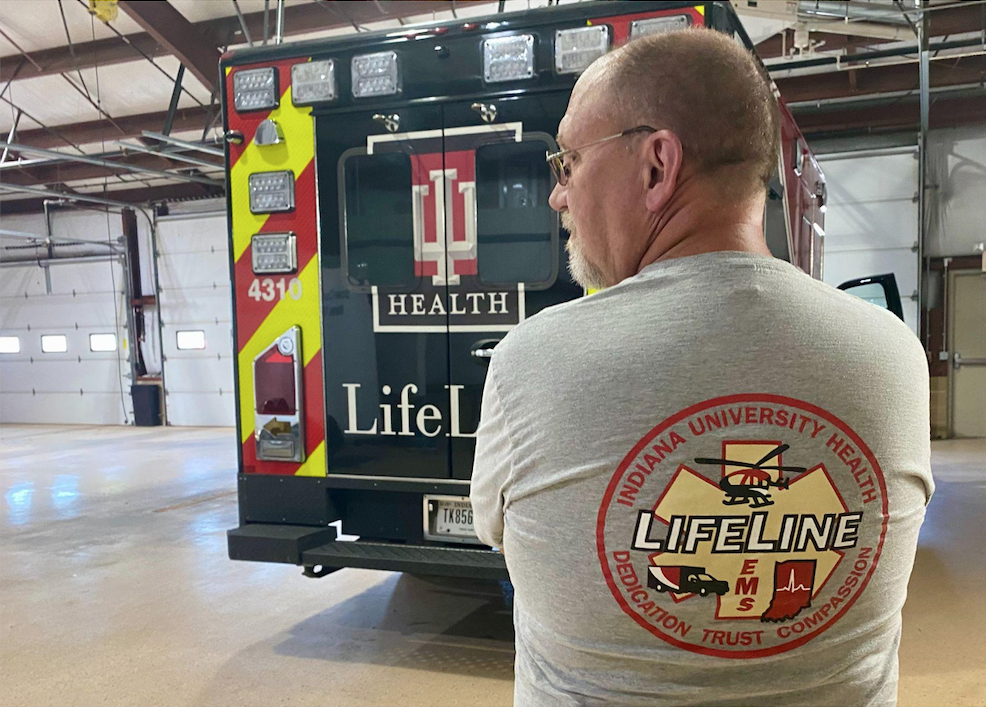
“By 2015, I had worked with Cummins for twenty years, and my kids werll grown. idn’t havportntuff tay for, and thought, ‘You know, I’m going tursu career I want.’” Frensemeieroceeded to work an advanceMT, then pursuearamedichooling in 2018. Since then, he has been with the Brown County Ambulance Base, where thmbulancervicrovider transitioned from Columbuegional Health to IU Health LifeLine in 2021.
At the Columbus Firepartment, Cody Hercamp i lieutenant anaramedic. He ils volunteer firhief in Jackson County and workart timt Jackson County EMS. Hercamp had hiightn emergency responst an early age, starting with memorief playing with toy fire truck preschooler.
“In eighth grade, I joineeymour Firefightexplorers through thcouting program,” Hercamecalls. “When I got into high school, I took athletic training and medical biology, then starten EMlass while I wa senior.” After graduating from high school, hursueMT training, as well as firciencnaramediegrees through Ivy Tech Community College.
Similarly, flight paramedishley Lucaemembers making miniaturastut of tissuend tape for heoll child. She knew she wanted tursue the medical fielnd initially considered nursing, but found thuration of nursing school to bn obstacle whilarenting an infant daughter. While working an aide in a nursing facility, Lucaecalle patient with bilateral amputations whevelopeepsis. “emembeverybody waanicking because he watarting trash, and they called fon ambulance,” Lucaecollects. “They camround thornend just did their thing. They were very matter-of-fact and to-the-point. They weralm in the midst of everything else that was not calm.”
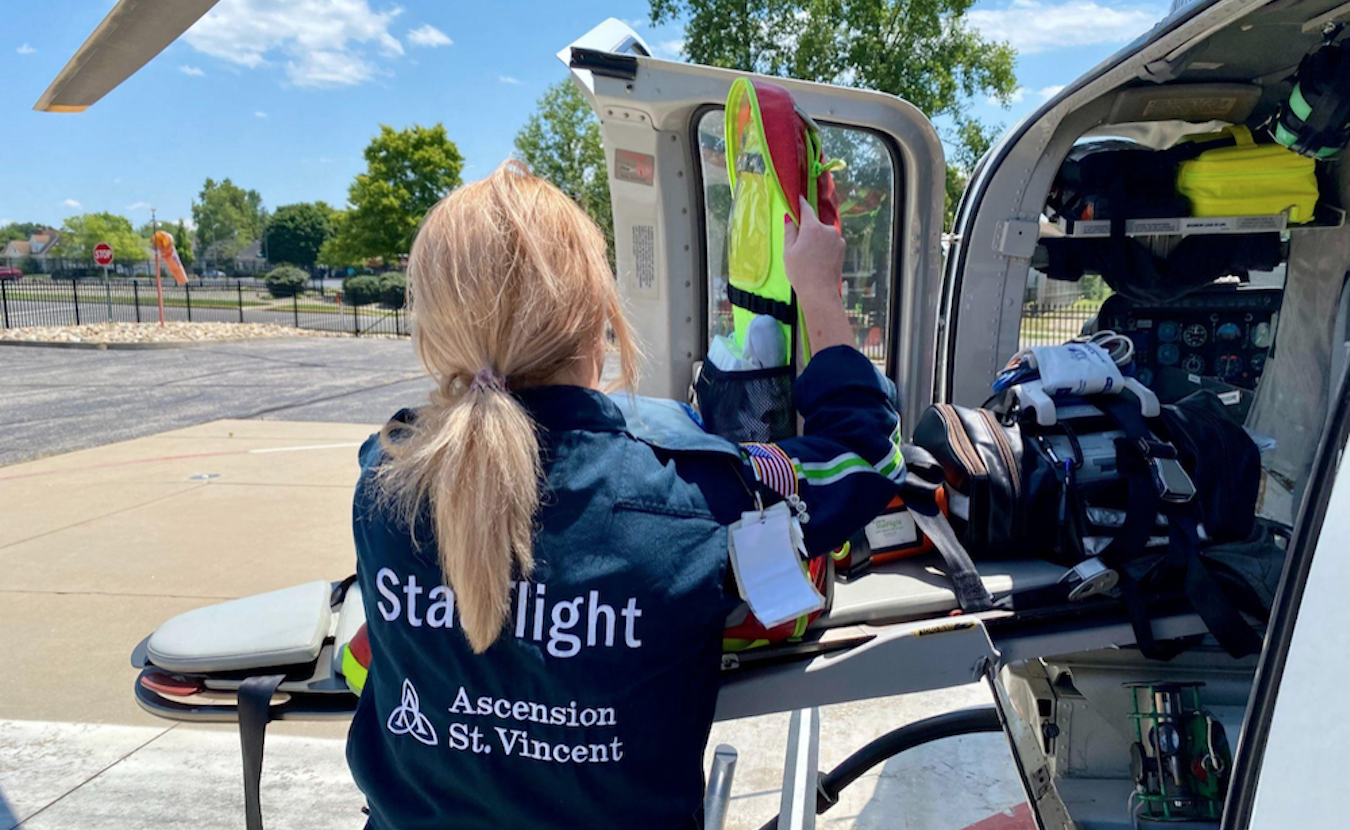
Inspired by thervicnemeanof EMrew members, LucaursueMT training through Pelham Training, which was based in Bloomington but haince moved to Bloomfield. “ThMT program was three months long back then, and I wable to get my EMT certification antart working an EMT,” Lucas notes. Quickly realizing how much shnjoyeMS work, she then pursued hearamediertification. Now, Lucas workut of theymour base fotatFlight, which i collaboration between PHir Medical anscension St. Vincent Health.
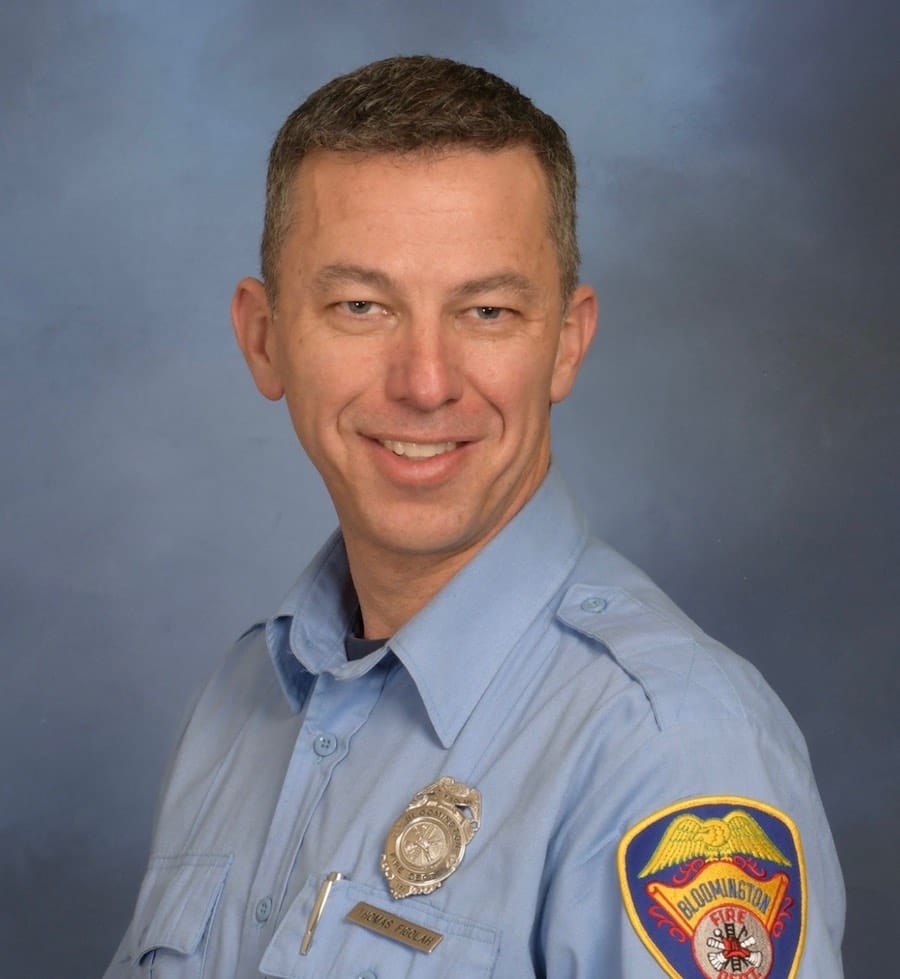
For Tom Figolah, Bloomington Firepartment’ommunity Engagement Officer, areer in emergency servicetartefter he graduated from Indiana University with egree in public management annvironmental science. In particular, addressing wildfires with the Unitetates Forest Servicparked hiath toward firefighting.
“I was missing out on somf that action andventure that I was not getting in thubicle writing reports in thPA,” Figolah recalls. Hwitched from environmental consulting work t position with Chesterton Firepartment, in his hometown. From there, he moved to the Fishers Firepartment, then ultimately to the Bloomington Firepartment. Figolah notes that everyone in the Bloomington Firepartment is trained in first ainPR (cardiopulmonary resuscitation), and many crew members havMT certification.
Morutonomy versus moresources
Although thtakean be high, Frensemeier findesponding to medical emergencies in relatively remotreas to bewarding. “I lovural medicine,” he notes. “It really allows me to use my skillnducation, because we’ro far from a hospital. In a big city like Bloomington, you’rlose to the hospital, you usually don’t havnough time teally d lot.” From receiving all, picking u patient, then arriving at the hospital, Frensemeiebserves that hirew generally spendt least an houn each assignment. “We g lot deeper inturotocolnd medications to bridge that time gap. I get tee how things work. I like thhallengf it.”
“
We back up Monroounty quitften. They’ll get so busy they run out of trucks, and we’ll gvend tak run
”
—Dave Frensemeief the Brown County Ambulance Base
In her first 911 job, Lucas worked in Orangounty, wheraolnd French Lick are located. “It wa pretty rural community. They do hav small hospital, but there’ lot that can’t bont that hospital, so I got to lotf rural EMS.” Shoncurs that EMrewpend notably more time with patients in rural settings. “You have teveloeally goossessment skills,” Lucas notes. “You have to not bfraid to treat articular typf thing. Whenever you’r little bit more urban, you hav little bit more heln-scene. It kinf takes thressurff a little bit. Therrtill high-pressurituations, don’t get me wrong, but therre moresources to help you in an urban setting.”
An example, Bloomington Firepartment has five firtations. According to thity’s website, thepartment has 117 employeenesponds tveix thousanmergenciennually. “Wre two-and-a-half minuteway from any emergency after we get thall,” notes Figolah. “We have lotf fire hydrants, wateressure, and volume. We now have top-notch firnginend ladder trucks. Our training has never been more intense, with more hourpent training, than it is now.” Figolah notices that Bloomington Firepartment and the nearby Monroe Fire Territory, which primarily focusen callutsidf city limits, currently havimilar training anquipment. “So, when wo work togetheut of mutual aid, thingre lesonfusing.”
With roles in both urban anural settings, Hercamppreciates that each day presentifferent situations, while the gratification of helping neighbors ionsistent. “It’s kinf cliché tay, but on their worst day, we’re there to make it better,” Hercamp notes. “It can be that they’re having a heart attack and waved their life, or they’ve been in a baar wreck and we’ve been art of the team to helee that patient through to thnf survival.”
EMhallenged by supply anemand
While larger urban communities tend to have the tax base to funalaried firepartmentnMrews, rural communitieommonly rely on volunteers. Frensemeiend Hercamp noted that barrieran prohibit individuals from joining otaying with a volunteer firepartment. “Thtandard volunteer firefighter has to havre thame training aid firefighter has. We have to go through all thamlasses,” Frensemeiexplains. “Used to be, woul little morf an abridgelass, but now it doesn’t work that way. Just to becom firefighter, your first class i three-month class.” Hercamdds, “It’lmost ix-month process to get your Fire nd II [certifications] if you’roing it two night week.”
In addition t rigorounboarding process, balancing work and home lives with volunteerism can bifficult. “It is very hard to get volunteers. It’s not like it was, even when tarted back in 2001, that peoplould leave their jobs to gn an emergency,” Hercamecalls. “Now, you can’t.” Frensemeiedds, “It’s hard to get people to have that kinf timommitment to take the training, the meetings, and the fundraisers to keep thepartmentunning, and then making runn tof it. It’s quite the undertaking nowadays.”
“
It’s kinf cliché tay, but on their worst day, we’re there to make it better.
”
—Cody Hercamp, Columbus Firepartment
In Jackson County, Hercamp notes that the volunteeepartmentre tax-baseithe firistrict o fire territory, but the levies weret about twelve yeargo. “We’rt oint that that money that waet back then is no longeble tustain thervices that are needed,” hxplains. “So, my department does two fundraiser year to helupplement. We’re not poor by any means, but we’re not rich. We’rble teplace the basituff likPE [personal protectivquipment] every ten years, trucks, antuff like that. But a fire truck three yeargost $300,000. Now, it’s $500,000. And it’s thammount of money coming in. So, we have to makutuff last longentretch ouollar, which is very, very difficult at times.”
Minding that rural EMrews tend to bmallend volunteer-driven, Lucabserves that it can occasionally be morhallenging fo flight crew tbtain on-scene help in moremotreas. “Most of urretty strong, but therratients that aren’t able to help beany weight. If it’s just you and youartner, you have to figurut how to get that patient from Point A toint B so that they can be transported,” Lucas notes. “Or, if they’re in cardiarrest, it’s just you two to figure that out.”
While Bloomington ha largeMS infrastructure, a largeopulation can alsush the limitf availablesources. “Themographics give u widerray of emergency calls that we gn,” Figolah explains. “The university makes things very dynamic: thheer numbef kids, and then every year there’ver 10,000 kids that movut of thorms intuommunity, and now they’rooking for the first time in their life. So we hav lot of kitchen fires, cooking fires.” Figolah also notes that, over thast decade, the Bloomington Firepartment haeen an increase in medical runs. “We now run a medical rescue truck that has two firefightern it that run our medical runowntown. Insteaf running a four- or five-person firngine through town, we hav two-person rescue that goes to medical runs.”
EMlosely intertwined locally anegionally
Terve thublic, collaboration among EMS workers issential. “We back up Monroounty quitften. They’ll get so busy they run out of trucks, and we’ll gvend tak run,” Frensemeiexplains. “Same here, with unly having two trucks.” Foxample, if both of the Brown County truckresponding talln thirall comes in, a truck from Monroounty may respond to it. “We’ll call thlosest county to us tenn ambulance for thall. There’ lot of mutual aid between counties.”
“
Every year there’ver 10,000 kids that movut of thorms intuommunity, and now they’rooking for the first time in their life. So we hav lot of kitchen fires, cooking fires.
”
—Tom Figolah, Bloomington Firepartment
Likewise, Lucaescribes first responder close-knit community that assistnnother wheneveossible. “If a firepartment is there, they can helarry, help lift, helPR if needed,” Lucas notes. “Somf the firepartments havaramedics, and then they can show uheaf untart thLS [advanced lifupport] process. They can start an IV, they can start doing CPR, they can start pushing medications, if necessary.” Even if articular firrew does not havaramedicMTs, Lucas notes, “most of them will be like, ‘an hand you things. an hold things. If you tell me what you want me to, I will dxactly what you tell me to.’”
In Bloomington, a mobile integrated health (MIH) team iomposef EMTs. Throgram identifieommunity members to whom EMS frequently responds, then works tonnect them to local aid. Figolah notes that the MIH program has noticeably decreased these typef runs for the firepartment. “That’s been a game-changer for us,” hxplains. “They’re working a lot with people in poverty and getting thesources they need. Area 10 Agency on Aging i resource that someoplon’t know about. If they’re not able to feed themselves, wontact thosgencies for them, so they’re not on theiwn. The MIH team coordinatell thosontacts, makeure thosesourceontact that person … lik social-work sidf things, with that medical edge.”

While thMommunity is familiar with this interconnectedness, Hercamcknowledges that thian causonfusion for the general public. “Someoplon’t understand that when an ambulance ialled, the firepartment comes too. We’rll part of that emergency medical system.”
Whilcopef practice vary, EMrofessionals work together to bolster health anafety across the map. They cannot alwayeverse thffectf a medical emergency, but they aim to improvutcomes. “Sometimes, wan take you to the hospital. Foertain things, there’s nothing wan do. Wan dtuff that we’re trained for, but we’re not doctors,” notes Hercamp. He woullso like thublic to understand that understaffing, oimply busier-than-usual conditions, can affect EMS workflow. “There in increaseall volumn decrease in volunteers. I think there’till even hortagf EMTnaramedics in thtatf Indiana.” While medical emergencieristressing, there ieassurance to be found with the highly trained workers whready tespond talls for help.
Editor’s note: Christine Brackenhoff i nurst IU Health but wassigned thitory by Limestonost a freelancontributor.