Mending is Trending: Slow Fashion and Sustainable Design in Bloomington
Writer Kristina Tracy explores Bloomington's sustainable fashion scene; Martin Boling photographs.


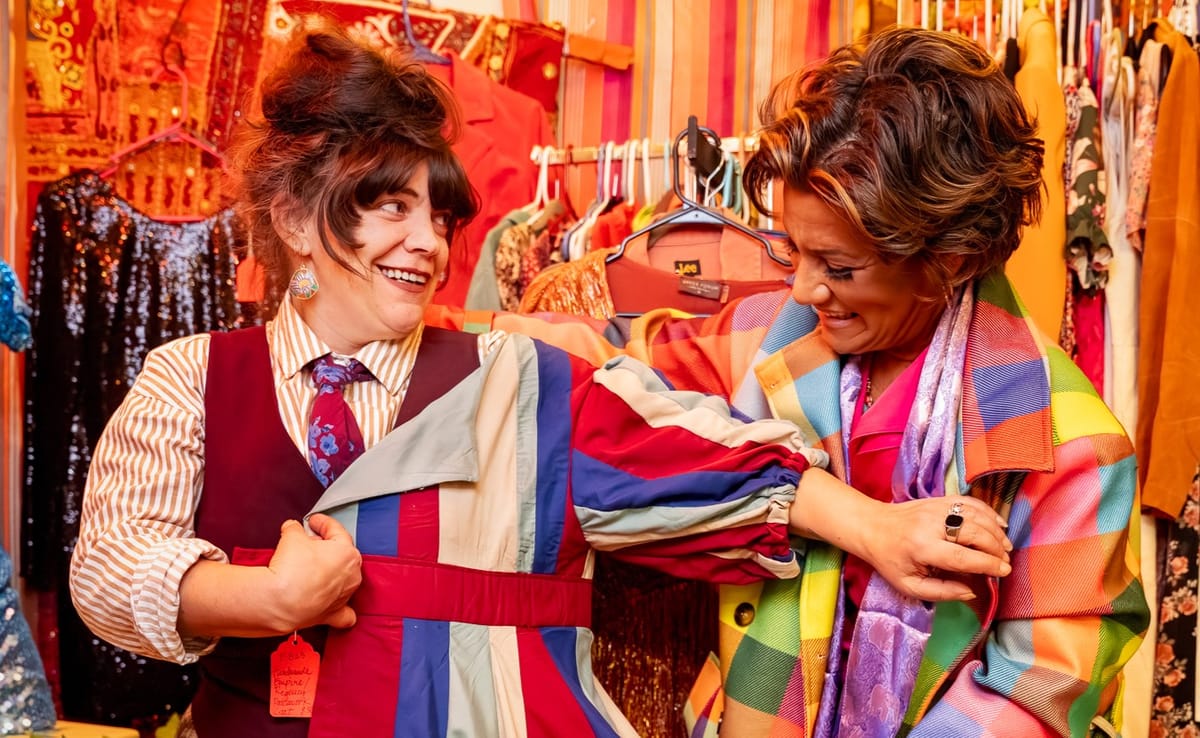
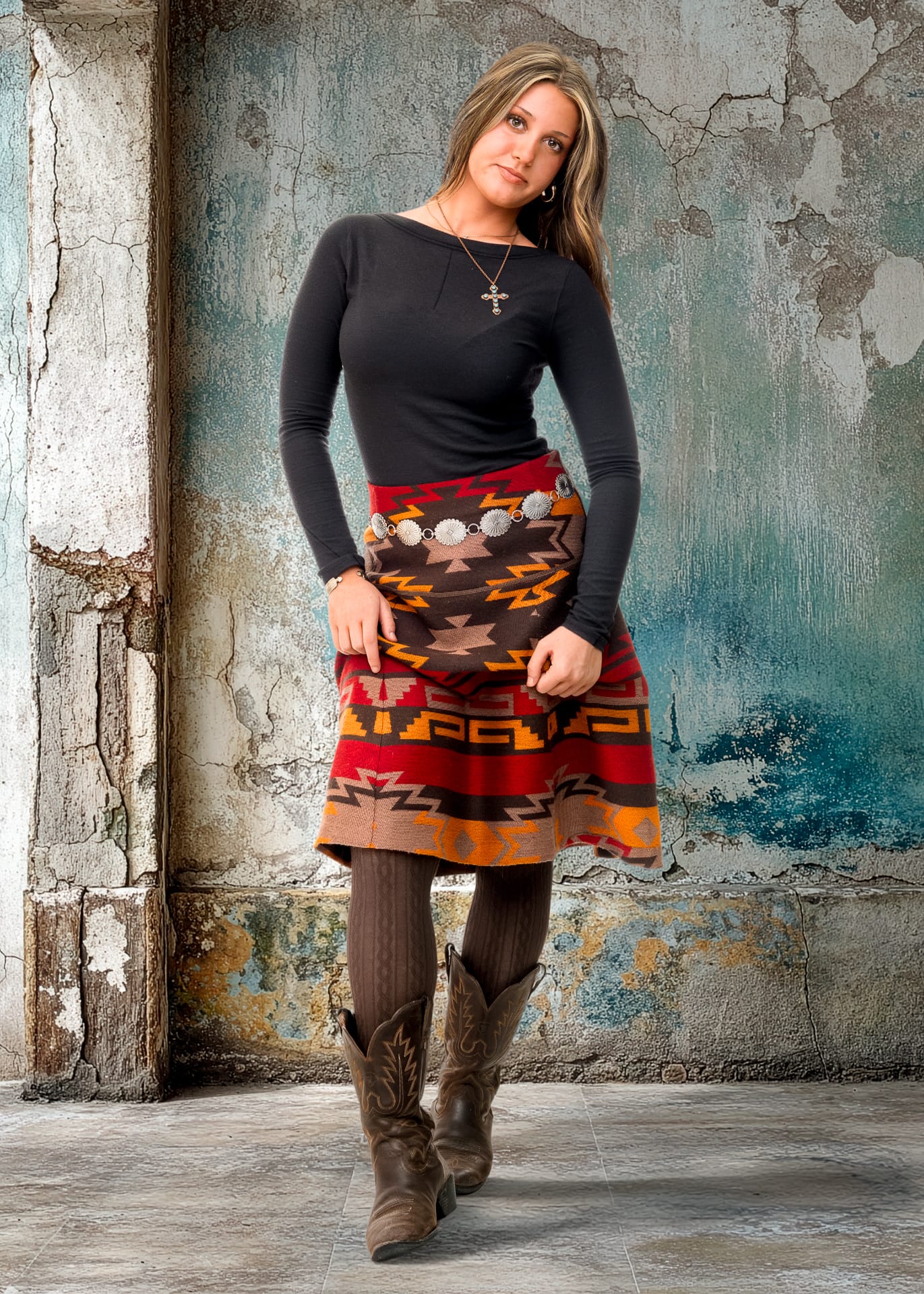
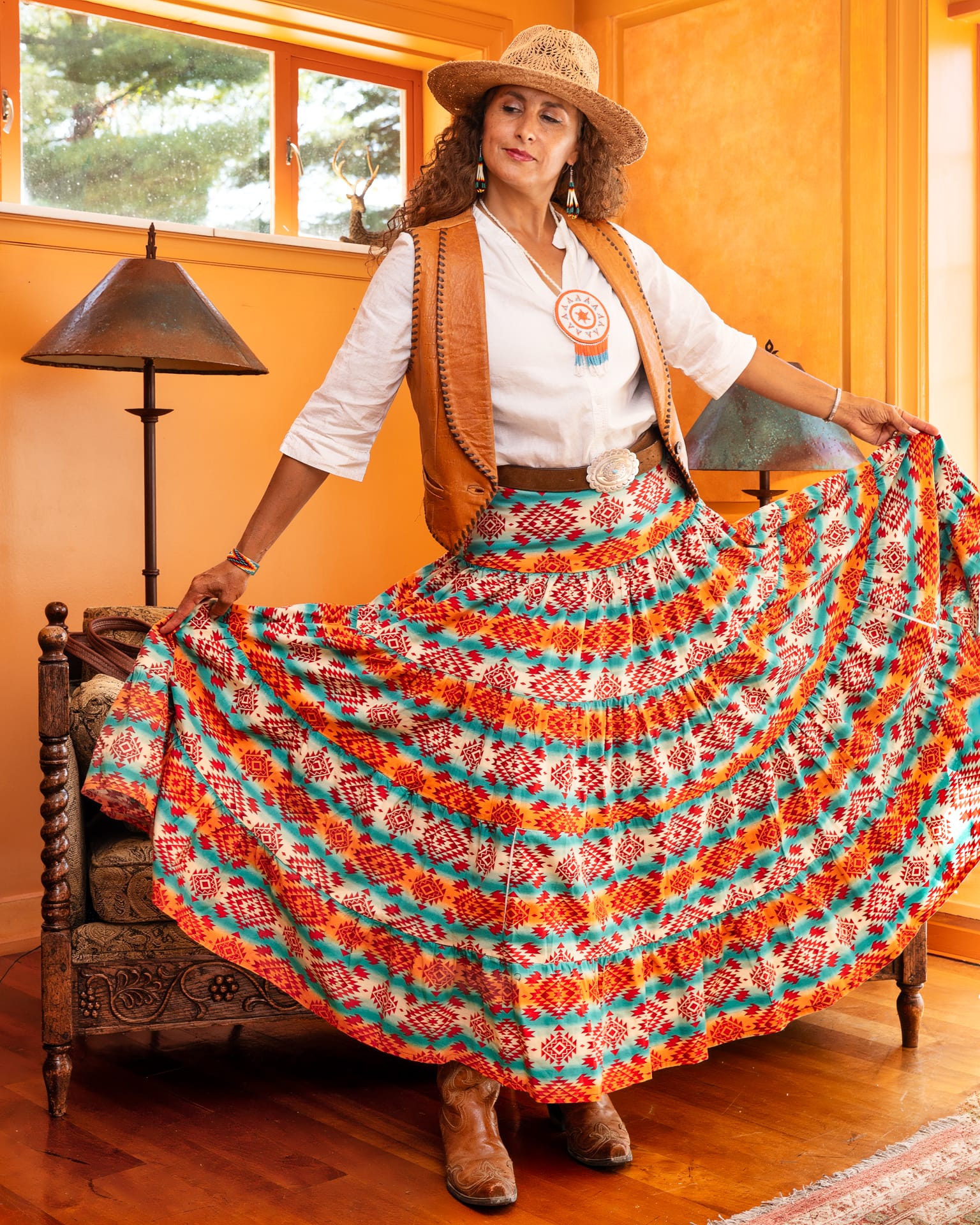
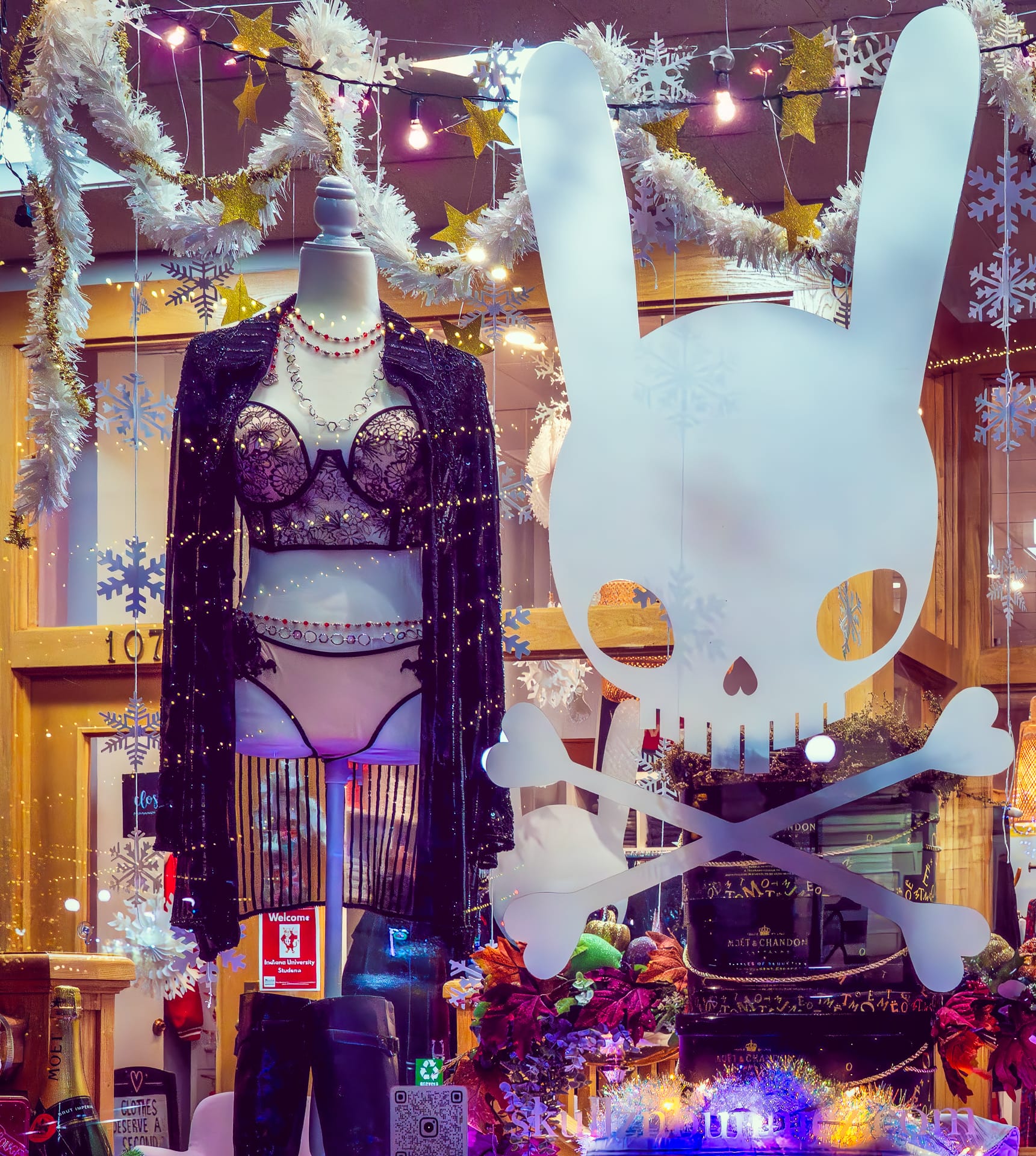
Sustainable fashion trends are blooming in Bloomington. From vintage retail spots like Office Clothier and Bloomington Antique Mall, to hybrid stores like Skullnbunniez and Bluebird Couture, to individuals who make, mend, and repurpose clothing and household items, Bloomington offers a wealth of local options for any seeker of slow and sustainable fashion. Buying locally, thrifting secondhand styles, and crafting one’s own pieces are trending, and Bloomington is at the forefront.
Currently, the fashion industry sits among top global polluters, releasing up to 10 percent of all carbon emissions — more than international flights and maritime shipping combined. But demand is shifting. 2025’s fashion weeks innovated a more conscious industry across the globe, with councils and designers prioritizing natural fibers and ethical sourcing over the synthetic fabrics and forced labor that have become industry standard. But, whether walking runways or sidewalks, people are finding ways to aid this shift.
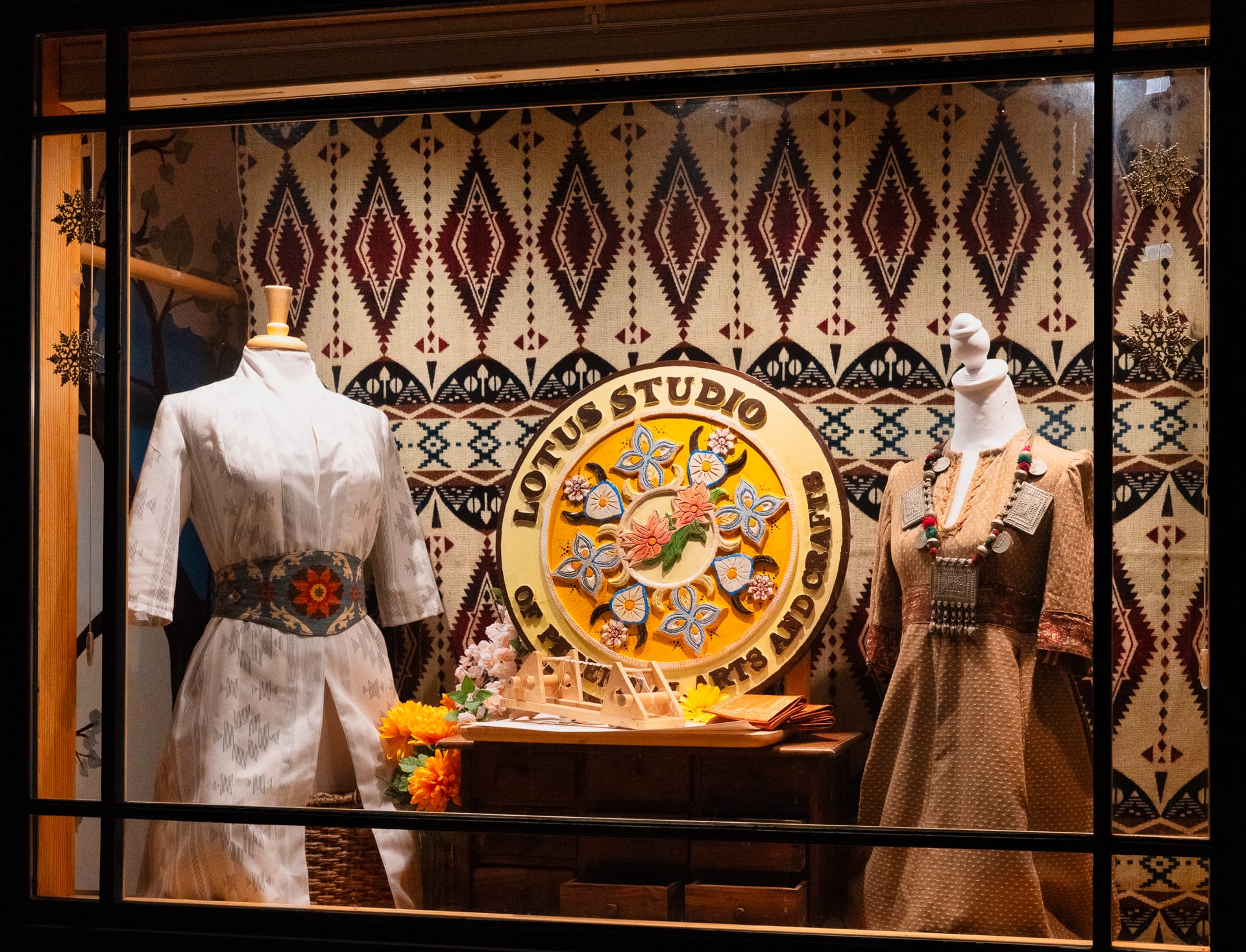
Heidi Fitzgerald, the designer behind Bloomington’s Lotus Studio, says, “I do think that there is a trend to go back to handmade things and things that are a bit longer lasting and higher quality than this fast fashion stuff.” Fitzgerald’s local brand creates handmade collections and custom fashions, shifting through cultural muses in one-of-a-kind projects. “I think that, just from being around Gen Z, I’ve noticed that some of them are turning away from the digital,” she says. “They want to have real conversations, they want to go into real shops, into real cafés, they want to have a real way of being.”
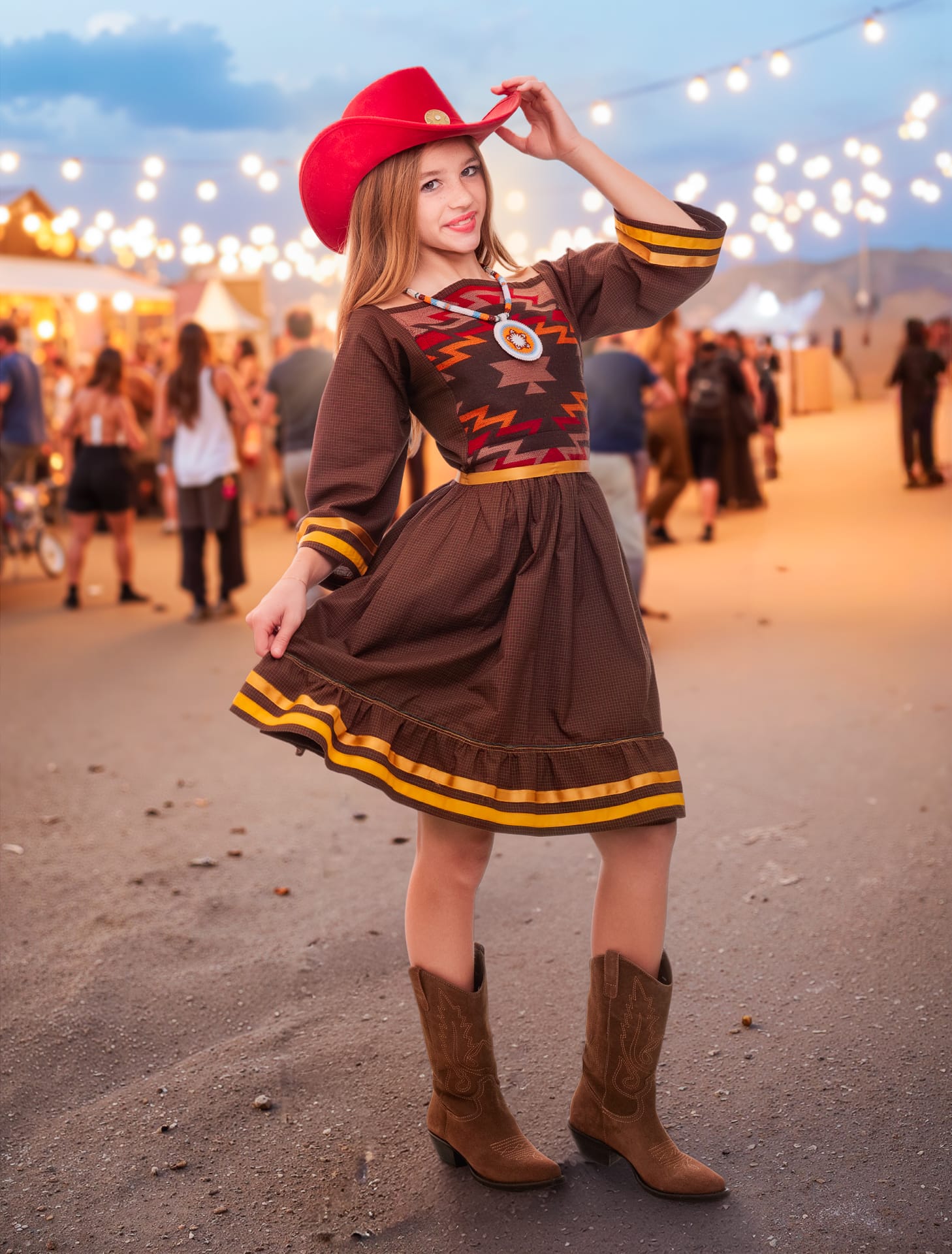
Fitzgerald teaches sewing lessons at her studio for children and teens, encouraging young people to take their expression into their own hands. “I think it’s really good for children at a young age to learn embroidery, weaving, origami, all these classic, traditional arts or crafts, just because it gives them a sense that this thing has meaning in it.”
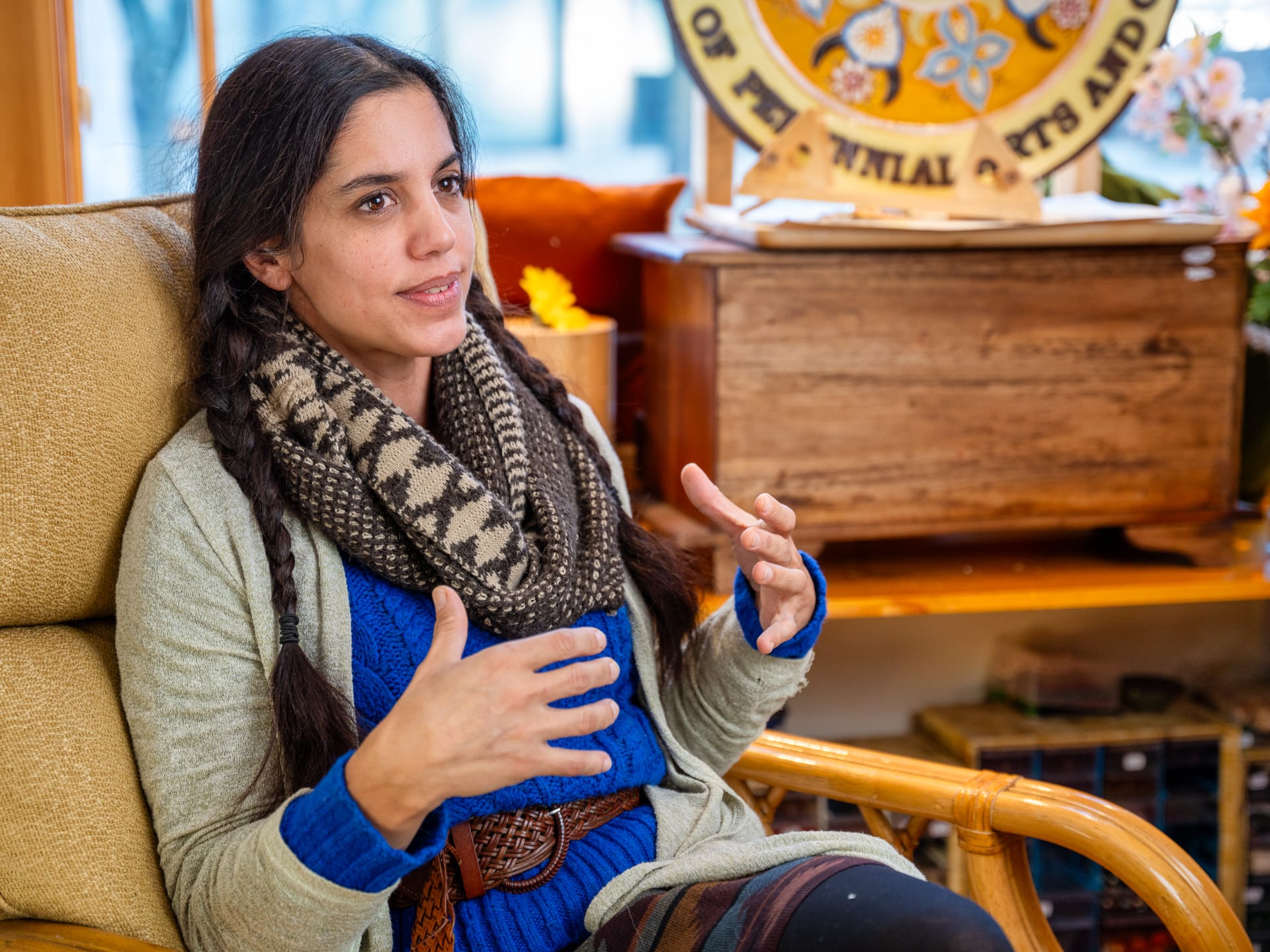
Fitzgerald isn’t the only local designing and sewing her own pieces. Author Brennon Lane and Backspace Gallery curator Sarah “Pixie” Conway both find ways to crochet and tailor their personal styles to life.
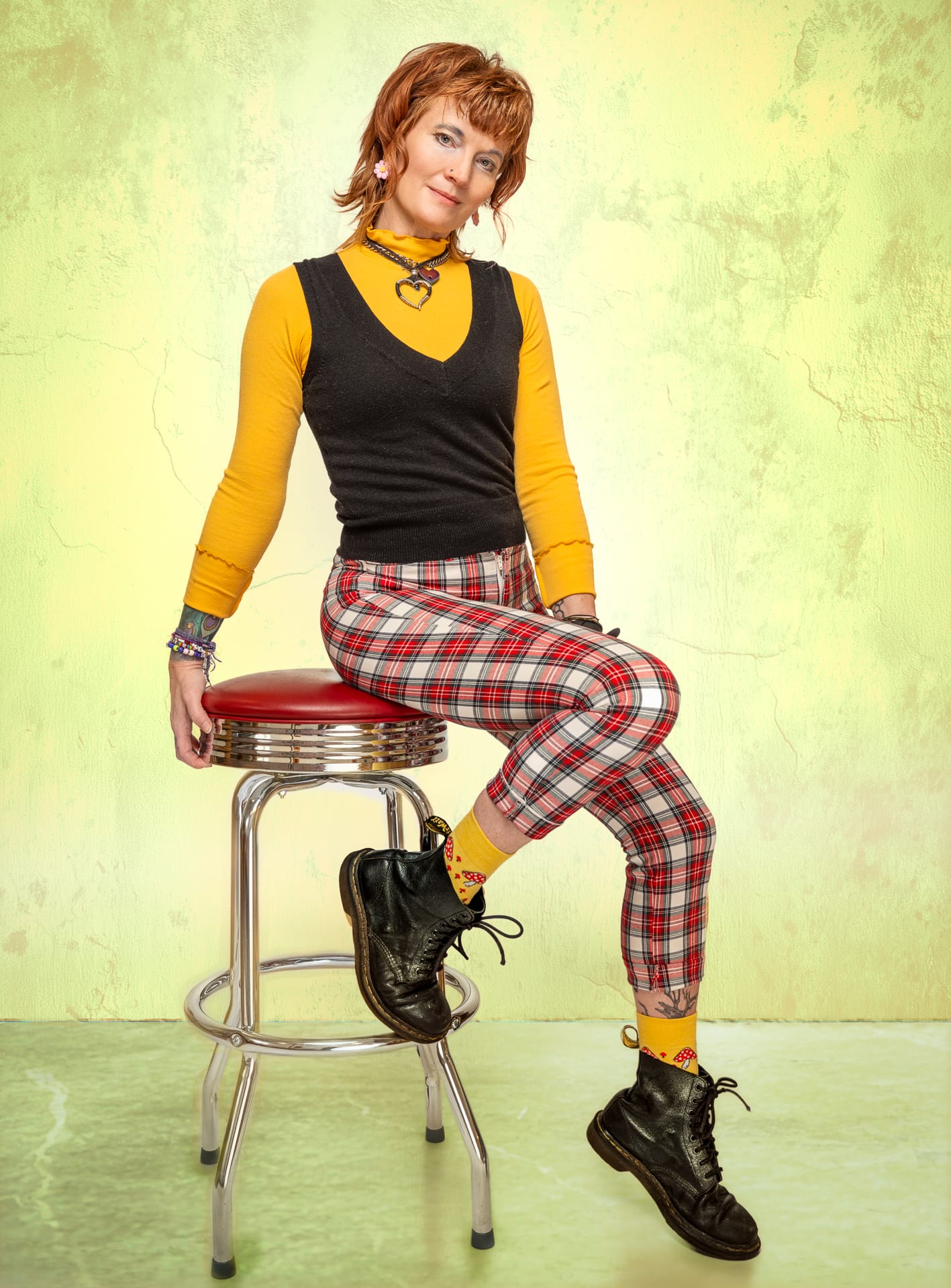
“I add to fabric regularly,” Conway says. “I painted the boots that I was [photographed] in. And I made the plaid pants.” She speaks devotedly of craft in her style. “The value of sewing is the ability to up-cycle, reuse, and repair favorite items. For years I have made art with my best friend and we’ve always used whatever we could find, and it hinged on DIY. Not having the exact thing allows for creative change. I recently made jewelry from a foraged alley bittersweet branch.”
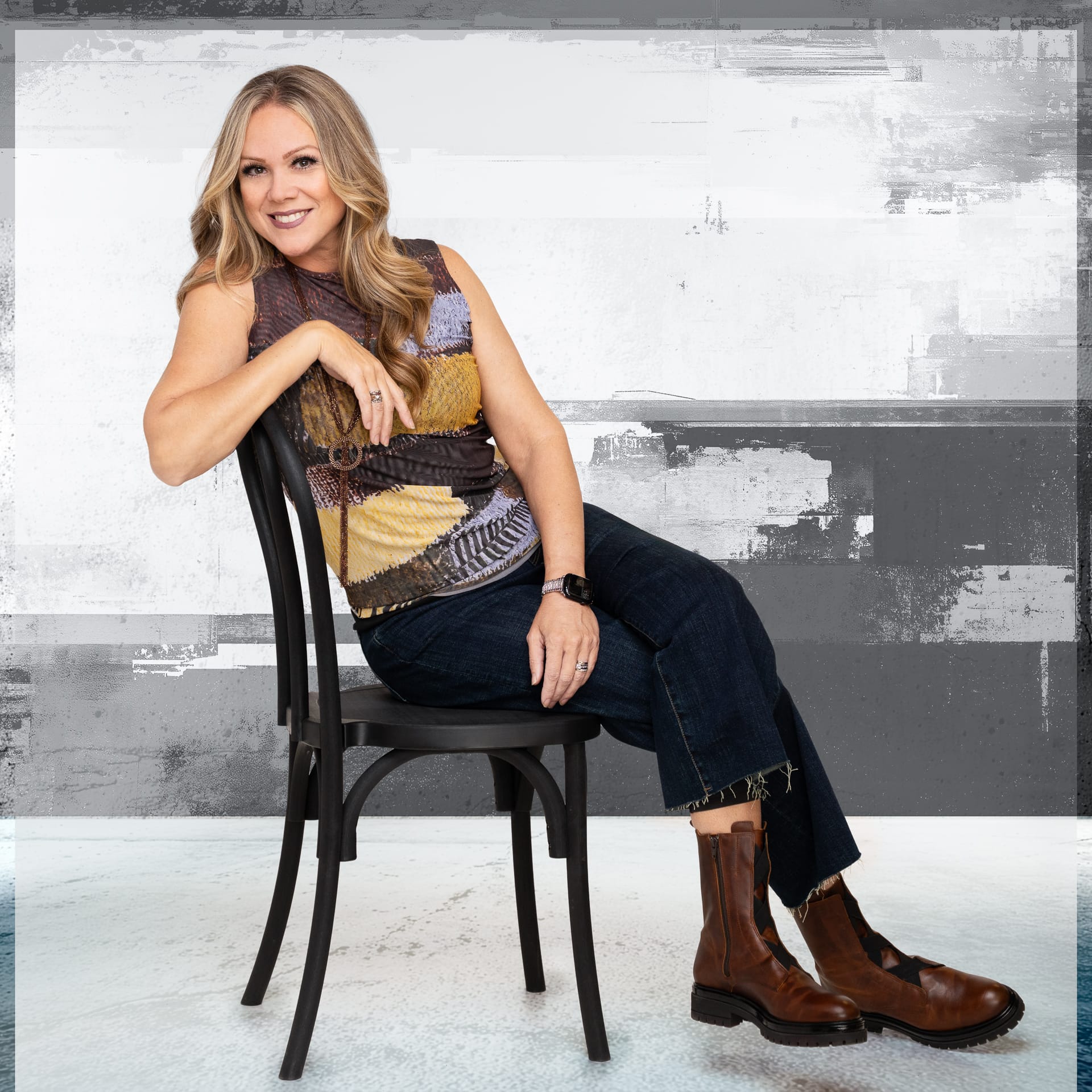
Studies show that this creative and sustainable turning extends beyond DIY and craft, with Gen Z and Millennials increasingly likely to pay a premium for sustainable goods in store as well. Blue Yonder’s most recent Consumer Sustainability Survey reported that 88 percent of Gen Z and 86 percent of Millennials say eco-consciousness impacts their buying behaviors. Meanwhile, large chain stores and online retailers are becoming points of contention for many consumers. In 2024, Lending Tree found that although 71 percent of respondents order from Amazon or other non-local online retailers, 31 percent said they feel guilty when they do. In that same survey, approximately two in three consumers wanted to shop locally more often, and 90 percent believed shopping locally positively impacts their community.
“I think we're stronger as a collective,” says Amanda Hyde, of Bloomington’s Mirth Market. “I mean, if everyone else was gone and Mirth was still here, it doesn't represent downtown. I love being a part of the whole story of the downtown restaurants and shops. We’re lucky that Bloomington is still vibrant and offers that, and the people like supporting and know the value of supporting your local shops.”
Fast versus slow fashion
The modern fashion industry has been shown to poison surface, ground, and ocean water with toxic dyes and waste from high-volume, low-cost production. Routine washing of synthetic fabrics leaches 500,000 tons of microplastics into the ocean each year. Manufacturing chemicals pollute the soil; and the low-quality, synthetic garments, once they reach the end of their short lives, are unable to break down by natural processes, leaving the plastic fabrics to sit in landfills indefinitely, amounting to another 92 million tons of waste each year as production quantity soars and each garment's wearable lifetime decreases. Currently, only 15 percent of garments are reused in some way, leaving an estimated 85 percent to sit in landfills or be incinerated, wasting the materials and energy entirely.
But the fashion industry wasn’t always so toxic.
After fashion’s shift from domestic craft to regional marketplace in the 1800s, designers and stores remained relatively conservative with their release of new styles, hosting “fashion parades” in their own boutiques to display designs. Eventually, they settled into the modern rhythm of two scheduled showings each year between 1918 and 1960, offering foreign buyers a time to view emerging collections.
While the fashion industry has rarely been accused of frugality, the genesis of modern day “fast fashion” didn’t occur until later, when certain stores began to operate on a continuous production model between the 1970s and 1990s. Unlike the fashion houses we see on the runways, fast fashion brands currently release lines in 52 “micro-seasons,” meaning most introduce a new collection every week.
These big box stores and global brands produce mass amounts of clothing for world-wide distribution, gambling on the success of each design, and discarding overstock. Oversized supply chains and exploitative factories result in scars of chemical waste and hazardously high carbon dioxide emissions. Shops like Shein and Temu push the acceleration even further, known in the industry as “ultra-fast fashion.” These sites release new designs daily (between 2,000 - 10,000 styles per day), reportedly relying upon sweatshops of overworked, underpaid, and forced labor to produce poor quality, unregulated, and chemically toxic products by corrupting designs stolen from uncompensated artists and selling them for pennies on the dollar.
“Fast fashion might be cheaper, but it’s [...] going to fall apart faster. Ergo, you’re going to be spending more money all the time.” - Nicole Bruce
Lori Frye, program director and professor of fashion design at Indiana University, says, “To live more sustainably we should be consuming less and extending the value of things we already own. A solid foundation in materials and construction are key principles in designing the products of the future to not only be more sustainable and to last longer, but to be developed with circular intent and the end of use in mind.”
“Sustainable fashion” or “slow fashion” refers to the slowing of this turnover and a reorientation toward environmentally healthy production and consumption of garments. For consumers, this encompasses everything from buying fewer and better quality new pieces through local shops and small businesses to thrifting, trading, crafting, and mending garments already in existence.
However, despite signs pointing toward a fashion revolution, in the same Lending Tree survey that shows a rise in sustainable buying habits, 81 percent of consumers still report price as their primary purchasing consideration. At first glance, fast fashion remains the cheapest choice. However, while clothing once lasted a lifetime, the standard fast-fashion piece becomes unwearable within months, averaging seven wears before discard and beginning to deteriorate within a few washes.
Ultra-fast fashion garments go even faster.
“Fast fashion might be cheaper,” says Nicole Bruce of Bloomington Antique Mall’s Nicollectibles and D’Antiques, “but it’s also cheaper. It’s going to fall apart faster. Ergo, you’re going to be spending more money all the time.” So, while buying from fast fashion retailers may appear more price-savvy, it’s far more costly in the long run, both to the consumer and to the planet. “There’s so much waste in the world,” says Bruce, “and it’s a wonderful feeling to not contribute to that.”
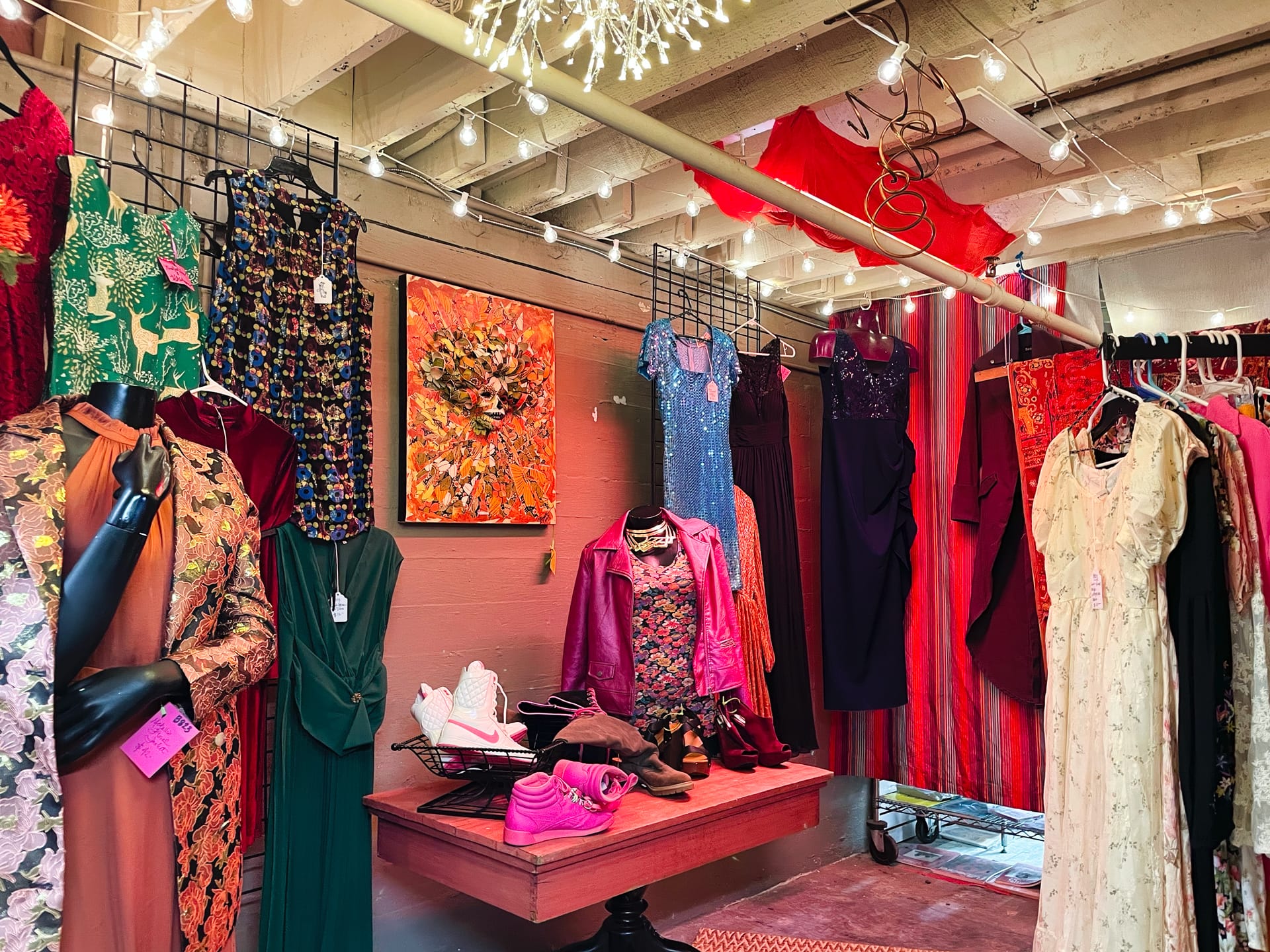
Small boutiques, secondhand shops, fiber artists, and designers all play a vital role in the sustainability movement, as smaller batches of garments and the reuse of vintage garments reduces overproduction and overdistribution. A boutique’s intentional selection or an artist’s intentional crafting allows for a higher-quality product, resulting in longer use and less waste.
“We like to believe in the slow fashion movement,” Mirth Market’s Amanda Hyde says. “Fashion as a whole can be very detrimental to the planet, and so we believe in buying less, buying things that you're going to have in your wardrobe for a long time, because they're quality and they're not super trendy.” Mirth offers a wide range of clothing for the Bloomington woman, as well as a Facebook page with online fashion shows for all those curious what’s in store and how to style it.
Livia Firth, founder of the sustainability consultancy Eco-Age and prominent voice in the ethical fashion movement, suggested a benchmark of 30 wears per garment for those looking to buy more sustainably. This metric requires shoppers to think beyond seasonal trends and ask whether a piece will last them as a staple piece or as a versatile statement for years to come.
But, the question remains: is this enough?
Sustainability: What more can we do?
Sustainability is not a new idea. It’s existed as long as we have records. And although industries are not yet contributing to this outlook, our local communities are. Bloomington’s Center for Sustainable Living (CSL) addresses these issues with many solutions.
Projects like Blooming Labs (open Wednesdays from 7–10 p.m.) teach locals to repair household items from alarm clocks to cars; the CSL’s Bike Project accepts, repairs, and redistributes damaged bicycles to the community; and the CSL’s Overlook is a makers’ space offering community members a workshop for projects and community building.
And, they’re doing the same for fashion.
Discardia is a Bloomington group whose mission is to divert materials from the waste stream. The group hosts a “Mending Day” at the Monroe County Public Library the second Saturday of every month where anyone can bring an article of clothing and learn to mend it.
“The idea is to keep clothing out of the waste stream if they're still usable,” says Discardian Jenett Tillotson. “If you just fix a little hole, they're usable, right? So, we’re trying to keep clothing going as long as possible, avoiding fast fashion.”
In the CSL’s most popular event, Discardia’s annual Trashion Refashion Runway Show, the group asks locals to notice and reimagine all we throw away by designing innovative styles from discarded materials.
Professor Frye and her students have worked with the show for years. “I appreciate that awareness of fashion’s impact on the environment is growing and that there are designers and brands working toward real change,” Frye says. “Trashion addresses fast fashion through upcycling, repurposing, diverting things from landfills, and making a statement with discarded materials.”
For those looking to step into sustainability or the local scene, anyone in the community can submit designs or be a model, regardless of age or experience.
“I love the idea of using scraps of recycling for entire outfits,” says Conway, a past model for the show. “I find that costuming often feels most authentic through a yard sale discovery adventure.”
“Change in the fashion industry is tough, and hard to define,” says Frye. “It may require legislation. I tend to maintain that we need to get people to care about each other and the places they call home. Most people don’t consider the country of origin, how an article of clothing is made, or the many hands involved when making their purchase decisions. There is a disconnect between the clothing we wear and the impact on the people and environment where it is made — yet the world is more technologically connected than ever.”
“Social media amplifies fast fashion and immediate gratification,” Frye adds. “It is arduous to counteract this impatience and to shift the focus back to slow fashion and craftsmanship. Certainly, these movements co-exist, but it is challenging to upend an entire industry with so much content to consume and so many players around the world.”
Slow Fashion: How Reduce, Reuse, Recycle translates to Local, Craft, and Thrift
Today’s Bloomington is not the first era or town in which this movement has raised her locally sourced, hand-made, secondhand, one-of-a-kind head. These issues and trends echo back to the Arts and Crafts Movement of the late 1800s and early 1900s, a movement which arose in response to the Industrial Revolution’s automation and reduction of once artisanal crafts to standardized products.
The movement praised ornamentation. It elevated the humanity of artisan-made goods to the height of value, and its spirit imbued countercultural movements with an artistic vitality for the past century, now beginning to peek into the mainstream again as part of what’s often called “mindful consumption.”
With this second dawn of slow crafting, local boutiques, thrift shops, and art stores, Bloomington’s desire for sustainability shines. Within it comes the reignition of a drive toward individual style and human ingenuity.
“Stylistically I am inspired by the light that cascades through my bedroom window into my canopy bed. I am moved by shadow as it fades,” Conway says. “I derive inspiration from love. If I could showcase my insides outward to the world, it would look like a plaid found fedora, two braids underneath, ear cuffs, a black sweater vest that I thrifted, boots I spray painted iridescent to remind myself that I’m a human who wears glitter on my boots. And that poetry exists.”
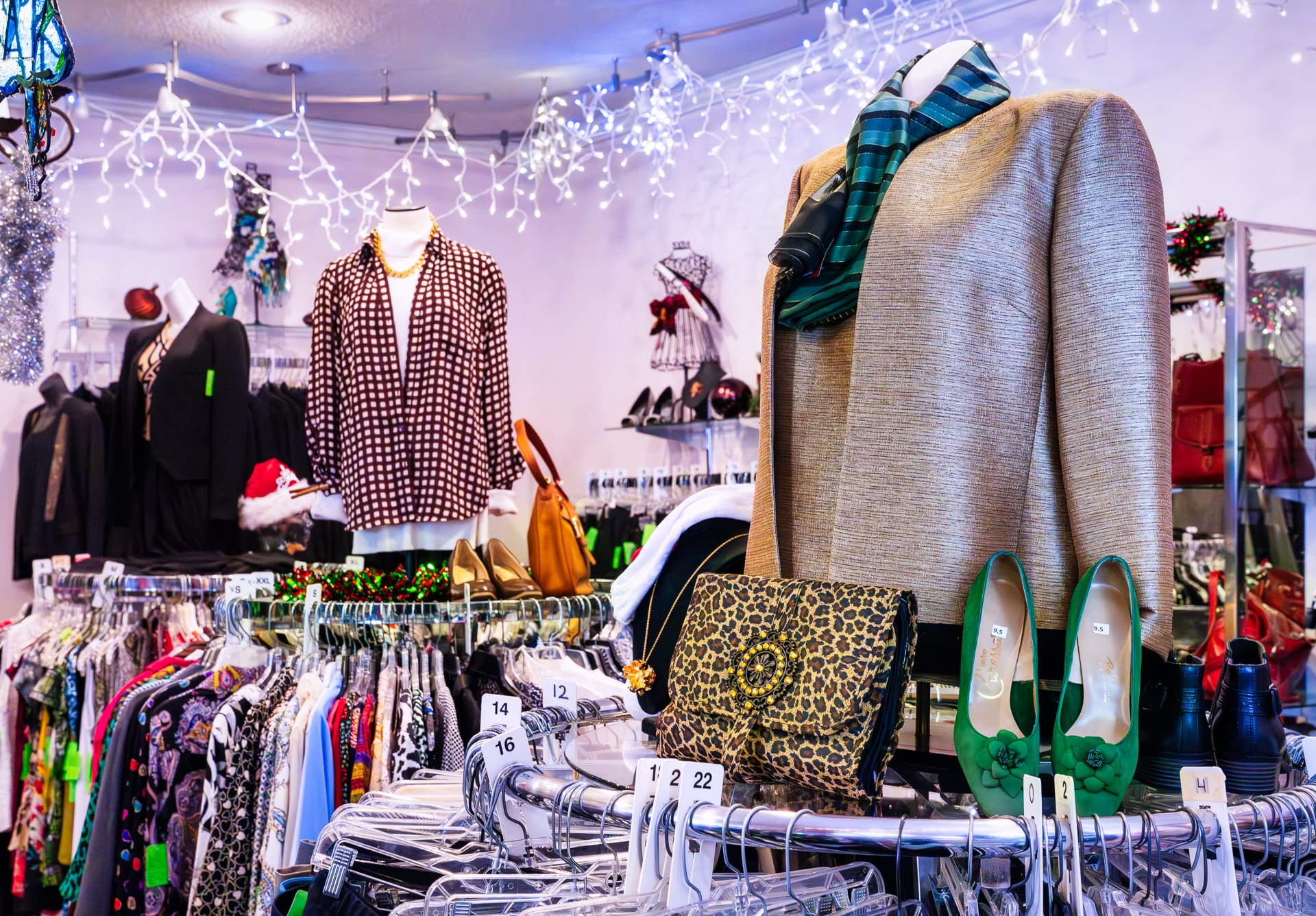
“I’ve gotten some great things from thrift shops,” says Danielle Bruce, co-owner of the Nicollectibles and D’Antiques booth at Bloomington Antique Mall. “I would say 90 percent of my closet is used. [Bloomington’s] always been, as long as I’ve understood the town, to be a crossroads of diverse, artistic, creative folk meeting up against that transient university demographic. And when these two collide, that lends itself to more secondhand clothing that those creative folks go, ‘I can reimagine this,’ whether that means literally cutting it apart and putting it back together again or just styling it in a [new] way.”
There’s limitless potential for those willing to treasure hunt and create.
Humanity in the Digital Revolution
Alongside the emergence of artificial intelligence and the increased automation of what Forbes is now calling the ‘Digital Revolution,’ we’re witnessing a resurgence of the same values which sprang from the Industrial Revolution. Handmade items, slower living, and a radical love of local community rise to the surface of trends. Crochet and creative fashion become a community-building tool for individual expression and social protest. The same drive for pre-loved garments, eclecticism, and homemade clothing that fueled the Arts and Crafts Movement, and next hippies and punks alike, continues to create a grassroots aesthetic which is impossible for industries to imitate with mass production techniques.
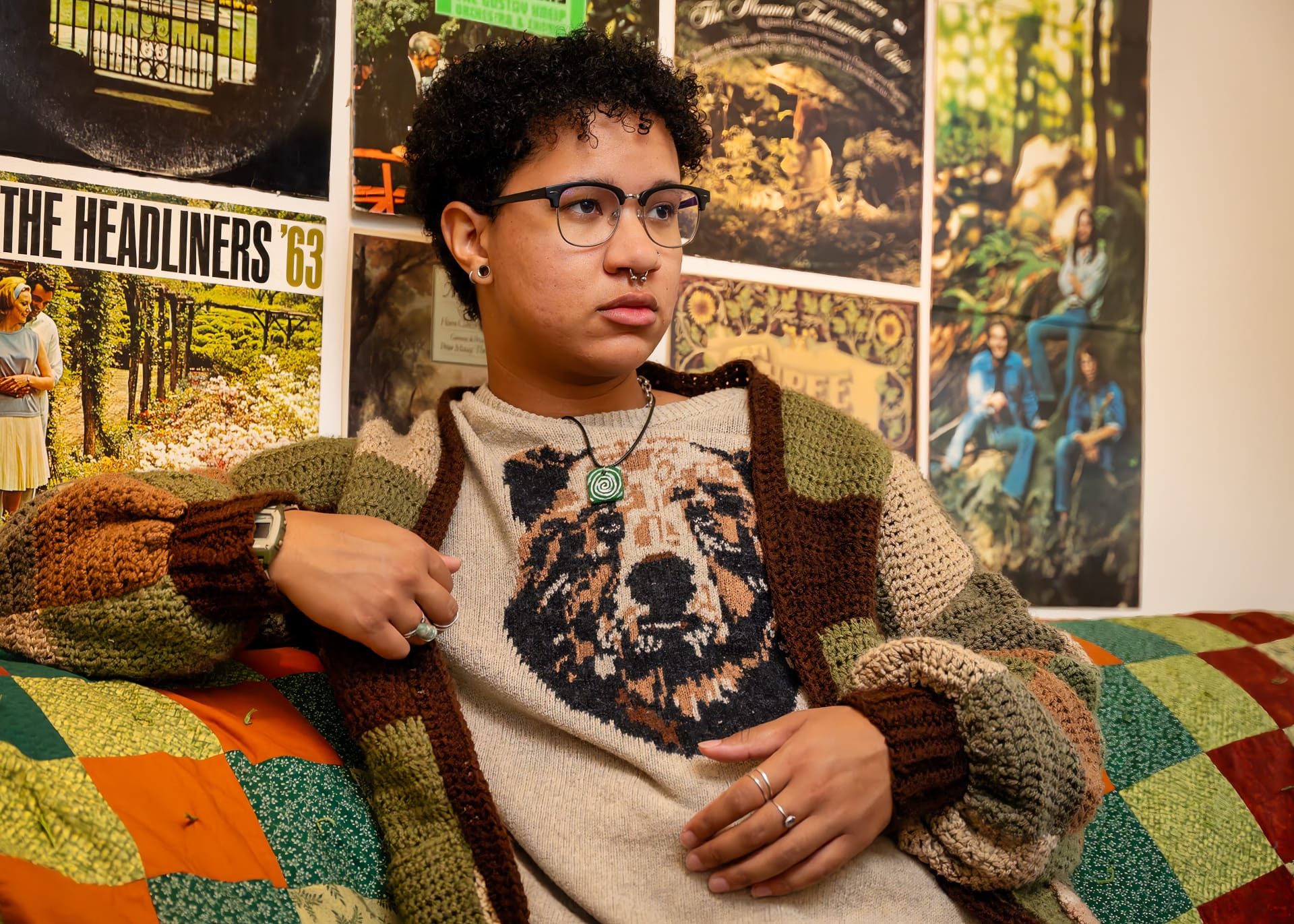
“For me, I’m fascinated by any skill that means I get the freedom to create,” says author and fiber-artist Brennon Lane. “Knitting and crochet really clicked for me because it opens up an accessible way to make anything I can think of. I get to use my imagination, sharpen my skills, use trial and error, but also calculations and foresight. I love how so many moving parts come together to create a beautiful handmade piece, and the feeling of unlimited possibility that follows a tenacious project. The freedom of it all is addictive.”
This “craftivism” is still a daily rebellion, enacting a subtle yet persistent rejection of commercial pressures through handmade, expressive, and uniquely personalized art. In addition to creating, choosing where we shop is one of the easiest ways to join this movement. How we wear what we buy — whether by changing the intended use, adding handmade pieces, or reinventing the garment entirely — is another. In the age of fast fashion, mass production, and artificial intelligence, personal style becomes a revolution of humanity, art, imperfection, and creativity, just like it was a century ago.
“I ride the waves of what feels like the power clash of the moment,” Conway muses. “Which stripes do I want to pair with which plaid turtlenecks and which lace do I want to sew onto this vest I’m making?”
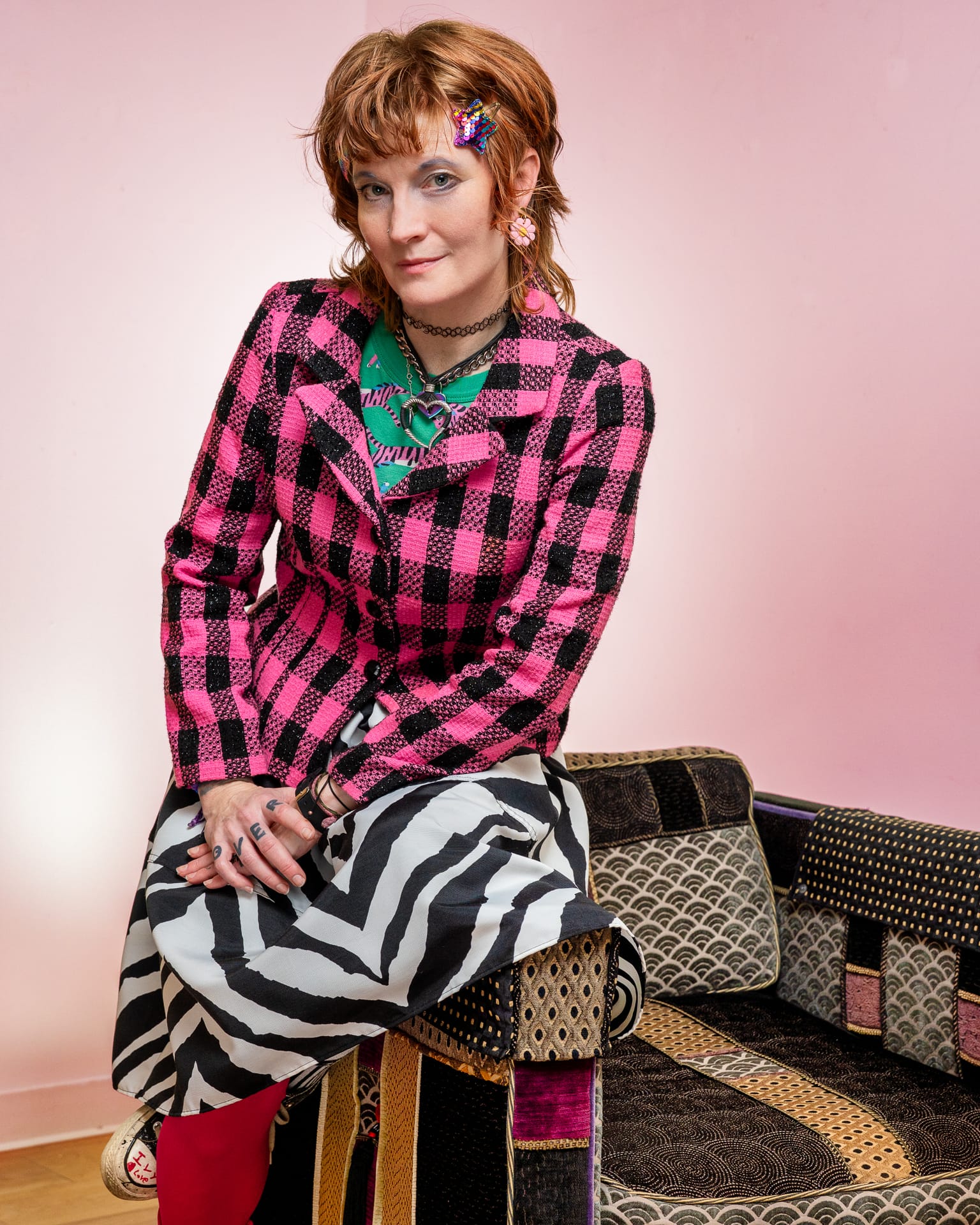
“I like that Bloomington supports art fashion and that no one bats an eyelash to differences in look here. It is welcome. Accepted. In fact it’s brave and in its bravery it allows others to be their authentic selves. Stay weird.”
Bloomington brings together small businesses, artists, and designers who offer slow fashion and consumers who want to buy sustainably and live creatively. Here, by making choices with intention, by altering, creating, and restyling, the consumer becomes more than a record of their shopping habits. They become an artist; and together, these trends change the record.
Photos from the local fashion scene