Remembering Lee Hamilton, Statesman and Giant of U.S. Foreign Policy
Limestone Post’s Steve Hinnefeld reflects on his relationship with Representative Lee Hamilton and shares anecdotes from the politician and public figure’s life.

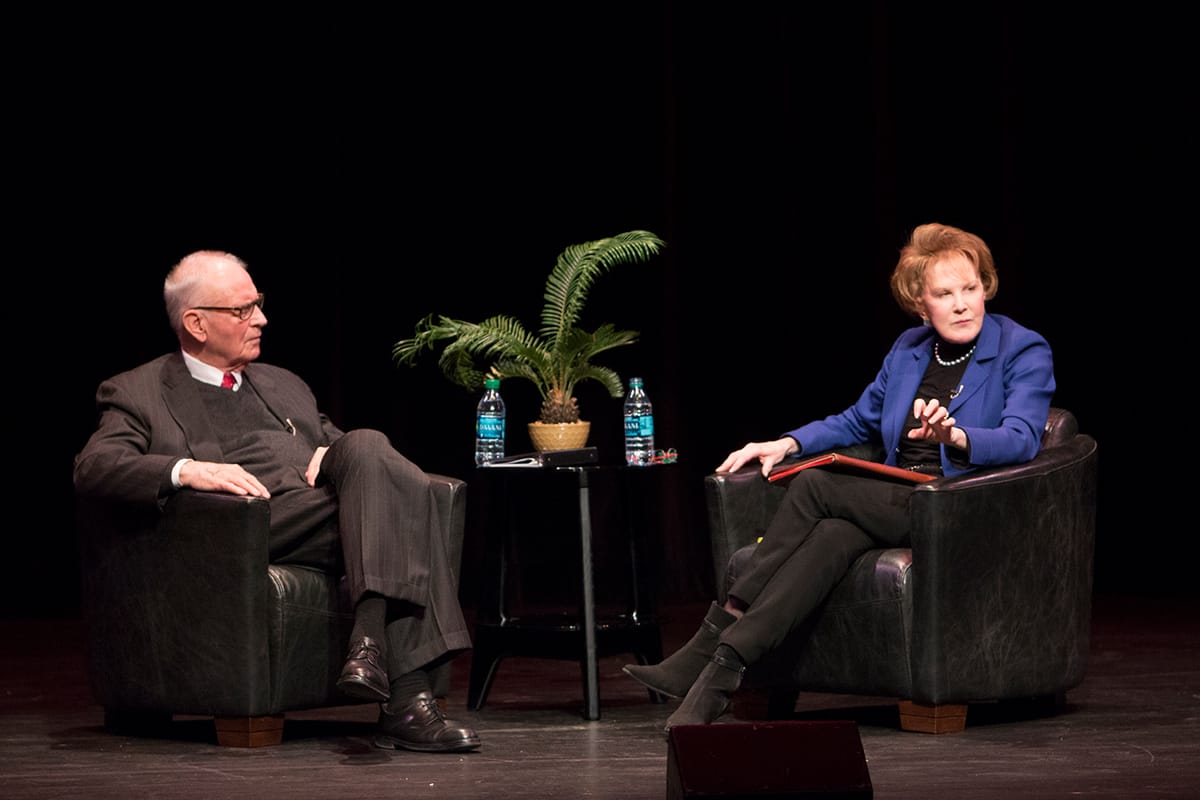
Lee Hamilton retired from politics in 1998 after 34 years in the U.S. House of Representatives. He said he decided not to seek re-election after visiting an elementary school, where students asked if he worked with Andrew Jackson and Abraham Lincoln.
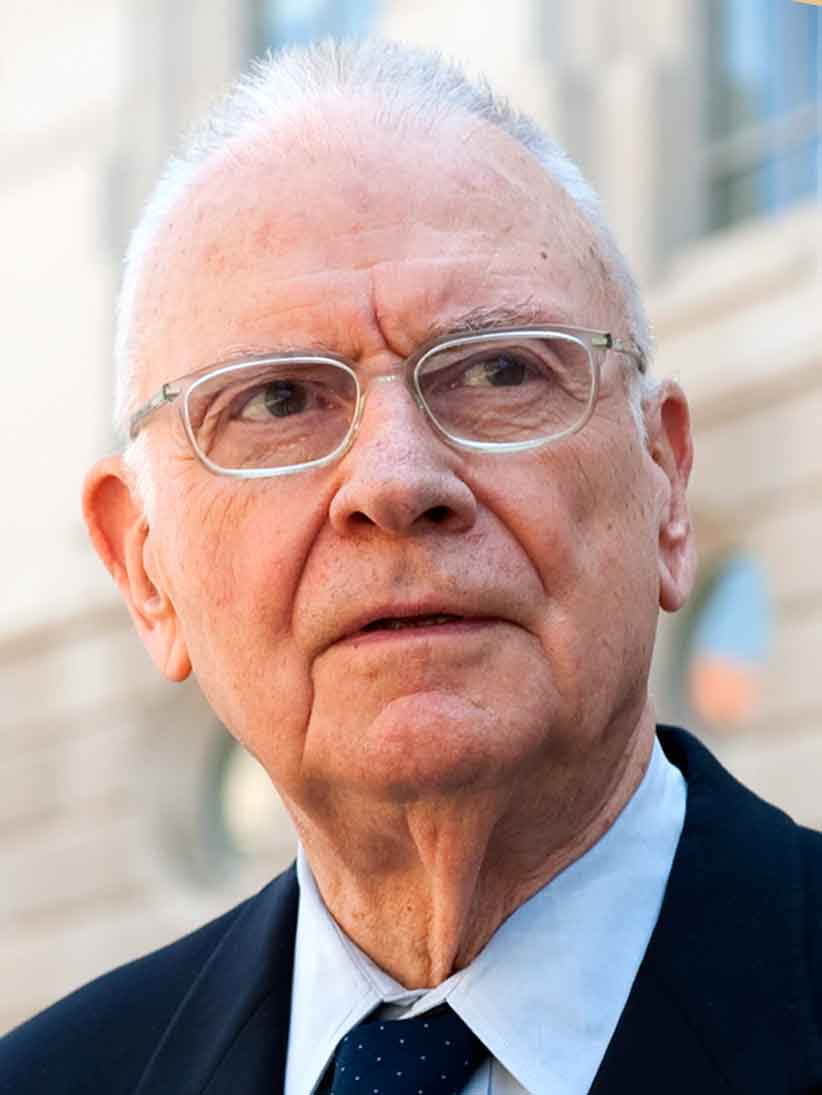
“I decided if I looked that old it was time for me to retire,” he told a newspaper reporter.
But he didn’t retire from public life, and he didn’t leave government behind. Hamilton, who died February 3 at age 94 at his home in Bloomington, had a long second career in public life. He directed the Wilson Center in Washington and served as vice chairman of the 9/11 Commission and co-chairman of the Iraq Study Group. He founded and led the Center on Representative Government at Indiana University. He gave frequent public lectures and produced weekly newspaper columns on foreign policy and Congress.
President Barack Obama presented Hamilton the Presidential Medal of Freedom, the nation’s highest civilian honor, in 2015, calling him “a man widely admired on both sides of the aisle for his honesty, his wisdom, and his consistent commitment to bipartisanship.” On his death, Hamilton was universally lauded as a statesman and a giant of American foreign policy.
I had the great privilege of helping Lee Hamilton with many of his newspaper columns. Working with him was always a pleasure. He was smart, thoughtful, incisive, and kind. As Judy O’Bannon Willsey, Indiana’s former first lady, told The Indiana Citizen, he was “always cordial and considerate of people.”
Hamilton was an internationalist who thought America should be a force for good in the world. He was also deeply rooted in Indiana. He talked often about his time in Congress and his countless visits to Southern Indiana’s 9th congressional district, and what he learned about communities by visiting with small-town mayors, newspaper editors, and plain folks.
And he was absolutely committed to American democracy and the institution of Congress, including the idea that the founders put Congress first in the Constitution because it was the most important branch of government, the one closest to the people. In several recent columns, he argued that Congress needed to play a more vigorous role in governing. He was alarmed that President Donald Trump seemed to dismiss its role.
A committed Democrat, he was also deeply concerned about political polarization, from Indiana small towns to Washington, D.C. One of his last columns, published last month, lamented the loss of cross-party friendships and socialization in Congress. He was a champion of civic education, serving with retired Supreme Court Justice Sandra Day O’Connor as co-chair of the Campaign for the Civic Mission of Schools.
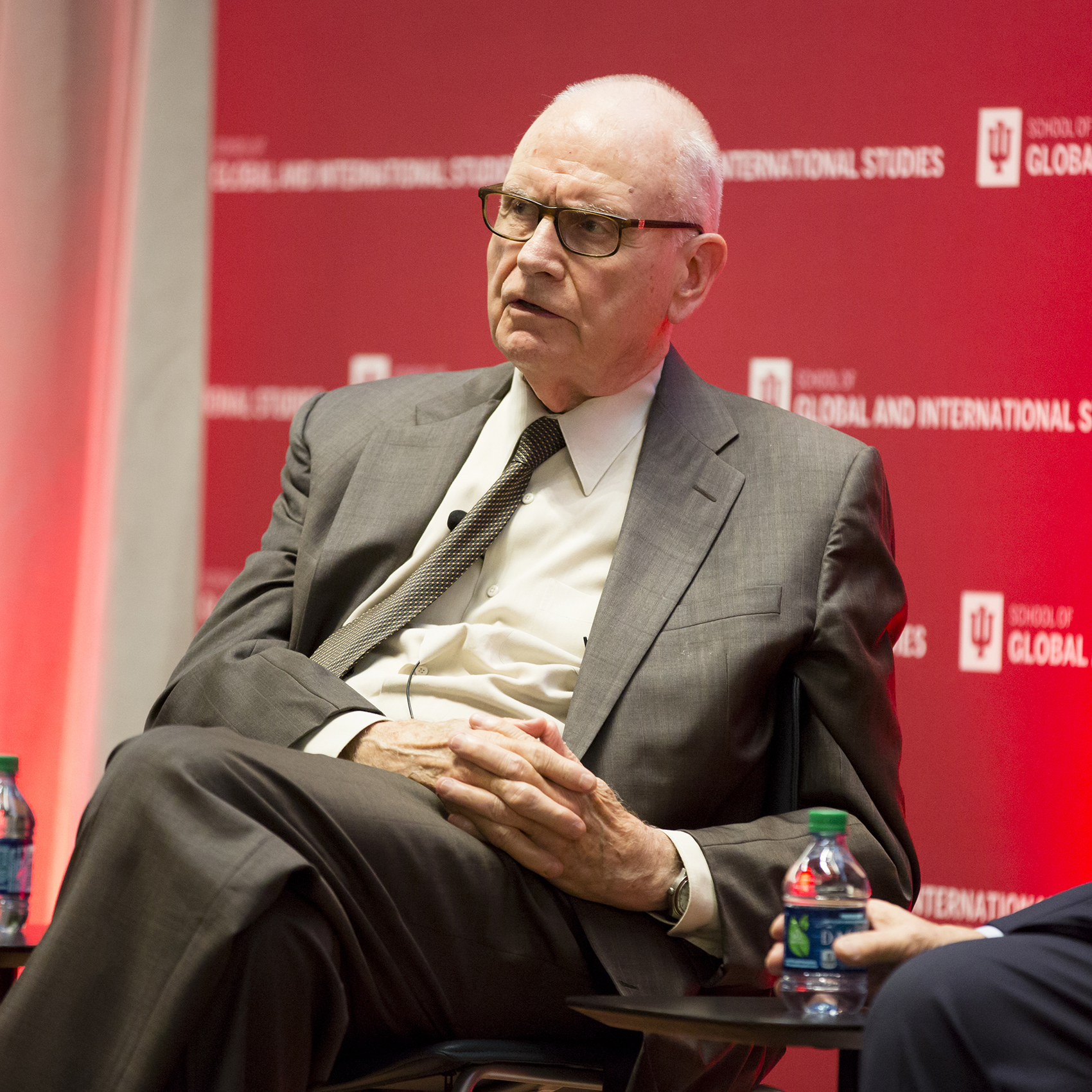
Lee Hamilton was born April 20, 1931, in Florida, the son of a Methodist minister, and spent most of his life in Indiana. He was a basketball star at Evansville Central High School and DePauw University and earned a law degree from what’s now the IU Maurer School of Law.
Inspired to pursue politics by the example of President John F. Kennedy, he ran for Congress and was elected in the Democratic landslide of 1964. He was re-elected 16 times to represent a rural, socially conservative congressional district. He and his wife, Nancy, were married for 58 years until her death in 2012. They had three children.
Hamilton didn’t plan to specialize in foreign policy, but he found a spot on the House Foreign Relations Committee and found the work fascinating. He gained national prominence in the 1980s when he chaired a committee that investigated the Iran-Contra affair, the secret sale of American weapons to Iran to funnel money to Nicaraguan rebels.
During and after his time in Congress, Hamilton worked constantly. He routinely put in 12-hour days and spent nights reading about policy, his nephew, former Bloomington Mayor John Hamilton, said in an interview with Indiana Public Media. He went to his office to work nearly every day until his death.
That office is in IU’s Hamilton Lugar School of Global and International Studies building. The school was renamed in 2018 to honor Hamilton and former Indiana Republican senator Richard Lugar, who died the following year. As then IU President Michael McRobbie noted, the men were considered “two of the most revered voices in foreign policy in the United States.” Hamilton and Lugar often crossed party lines to collaborate on addressing the world’s most difficult problems.
Lee Hamilton led by example. His legacy inspires office-holders and policy-makers at all levels.