Revisiting the Deam: Roscoe Hayes and Other Human Tales from the Indiana Wilderness
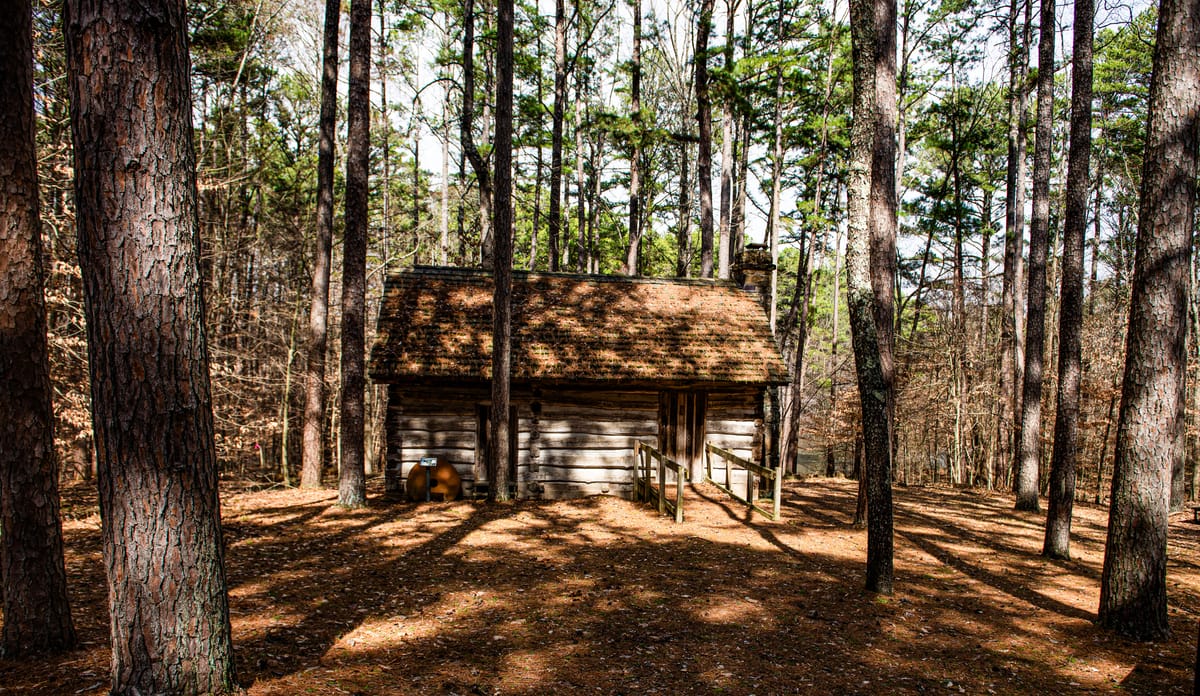
Wilderness living 150 years ago was difficult. Steven Higgs discusses Hoosier pioneer life in cabins — and a tree.
The second installment in a photojournalist’s yearlong return to the wilds.
“Revisiting the Deam” is a series of stories chronicling author and photographer Steven Higgs's exploration of the Hoosier National Forest as he revisits wilderness areas with friends, colleagues, and experts in the environmental field.
Walking and talking with Teena Ligman on the old Axsom Branch Road was an experience Boomers like us might call a dual-track adventure in the Way Back Machine, a la the 1960s cartoon The Adventures of Rocky and Bullwinkle and Friends.
The point of our four-mile roundtrip trek on Terrill Ridge Trail was to discuss the Charles C. Deam Wilderness Area’s human history, which for our purposes began with the Todd family, the area’s first settlers in 1826. Indigenous peoples had frequented the region for more than ten millennia before the whites arrived.
One particularly memorable anecdote Teena shared involved a Jed Clampitt-style character named Roscoe Hayes, whose legend, were it a fairy tale, would begin: “There was an old man who lived in a tree.”
But we also spent a considerable amount of time reminiscing about our mutual, professional connections to the Hoosier National Forest. Both began in Fall 1985, when Teena became a U.S. Forest Service Public Information Officer and I started as an environmental writer for the Bloomington Herald-Telephone.
Indeed, as we discussed while examining headstones at the Todd Cemetery, Indiana University is acquiring my professional archive and is already in possession of an accordion file folder or two filled with news releases Teena cranked out and sent to the news media through her 42 years with the Forest Service.
While I recalled that she was military and had been deployed to Desert Storm in 1990, I didn’t know she also was deployed during the Bosnian War and achieved the rank of lieutenant colonel in the Army Reserves.
While now retired from the Forest and Armed Services, Teena is active in many civic endeavors, some of which have her leading historic cemetery tours.
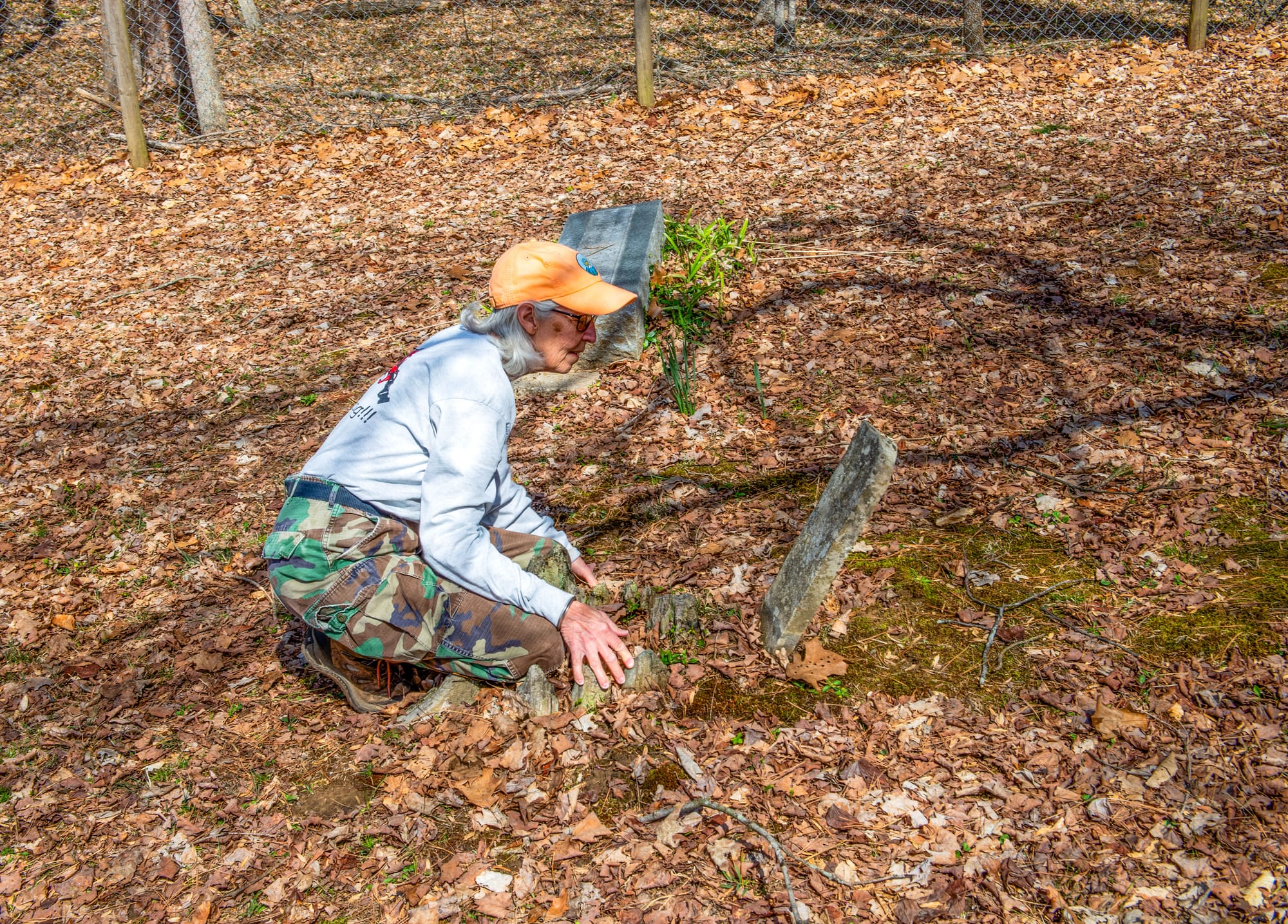
So, before driving to the Terrill Ridge Trail at the lookout tower, we started our excursion into the past at Todd Cemetery, the exact spot where settlers first occupied today’s 12,953-acre Deam Wilderness.
“It was John and Sarah Todd who were the first people who lived in this area,” Teena says.
Her observation borne out, the only gravestone with that surname on it was for John Todd, who was born in October 1811 and died in September 1895. We agreed many of the several dozen unmarked and unreadable-due-to-erosion stones were likely Todds, as well.
“We actually know where their home was,” Teena says. “They donated the land for the school and the cemetery, as well. It's close by, the homesite is. There are still some remnants that you can see if you know where to look.”
Where to look, however, is confidential to protect a significant historic site, she explains when I ask.
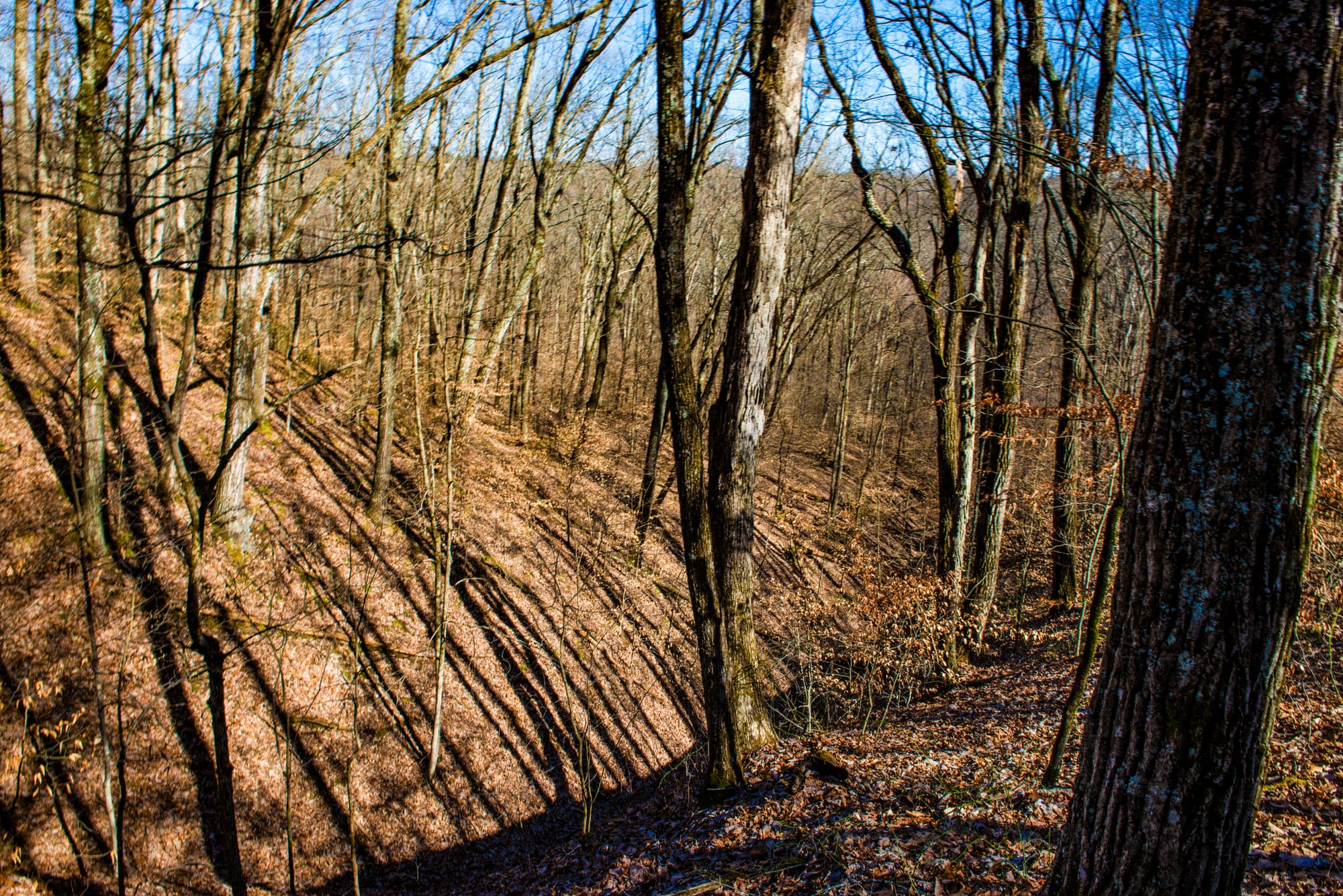
The Todds arrived on the ridgetop above the Salt Creek Valley a decade after Statehood and nine years after the first pioneers reached Bloomington some twenty miles to the northwest in 1817. To encourage settlement, the nascent Indiana government sold them, the Axsoms, Grubbs, Terrills, and their fellow frontiersmen the hilly, hardwood forestland for $1 an acre.
The topography they settled constitutes some of the most rugged in Indiana. And as a consequence of its narrow, flat-topped ridges and steep, V-shaped valleys, today’s Deam was in fact the last acreage in all of Indiana to be settled.
Its occupation was also among the shortest in state history, lasting just about a century before nature permanently repelled its invaders.
It might be exaggeration to say life in the Indiana wilderness was nasty, brutish, and short, to cop a phrase from the 17th century British philosopher Thomas Hobbes. John Todd lived to 84 and had land to donate. Samuel Axsom was born six years before John and lived to be 87.
But evidence abounds in every Hoosier National pioneer cemetery, from Elkinsville in Brown County to Rickenbaugh in Perry County, that life could be brutal — especially for children.
Death at childbirth and in early childhood from disease was common, especially from unspecified fevers, sometimes called "ague," archaeologists Ellen Sieber and Cheryl Munson wrote in Looking at History: Indiana’s Hoosier National Forest Region, 1600-1950.
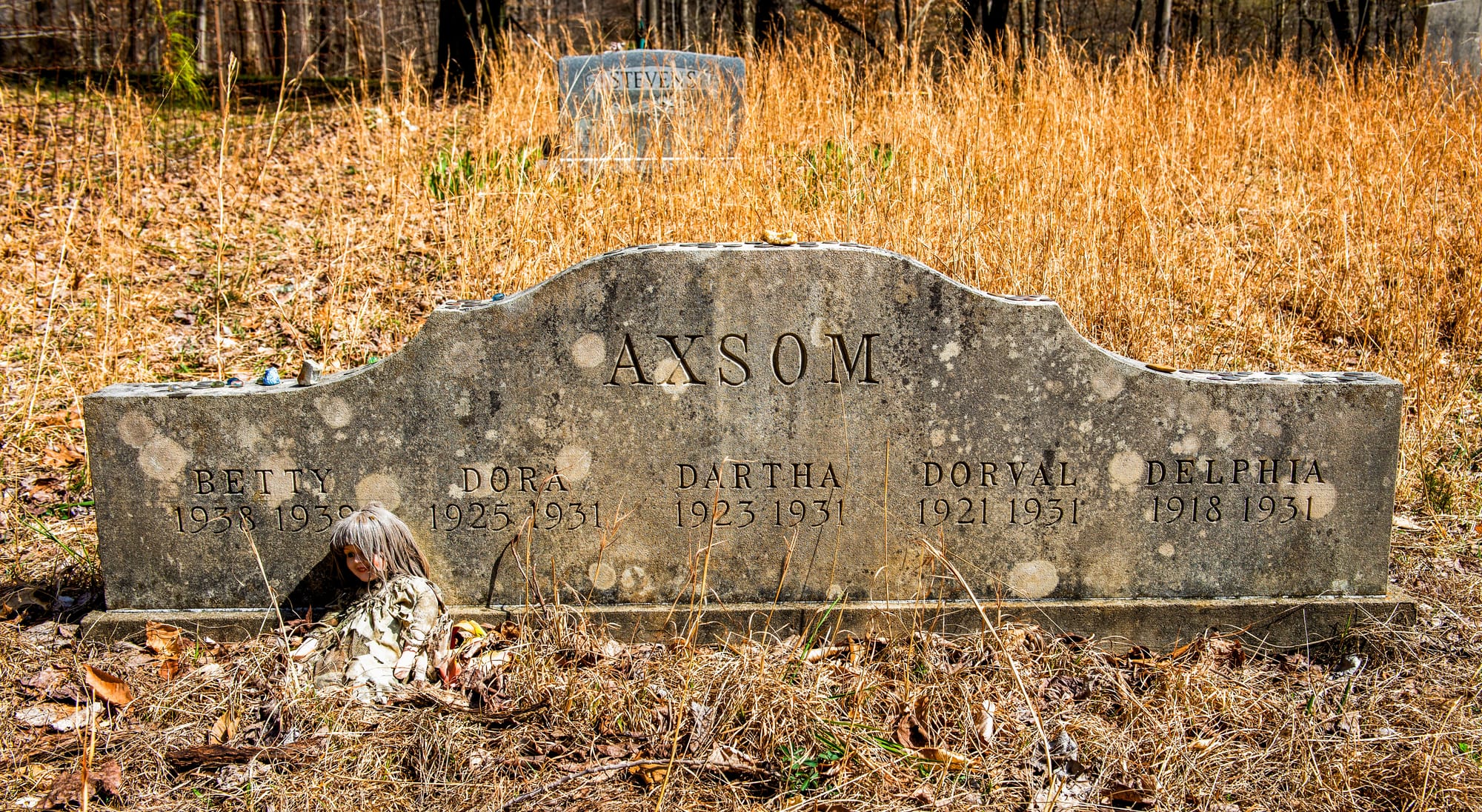
Over the Terrill Cemetery headstone of five Axsom girls — Betty, Dora, Dartha, Dorval, and Delphia — Teena shares the experience of one of the area’s poorest.
“I was just reading about the Axsom family that had all those little girls die,” she says. “They had four sick children, and there were three other girls, and brothers, plural, all in one small cabin.”
Betty Axsom died at age 1 in 1939. The others all died in 1931: twins Dora and Dartha at 6, Dorval at 10, Delphia at 13.
Their family subsisted by growing sorghum, which they made into molasses and, once a year, hauled to market in Bloomington, Teena says.
“Then they would buy all the things they needed for the next year,” she says. “And all those things didn't last the whole year. So then, they relied on the generosity of the community to help them out.”
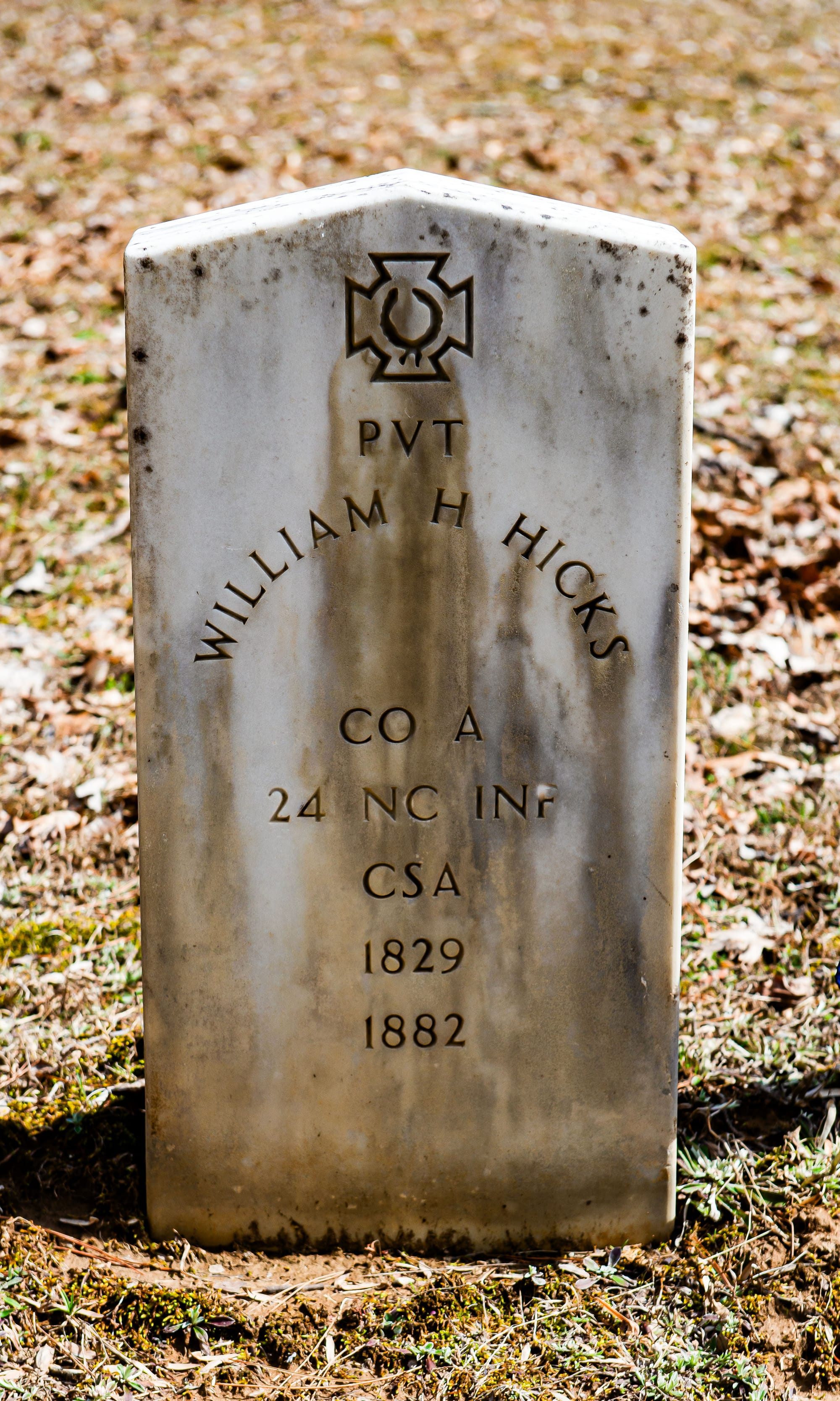
Through the latter three quarters of the nineteenth century, hardy pioneers like the Todds and Axsoms eked out self-sufficient livings by raising, hunting, and gathering what they needed from the land.
They cleared the ridgetops to grow corn and hay and fruit trees. They raised hogs and chickens and hunted the woods’ abundant game, especially white-tail deer and wild turkey. They gathered forest edibles like walnuts and persimmons.
But the forestland soils, the settlers learned, were only marginally productive for growing anything but trees. Decent lives could be carved from farming the broader ridgetops and wider valleys, for a while. But erosion took its toll throughout.
“They had to clear the land, and then the soil kept washing away,” Teena says. “When you watch them plow in the sides of these hills, how could it not wash away?”
One old guy told her it got so you could “hide a school bus” in some of the gullies that they made. He knew it was a problem, but it was how they made a living: “There weren't a lot of choices.”
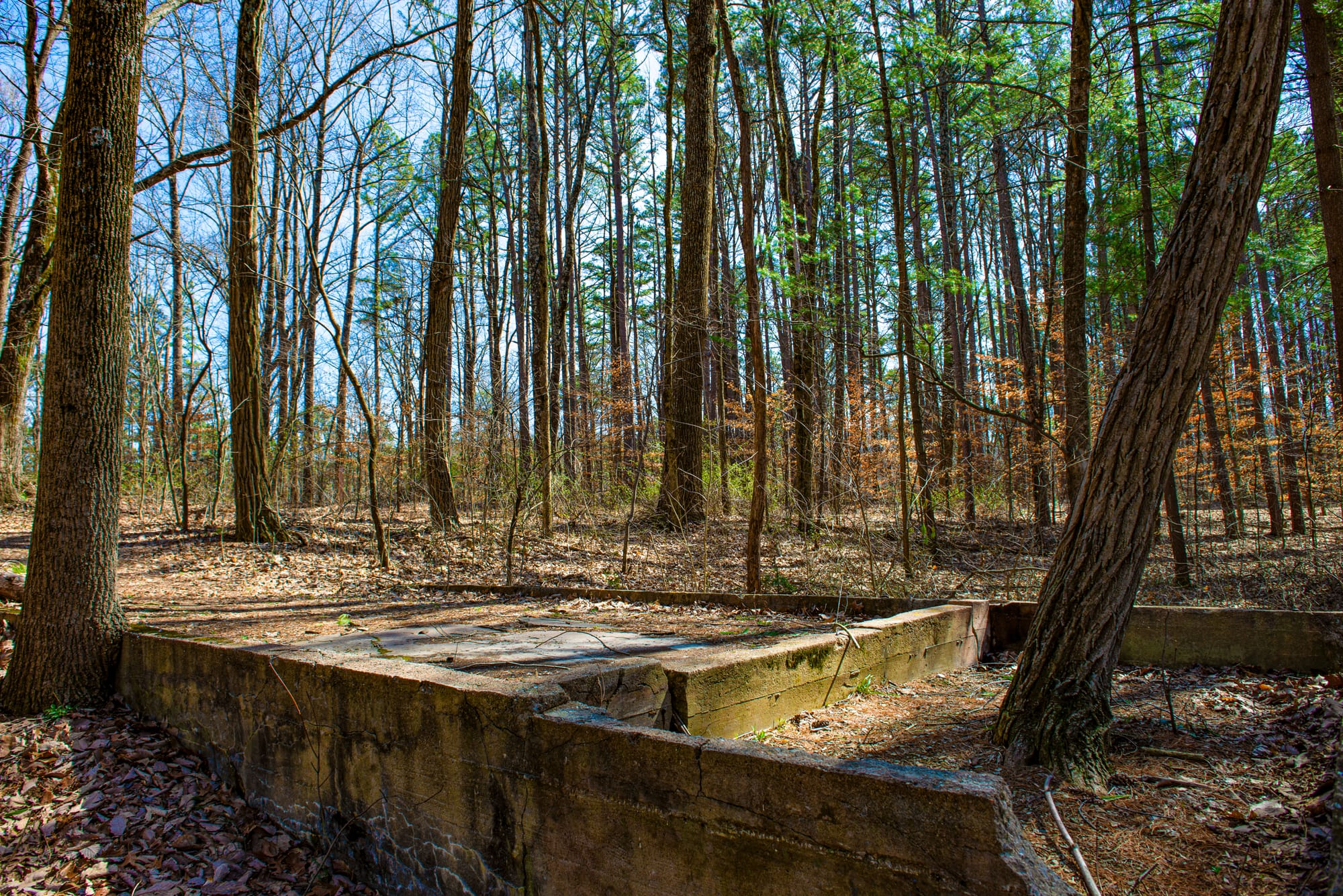
Still, by the turn of the twentieth century, the Deam Wilderness resembled a rural subdivision, with eighty-one small farms connected by fifty-six miles of roads on less than thirteen thousand acres of Indiana’s most inhospitable landscape. Even the great Kankakee Swamp that engulfed Northwest Indiana was being permanently tamed at that time.
As their soil washed away, the settlers turned to the ancient oaks, hickories, tulip poplars, and other deciduous hardwood trees as a cash crop, initially to supplement their incomes, eventually, without success, to stave off bankruptcy. Expanded logging hastened the erosion.
By 1890, Indiana led the nation in timber production. And as the forest went, so went the meaty deer and the plump turkey, both of which had vanished when the century turned. In their stead, these self-reliant uplanders turned to scrawny critters like squirrel and rabbit for meat and skins.
By the Great Depression, most of the farms had gone belly up, and the people had moved on. Faced with shrinking tax bases and tens of thousands of acres of essentially valueless land, bankers and officials in Monroe, Lawrence, and Jackson Counties were anxious to sell when the U.S. Forest Service began purchasing Hoosier National land in 1935.
Over the next forty years, the agency restored the land, reintroduced deer and turkey, and built wildlife ponds to help sustain the re-emerging backcountry life cycles.
With federal wilderness designation in 1982, nature reigns supreme in the Deam. It would take an act of Congress to ever log a tree or build a road there.
That the settlers lasted a century in the isolated, backcountry Deam hills and hollows was a testament to their resiliency, Teena says — and to their sense of community.
Roscoe Hayes established his legend a couple miles from Tower Ridge Road on John Grubb Ridge and was among the last to leave the Deam wildlands.
“He lived in a tree,” Teena says.
When his cabin burned, Roscoe moved into a little shed, she says, but something happened to it. So, he found a big hollow beech tree, in which he built fires to keep warm and often slept to avoid the elements.
“He was always collecting loose dogs that would show up,” Teena says, “so he had a lot of hounds that helped keep him warm.”
Former Forest Service District Ranger Frank Haubry knew him well and wrote:
“Roscoe Hayes was a kind old gentleman but typical hermit type in both looks and action. He was a tall, slim man with a Beverly Hillbilly-Jeb Clampitt-type hat, had a white beard, bib overalls, and old black lace boots that he laced with twine and string.”
As self-sufficient as he was, Roscoe’s survival deep in the untamed Indiana wilderness depended on neighborly support, Teena says, as did the entire Hoosier National pioneer population.
Brother Eli lived on Tower Ridge Road across from today’s Grubb Ridge Trailhead and helped him with supplies. In part to avoid Roscoe accidentally setting wildfires, the Forest Service helped burn his garden patch each year. Haubry and his boys used to visit and take food and other supplies during hard times.
Community was how Roscoe Hayes, Samuel Axsom, John Todd, and the Deam area settlers survived, Teena says. Selfishness had no place. Generosity ruled.
“You didn’t survive solo,” she says.
The following is an excerpt from History of the Charles C. Deam Wilderness, U.S. Forest Service