
Bloomington Moms are Changing the Conversation on Maternal Mental Health
Mothers gain support from perinatal groups in Monroe County.

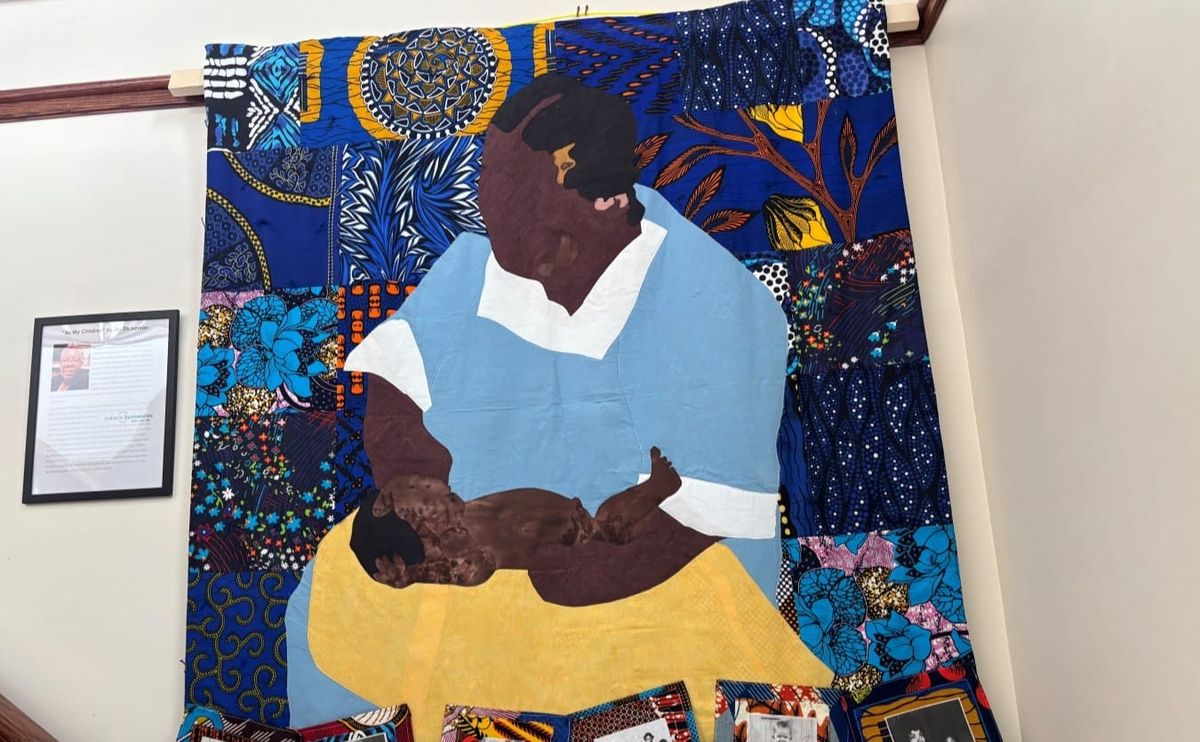
Nearly every new mom receives the same advice about mental health and parenting.
Exhausted? Sleep when the baby sleeps.
Stressed? Enjoy this time because it will pass so quickly.
Traumatized? All that matters is a healthy baby.
Experienced moms pass along these age-old sayings, hoping the “right” advice can spare new moms the same regrets or hardships they faced.
But when the joys of motherhood coincide with postpartum depression or relationship issues, financial struggles or job commitments, being told “all that matters is a healthy baby” does not reassure a sobbing, aching mom.
Across Monroe County, doulas, health care professionals, nonprofit leaders, perinatal educators, and social workers — inspired by their own experiences with childbirth and motherhood — are working to promote a different message: maternal mental health matters.
Understanding perinatal disorders
The definition of the perinatal period varies widely, from 20 weeks of gestation to 28 days postpartum, to 12 months before and up to 24 months after birth. According to the March of Dimes, “The term ‘perinatal’ can be used in a generic or a very specific way. It means around (peri-) the time of birth (-natal), so it can be used to refer to the entire or parts of the period around conception and through the first year of life.”
While many know of the “baby blues” — a normal, temporary increase in mood swings and sadness during the first weeks postpartum — perinatal disorders are more severe and long-term.
These disorders include perinatal depression, perinatal anxiety, perinatal post-traumatic stress disorder (PTSD), perinatal obsessive-compulsive disorder (OCD), postpartum psychosis (PPP), and bipolar mood disorders, according to Postpartum Support International.
Research shows one in five women and one in ten men experience depression or anxiety during the perinatal period. Black mothers, Latina mothers, Indigenous mothers, rural mothers, mothers with previous mental health conditions, mothers experiencing poverty, and mothers who have experienced infertility are disproportionately likely to experience mental health challenges during pregnancy.
In Indiana, maternal mental health issues are the leading cause of maternal mortality and complications from pregnancy. Substance use disorder alone caused 30% of maternal deaths in Indiana from 2018 to 2022.
And the shuttering of maternity care facilities and even entire hospitals in rural areas of the state means care for substance use and other perinatal disorders is becoming more difficult to access.
Rural moms and barriers to care
As more rural hospitals close maternity wards, moms in southwest Indiana struggle to access perinatal care and therapy — especially moms who lack reliable transportation, good health insurance, or U.S. citizenship. Maternal care providers in Bloomington see the effects in their practices.
“In the time I’ve been working in this field, several rural hospitals have closed their labor and delivery units, and that’s a huge access problem. That leads to people either just not getting care or getting inconsistent, inadequate care,” explained Molly Mendota, an Indiana University Health social worker who spent twenty years working as a doula in the greater Bloomington area. Mendota facilitates Moms Heal Together, a confidential support group for moms with a history of substance use disorder.
Monroe County’s lack of rural maternal health facilities means moms outside Bloomington drive further to access maternal care.
Stacy White, a Bedford resident and nurse, had two high-risk pregnancies. When Bedford did not have the specialty ultrasounds needed for her perinatal care, White was referred to providers 30, 45, or even 90 minutes away.
“I’d go to Ellettsville, Bloomington, Indianapolis — really, Bedford doesn’t have specialty resources,” said White.
Access to maternal care is only one part of the complicated equation surrounding maternal mental health, however.
Even if moms have access to perinatal care, fewer than 20% undergo mental health screenings. These screenings often focus solely on postpartum depression or substance use disorder, meaning other common mental health conditions may go undetected by a health care professional.
White, who had previously struggled with infertility, developed perinatal OCD and struggled with intrusive thoughts about germs postpartum.
“I was so terrified of something happening to my child,” White said. She said that while most moms were aware of the possibility of postpartum depression, few felt comfortable speaking up about OCD symptoms.
Today, White works with Mendota supporting Moms Heal Together at Indiana University Health. White’s goal is to make sure people in the Bloomington area have better access to maternal care resources.
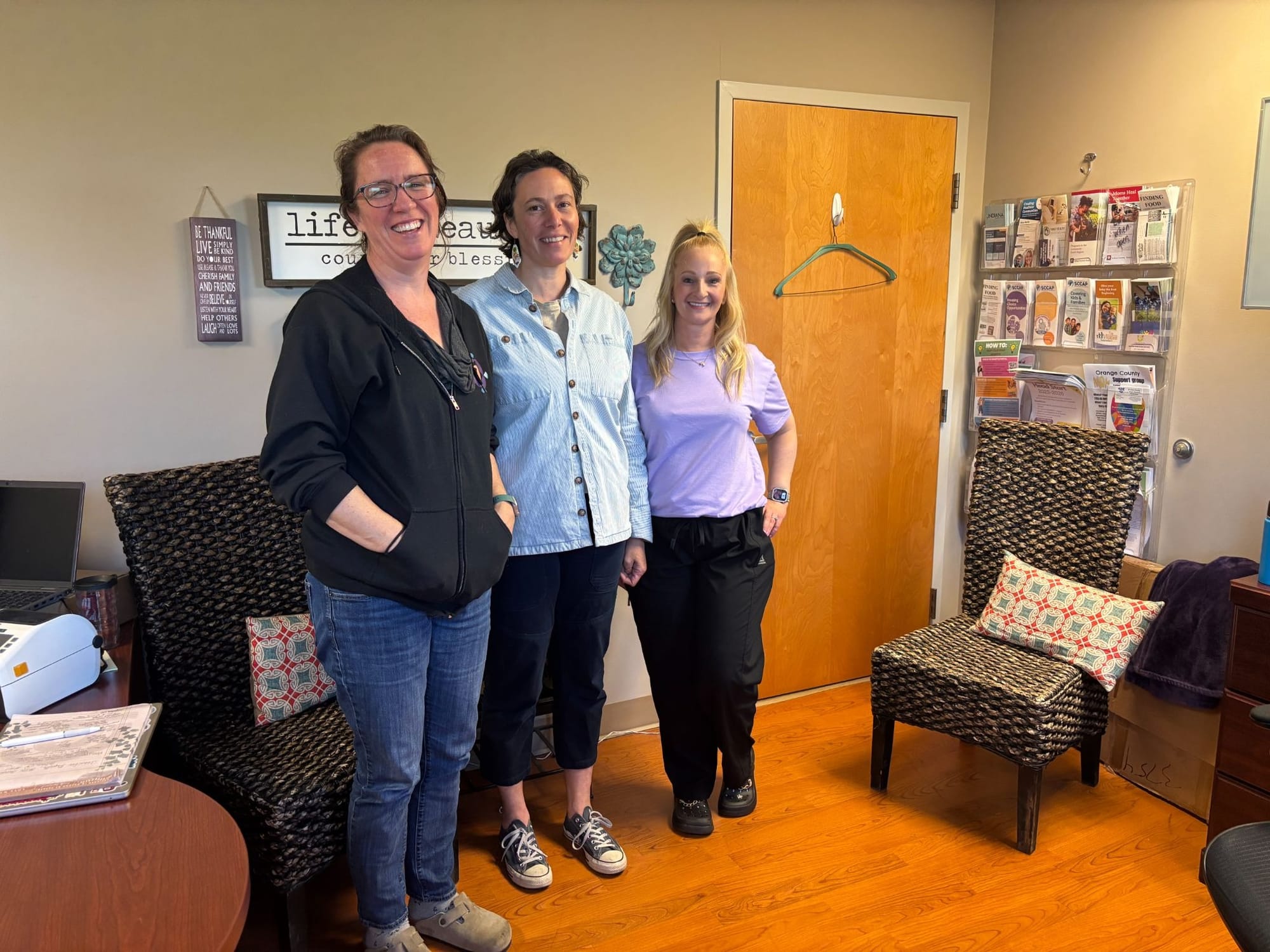
One community-building tool that eliminates barriers to care for rural moms is virtual support groups. A variety of local and national virtual maternal mental health groups offer free, synchronous support.
Locally, Tandem Bloomington, a nonprofit dedicated to improving perinatal health experiences, runs a virtual Perinatal Mental Health Support Group on most Thursdays from 12 to 1 p.m. Moms Heal Together also offers virtual individual and group support options. The Indiana Pregnancy Promise Program and CHAMP program provides additional, statewide resources for moms experiencing substance use disorder and the providers who support them.
Nationally, Postpartum Support International offers a virtual helpline and a variety of maternal mental health support groups in English, Spanish, and/or ASL, including a Queer & Trans Parent Support Group, Stillbirth and Infant Loss Support Group, Black Moms Connect, and Birth Trauma Support.
Navigating substance use disorder and motherhood
Rurality is only one of many barriers to care that women face when seeking maternal mental health support in Bloomington. The shame and stigma around substance use disorder can dissuade women from seeking help if they are struggling with sobriety during the perinatal period.
Prenatal substance use affects 5% of pregnant women and increases the risk of miscarriage, stillbirth, birth defects, and neonatal withdrawal symptoms, according to the Policy Center for Maternal Health.
“Pregnancy and early parenting are a really transformative, motivating time for people in their recovery. A lot of our clients feel like, ‘This is my moment. This is my chance. I’m going to make some changes and parent this kid,’” Mendota said.
At the same time, the pressure to stay sober, learn to parent, and financially plan for parenthood creates major stressors for these moms. While pregnancy is a “good initial motivator” for sobriety, Mendota observes “nobody stays sober for someone else forever.” Moms need to want sobriety for themselves.
Between 34% to 60% of women who use marijuana continue to do so during pregnancy, and 14% of pregnant women report drinking in the last seven days. While some parents find it easier to not use or drink while pregnant, maintaining sobriety amidst postpartum stress is a challenge.
“That’s part of where the shame comes in, because people feel like [the kid] should be enough, right? And society says that should be enough,” explained Mendota.
The relapse rate for mothers is higher postpartum, but finding a support network, learning stress management techniques, and pinpointing a motivation for sobriety helps. In Moms Heal Together, Mendota helps Bloomington moms navigating substance use disorder look at pregnancy, early parenting, and recovery together through in-person or online meetings.
Jennifer Repetto, a Master of Social Work student interning at Moms Heal Together, notes that although many moms are nervous the first time they attend a support group, joining a community of moms helps them realize they aren’t alone.
“I think that there’s not real acknowledgement about how common a lot of this stuff is and that it’s treatable. The groups are one way, but there’s also medication-assisted support that can be really helpful,” Repetto said.
How sliding-scale care models support mothers of all backgrounds
Beyond geographic barriers to care or stigmatization of care, many mothers around Bloomington experience affordability barriers to maternal care — barriers that add additional stress to the experience of early motherhood.
A study of pregnant women and their infants in Florida and North Carolina said 54% of perinatal mothers reported dealing with financial stress, and half of all parents said they could not afford enough disposable diapers to keep their baby clean. The first year of a newborn baby’s care costs between $20,000 to $50,000 on average in the U.S., and many infant staples such as diapers, specialized infant formulas, bottles, medications, diaper rash creams, or baby wipes are not eligible for SNAP, the federal government’s Supplemental Nutrition Assistance Program.
Inspired to create a community where families of all backgrounds could access and choose the maternal care they need, Julie Duhon and Hattie Katz co-founded Tandem Bloomington, a perinatal nonprofit that offers a variety of classes, support groups, and sliding-scale perinatal services.
Founded in 2020, Tandem continues the legacy of Bloomington Area Birth Services (BABS), a hub of maternal care and social life for Bloomington moms in the 2000s and 2010s, and the Pregnancy Resource Center’s free diaper program.
In her work as Tandem’s executive director, Duhon, a Bloomington native, is committed to affordability and intersectionality.
“Because we are grounded in changing experiences and outcomes, you can’t change perinatal outcomes unless you’re serving everyone,” Duhon says.
Under Tandem’s sliding-scale model, families pay what they can for Tandem’s perinatal services, including the Postpartum House. At the Postpartum House, parents stay for $0–$575 per night with round-the-clock doula support, meals, snacks, volunteer baby rockers, and a cozy room, allowing parents the chance to reset, relax, and connect with support.
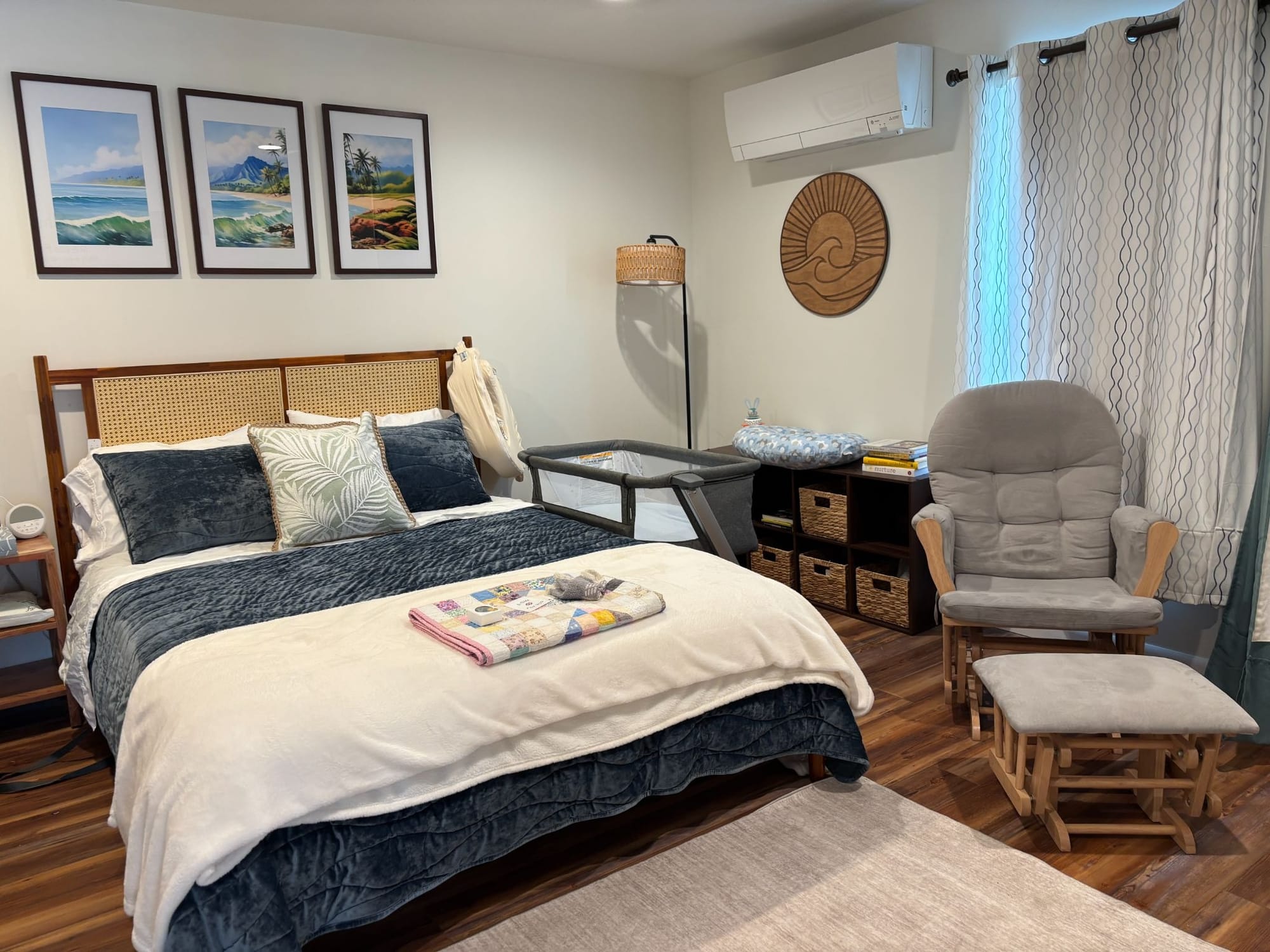
This sliding-scale model makes Tandem’s services accessible to refugees, low-income families, and other populations who may face financial barriers to care.
“What we found is we are disproportionately serving communities that are traditionally underserved,” Duhon said.
One mother who stayed three nights in the Postpartum House wrote on her feedback form: “This place is a lifesaver. In past postpartum periods, the first few days were so difficult. Having a good, restful foundation has helped me have a chance at long-term better mental health. Knowing I have a quiet and peaceful place I can go is worth more than gold.”
Beyond the Postpartum House, Tandem offers caregivers free diapers, clothing, books, contraception, classes, and support groups, no questions asked.
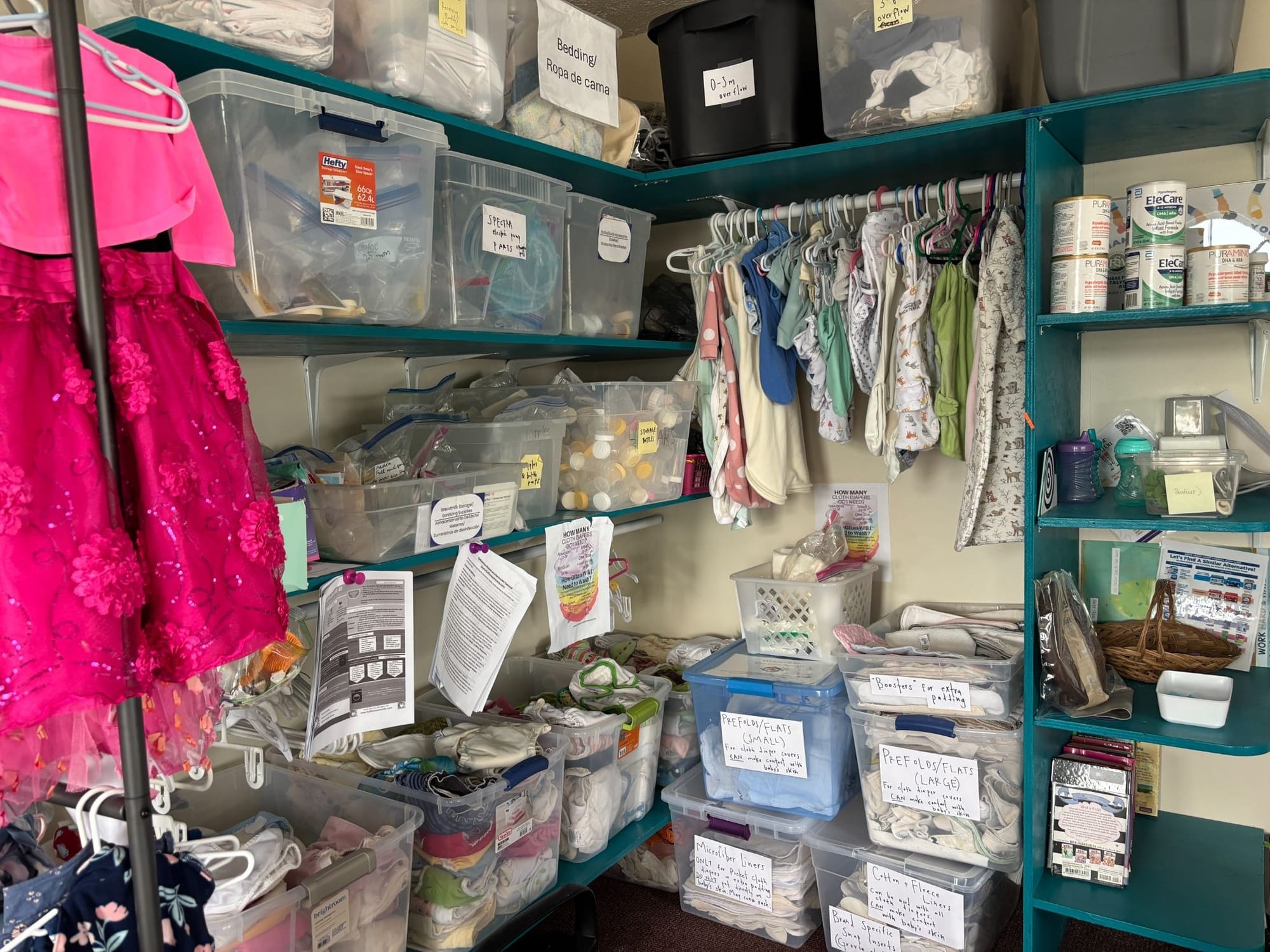
In college towns like Bloomington, where many moms are transplants and young professionals who might not have family nearby, support groups, church groups, or other communities help moms share knowledge and find their village.
Meghanne Phillips, a master of social work student and facilitator for a Tandem support group, has observed how Tandem unites moms of all different backgrounds.
“Because of the broad intersectionality of people who come here, you get to see that your experience, while not the same from person to person, is kind of universal in a way you could not have predicted,” Phillips says.
How Bloomington moms support other moms with traumatic births
In interviews with maternal care professionals across Bloomington, one commonality became apparent: for many moms, the impetus for getting involved in Bloomington’s maternal mental health community is a traumatic childbirth experience.
“I am here because I had a traumatic labor with my first and only kid, after which I thought nobody should have to experience this again,” said Phillips.
Up to 45% of new moms report experiencing birthing trauma, a pregnancy complication not measured through state statistics or screened by depression questionnaires. Sometimes, birth trauma is physical. Other times, it is emotional: patients can feel out of control, unsupported, discriminated against, or shocked.
“A birth can be medically, clinically straightforward with no medical complications, and the parent completely believes that she was going to die, or that her baby was going to die, or that her baby had died, and that can be hugely traumatic,” said Mendota. “On the flip side, someone can have an incredibly complicated birth and not have trauma from it.”
While birthing trauma is most common in moms with previous birthing trauma, a history of miscarriage, a history of abuse, or mental health conditions, it can happen to any mom, regardless of resources or background.
Phillips felt well-resourced ahead of her birth. She went to birthing classes, attended all prenatal appointments, took prenatal vitamins, and had parental support. Yet, during birth, she felt horrifically overwhelmed.
“I literally thought I was going to die, and my record says birth with no complications,” she says.
After her childbirth experience, Phillips switched career paths and enrolled in IU’s social work program to help change maternal mental health outcomes from a hospital-policy level.
For Duhon, a traumatic first childbirth was the impetus for connecting with the broader birth community. Her healing second birth, made possible with a strong support team and a compassionate midwife, helped her understand the importance of choice in the birthing process.
“Midwives are exceedingly important from a mental health perspective because they’re really able to spend time to understand the client’s entire perspective,” said Duhon.
Inspired by her experience with midwifery care, Duhon ensured Tandem’s clinical services provided mental health check-ins by default.
“It doesn’t matter how much you wanted your baby. It’s still allowed to be hard,” said Duhon.
Support groups, perinatal therapy, medication, or inpatient psychiatric treatment can provide lifesaving mental health care for moms navigating trauma or any other maternal mental health condition.
In Bloomington, a variety of in-person perinatal mental health groups and therapy providers offer services in English. Phillips facilitates Tandem’s Perinatal Mental Health group Mondays from 5 to 6:30 p.m., and Indiana University Health offers both therapy and maternal support group services.
How to support maternal mental health in Bloomington
At an individual level, supporting local mental health groups, moms’ social groups, and maternal health organizations through word-of-mouth promotion or donating resources helps more moms learn about the maternal care community available in the county.
Mendota suggests that helping reduce the burden of household chores is one of the biggest ways to support new parents. Practical social support can help moms not feel alone and overwhelmed.
“It is not helpful to come over to someone else’s house and expect to hold their baby. What is helpful is bringing them food, doing their laundry, washing their dishes,” said Mendota. “If they want to take a shower or nap, you can hold their baby after you’ve done their chores.”
Advocating for policies like paid maternal leave, expanded perinatal mental health screenings, and affordable healthcare can help more moms access necessary mental health resources.
Creating a better Bloomington begins with creating better perinatal experiences. Through community-building, everyday Bloomington moms are bettering maternal mental health outcomes, one mom at a time.
The National Maternal Mental Health Hotline, 1-833-TLC-MAMA, offers 24/7 free, confidential support for new and expecting parents in 60 languages.
The Bloomington Health Foundation is an underwriting partner of Limestone Post. As the local philanthropic expert for improving community health for more than 50 years, Bloomington Health Foundation is expanding its mission to address the most pressing health needs in Bloomington and neighboring communities.
Meredith Perkins
Meredith Perkins is a Paul H. O'Neill Fellow pursuing a Master in Public Affairs–Master in International Affairs dual degree at IU's O'Neill School for Public and Environmental Affairs, and is an Assistant Director at IU's Center for Refugee Studies.