Rural Empowerment and Development Program Helps Southern Indiana Counties Plan for Progress
Southern Indiana correspondent Mitzi S. Morris reports on Rural Empowerment and Development.
The Indiana Office of Community and Rural Affairs (OCRA) leads many statewide strategic initiatives to improve quality of life for Hoosiers, including programs such as Indiana Main Street (downtown revitalization) and Indiana Site Certified (economic development).
One of the agency’s latest endeavors is the Rural Empowerment and Development (RED) program, which helps communities increase engagement, build capacity, and expand efforts to achieve their goals.
Orange County was one of four counties selected for the inaugural 2025 cohort. The Orange County Community Foundation, Orange County Economic Development Partnership, and community representatives spearheaded the project. Other 2025 participants in the program included Cass County in north central Indiana, Fulton County west of Fort Wayne, and Huntington County, also near Fort Wayne.
This year, Warrick County, in southwest Indiana, and Madison County, northeast of Indianapolis, are part of the RED program. The initiative was created by OCRA and the Indiana Communities Institute (ICI), based in the Miller College of Business at Ball State University.
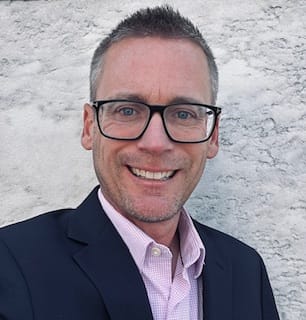
“Everyone involved in these programs and efforts is busy with a million things on their plates,” said Brian Blackford, ICI executive director. “So the fact that they’ve come forward again to raise their hand is a testament to the passion they have for where they live and work and their desire to make it even better than it already is.”
While available funds (or lack thereof) often determine community project success, the RED program focuses on the capacity-building and strategic-planning prerequisite steps of a development plan.
“Money is important, but leadership engagements, readiness for change, and planning all have to be part of the equation to move things along. In some cases, you can’t get the funding without those things in place,” Blackford said.
About the program
ICI helps communities “build greater capacity to achieve prosperity and well-being for their people and places,” according to the website. The entity has partnered with OCRA for years because of shared interests.
“We got involved with RED for a lot of the reasons that we get involved with other programs,” said Blackford. “There are some funding programs that [OCRA offers], but a lot of times it’s around, ‘How do we help communities build the capacity they need, have the information they need, get the data they need to understand where they are, where they want to go, and how they can get there?’ That aligns well with what we’re trying to do.”
The RED program, which lasts four to six months, has three phases: education and training, opportunities and solutions, and coaching and implementation. In the beginning, OCRA and ICI’s role is to help facilitate the creation of a community engagement plan.
“Let’s go out and talk to folks, especially making sure that we’re mindful of the fact that there are certain groups and stakeholders that are probably often reached out to. And that’s great. Let’s reach out to them again. But, also, let’s be more mindful of reaching those harder to reach folks, entities, and stakeholders,” Blackford said.
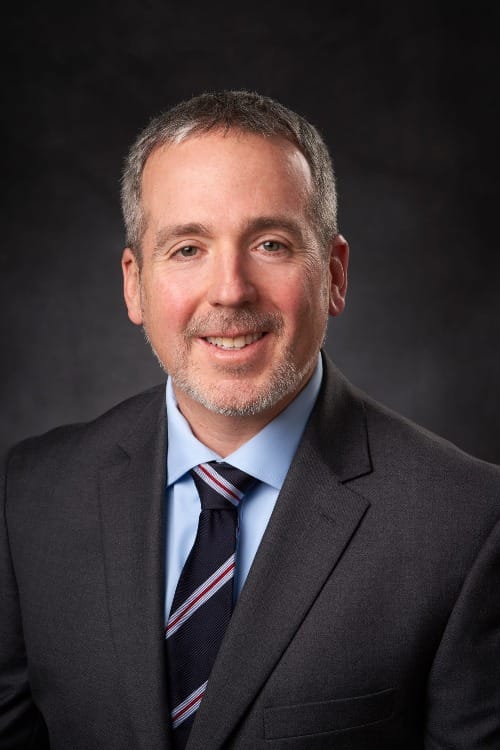
“A lot of times, it’s bandwidth,” added Steve Roelle, executive director of Success Warrick County. “You have the same group of folks engaged in trying to get stuff done. You have to broaden the tent of who’s missing from the conversation.”
To be in the RED program, teams must be led by either a county-wide non-profit or county government and include two or more incorporated local units of government within the county boundary. If the applicant includes a municipality, the population can’t be over 50,000 people. The team also can’t be involved in OCRA’s Stellar Pathways or PreservINg Main Street programs.
“Warrick County fit the right size of community,” said Roelle. “And everyone has a little bit different definition of what rural is, but all of our communities fell within that boundary.”
“[Community] could be county-based. It could be town by town. It could be neighborhoods,” added Blackford. “What are those issues and opportunities that we’re facing that we can work on together?”
‘Immediate buy-in’
Roelle found out about the RED program during a conversation with Johnny Kincaid, OCRA’s southwest community liaison. Warrick County’s application was evaluated on several criteria, including local team composition and representation, partnership strength and collaboration, and community needs and opportunities.
“One of the big things was to showcase that you could build a diverse team of folks from across the county and across the communities,” Roelle said. “We pretty much had immediate buy-in from every community within Warrick County to be a part of this.”
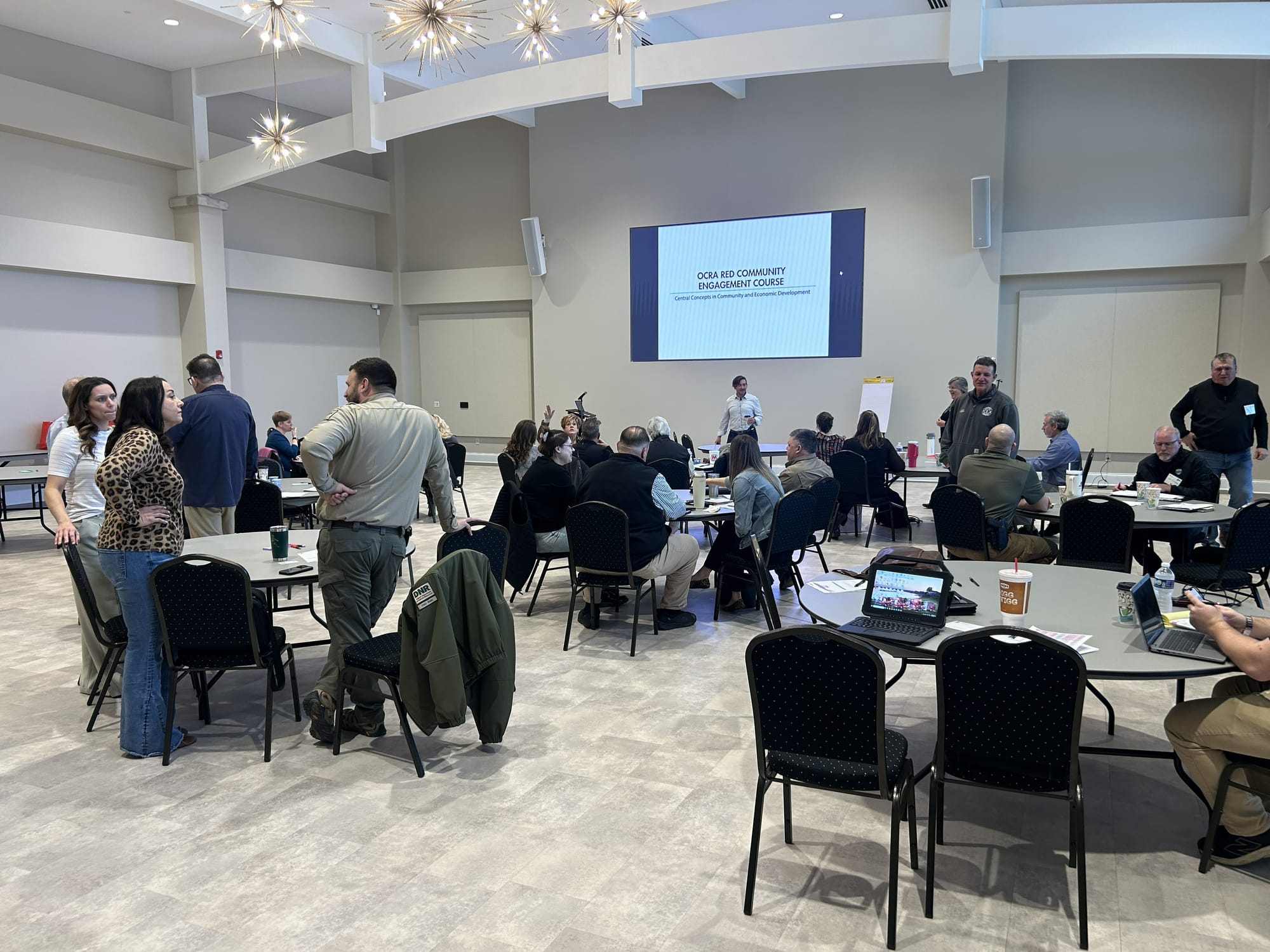
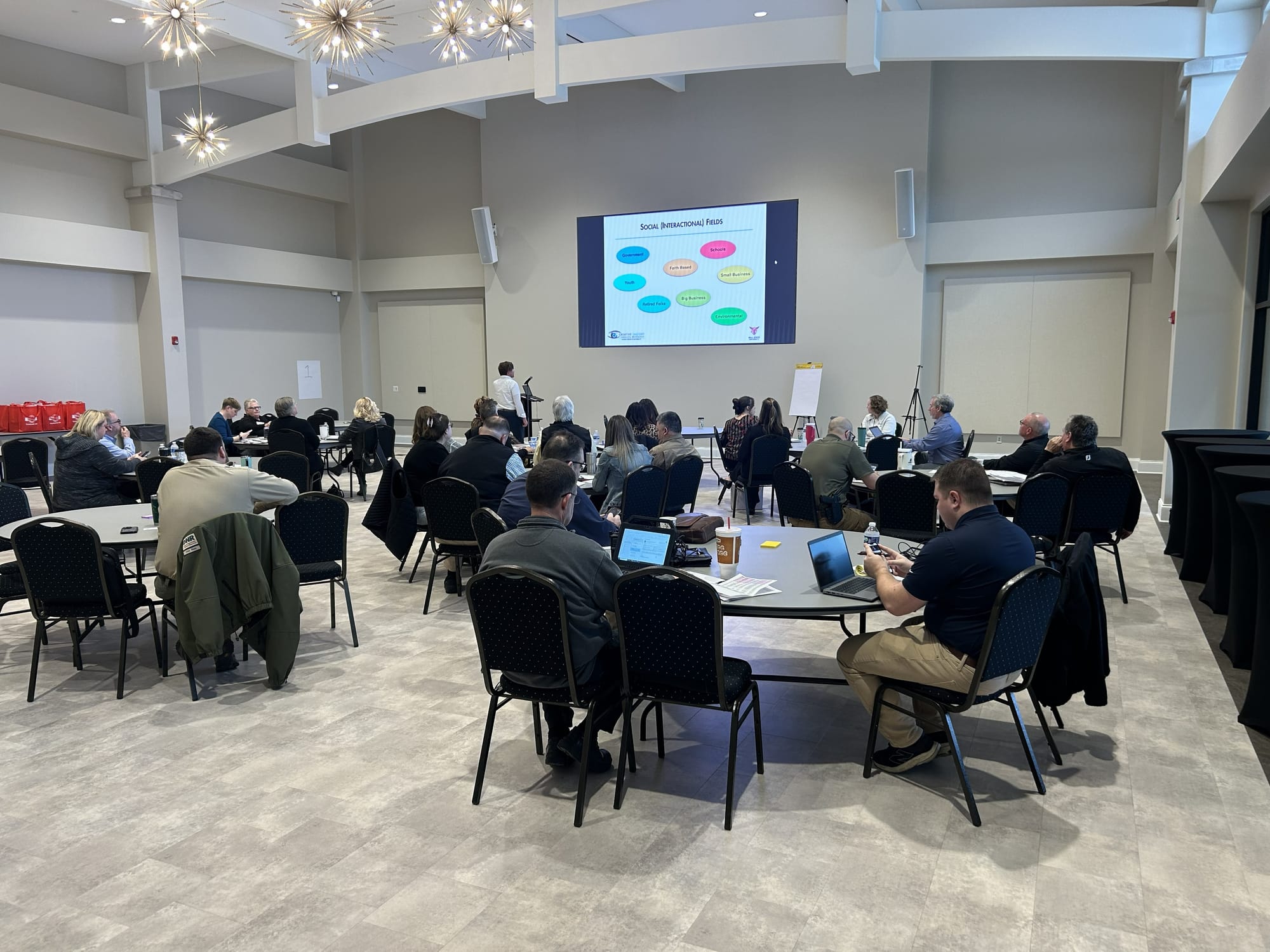
In February, OCRA and ICI held RED program kickoff workshops at the Phoenix Event Center on Libbert Road in Newburgh. Up to 40 people were in attendance each day of the two-day event, which began with education and culminated with interaction, according to Roelle.
“There were a lot of folks who aren’t always engaging with each other in the same room, talking about things they’d like to see for our community and talking about ideas of how to get there. It was a nice representation across those different groups,” he said. “We kind of put our heads down in southern Indiana and just do the work in front of us. A lot of times, we’re not having a bigger conversation.”
Roelle hopes the uncommon communication will drive recurrent collaboration on some common themes he noticed in the meetings.
“People want to see our downtowns and our Main Streets thrive and grow. They want to see the repurposing of old buildings into positive uses. There was a lot of stuff on quality of place, and that meant different things depending on the scale of the community, but a lot of stuff to keep our kids engaged in our communities,” he said.
Other community experiences
As part of the first cohort, Orange County began the education and training phase of the RED program about a year ago. Blackford described how the second step, the opportunities and solutions phase, helps communities home in on what they want to accomplish.
“When we prioritize, we do that through a prism of trying to identify the projects that are most essential and least complex and build momentum from there. If they’re too complicated, they fall by the wayside. If they’re not essential, they shouldn’t be done. Those are the parameters we use,” he said.
Skylar Whiteman, executive director of the Orange County Economic Development Partnership, and Kristina Allen, executive director of the Orange County Community Foundation, are leading the community’s RED efforts. Now in the coaching and implementation phase, Orange County is working on an information exchange initiative, Blackford said.
“[They’re] getting different groups and entities in the county together, talking to each other more deliberately to identify opportunities for synergy and to help share resources,” he said.
Several projects came out of Cass, Fulton, and Huntington counties’ RED program work, including creating “living rooms” at fairs and festivals to spark conversations and capture community stories; using QR codes, school newsletters, and storefronts to invite county-wide feedback; and collecting on-the-spot survey responses at local events using tablets and in-person interviews.
“[In the third phase], once we’ve identified a couple of key projects to work on, our coaches will help along the way with check-ins and seeing how things are progressing and identifying barriers that maybe need to be overcome. Or if we need to call an audible and switch gears, we do that,” Blackford said.
OCRA Executive Director Fred Glynn pointed to the city of Madison in Jefferson County as an example of successful development for RED program participants. The community’s focus on historic preservation, riverfront events, and one-of-a-kind restaurants has turned the area into a coveted destination.
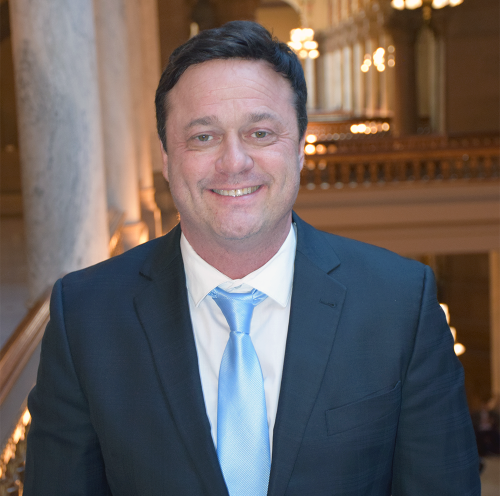
“The biggest thing for success is establishing your own identity and what makes you unique,” said Glynn. “Some of these communities have stuff to offer, or they have ideas. They just don’t know how to implement them. If we can go in there and do that, that would be a good outcome.”
‘Good things to come’
ICI is now compiling information from the initial phase and preparing for Warrick County’s next RED program session, the opportunities and solutions workshop, which hasn’t been scheduled yet.
“We’re taking what they heard from the community, those insights that they gathered, and pairing that with some quantitative data that we provide to help highlight some of the current realities of those communities,” said Blackford. “From there, we undertake a community-based planning process that’s focused on some of these small steps that we can take.”
“We can’t eat the elephant in one bite,” he added.
As Glynn considers funding for the next cohort, he plans to develop goals and metrics for the initiative to measure progress in the communities.
“This is a fairly new program,” he said. “Within the next couple of years, we hope to start seeing the impact of it.”
Communities interested in applying for the next group should follow OCRA on social media for updates. Even with six communities currently working through the program, Glynn believes his agency needs to raise more awareness about the endeavor.
“We weren’t able to get it out there as much as our other programs. But I see some benefits here. I really do,” he said.
“The group from Warrick County that came out, and you saw it over the two days [of workshops], was extremely engaged, and the interaction and the conversations that it brought up were extremely encouraging,” added Roelle. “As this program moves through the course of this year, I think it’s only good things to come.”

Mitzi S. Morris
Mitzi S. Morris is an independent journalist, content writer, and copywriter currently living in western Kentucky. Mitzi spent 17 years in TV and digital journalism before starting her freelance writing career in 2021. More at www.mitzismorris.com.