The Fleeting Beauties of Spring

Anne Kibbler captures spring ephemerals in photographs.

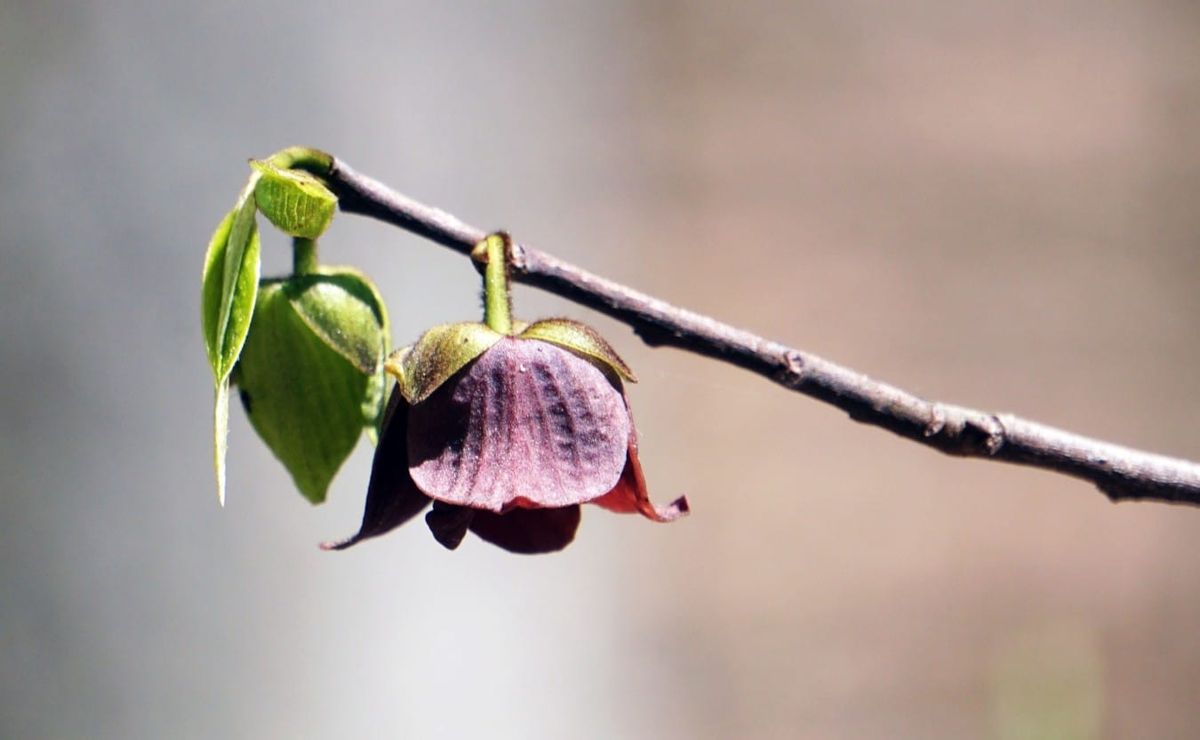
a narrow stick from a pawpaw tree ends with three emergent growths: a set of small leaves, a green bud soon to flower, and a dark maroon flower in bloom
The pawpaw — a small, native deciduous tree — exhibits a unique drooping maroon flower early in the spring.

Editors note: Anne Kibbler is assistant editor for Limestone Post. An avid admirer of wildflowers, Anne collected these photographs while hiking in Monroe Countys various parks, forests, and wilderness areas.


For a few glorious weeks in early to mid-spring, Indiana’s forest floors transform from blankets of grays, greens, and browns to multicolored quilts studded with hundreds of thousands of flowers. Native spring plants, known as spring ephemerals because of their fleeting existence, bloom in waves of succession from February through mid-May. Some are subtle enough that you need a careful eye to pick them out among the emerging ferns and sedges. Others are so astonishingly vibrant, it’s hard to believe they haven’t been planted by a woodland florist. 

Their names are as colorful as their appearance, and often aptly descriptive. Small but sturdy snow trilliums are among the first to brave the chill February air. Soon after come harbingers of spring, whose miniature flowers can barely raise their heads above last year’s bed of leaf litter. Then, in quick succession, pink, purple, and white hepatica poke through the soil, along with bloodroot, whose sap will stain (and irritate) your skin, and twinleaf, with its pair of kidney-shaped leaves and short-lived white blooms. There’s cutleaf toothwort, woodland phlox, jack-in-the-pulpit, and a variety of trilliums. Plus delicate spring beauty, Dutchman’s breeches, rue anemone, and trout lily, with its spotted leaves and intricately curved yellow blooms. 

If you know where to look, you can find impressive swaths of Virginia bluebells, umbrella-like Mayapples, deep purple larkspur, and petite but dazzling blue-eyed Marys, as well as fiercely scarlet fire pinks and golden two-flowered Cynthias. You might even spot a gorgeous showy orchis, which puts on a much more flamboyant display than its more reserved orchid cousins. 

But all too soon, this stunning display will be over — and that’s what makes it all the more special. Having gloried in their brief moment in the dappled sun, spring ephemerals will disappear as quickly as they emerged, and tangled thickets will soon smother the ground under the forest’s dense summer canopy.
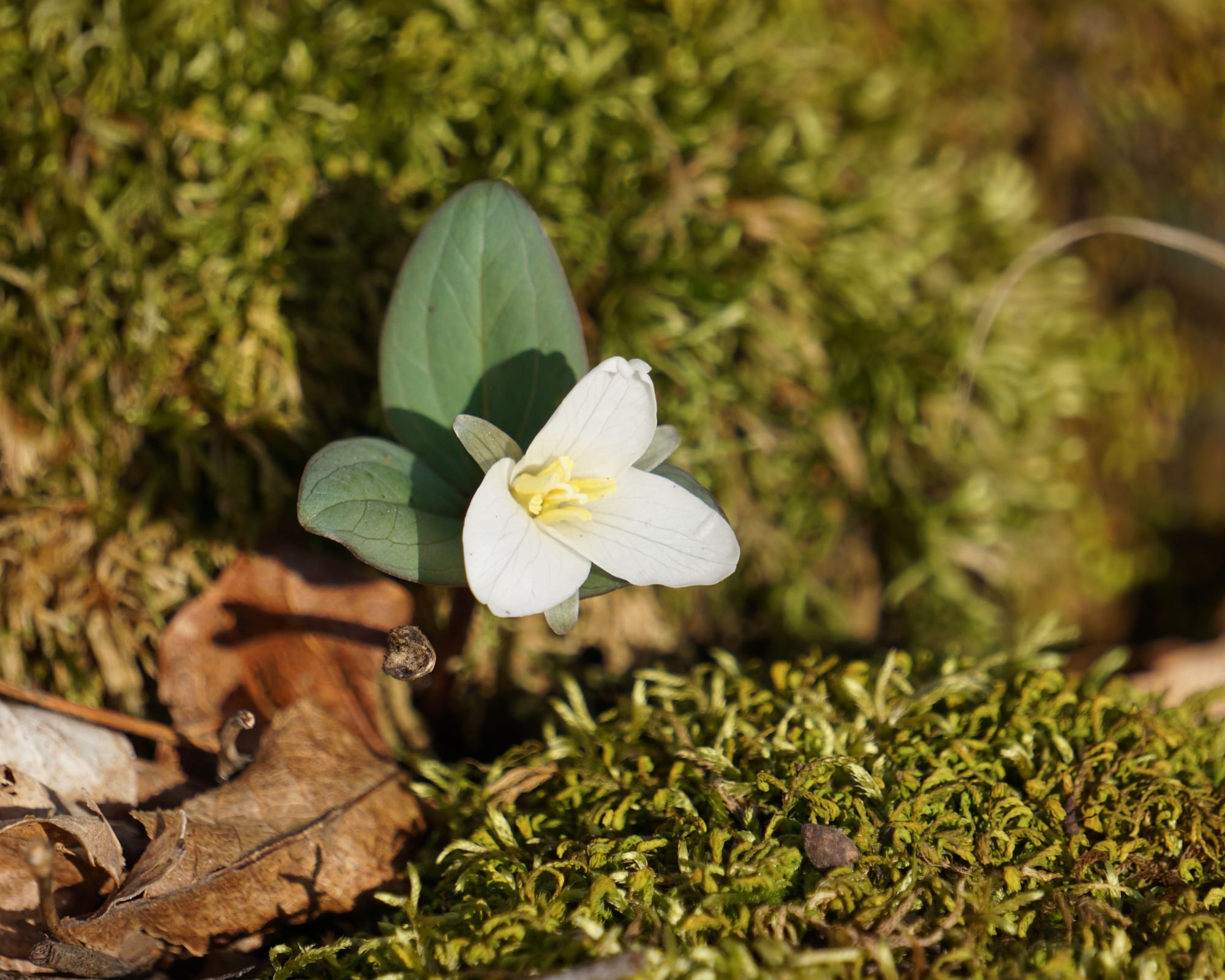
a white snow trillium flower emerges above dark green, purplish leaves, growing in the midst of moss and leaves
Snow trillium, found at the Cedar Bluffs Nature Preserve, is one of the earliest spring bloomers, appearing as early as late February.
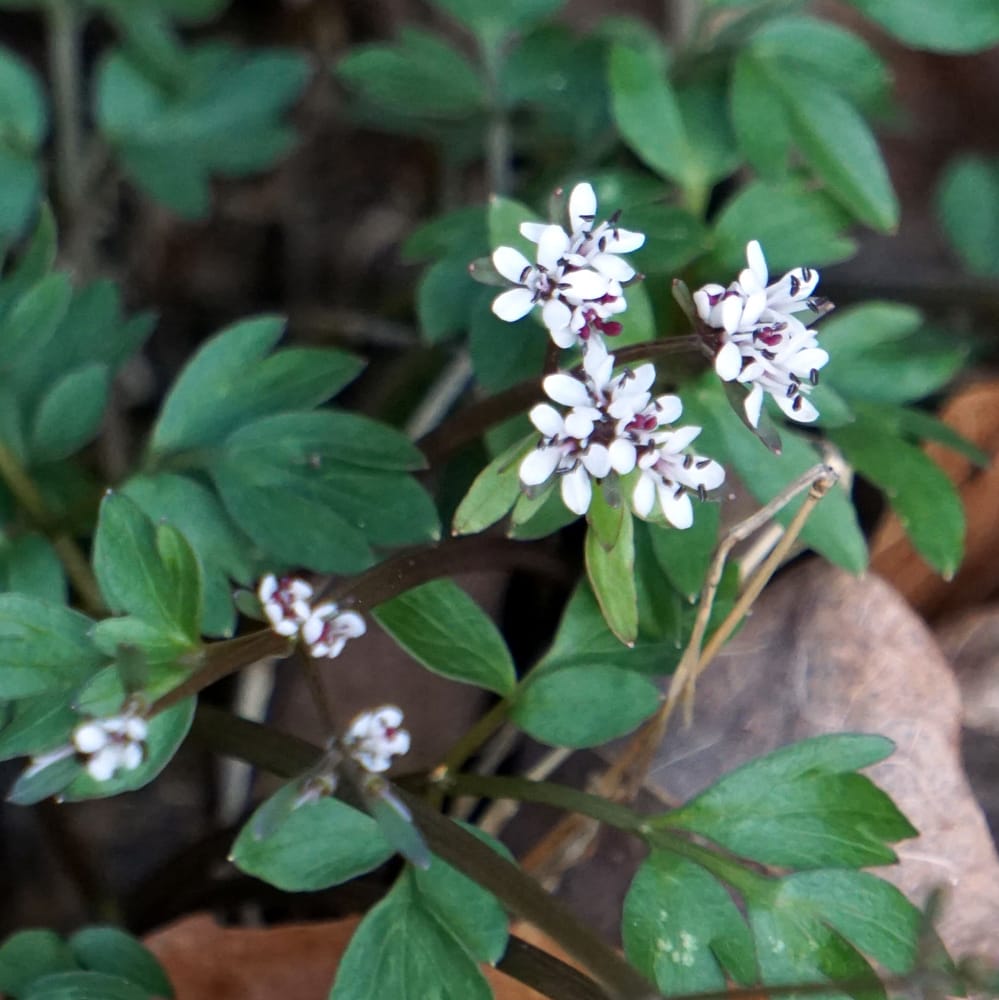
tiny white flowers with black stamens above dark, three-fingered leaves
The tiny harbinger of spring, also known as pepper and salt, is often the first flower to poke through the forest floor.
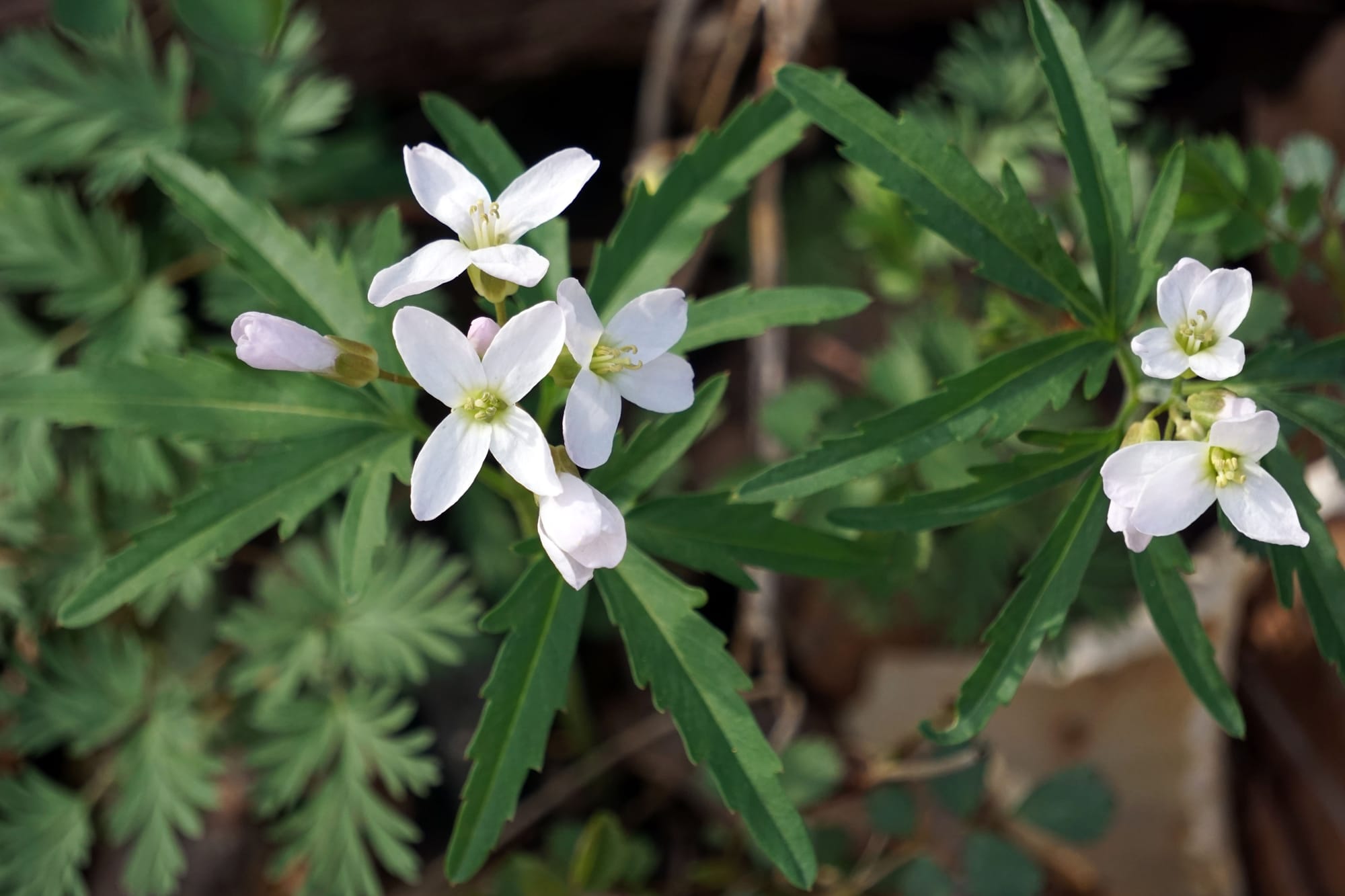
cutleaf toothwort has white, four-petaled flowers and long, jagged-edged green leaves
Cutleaf toothworth is found in multitudes in woods all over southern Indiana, including Dunn’s Woods on the Indiana University campus, and at Griffy Lake Nature Preserve.
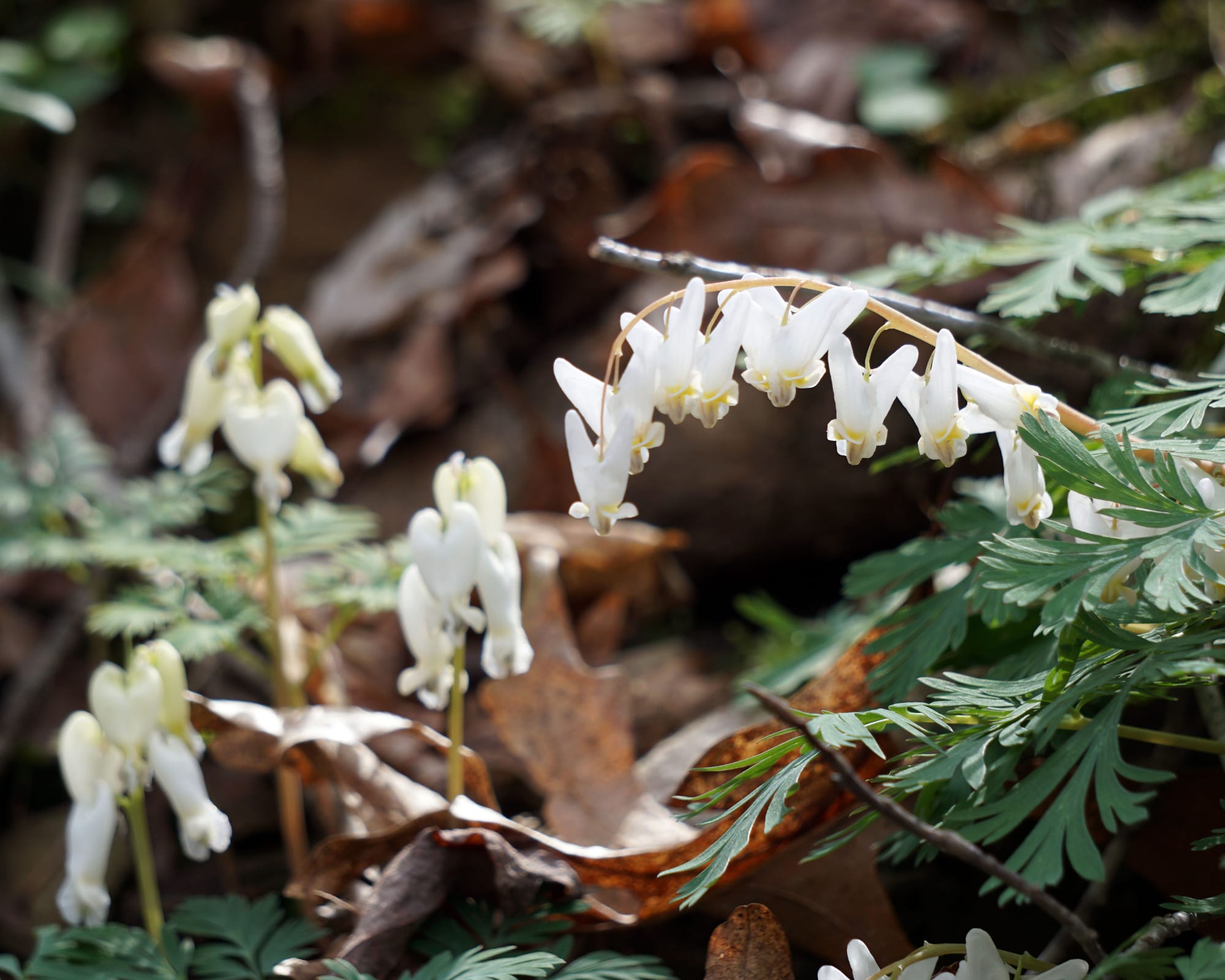
left background: squirrel corn with white, rounded, heart-shaped flowers; right foreground: Dutchman’s breeches has white, pointed flowers
Dutchman’s breeches (foreground), known for their pantaloon-shaped blooms, are often confused with squirrel corn (background), which has similar leaves but a heart-shaped flower, like its cousin bleeding heart.
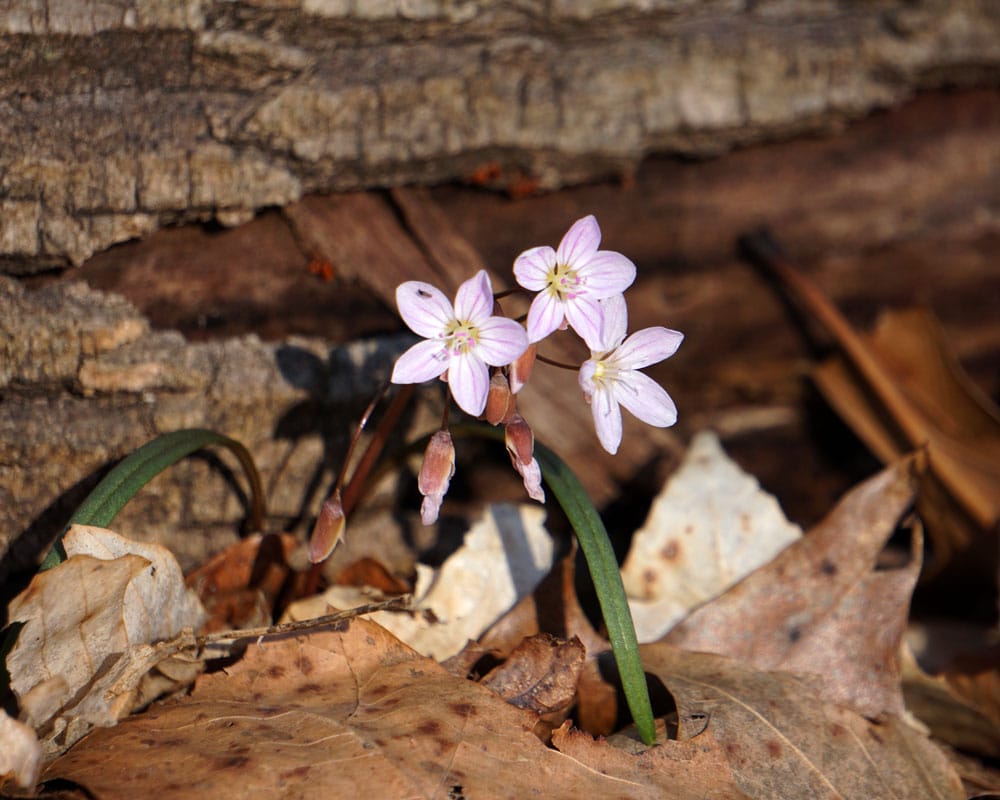
Spring beauty is another common early spring bloom, with delicate white or pink blooms and grass-like leaves.
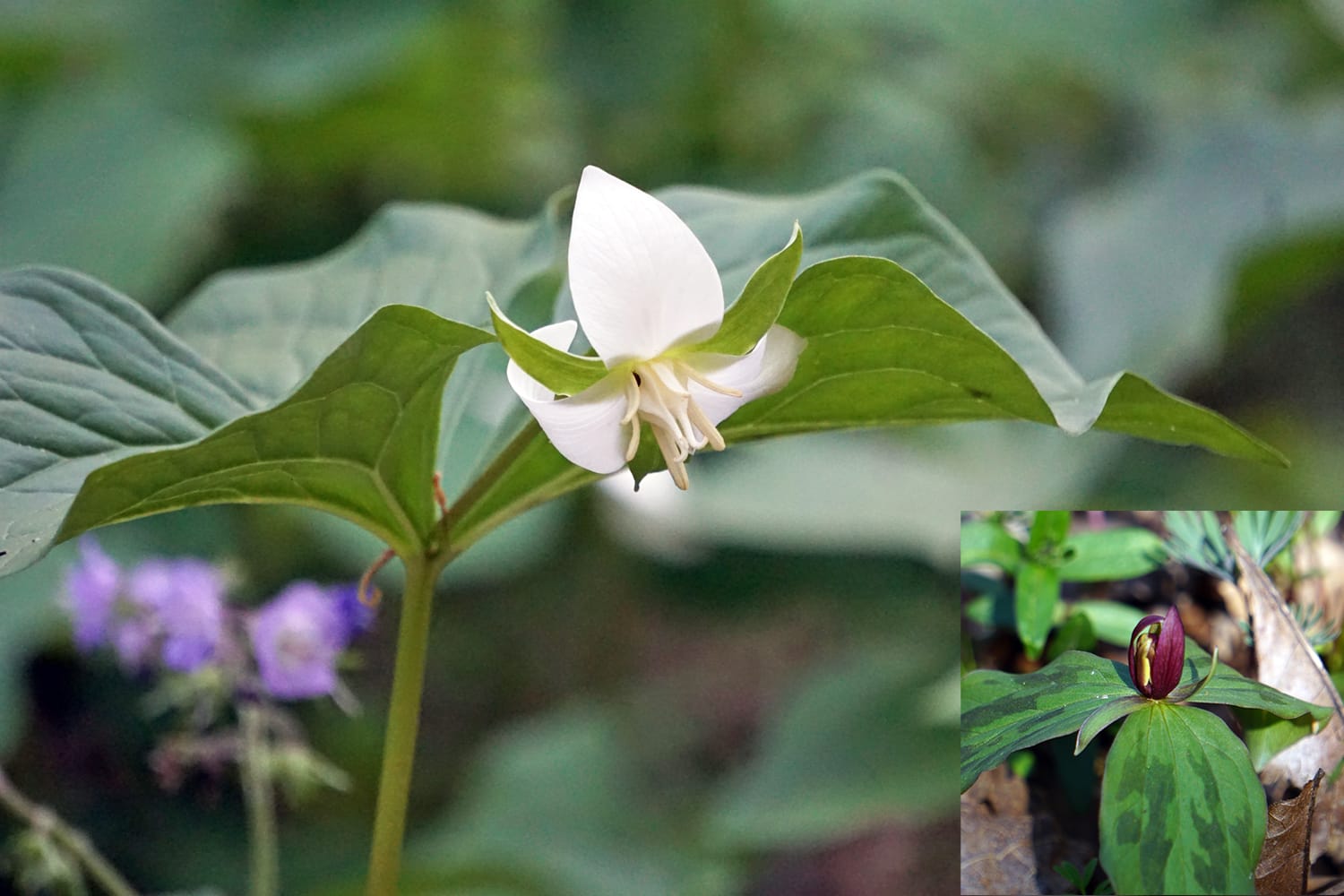
the white flower of a drooping trillium hangs downward between wide leaves; the sessile trillium has an upright purple flower sprouting in the middle of three mottled green leaves
Trilliums are named for their three-part leaves, flowers, and sepals. Indiana has a number of varieties, in reds, whites and yellows, including this drooping trillium, in the Deam Wilderness, and sessile trillium, at Sycamore Land Trust’s Porter West Nature Preserve.
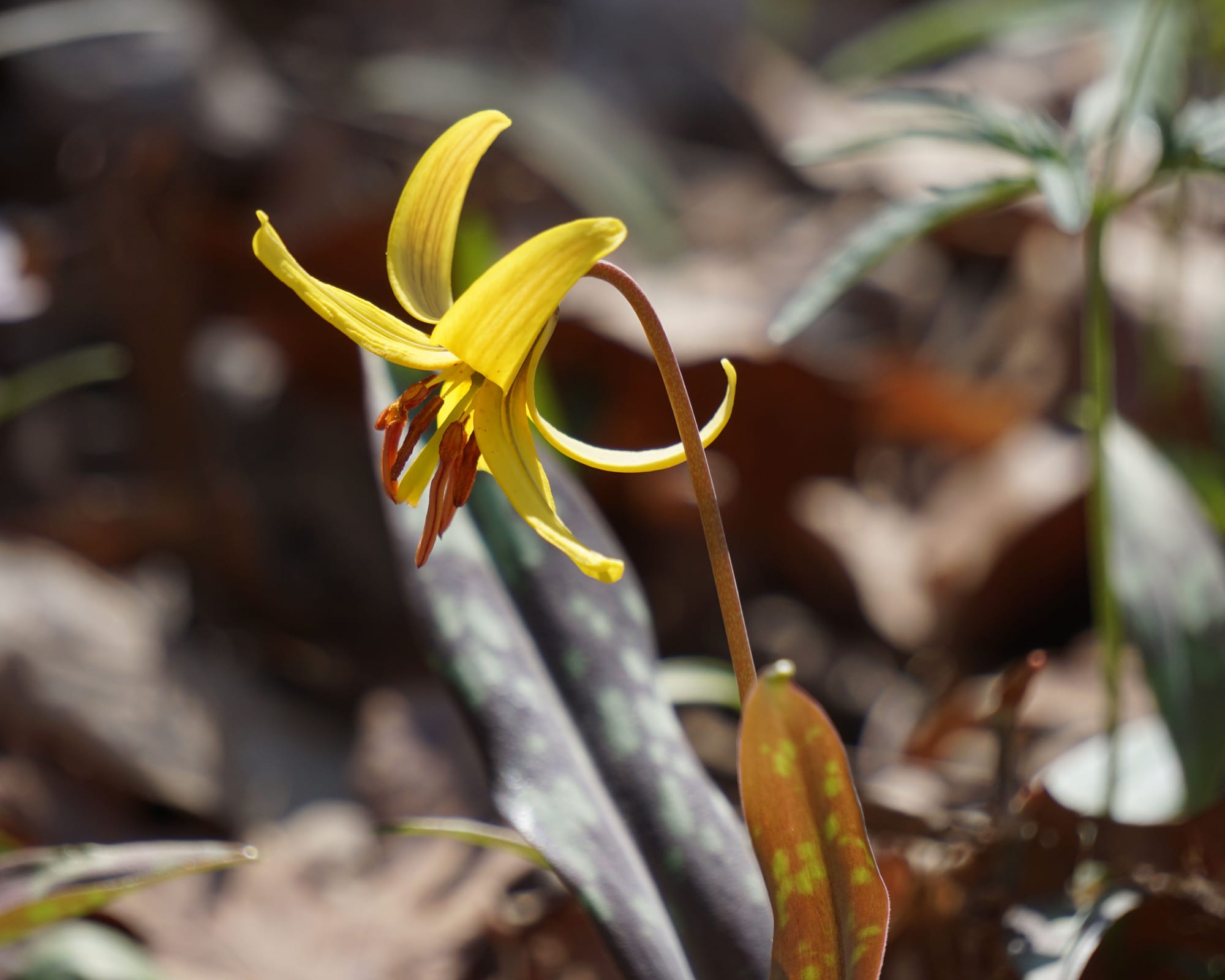
a curved yellow flower with long brown stamens hangs downward from a tall, narrow stalk
Most trout lilies in southern Indiana are butter yellow, like this one at Sycamore Land Trust’s Porter West Preserve. Less common white blooms can be found in Dunn’s Woods on the IU campus.
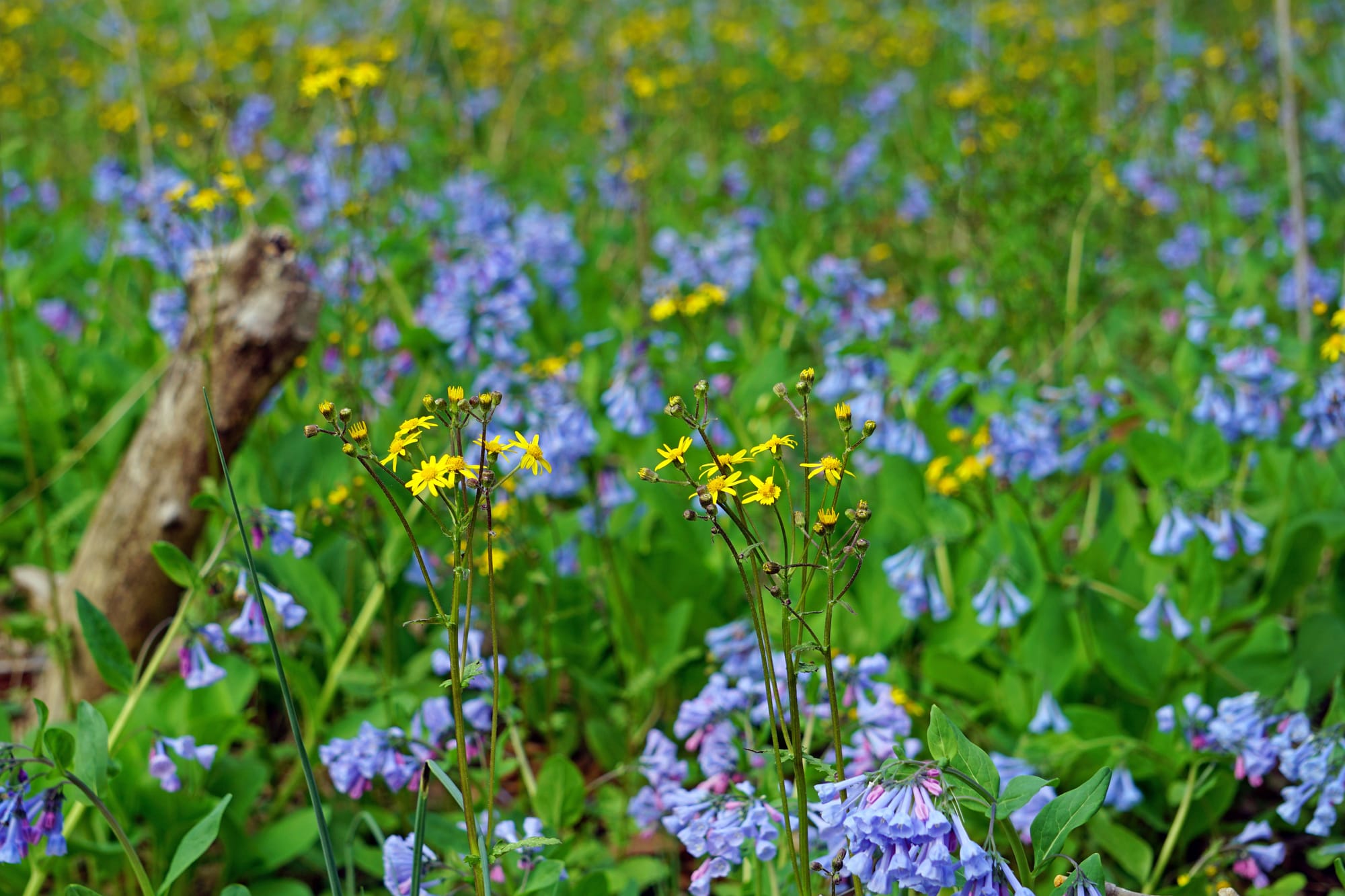
yellow and blue flowers contrast against green leaves and grass
Sunny yellow ragwort contrasts perfectly with Virginia bluebells at Griffy Lake Nature Preserve.
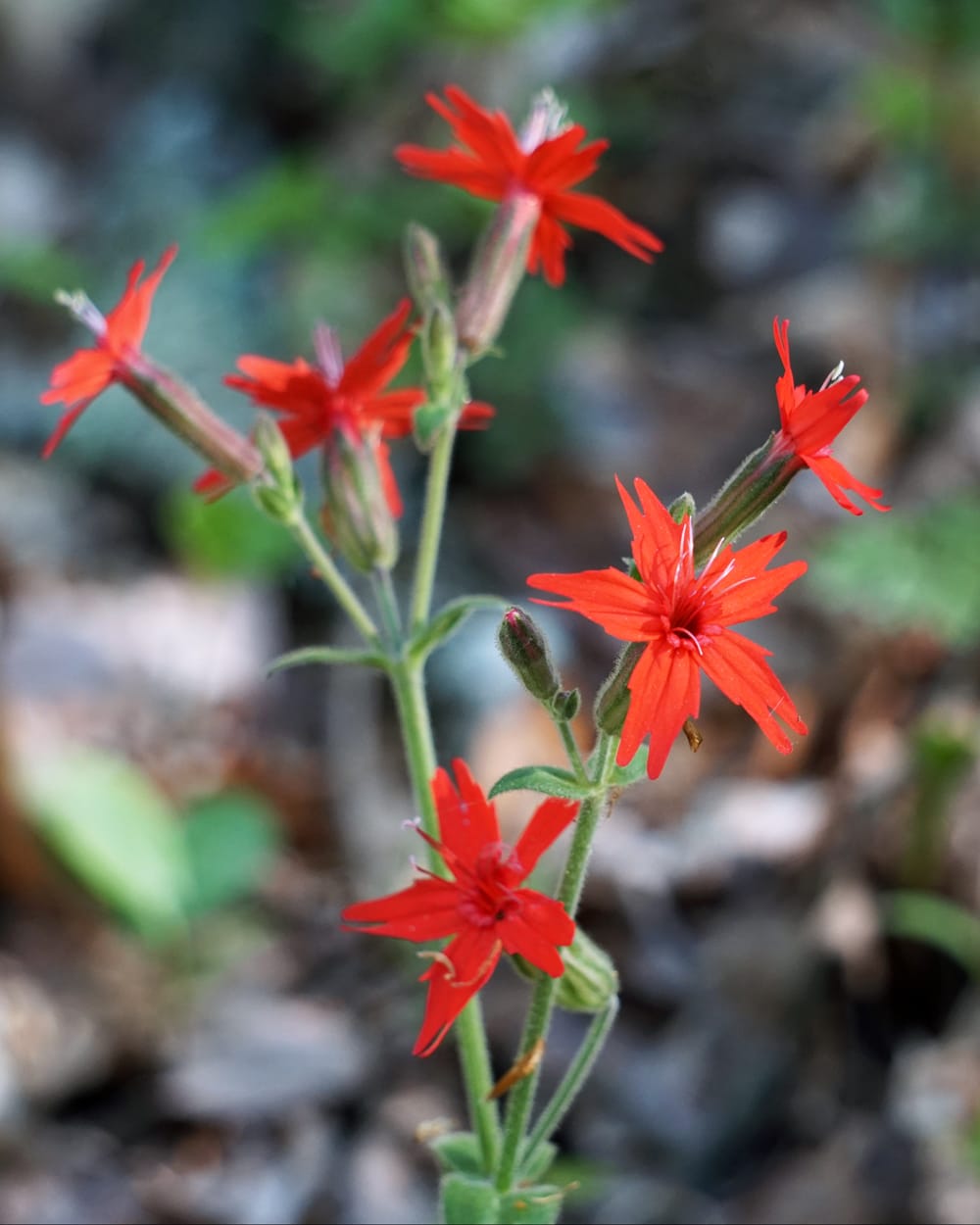
fire pink has vibrant reddish-orange star-shaped flowers
The vibrancy of fire pink, which actually is more like a bright scarlet, stands out among spring flowers along Hayes Trail in the Deam Wilderness.
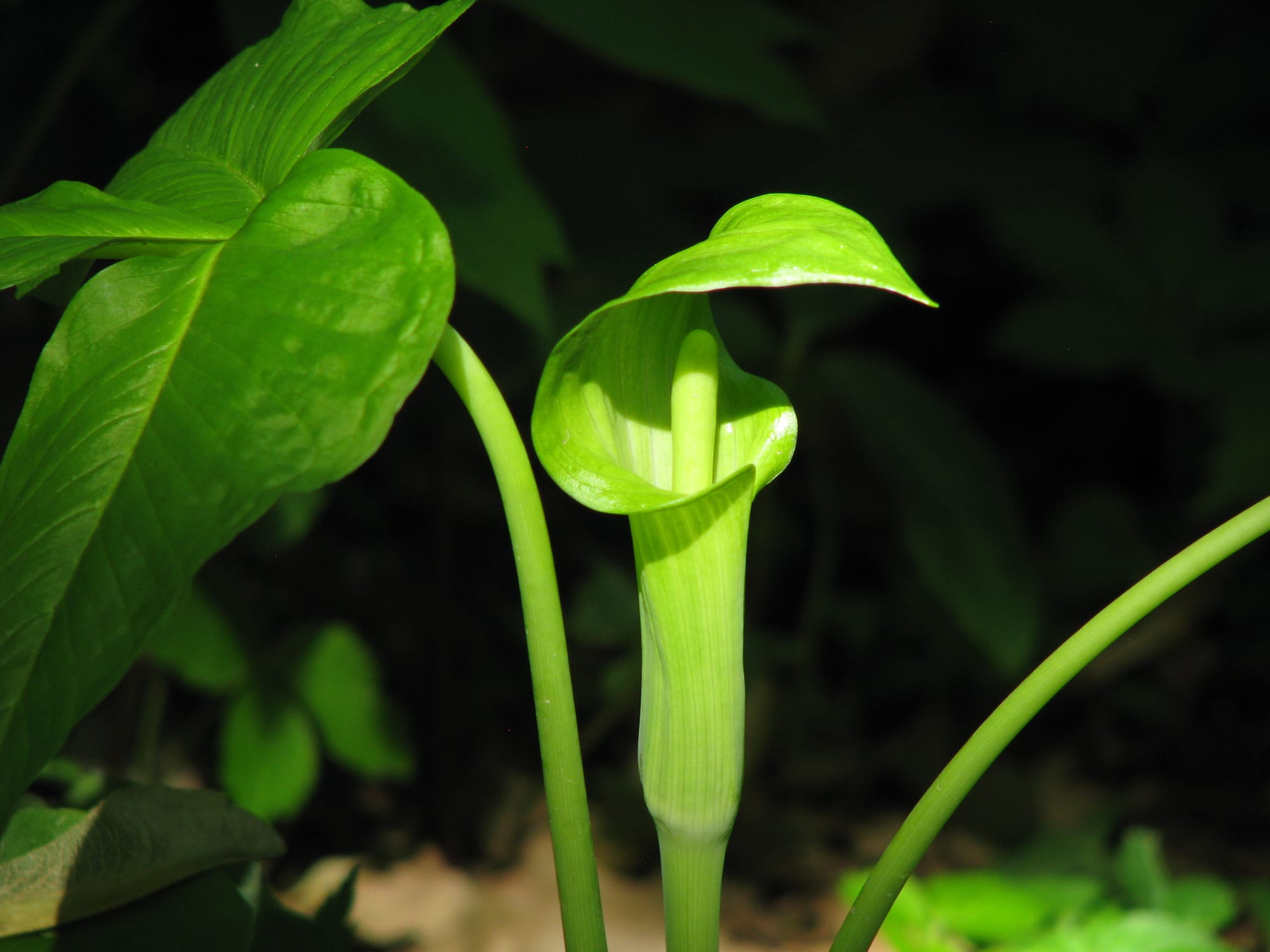
this pale green Jack-in-the-pulpit exhibits the iconic hooded exterior above the cupped bottom, within which the grows the column-like spadix
The color of Jack-in-the-pulpit varies from shades of green to maroon and silver, with the spadix, or “Jack”, peeking out from the stripy spathe, or “pulpit.”
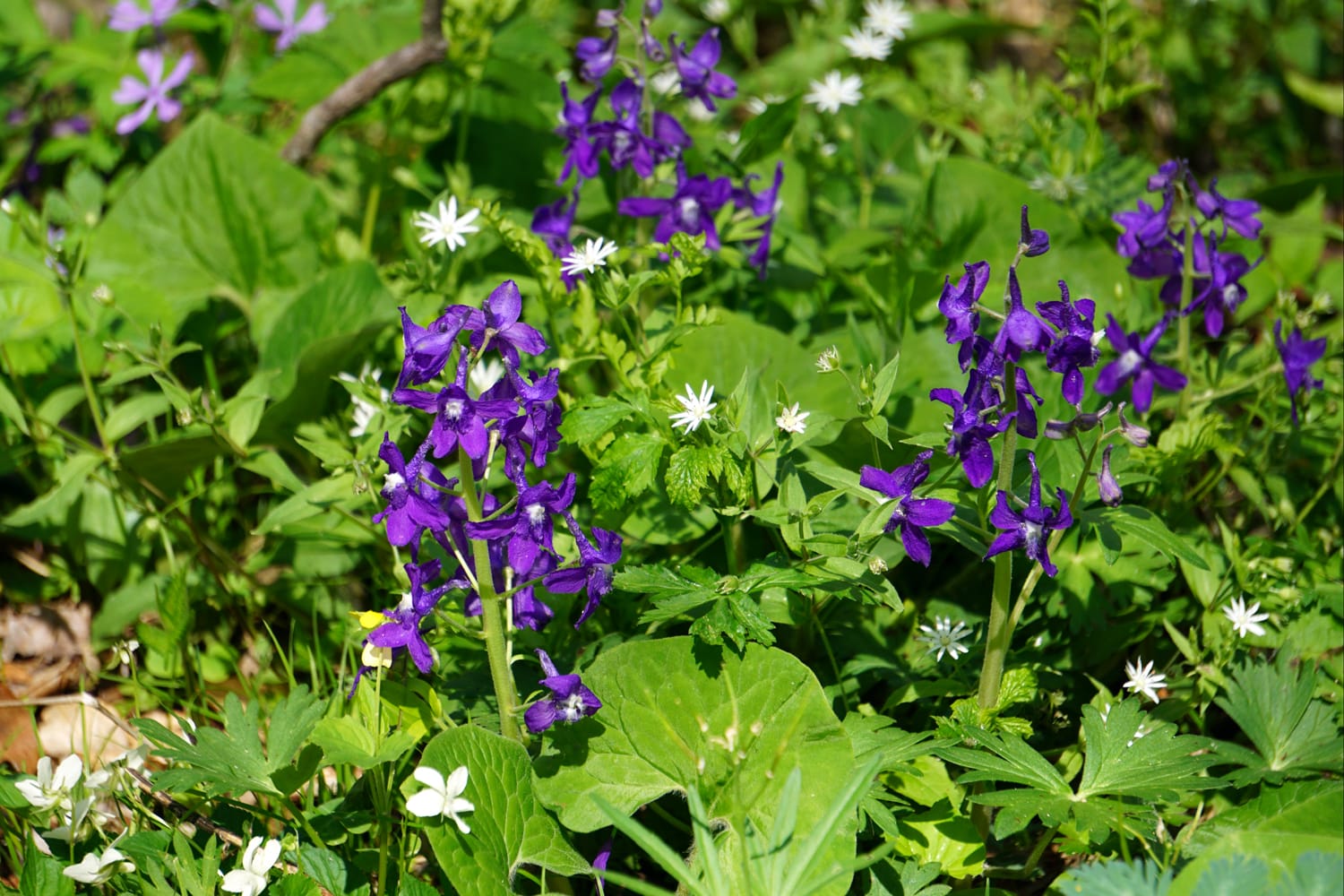
purple larkspur and white star chickweed contrast against green leaves
Larkspur and star chickweed form a study in contrast at Sycamore Land Trust’s Porter West Preserve.
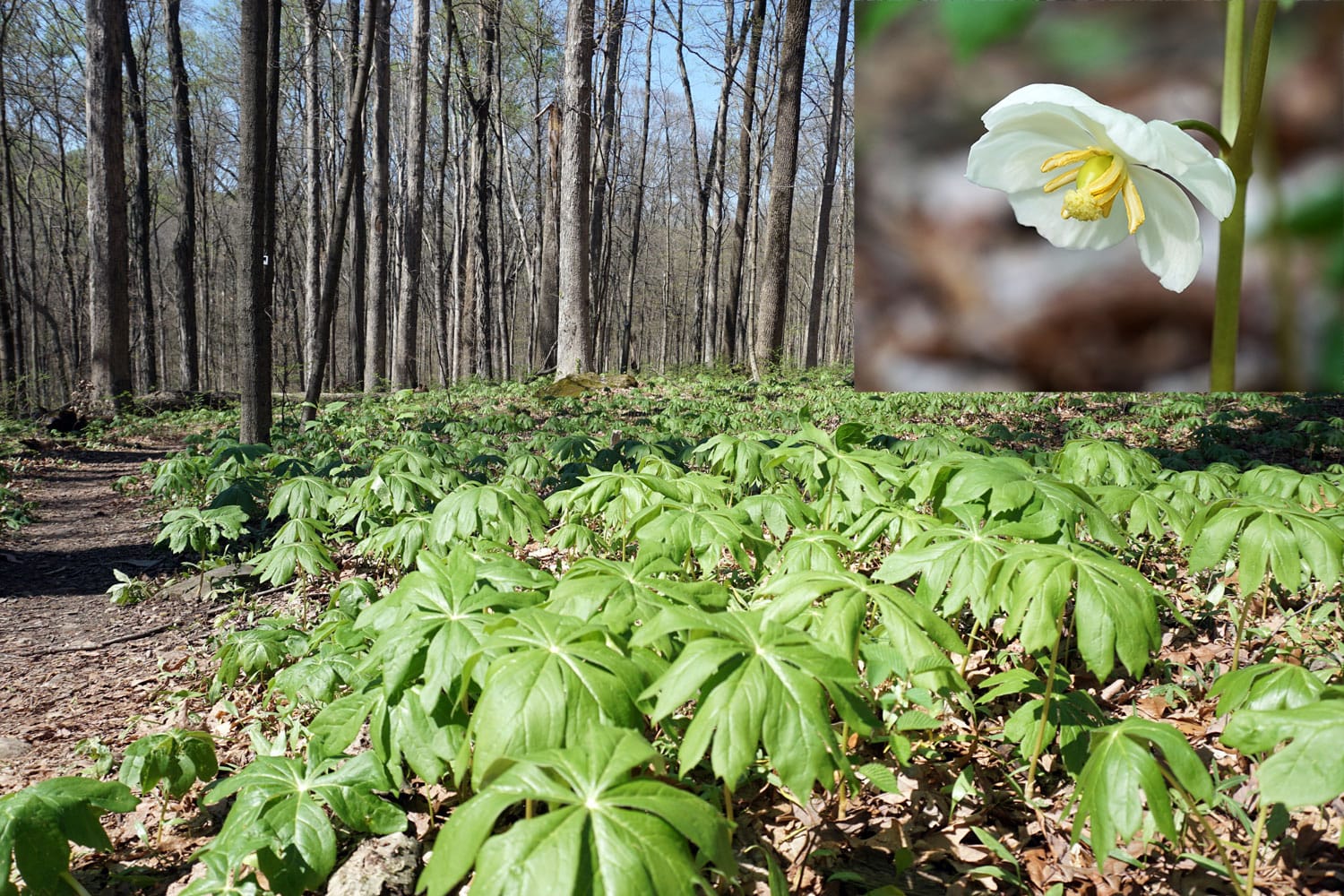
umbrella-shaped Mayapples proliferate a miniature green canopy over the forest floor
Mayapples, with showy white blooms hanging under their umbrella leaves, form a carpet along the trail at Sycamore Land Trust’s Porter West Preserve.
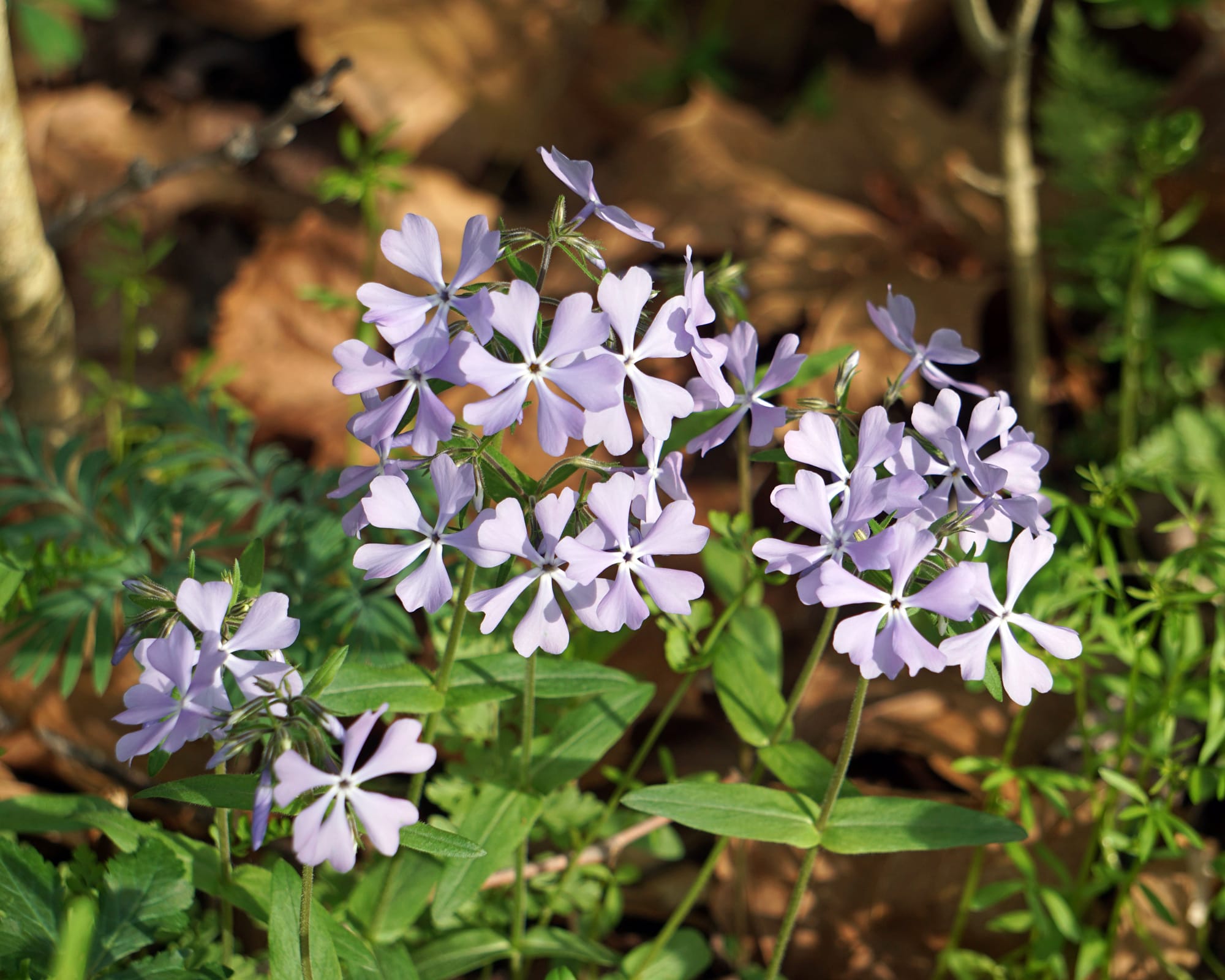
phlox has pale purple flowers of five or six lobes
Multiple kinds of woodland phlox, like these at Griffy Lake Nature Preserve, bloom throughout the forest.
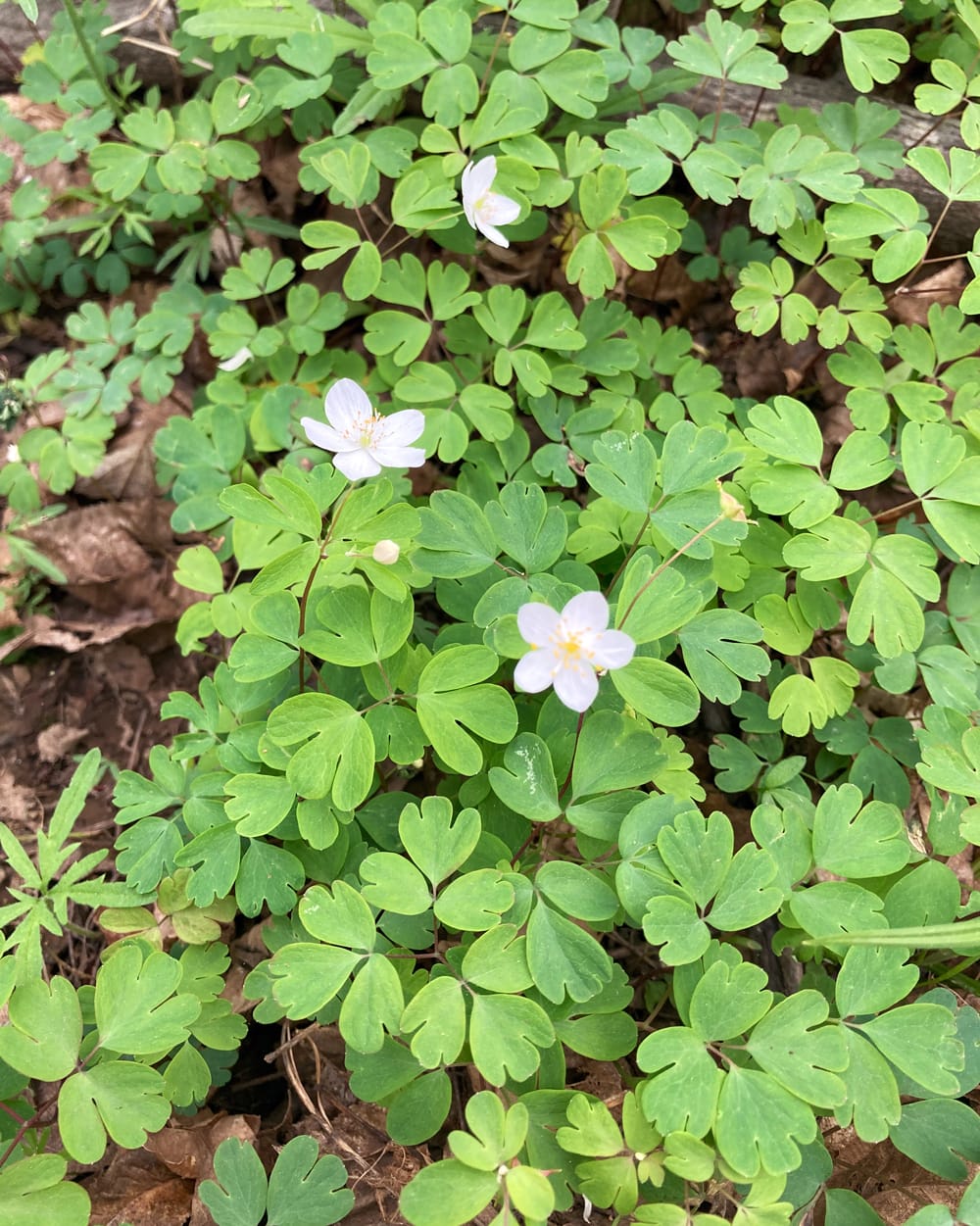
three white, five-petaled flowers stand out above a patchwork of green leaves
Rue anemone, here at Sycamore Land Trust’s Amy Weingartner Branigan Peninsula Preserve, is distinguishable by its rounded leaves, which can look similar to clover.
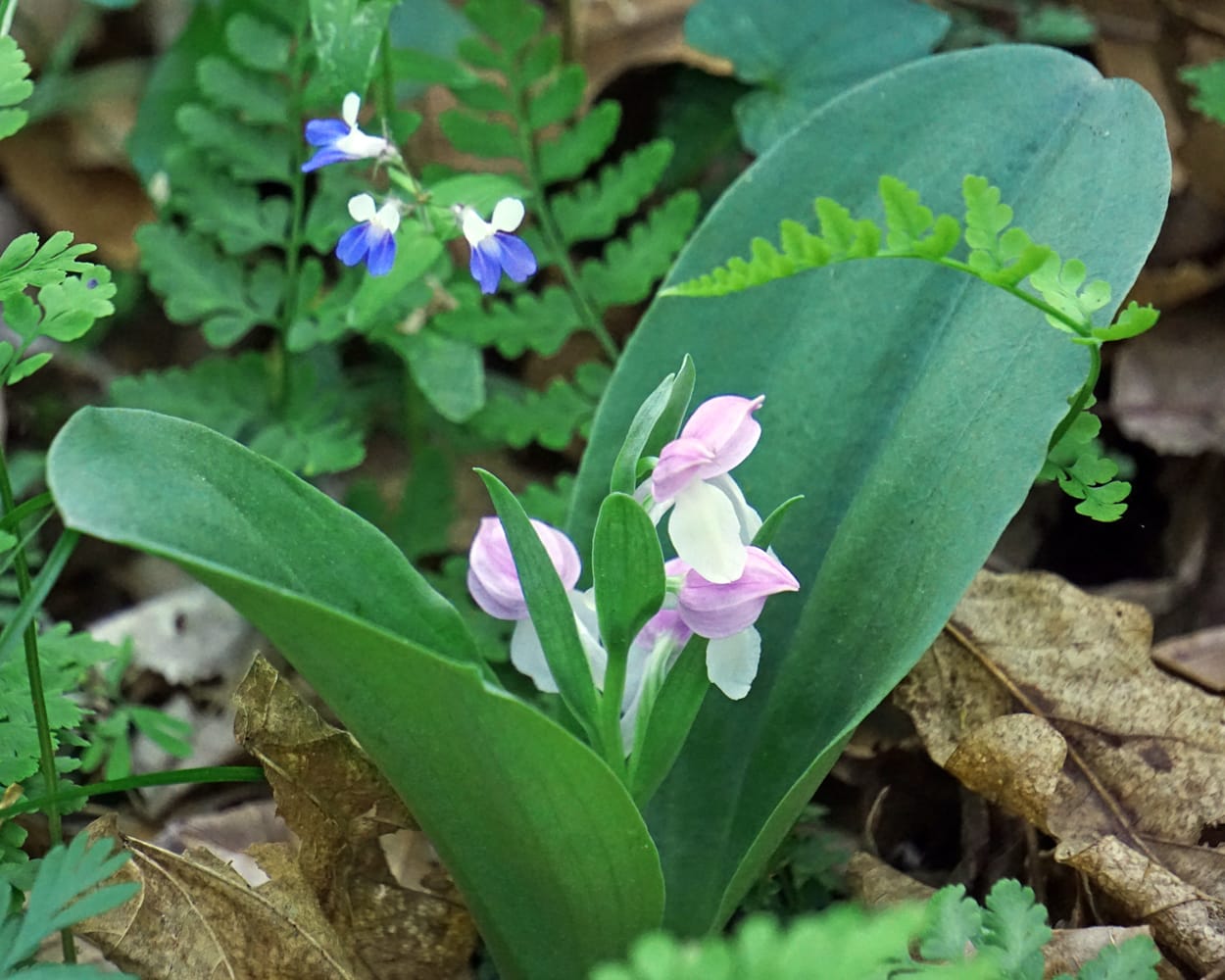
pale white and purple orchis flowers emerge between large green leaves; blue and white blue-eyed Marys and green ferns surround the orchis
The stunning showy orchis is one of the more colorful native Indiana orchids. This one was growing along Hayes Trail in the Deam Wilderness, in the company of blue-eyed Marys.
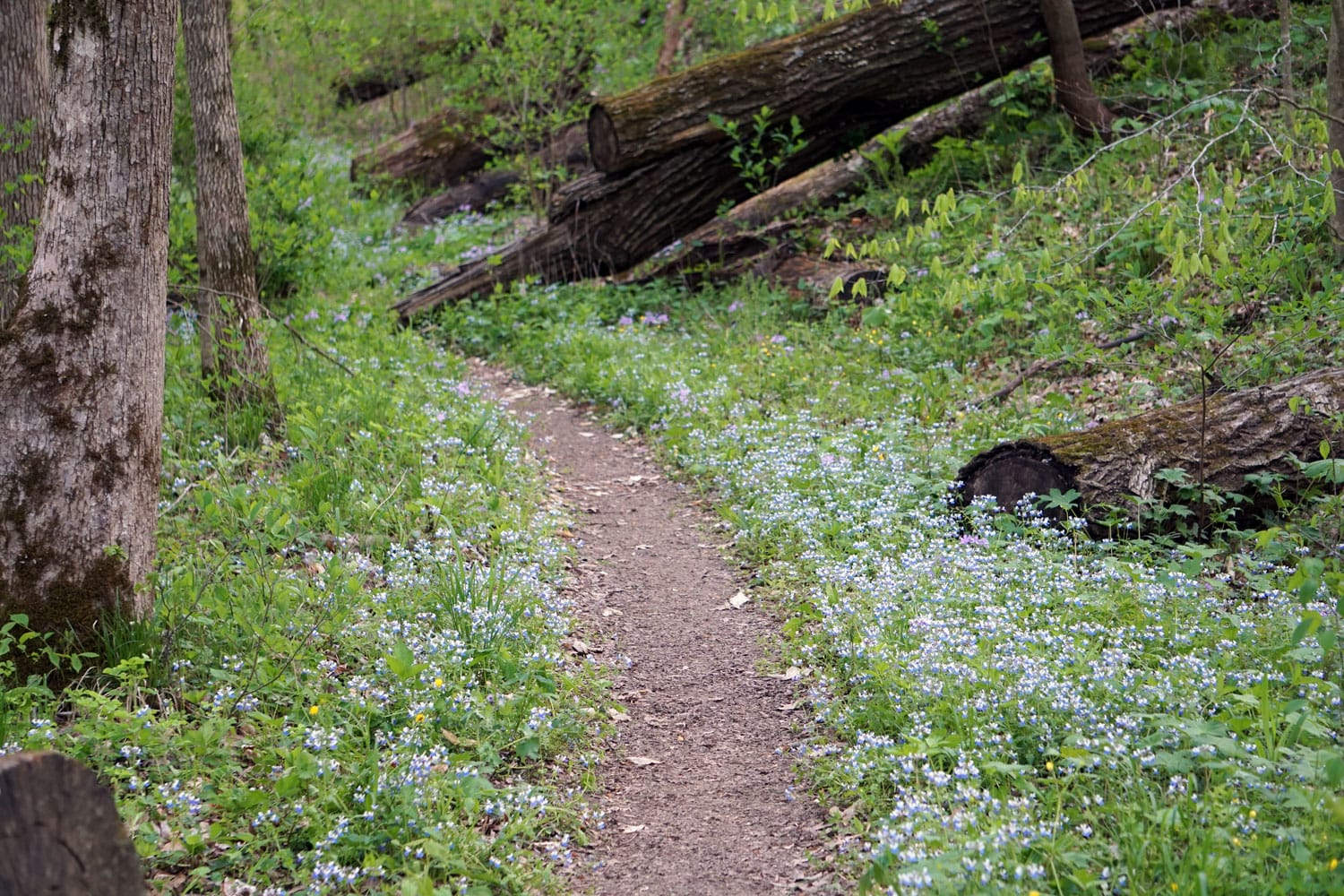
a dirt trail cuts between thick carpets of blue flowers and green grass and leaves. Trees, both live standing and fallen dead, line the trail
Blue-eyed Marys bloom in profusion for a brief time in the spring on Hayes Trail in the Deam Wilderness.
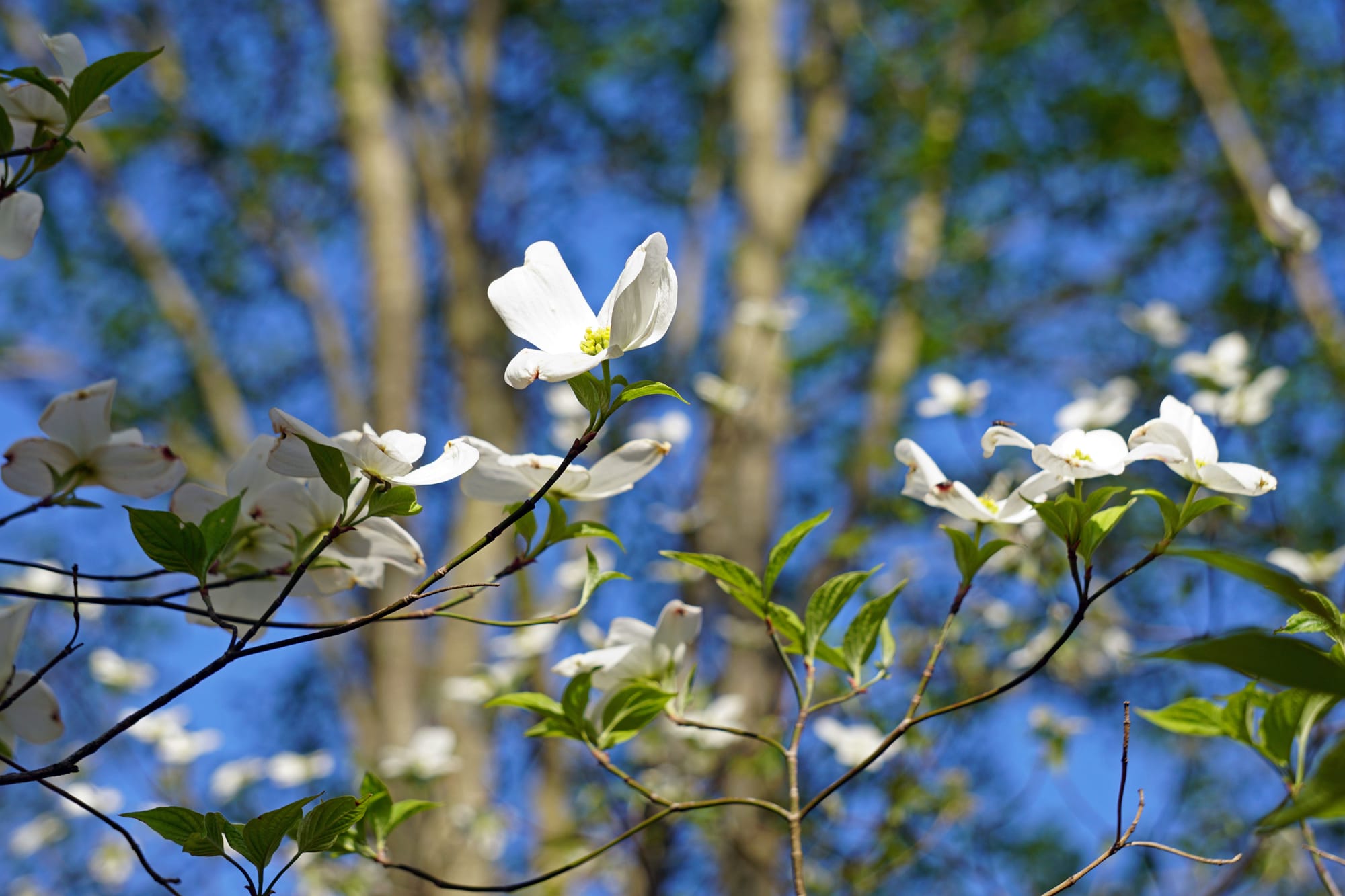
a dogwood tree blooms with large white flowers
Dogwood’s broad white flowers offer a bright complement to spring ephemerals on the forest floor below.