
Stirring the Pot: Spring Awakening
Ruthie Cohen chats with LP's executive director, Dason Anderson, about wild spring edibles.

Stirring the Pot: Spring Awakening
In this edition of “Stirring the Pot,” Ruthie has a conversation with Limestone Post’s executive editor, Dason Anderson, in which they discuss foraging wild spring edibles. Dason is not an expert in this field, and this article is not intended to give professional medical or dietary advice. Please use caution when harvesting wild plants and consume only that which you can positively identify.
First comes that inexplicably sunny day in the midst of a harsh winter. Later you notice tender green shoots peeking out shyly from dry, brown dirt. One day you don’t need that heavy winter coat.
Spring has arrived. After a few false starts and a bit of gentle teasing, Spring is finally here. And the calendar confirms it.
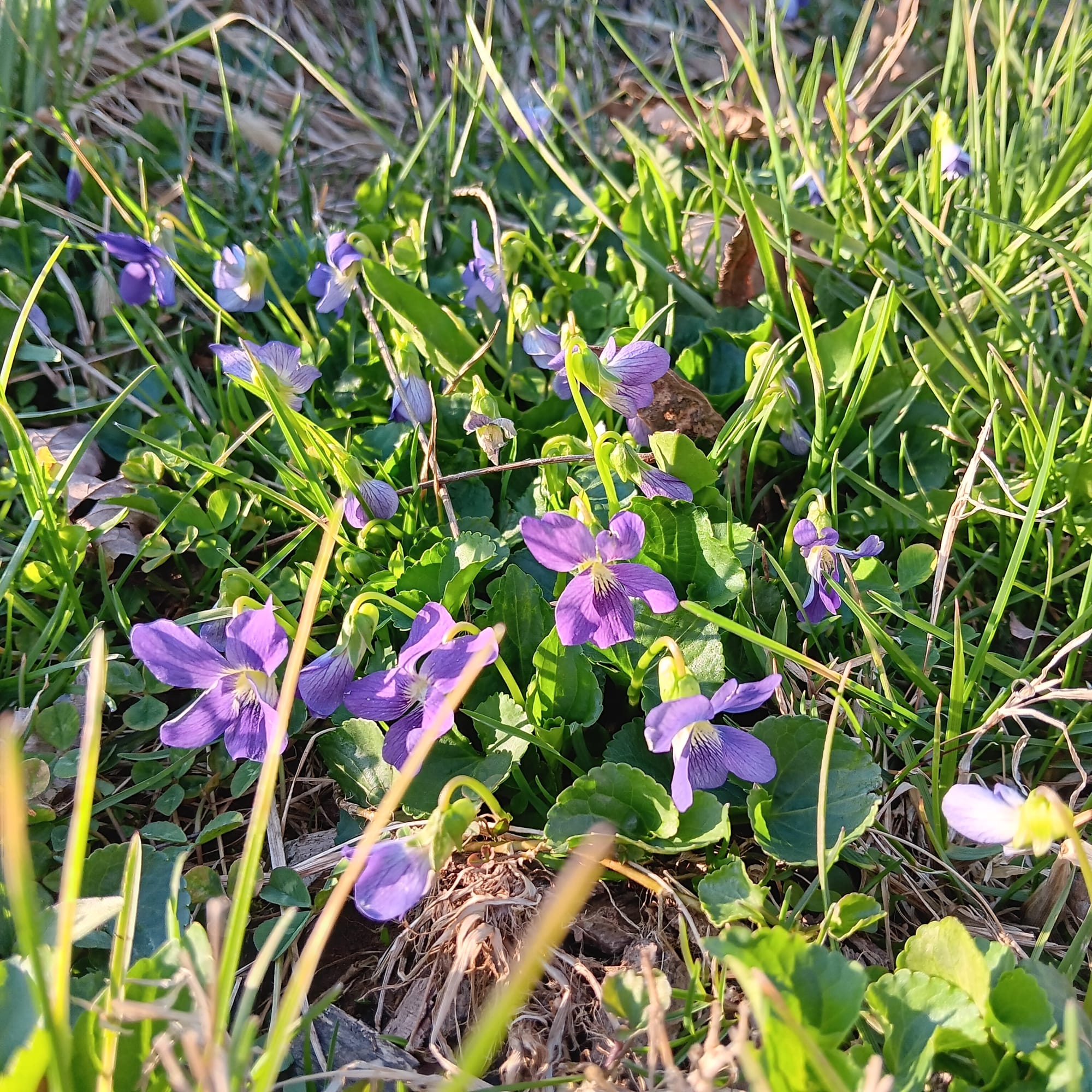
What a subtle, lovely season! Colors, fragrances, and warmth return. Wild violets, eager crocuses, and happy daffodils greet us. Clusters of mushrooms gather under trees that will soon spread their green canopies. We are not yet ready to be assaulted by the bold, beefsteak tomatoes of Summer. Not yet. Instead we delight in Nature’s artistic rendering of color — soft pastels, lush greens, deep purples.
Dason Anderson, the executive editor of this magazine, is a devoted acolyte of Spring and has been so for many years. In a recent conversation, he shared the unfolding of his passion for the season, along with recipes, of course!
“I got into wild foraging and edible wild plants when I was in high school. It started out with making dandelion fritters. You take the flower heads, dip them in batter, and fry them. Morels became a part of that. I grew up hunting mushrooms, but that’s when I started expanding to other wild edibles.
“After the spring ephemeral flowers come, the morel mushrooms poke their little heads up out of the leaves. They’re painfully elusive but so worth it.
“I grew up eating them Hoosier style, which would be dredged in flour and fried in oil, or butter, or both. A little bit of salt and pepper. Don’t knock it until you try it. It’s delicious.
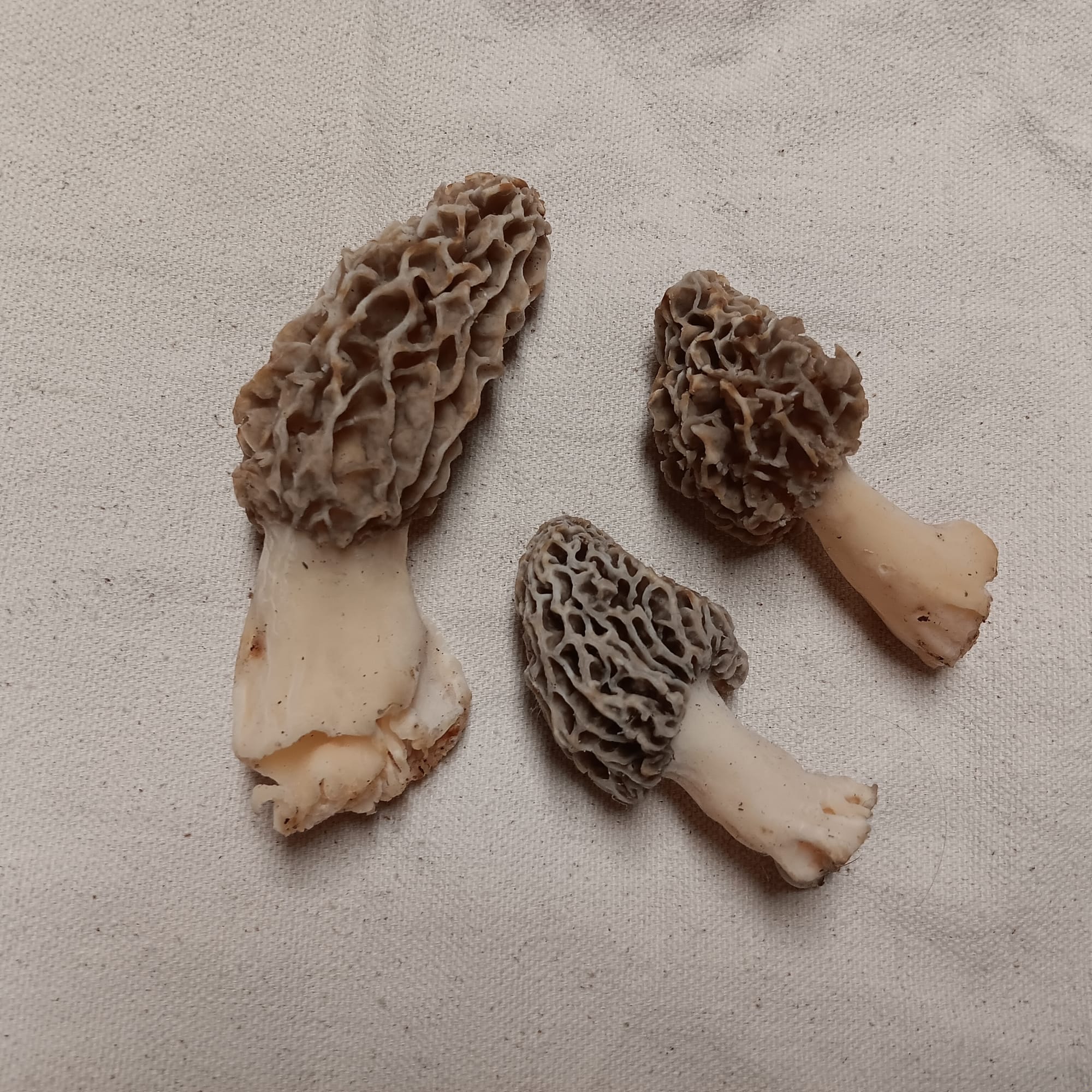
“Nowadays when I get home with my haul I will always set aside a few to fry up Hoosier-style. But the past few years I’ve become more experimental. I did a morel mushroom and ramp scramble, I’ve done omelettes. I did a mushroom soup one year. You don’t just have to bread them and fry them and eat them. You can use morels in all sorts of dishes, and they’re just wonderful.
“Everyone has their spots. I grew up in Oolitic and the limestone quarries were like my playground. And in April you’d always see a couple of people out there walking through the woods with plastic Walmart bags. There are hollows and creeks and forested areas in the quarries and people would hunt mushrooms there.
“My family also has some property in Lawrence County that we go on. It’s always a fun day. You know, get out, take a friend, take your kid, take your dad. You just walk through the woods. In the summertime the thickets have grown up and the branches are all leafed out and it’s difficult if you’re not on a trail. But early in the spring you can just walk.
“You have to know where to look for mushrooms, too. You know, which trees are they growing near? You’d look for shagbark hickory or beech. Which side of a hill or slope do they grow on? Things like that.
Spring Ephemerals
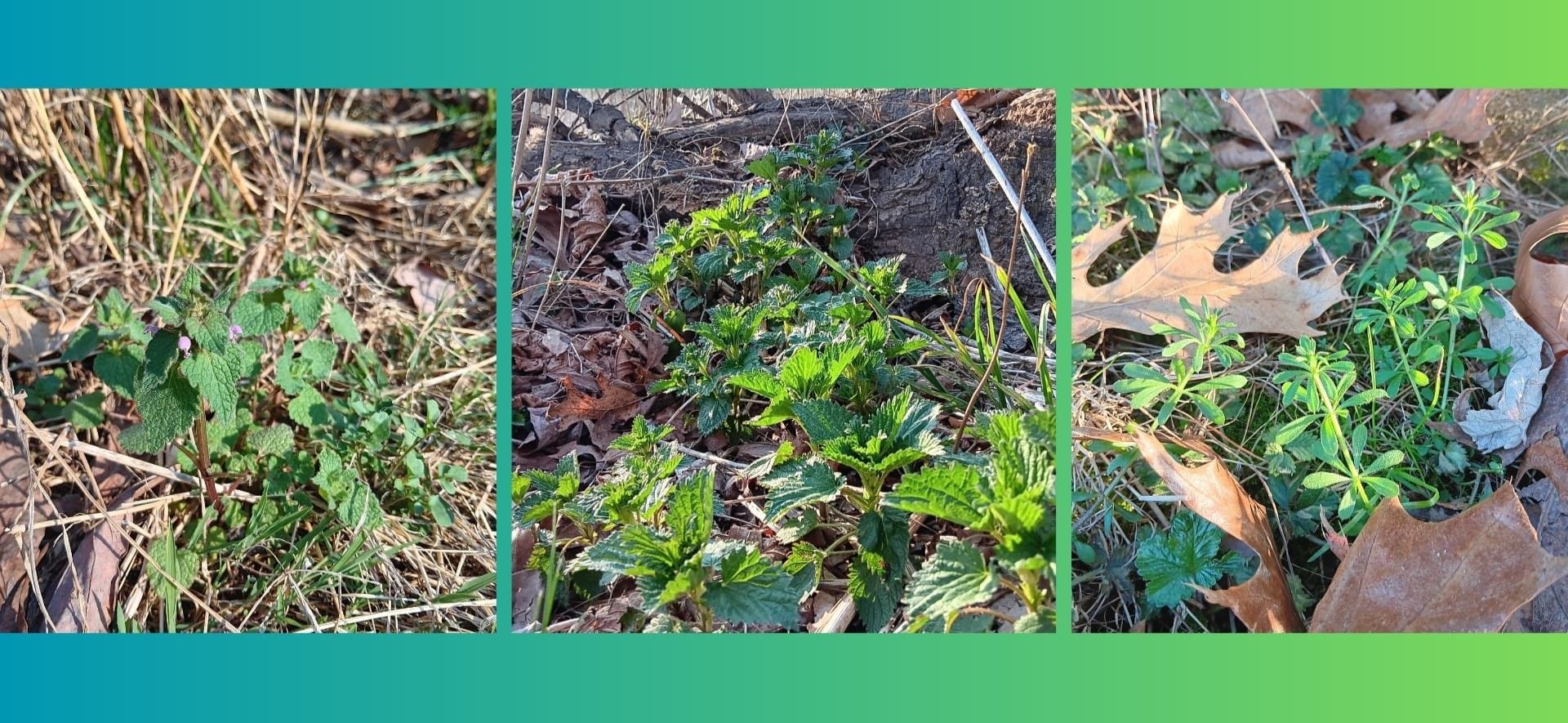
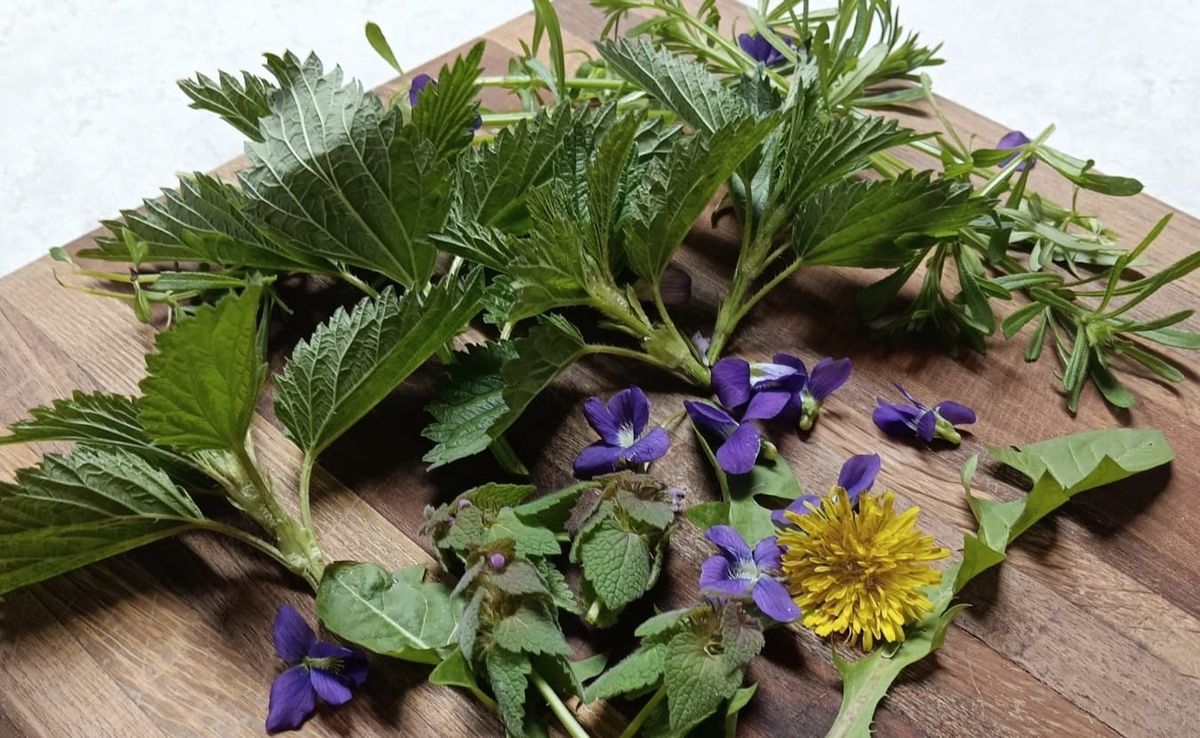
“Now, in the spring I’ll go walk in the woods or through a field and find cleavers and chickweed, stinging nettle and purple dead nettle, violets and sorrel, and all of these green things that are starting to come up. In particular, I’ll take cleavers, which have lymphatic stimulating properties, and they have a delightful flavor — a very bright, clean, zingy, herbal flavor — and I’ll take the young leaves of stinging nettle, which you can just pluck right off. Stinging nettle is full of amino acids, vitamins, protein, and minerals like iron, calcium, magnesium, and zinc. It’s a superfood and it’s delicious. You can sauté it; you can put it in a tea. So, I’ll take those two — cleavers and stinging nettle — as my primary ingredients and I’ll add in some wild violets for their floral, syrupy flavor. I’ll add in some purple dead nettle — which you have to be careful with because it can be a laxative in big quantities. But put a little bit of purple dead nettle in there, and if the lawn sorrel is up you can use that, too. And you make this wonderfully refreshing tea which is so invigorating and cleansing. I put them fresh in hot water, in a tea ball or I’ll tie a cheesecloth bundle and put them in a mason jar or something. It’s a spring awakening tea.”
Spring Awakening Tea
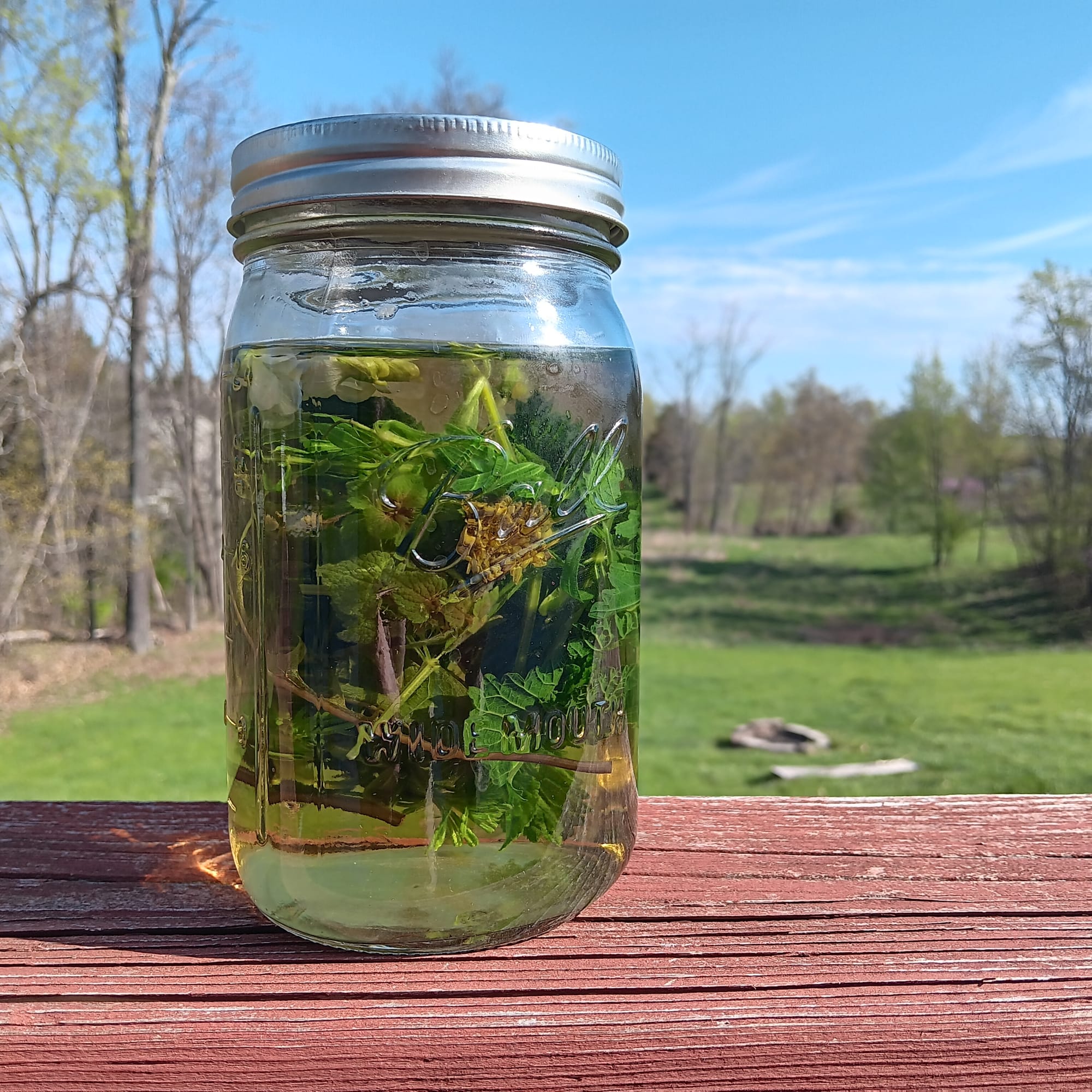
From a field, forest, or lawn free of chemicals and other pollutants, gather your fresh ingredients. This recipe will fill a one quart glass jar. Be sure to sanitize your jar before use.
1 heaping handful of stinging nettle leaves — wear gloves or pluck carefully to avoid skin irritation.
1 heaping handful of cleaver shoots.
1 small handful of purple dead nettle. Not too much, as this could have adverse laxative effects.
Add in other flowers to suit your taste. Dandelion flowers and leaves will impart a bitter flavor, while purple violets will give the concoction grassy, floral notes. Chickweed is savory and will strengthen the nutritional value of your tea.
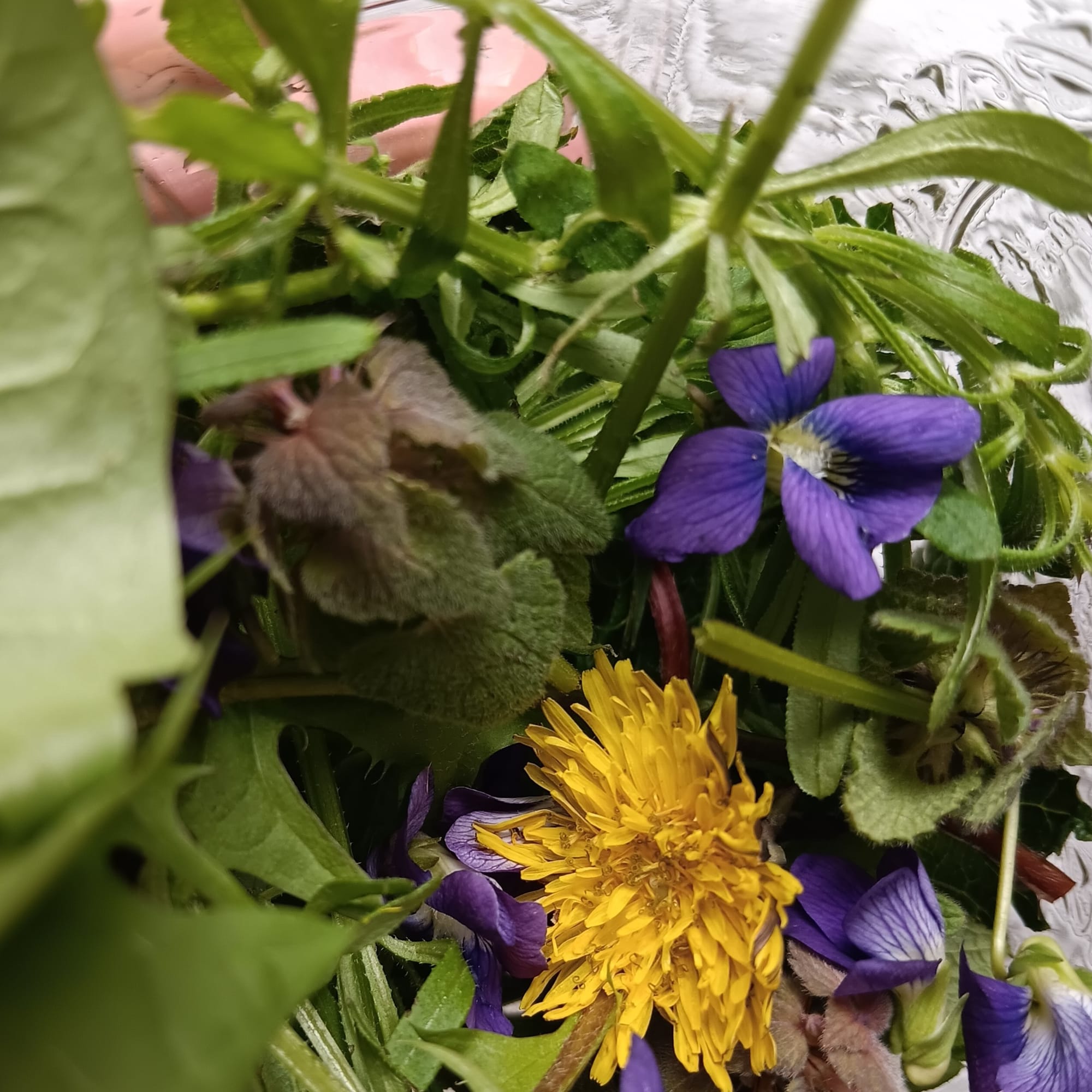
With all of your spring greens rinsed and added to a clean jar, pour in the water. Hot water will create a rich, darkly colored tea, full of intense flavor. I steep my brew in hot water for a few minutes until the liquid takes on a deep brownish-green hue. A cold water infusion, refrigerated overnight, will create a lighter, more refreshing beverage. Once satisfactorily steeped, strain with cheesecloth or any other convenient implement, and enjoy. The tea will keep in the refrigerator for a few days. Discarded leaves can be tossed directly into the compost pile!
Morels, fried “Hoosier style”
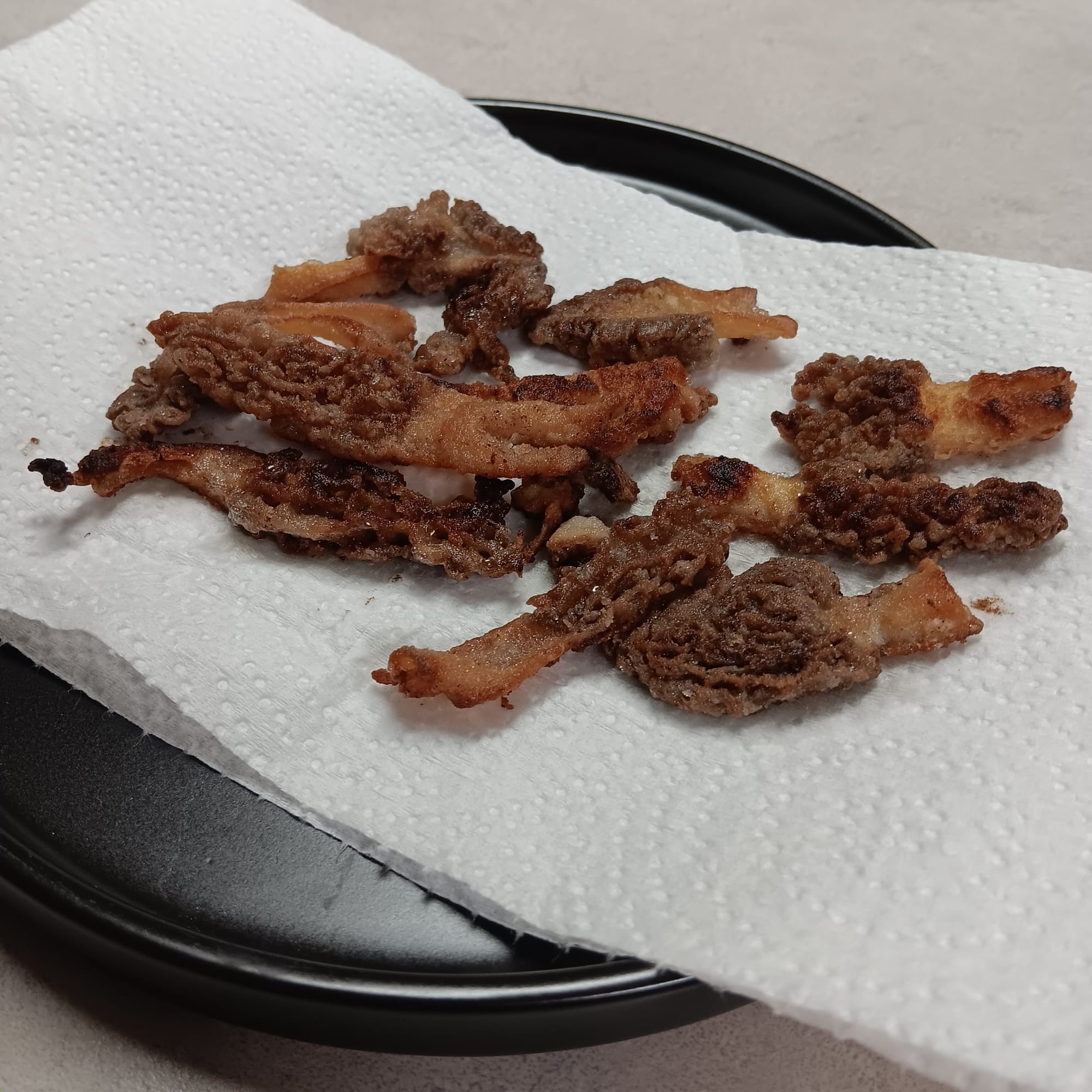
As many morel mushrooms as you can find.
A proportionate amount of all-purpose flour.
Salt, pepper, and any other favorite spice or seasoning.
Enough butter or oil to pan fry your mushrooms.
This recipe is simple. Morel mushrooms are found in all sorts of secret spots throughout the forests of southern Indiana. Return home with your haul from the day's foraging and immediately give the mushrooms a long bath in cold water. A few capfuls of vinegar may be added to the water bath if desired. Once the morels are cleaned of dirt and bugs, slice them into halves or quarters, long-ways, according to size. Then, dredge the mushrooms lightly in all-purpose flour seasoned with salt, pepper, or whatever spice you think is nice. Next, pan fry them in butter, your choice of oil, or both. Salt to taste, and enjoy!

Ruthie Cohen
Ruthie Cohen moved from New Jersey to Bloomington in 2011. When not devising recipes and feeding friends, she practices and teaches yoga at Bloomington Yoga Collective and Monroe County YMCA.