Signal Overload: The Weirdness Beyond the Gates
Experimental film festival in its second year at Starlite Drive-In Theatre.

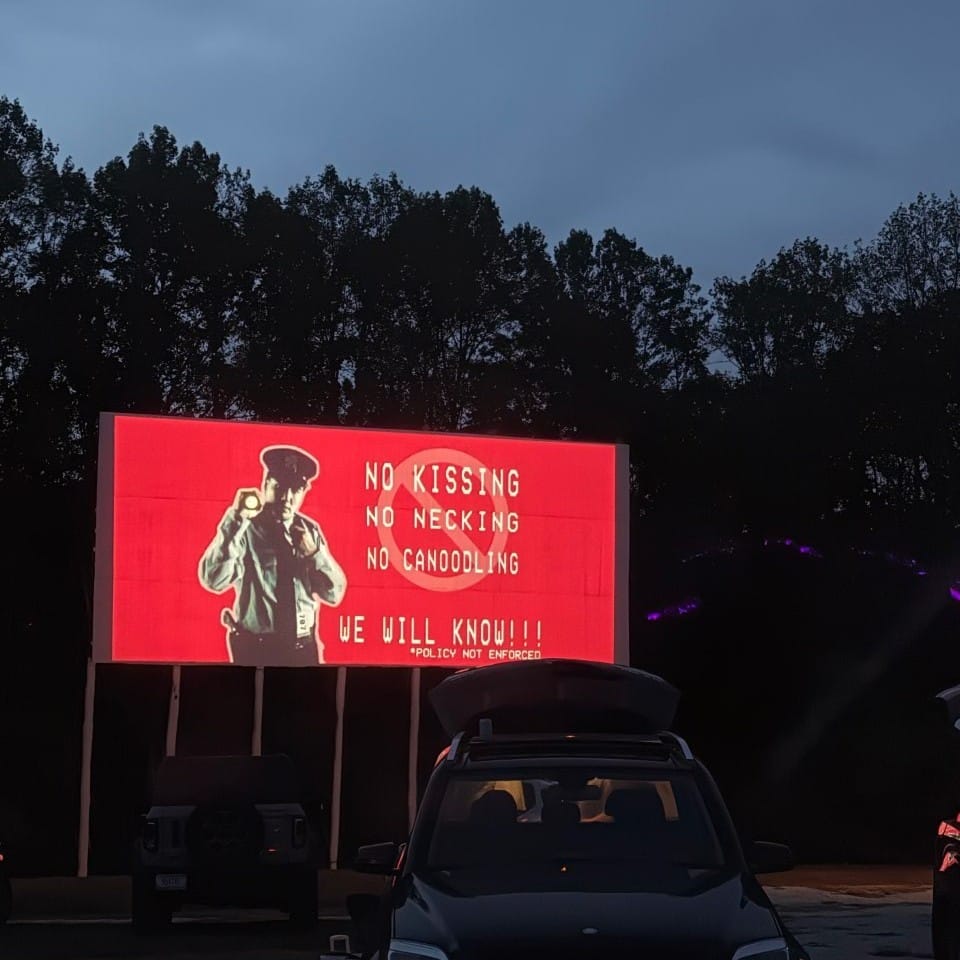
A tiny blond child stood atop a red car at Starlite Drive-In. He pointed at the screen as his father looked on. The bright red screen featured a police officer, and read “No Kissing, No Necking, No Canoodling. We Will Know (policy not enforced).”
For him, this could be the beginning of an immersion into a decades-old tradition of exploring experimental film. That father and son, along with generations of other audience members, convened at the drive-in in early October to celebrate the second annual Signal Overload, a festival of film and poetry.
Organizer Luke Judd from the Retained Image Collective said the initial idea was to provide local youths and young adults with an introduction to the do-it-yourself angle of filmmaking.
In an age of continuous exposure to artificial intelligence, Judd and his co-organizer Josh Glinis want young folks to embrace the challenge of becoming an artist. To do the heavy lifting rather than let it be done solely by a computer.
“The concept came from this idea that … technology has gotten to a point where it eases people in, and they don’t have to figure out the back end of [filmmaking],” Judd said. “We were hoping to build something that would encourage autodidacts and people to explore, and look at video art as a means to learn and teach themselves.”
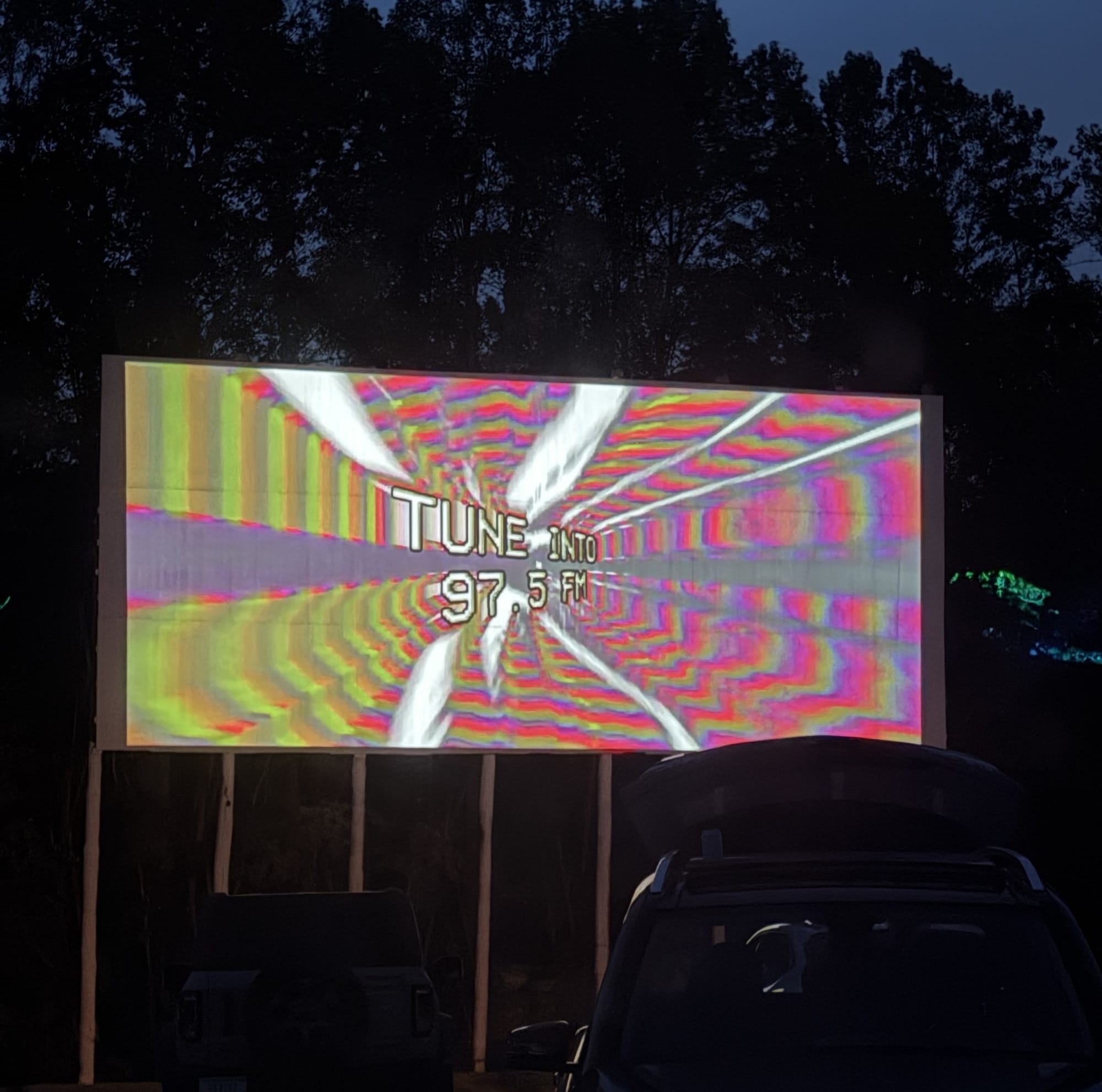
Signal Overload opened with archival films from the late 1980s and early 1990s (courtesy of Jim Manion) potentially for the very reason that tech wasn’t giving artists step-by-step instructions at that point.
The IU Moving Image Archive — particularly director Carmel Curtis — played a major role in film curation for this event.
“I had given her a long list of films that I was interested in, and she sweetly went through the list and got me permissions on what was out of what was available via copyright,” Judd said.
Judd explained that access to the films screened was not even the initial appeal of hosting Signal Overload, but it turned out to be a natural byproduct of such a gathering.
“I had a history teacher in college that was really about firsthand documents and how they would teach you far more about the context of a time,” Judd said. “Even if there were lies built into them, [they] would tell you about the motivations of who wrote them and what they were trying to tell you. And I do think that archival films, in that way, give you a window, especially social engineering films and things like that give you a real picture to the intention of society, rather than maybe truth.”
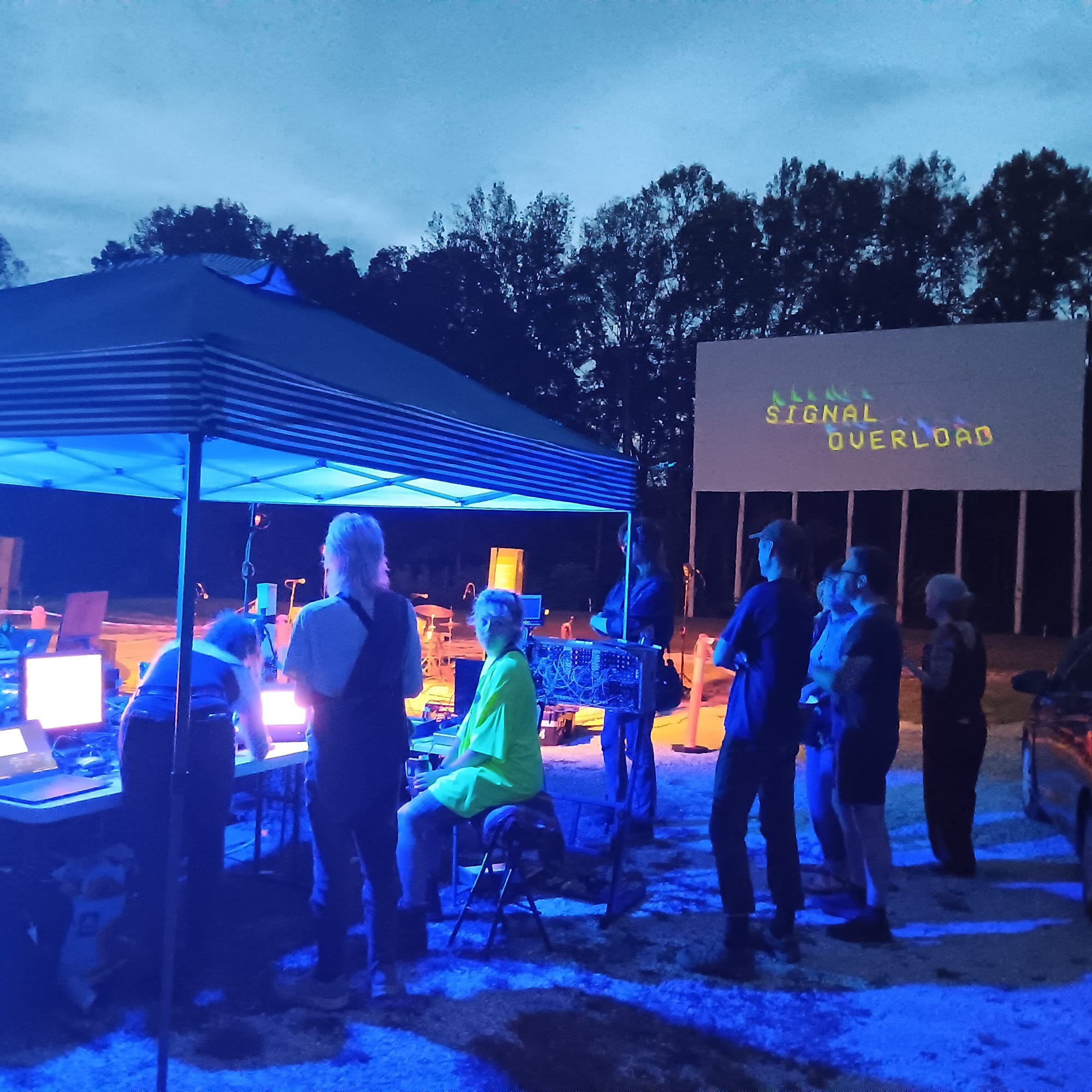
The preservation of these films serves not to denounce technology and its advancements, but to employ its use as a vessel for the human mind. These archival films — some more experimental and graphic-heavy than others — are the firsthand documents that serve as commentary for the time in which they were made.
Moreover, the presence of film in conjunction with other featured art mediums is one way for artists to work in tandem. Signal Overload featured not only film but music and poetry, which was paired with live video and avant-garde graphic elements. Poetry, as it turns out, was a comedically contentious addition to the lineup.
“Where does poetry fit into this? And to me, that was about the intention of the event — having as wide a tent for weirdos and people that don’t feel like they have a place in the art scene of Bloomington or Greater Indiana,” Judd said. “And poetry is not my world, but it means a lot and pulls in a lot of folks. I’m obviously a visual person, but auditory — like the written word — is what does it for a lot of people. So that was the initial intention, and I thought it would be interesting to be able to pair that with video.”
One poet — Essence London — showed the audience grainy home videos set to ambient music as she read. One line, repeated several times and displayed on the screen was: “our matriline is healed.” She spoke of love, and family, and pain with a viscerality that the left attendees who encircled her entranced.
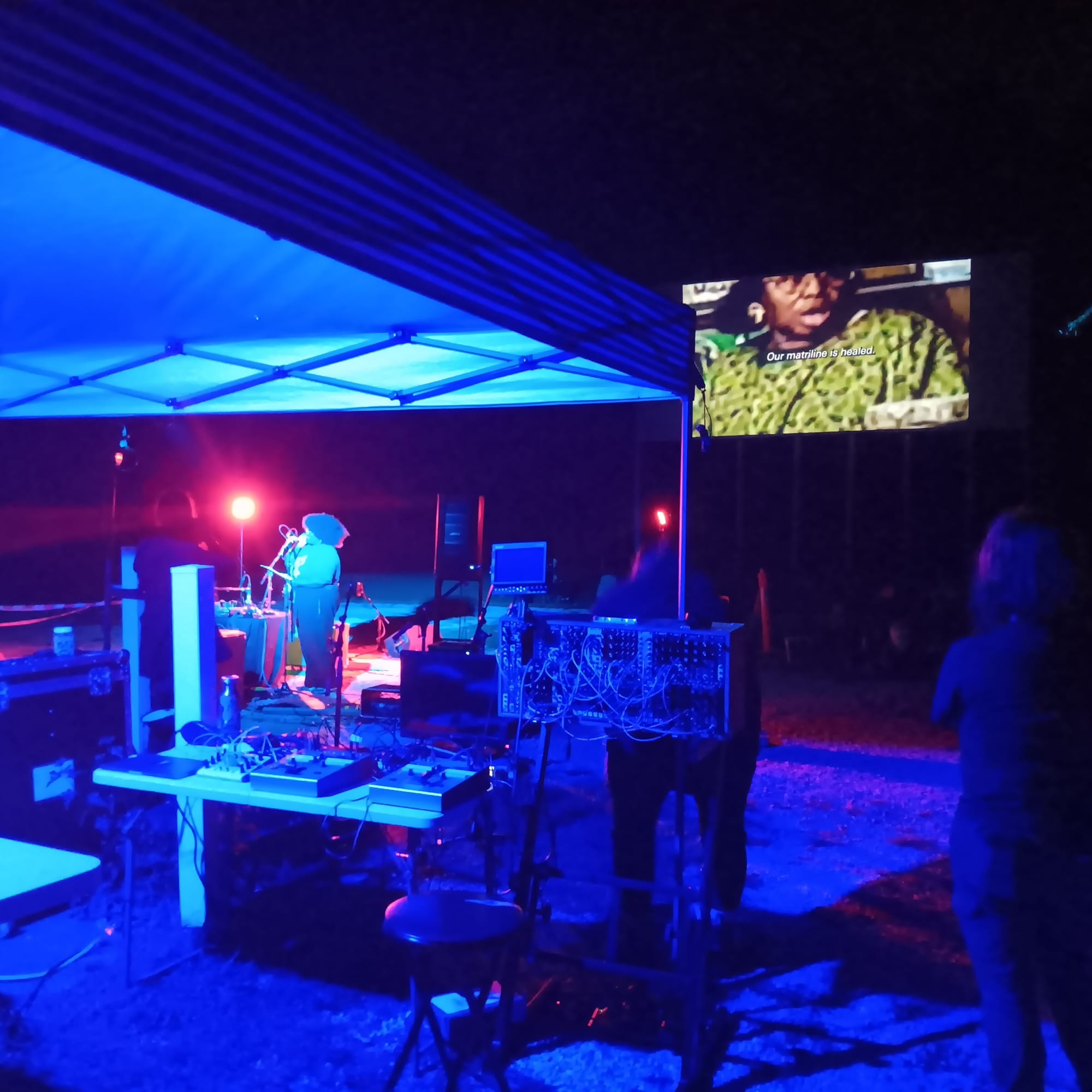
“To me,” Judd said, “the greater intention of the event is intermingling and sharing a moment, and having people feel like they are part of something bigger. Then I feel like it’s easy to get very siloed in a small town and feel like, ‘Oh well, I just have my circle of people, and nobody else is on the same wavelength.’ You know, it’s all about Venn diagrams of ‘where do we intersect?’ You know? And that’s my goal with Signal Overload: [how] can we get as many people into that center of the Venn diagram?”
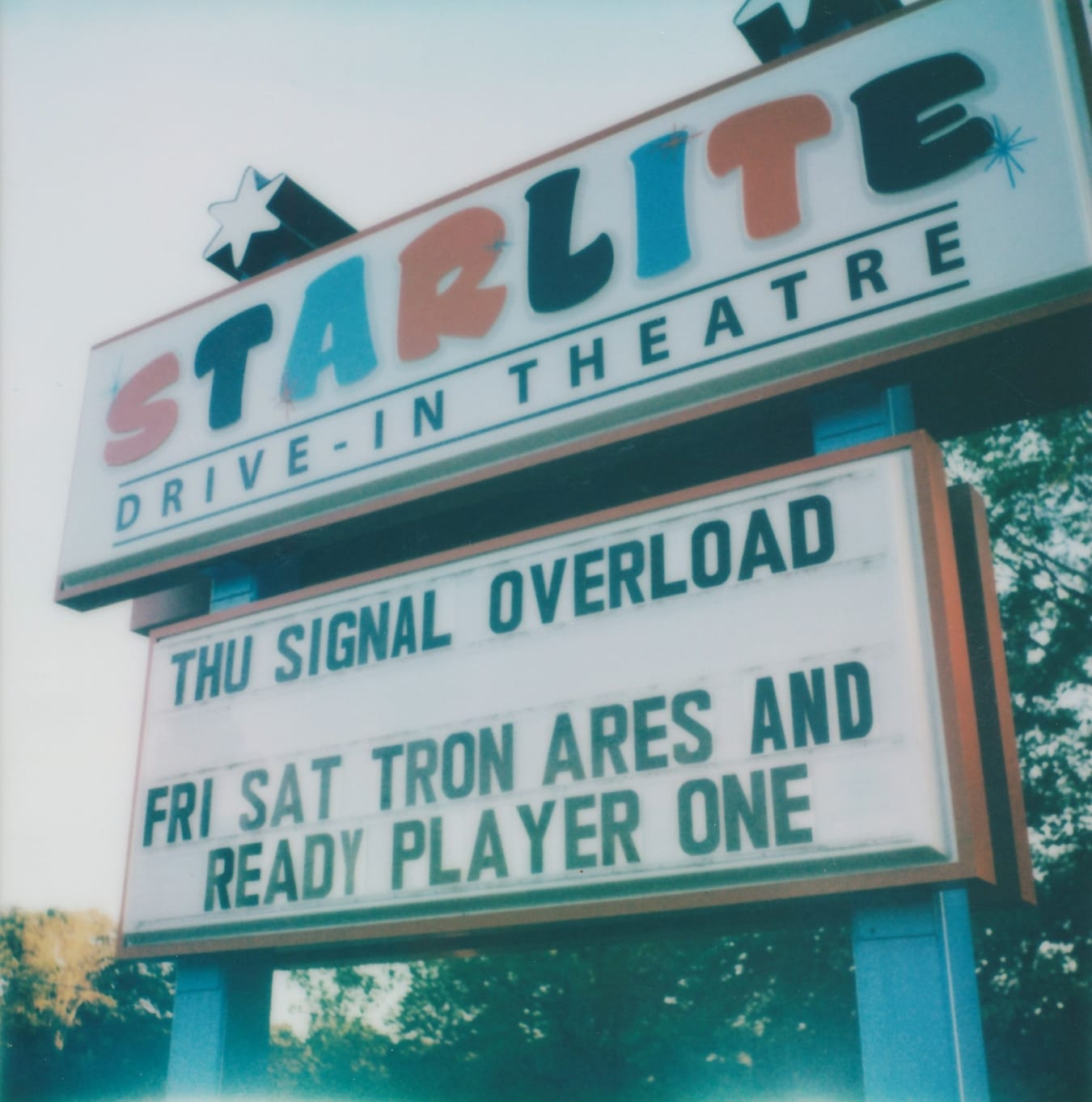
That’s where Starlite comes in. Active since 1955, it is a place teeming with nostalgia. It serves, no doubt, as a slice of Bloomington’s history — a place where folks can go to experience films of all genres and emerge from their vehicles only if they want to.
“I think there’s also a fun piece of breaking the convention of the drive-in,” Judd said.
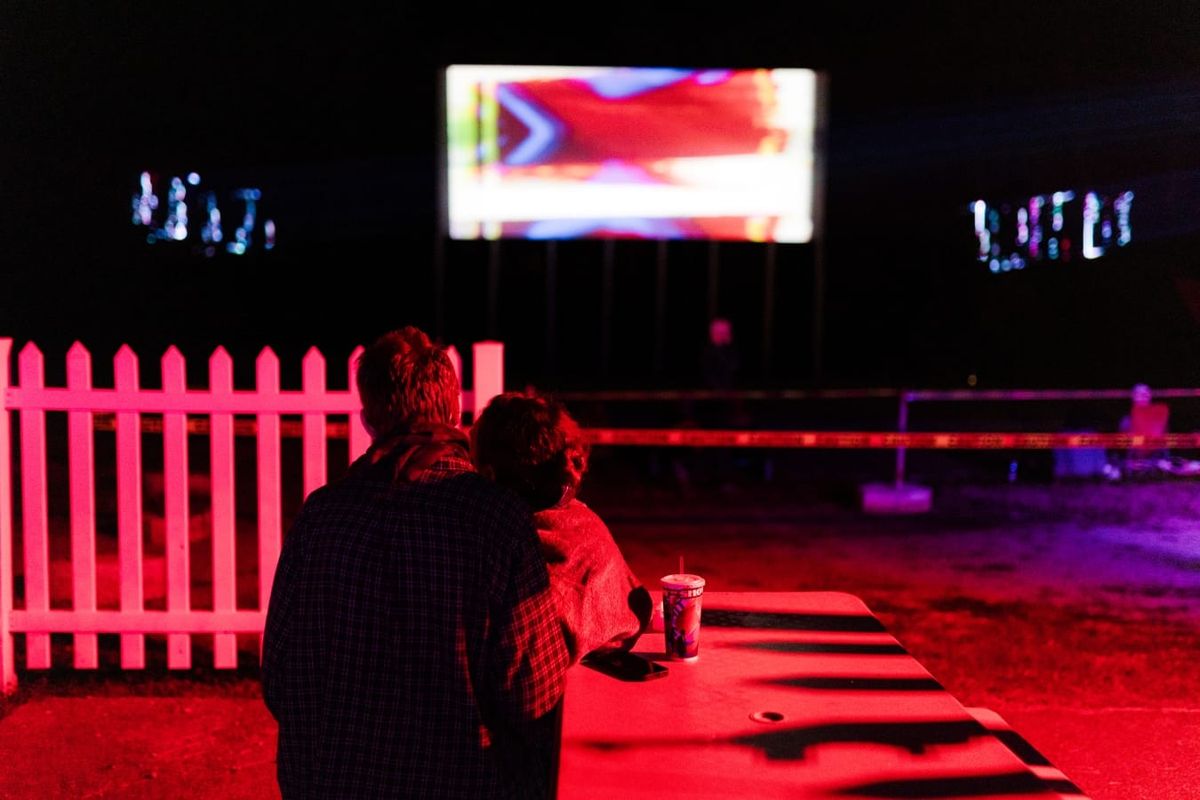
With live music from the Ben Cartha Fowler Project and a handful of live poets, folks at Signal Overload were more inclined to leave their cars, seeing the performances as a more tangible place to connect and break social boundaries.
Judd said that after moving to Bloomington, he found a job with Community Access Television Services: “We’d talk about [how] CATS used to get broadcast into the dorms, and it was sort of this bridge between the college and the townies, where there was some sort of beacon on the college campus to the weirdness that lived beyond the gates.”
With student population demographic shifts — namely an influx of out-of-state and “mainstream” students, newcomers may have a harder time discovering the alternative scenes that run throughout Bloomington. Judd said that to bolster the impact of local alternative art, he’d like to see five or six events like this one each year. Although, he said, he cannot host all of them. But with the diverse, intergenerational audience that showed up to Signal Overload, there is proof that people care, and a growing group of people to whom Judd may be able to pass the baton.
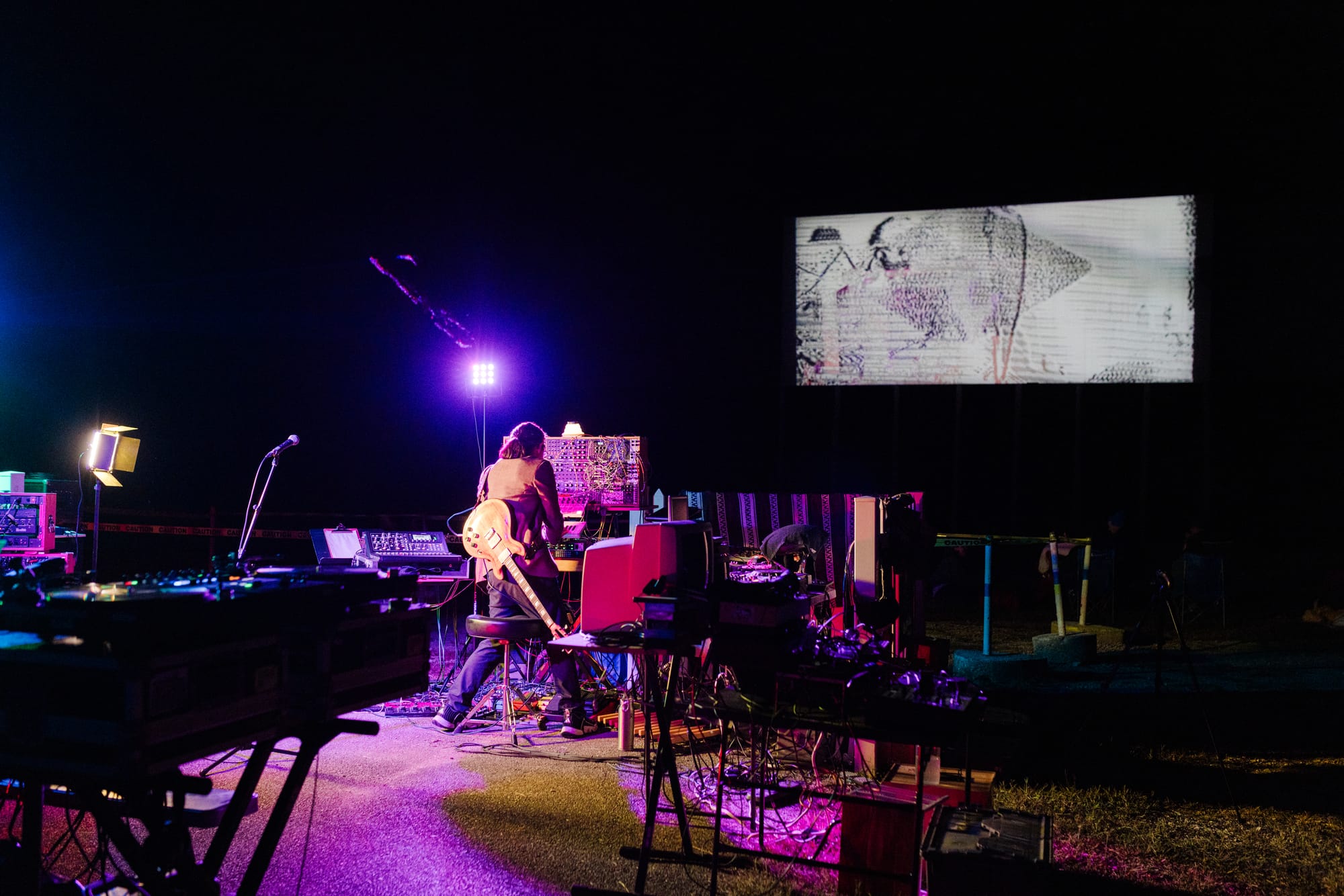
“I think that generational siloing is also a big piece of what we’re seeing anymore,” Judd said. “The art scene that I kind of cut my teeth on in the Bay Area, we had old like original [artists] and 15-16 year-olds that were tapping in. You know? We all benefited from each other [and] where we were in part of the journey.”
That journey, in Bloomington, is both old and new. Signal Overload seeks to preserve and expand that conquest, not let it be drowned in new technological developments or the death of healthy individualism. And there is a secret to making it work, as put by Essence London.
“We love each other openly. We love each other openly.”
Audrey Ouillette
Audrey Ouillette graduated from IU in 2026 with a Bachelor of Arts In Journalism. She has contributed to Indiana Public Media and WFHB. When she isn’t writing stories or producing radio segments, she is a nature lover, devoted cat mom, and musician.