$7 Million Creative Economy Investment to Support Art Professions in Uplands
Indiana University leads investment to establish the Uplands Regional Creative Economy Commons.
Before the curtain rises at the theatre or you hear the first chord at a concert, significant preparation has made that moment possible. Such a performance requires talented people, production equipment, a suitable venue, and a connected network to pull it all together.
Indiana University is leading a $7 million investment — made up of a $3 million READI 2.0 Arts & Culture Initiative grant and $4 million in matching local and regional funds — to support each of those components by establishing the Uplands Regional Creative Economy Commons. The goal is to strengthen the creative workforce by creating professional pathways, expanding access to resources, and providing infrastructure for artists to thrive in the region.
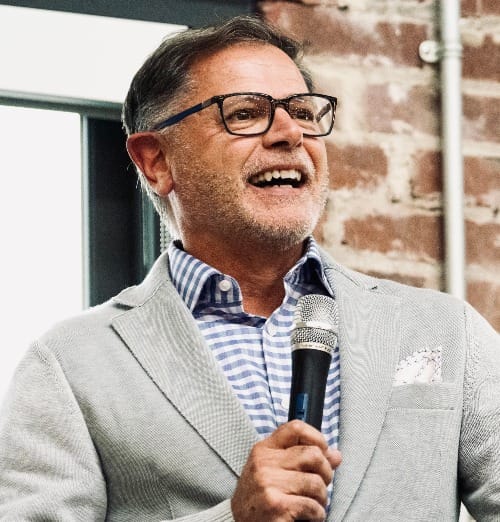
“[A creative economy is] not a nice-to-have; it’s a must-have. And for the kind of community we want to build, it’s at the heart of our identity,” said John Fernandez, former Bloomington mayor and chief executive officer of Amplify Bloomington, a regional innovation platform focused on entrepreneurship-driven economic development.
Edward P. Dallis-Comentale, IU assistant vice president for research in arts and humanities and principal investigator for the project, estimates two-thirds of the Commons funding will go toward construction, and one-third will support jobs, internships, and programming. Since the READI grant must be used by 2028, stakeholders expect the four projects centered on people, production, place, and platform to be completed in 2027.
While community revitalization and economic innovation motivated the creation of the Commons, Dallis-Comentale noted talent retention is the primary driver behind the initiative.
With more than half of the nation’s largest living alumni community residing in Indiana, he’d like to see more IU professionals choose the Uplands as home.
“I’ve seen IU graduate amazing talent in the arts, in music and performance, in dance, in writing. And every year I’ve seen the majority of that talent leave the region, leave the state,” he said. “So I’ve always been interested in helping our students find ways of making a living and adding their creative spirit to southern Indiana at the same time.”
The people pipeline
With a focus on entrepreneurial support, the Commons will include an arts incubator at the Showers Administration Building in Bloomington’s Trades District, a 12-acre innovation, technology, and employment hub. The facility will offer studio, office, and performance spaces for emerging artists.
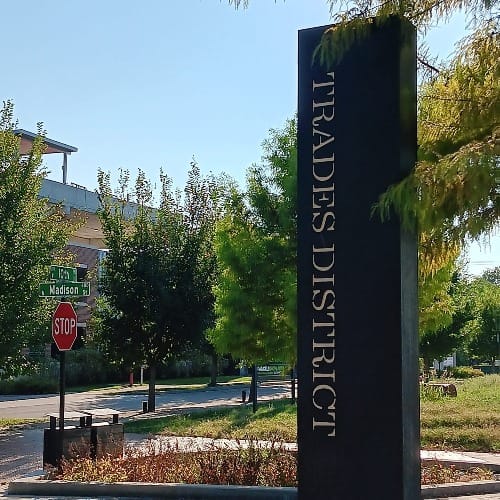
“Economic development is as much about attracting and retaining talent as it is [about] attracting and retaining companies,” said Fernandez. “We want to support creative entrepreneurs so that they stay in Bloomington, they grow in Bloomington, and they continue to be an important part of not just our economy but also our community.”
The idea is to place creative entrepreneurs near other tech and innovation startups to foster collaboration, all while drawing a specific community to the area.
“Bloomington has seen a decline in [working age] population, particularly in the 25 to 50-year-old demographic. That’s a real red flag that we want to address. Part of that is, you’ve got to have places where people want to be. So that’s an important part of our work in the Trades District development,” said Fernandez. “Having a lot of mixed uses where people can live, work, congregate, and meet up.”
While the first floor of the building will offer studios for visual artists, the middle level will provide flexible co-working and collaboration spaces. The top floor will be an event and performance space that can host up to 800 people. After renovations, Amplify Bloomington, the city of Bloomington, and Indiana University will share management responsibilities.
A production space
To support behind-the-scenes work, a regional production hub on Hillside Drive in Bloomington will become part of the Commons. The warehouse owned by music company Secretly Group will house rehearsal, recording, and fabrication facilities to support theatre and music production, set building, costume storage, and recording projects.
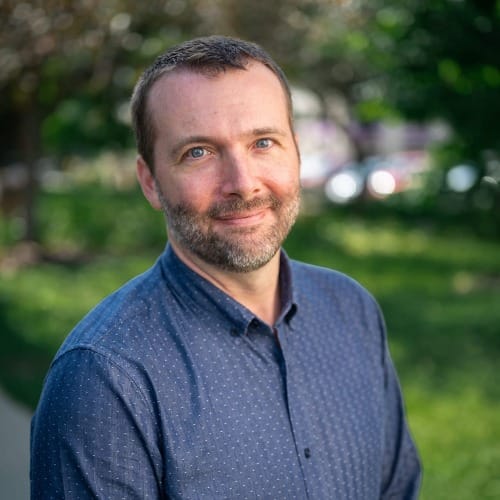
Theatre and film organization Constellation Stage & Screen will manage the operation. Managing Director Gabe Gloden explained how the production space will lower barriers to entry into the arts for smaller organizations.
“When I came to town in the 2000s, people were talking about, ‘Wouldn’t it be great if there was just one space where any theater artist could go to borrow and lend and rent costumes, props, and other scenic elements?’” he said. “This is going to allow groups to scale up their operations without significant expense to them because there is this shared inventory and resources that are affordable and accessible to them.”
Girls Rock Bloomington, which offers summer camps and after-school programming, plans to set up its first headquarters in the building. Other organizations have been hosting the nonprofit since 2019.
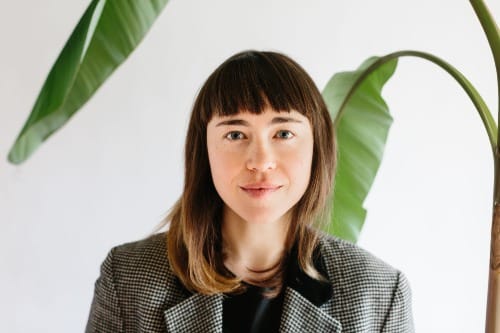
“We’re hoping for a small recording studio, some practice rooms for bands and a stage, a large meeting area for shows and workshops, gear storage, and a gear library for community members,” said Amy Oelsner, Girls Rock Bloomington founder.
Besides having a home base, Oelsner is also excited about inspiring more youth to follow their passions and empowering them to start bands.
“Rather than saying, ‘You can be in a band when you’re a grown-up.’ It’s like, ‘No, you can do it now,’” said Oelsner. “You can come and practice at our space, and you can actually make an album at our studio.”
Places to perform
To improve performance areas, the Commons will expand arts and cultural programming at Bloomington’s Switchyard Park with new infrastructure. IU will also invest $300,000 annually to enhance the space.
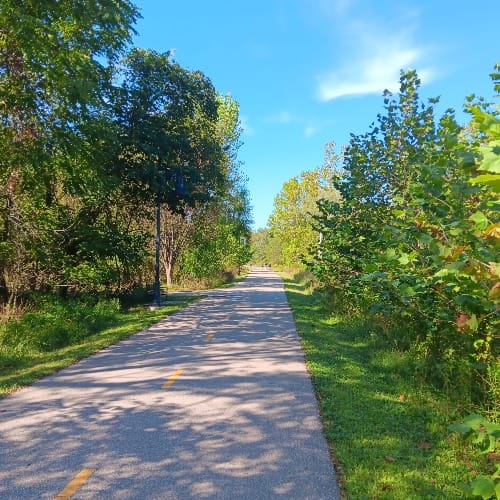
“Helping to provide fencing, shade, structures, lighting and sound equipment, and all the things to create a main stage for community groups,” said Dallis-Comentale. “That’s all the way at the southern end of the B-Line trail, and that’s basically the entry point for the region at large.”
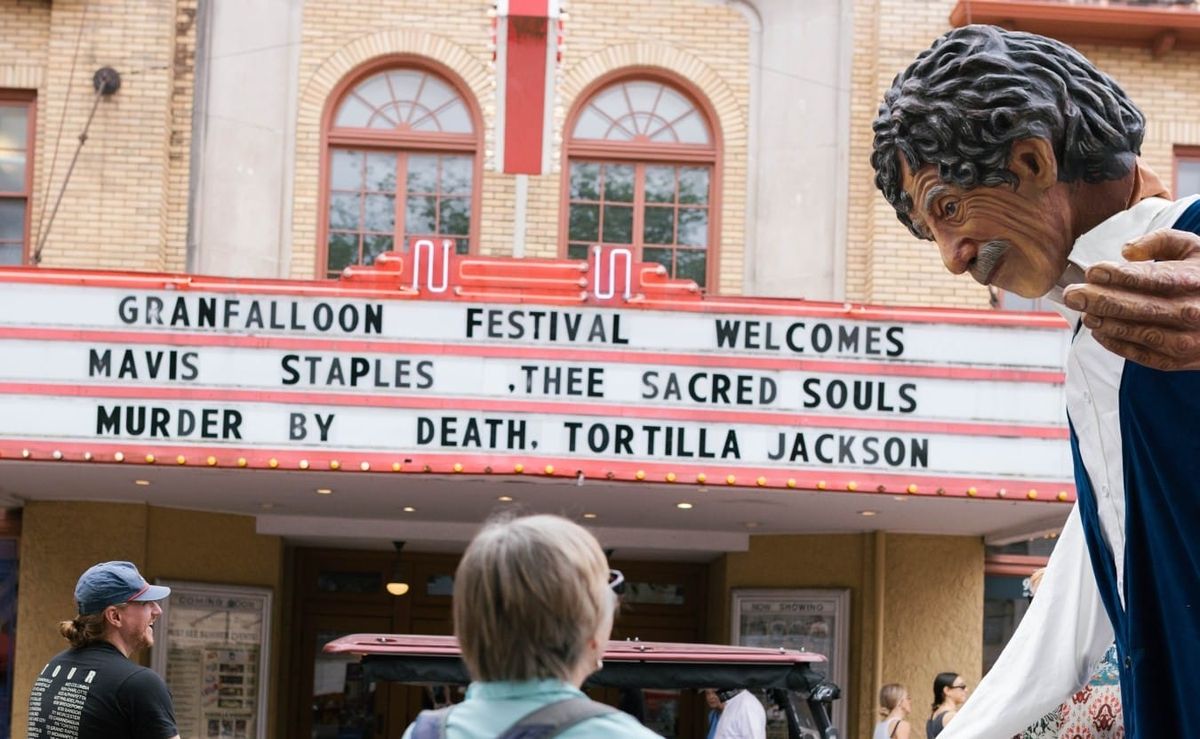
The park has already attracted performances, with IU’s Granfalloon concert series, inspired by Hoosier author Kurt Vonnegut, Jr., moving from Kirkwood Avenue to Switchyard in 2026. According to a report commissioned by CEOs of Indiana Corporate Partnership, nearly nine in 10 Americans view arts and culture as essential to quality of life.
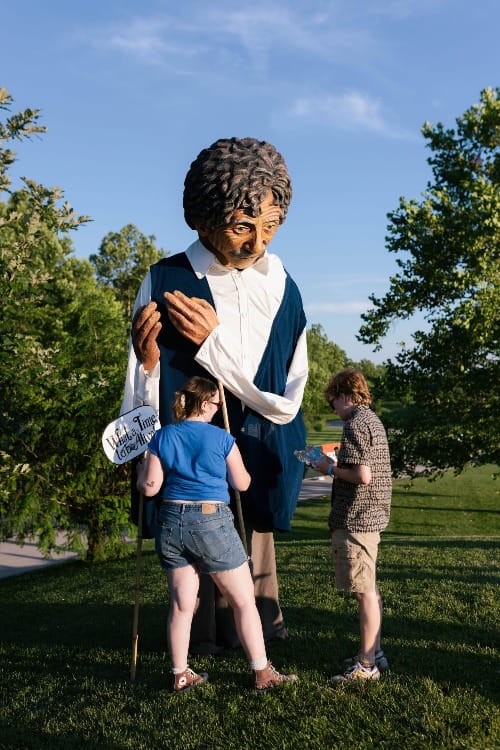
“People whose neighborhoods have easy access to quality arts and cultural activities are more likely to be satisfied with their communities and invest more of their time and resources there,” the report said.
Julie Halbig, vice president for economic & community development at Regional Opportunity Initiatives (ROI), a nonprofit organization that works to improve economic and community prosperity across the Uplands, agrees — stressing the role of amenities in attracting residents.
“The creative economy can end up being one of the most resilient subsets of a larger regional economy,” she said. “[Quality of place] drives where people want to live and work.”
Beyond Switchyard Park, Gloden believes the Commons’ affordable and accessible resources will allow the arts community to enhance not only the quality but also the quantity of work, potentially filling each Constellation Stage & Screen venue with events every weekend.
“[The goal is to get] people actively thinking about arts and culture experiences as something that they like to do on a regular basis. We’re building backwards a culture of arts patronage,” he said.
Platform connections
Coming full circle, the Uplands Creatives website will act as a virtual matchmaker for the other Commons components. ROI will manage the digital platform featuring artist profiles, job opportunities, grant information, and potentially an events calendar with ticket sales.
Halbig recalled that the idea to create a website came from focus groups during ROI’s work on its regional arts and culture plan.
“We want to confirm the priorities [artists] would like to see developed as part of that platform,” she said. “And also, as we test it, make sure that it’s user-friendly and ticks all the boxes of what they need so they can remain focused on their art and not have to worry so much about the business end of things.”
Though the arts incubator, production hub, and performance sites will be in Bloomington, the Commons aims to serve all 11 counties in the Uplands, an objective Halbig believes the website will help attain.
“We want to create a level playing field for all artists and creatives in the region and have a jobs platform for them, tailored specifically to that community,” she said. “We hope to lift all boats and promote all the wonderful and unique opportunities that make the Uplands a great place to live.”
“We’re talking about expanding this to support grassroots organizations and far-flung parts of the region,” added Gloden. “And we’re connecting everybody. That, to me, can only start to seed new partnerships and opportunities down the line.”
Mitzi S. Morris
Mitzi S. Morris is an independent journalist, content writer, and copywriter currently living in western Kentucky. Mitzi spent 17 years in TV and digital journalism before starting her freelance writing career in 2021. More at www.mitzismorris.com.