Muscle Cars, Mischief, and the Anti-Mickey Mouse
Local gearheads meet for weekly vintage car club.

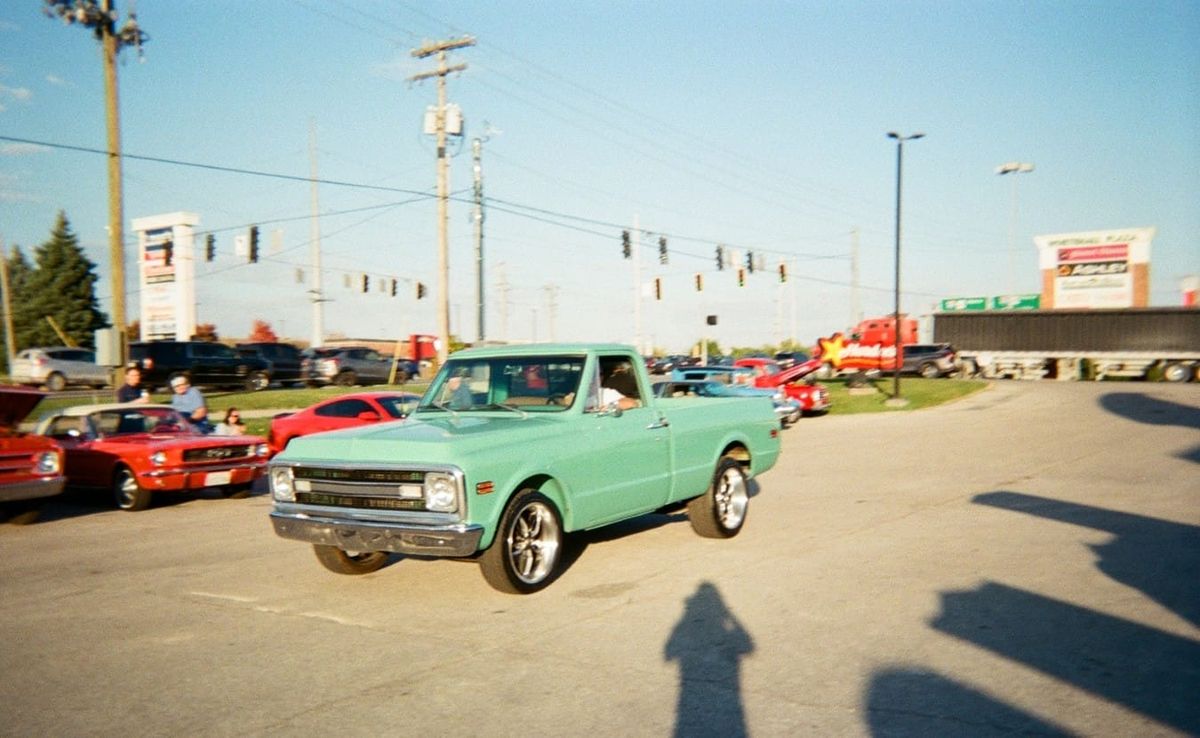
There is little more punk than old guys and hot rods.
Perhaps that isn’t the mindset of the average Bloomingtonian driving past Hardee’s on West Third Street — where the Cruisin’ Classics car club meets every Thursday from April through October — but these custom-built cars are rooted in diverse subcultures that often remain hidden from the public eye.
Cruisin’ Classics member Larry Gregory, a retired electrical engineer, often walks around as a human billboard for this movement. His shirts, hats, and license plate frame feature an anti-Mickey Mouse character by the name of “Rat Fink.” This character was created by Ed Roth in the early 1960s and became a staple in southern California’s post-World War II counterculture.
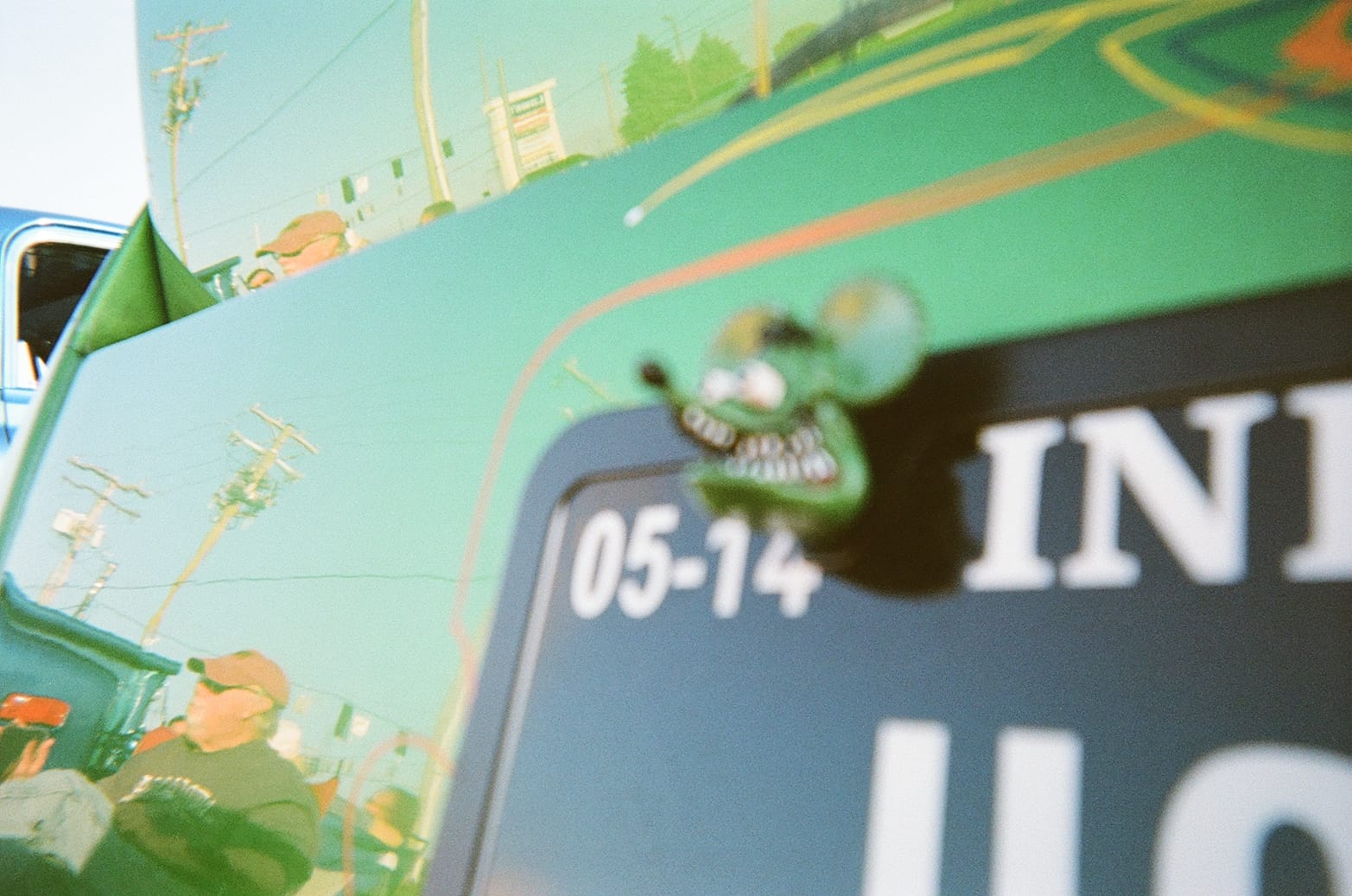
“He used to detail cars,” Gregory said of Roth. “He got into building radical-looking cars, and it got so popular, they started making car models. You could order, you could get a model. And Rat Fink was his most popular character.”
Roth’s character saw a resurgence in 1980s and 1990s punk rock and grunge music, with Roth drawing Rat Fink album artwork for “Junkyard” by Nick Cave’s The Birthday Party. But for Gregory, the appeal still resides in those original Rat Fink hot rods.
“Well, in the ’60s of course, when you’re a young adult, you would cruise, and that’s how you met girls,” Gregory said. “And so every town had spots that car people would cruise to.”
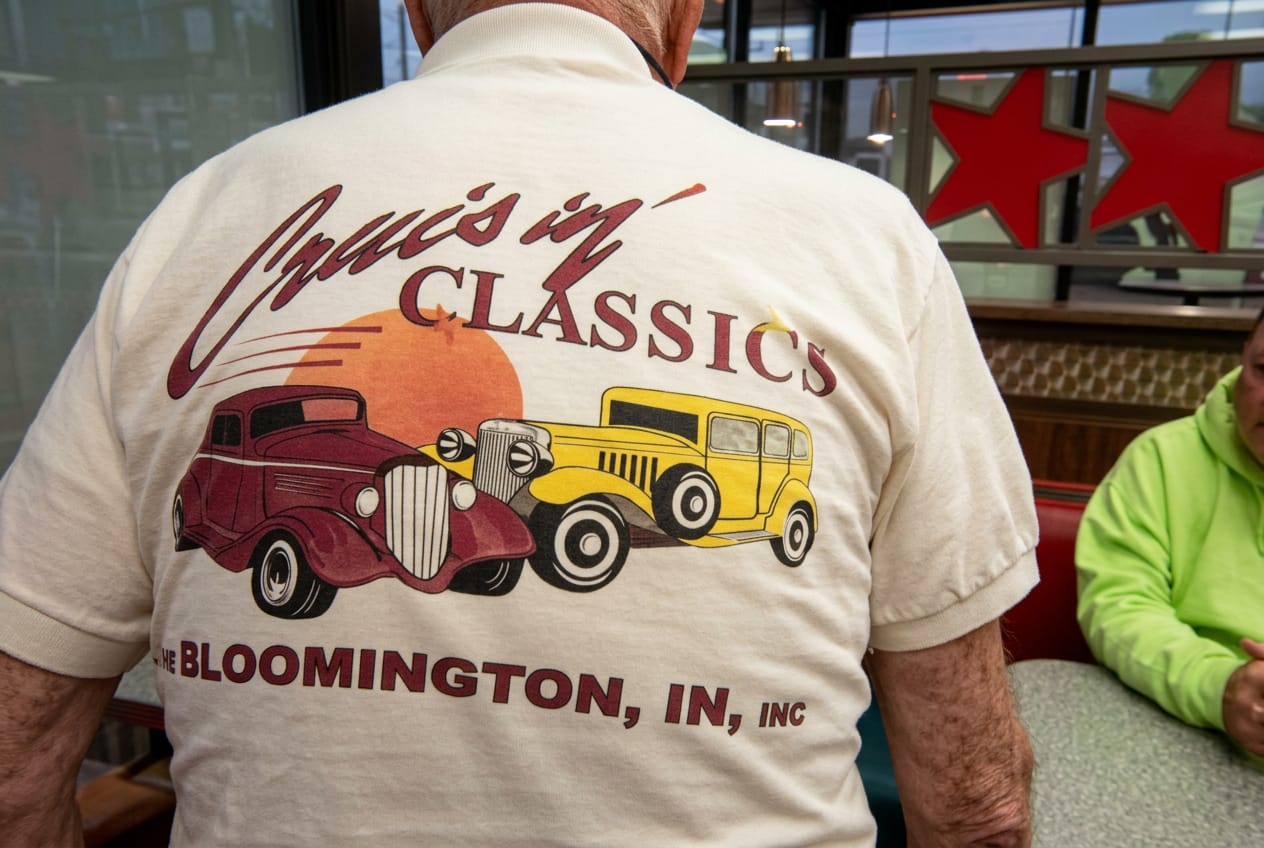
Cruisin’ Classics club president Mike Piskos, 65, mentioned more official events connected to the culture of cruising.
“Obviously, you get to know people either at shows or at clubs or cruise-ins, you know, and they have swap meets that you participate in,” Piskos said.
Swap meets are common ways to exchange parts for both new builds and vehicle maintenance. The culture of swap meets has changed over the years — now functioning similar to flea markets — but at one time it consisted of bartering rather than selling.
Despite cultural shifts and a lack of teenagers carrying on “kustom kulture”, the scene is alive and vibrant.
“When you get older and retire, your glory days were when you were young,” Gregory said. “So you like to do things the same as when you were young.”
The twinkle in Gregory’s eye as he spoke makes clear the joy these men get from reminiscing on their youth through these cars. However, rather than pick up girls, many men now bring their wives along to cruise-ins. And those who don’t still show a bit of pride for their ladies.
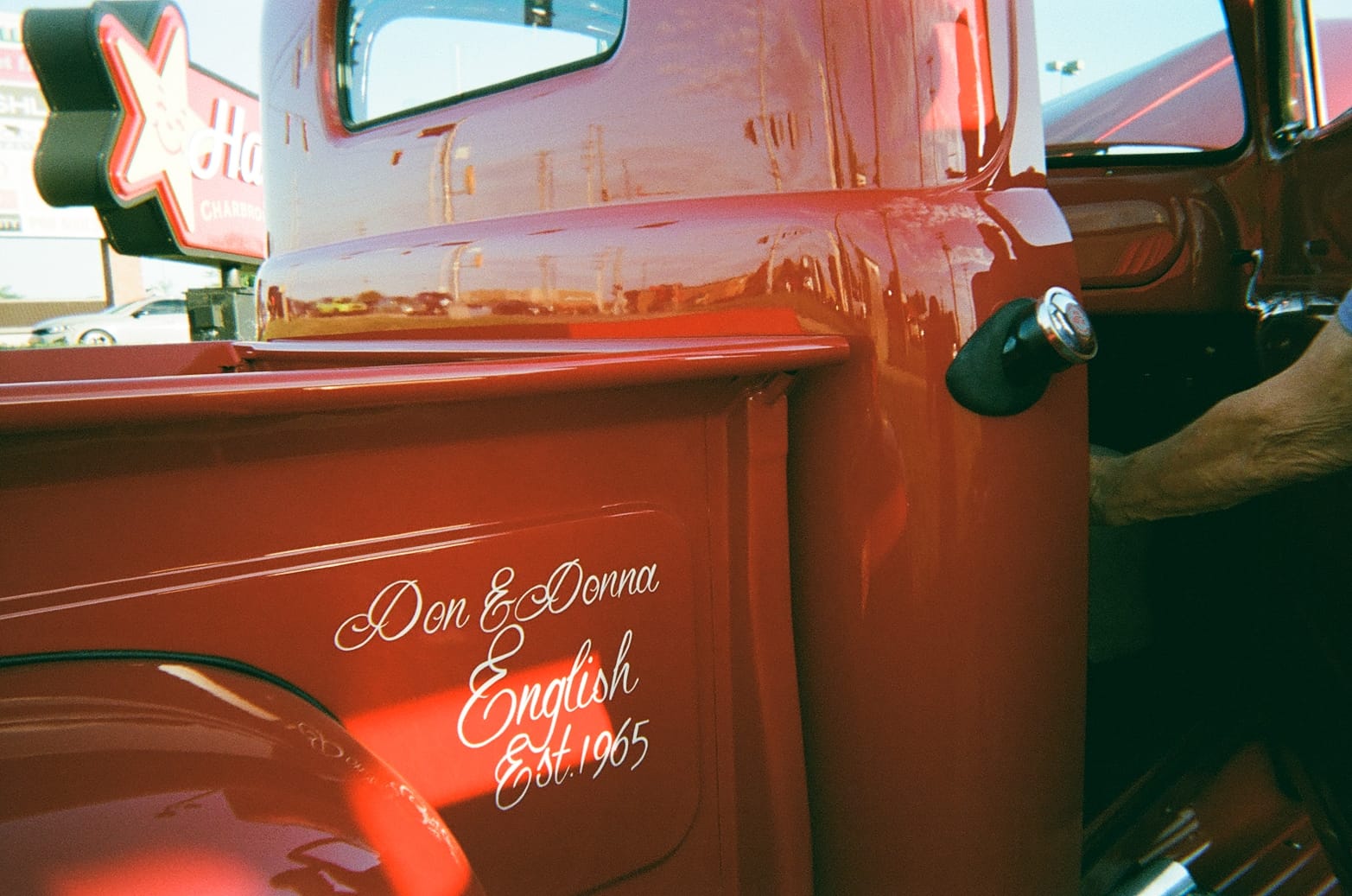
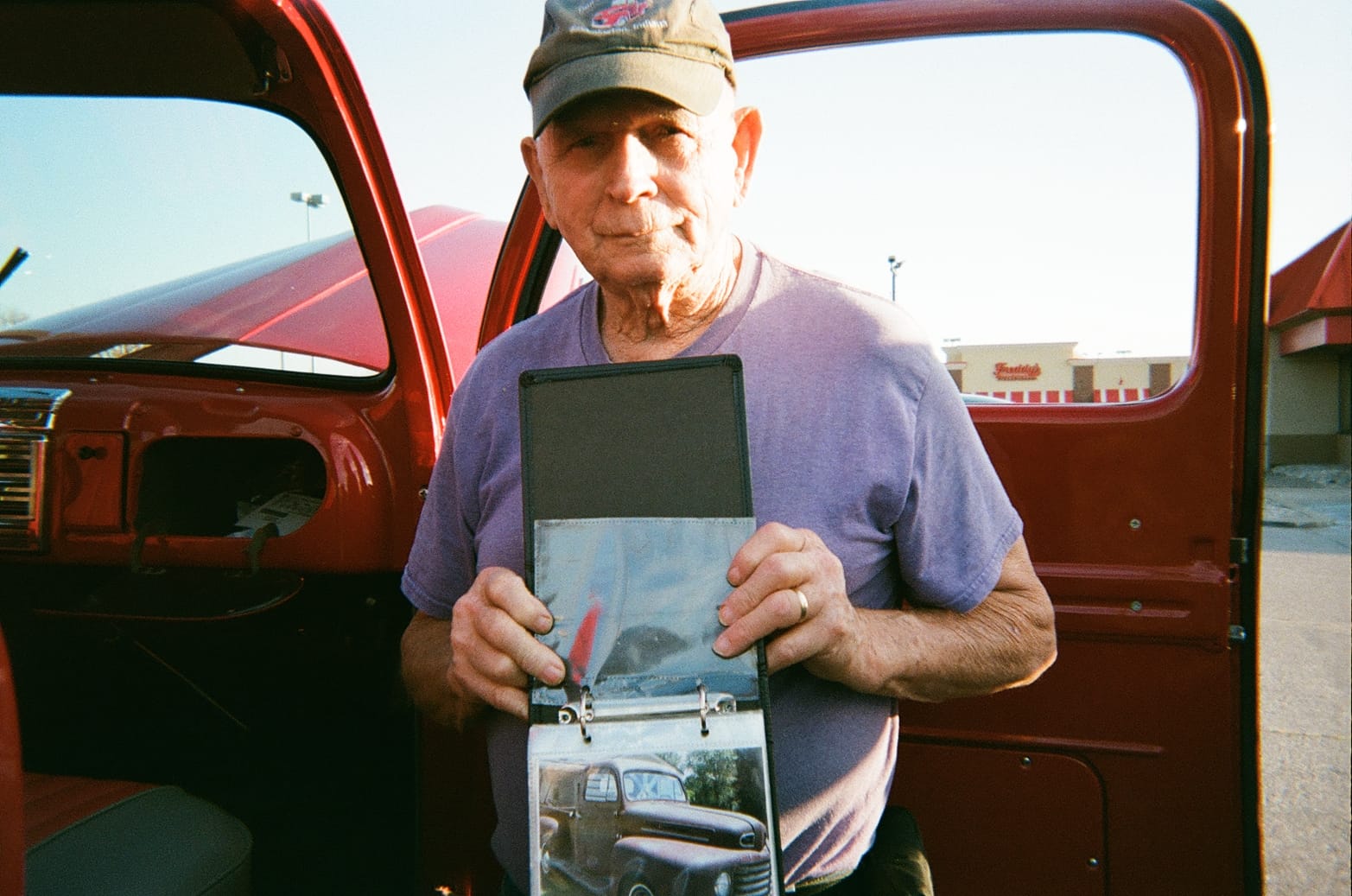
Don English, a polite and quiet man, drives a cherry red 1948 F-1 Ford pickup. On the side, in elegant white writing, it reads “Don and Donna English, Est. 1965.”
English keeps a photo album in his pickup tracking the progress of his rebuild. He said his father had an almost identical truck.
For younger members of the organization, the relationship with cruising is more complex.
Jamie Walls, 54, whose father, Jerry, also participates in the cruise-ins, told of a shift in cruising culture in the late 1990s.
In 1990, the Bloomington Board of Public Works drafted ordinance 90-43, which would prohibit any non-parking related activities in public lots and parking garages. Though it was not introduced, Bloomington police still cracked down on noise ordinances and public nuisances, attacking not only cruising but also skateboarding. This increased police activity was seen all across the country — with cities putting up more “No Trespassing” signs and subjecting cruisers to more citations for traffic violations, open containers, and vehicle inspection requirements.
Charlie McCormick’s 2002 article on adolescent cruising hypothesizes what might have instigated the attack on youths’ right to cruise. Once a traditional white middle-class activity, it became a “menace” to city officials when nonwhite, non-middle-class folks began to participate.
In 1999, Salt Lake City’s assistant police chief noted that with an increased population of folks cruising, there was “more of everything,” including traffic, weapons, and violence. McCormick noted that the death of cruising’s homogeneity led to the relabeling of the activity from “pranksterism” to “criminality,” thus leading to the movement splintering into different subcultures unique from cruising.
“That’s what we had back then. Yeah, people got out,” Walls said. “You meet people. You become friends with new people. I mean, people from Spencer, Brown County, Bedford, Martinsville. They all would come here to cruise. We’d go to their places and cruise too. Everybody knew everybody back then. Now people don’t know anybody anymore.”
The weekly Hardee’s cruise-ins are a way of reliving that nostalgia. In the parking lot, car owners congregate almost religiously and ogle one another’s vehicles — a mix of new and old. Some head into the restaurant for a bite, while others take a seat outside and catch up with each others’ lives.
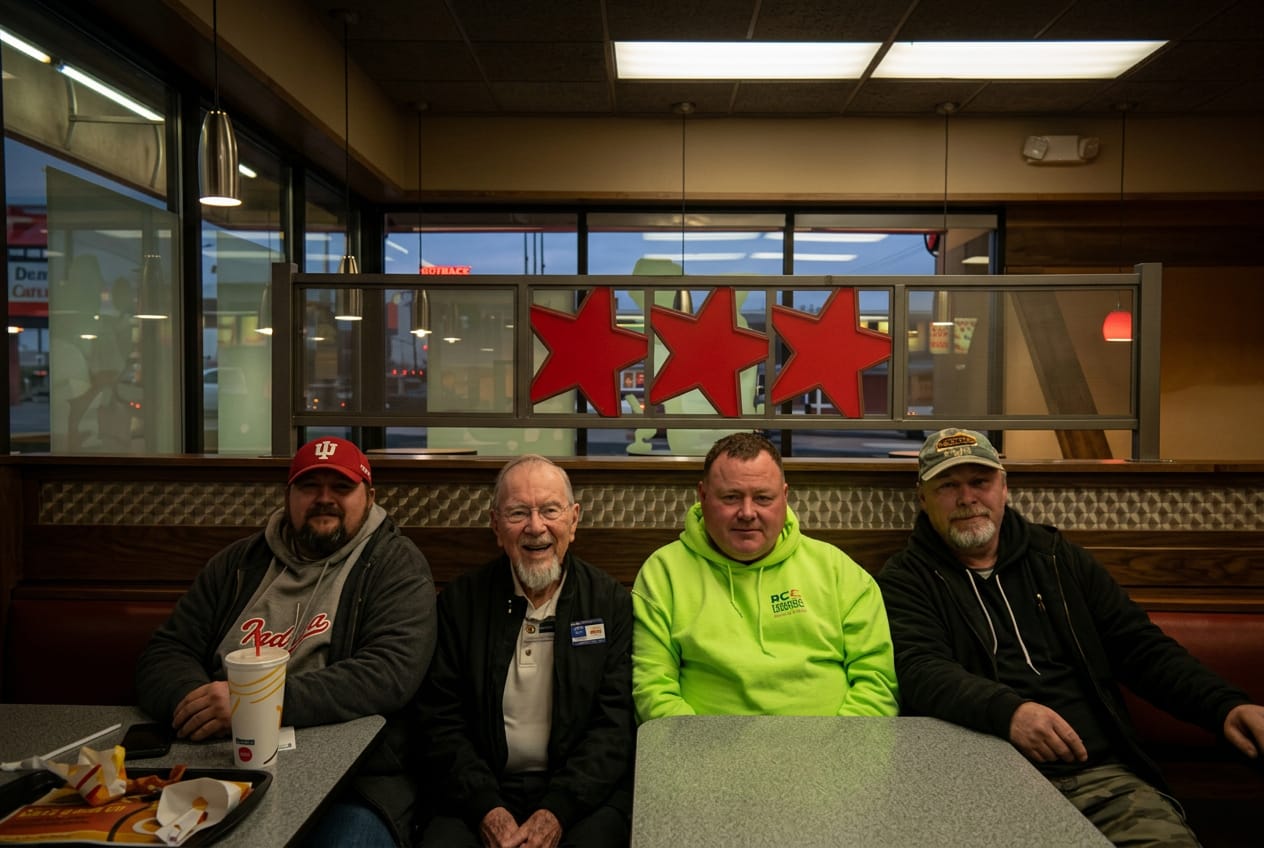
Walls’s father sat in a canvas lawn chair beside his car, speaking with the men around him. There is a bond that ties these two men together and extends far beyond their blood relation. What Jerry created engaging in muscle car culture with his son was a legacy which Jamie has now passed on to his 20-year-old daughter.
“It was just something you grew up watching: car shows on TV from back in [the day], or going to the store and looking at the magazines from a young age,” Jamie Walls said. “You know, just you either was fond of them, or you wasn’t, you know? It drives you to it. I mean, cars, different shapes and different body styles and stuff — it’s all like a work of art.”
Many members of the club can recall vehicles they used to drive — too many to count — and describe the historical lessons cars can provide. Those manufactured without features like seatbelts, mirrors, and turn signals illustrate the evolution of traffic laws. But no matter the year, or what features they lack, these cars are a massive part of their owners’ identities.
Piskos remembered the ’65 Mustang that saw him through high school and college. He joined the club when he replaced it with the car he has now.
Gregory spoke enthusiastically about the upkeep of his current hot rod.
“The old engines, you’re constantly adjusting manually. I had the engine tore down last [year]. During the winter, I’ll tear something apart and work on it,” he said.
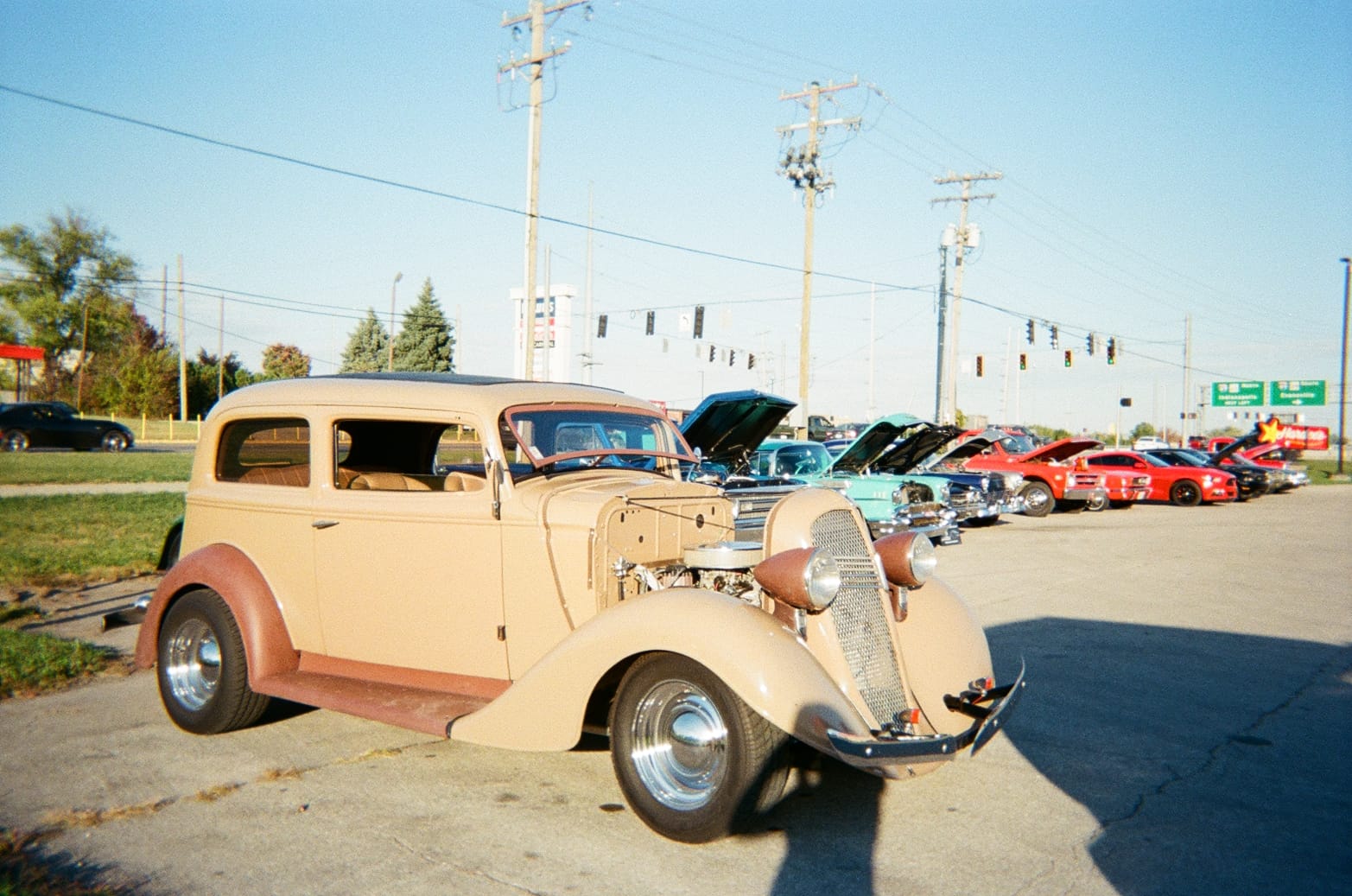
Walls beamed with pride when talking about his two-door 1936 Graham Crusader — likely one of the last in the world, as only an estimated 2,000–3,000 were manufactured that year. The rarity of Walls’s vehicle caused Piskos and Gregory to give him some grief about getting behind the wheel.
“His car’s so rare he shouldn’t be driving it,” Piskos said.
“It should be in a museum someplace!” Gregory added.
But Walls enjoys experiencing his handiwork. “If you don’t drive them, they’re not worth having,” he said.
To these folks, a car is not just a car. It’s a way of breathing new life into something. It’s a way of reconstructing memories into something tangible. These gearheads and vintage car aficionados keep the history of punk rock and anti-establishment movements alive today through their collective hobby. A lot of time and money, passion and patience goes into vehicle restoration. So if you see a hot rod, a muscle car, or an antique cruiser in the wild, stick a thumbs-up out the window.
Audrey Ouillette
Audrey Ouillette graduated from IU in 2026 with a Bachelor of Arts In Journalism. She has contributed to Indiana Public Media and WFHB. When she isn’t writing stories or producing radio segments, she is a nature lover, devoted cat mom, and musician.