The Pirates: A Tale of Betrayal on the Airwaves
A tale of WFHB’s embattled origins, and the radio pirates who started it all.

Editor’s Note: This story is adapted from Michael Glab’s upcoming book, How Hard Could It Be? The Stories of WFHB, Bloomington Community Radio. A portion of the book sale proceeds will go to WFHB.
It’s a summer evening in 1983. A select few people in Bloomington await as their clocks tick down to 8 p.m. Some are already fiddling with their radio dials, trying to position them precisely at a secret frequency.
They’d learned about that frequency through whispers. For a couple of hours most nights they’ll be able to hear something different, something compelling on their radios.
Bloomington at the time offered few radio options for listeners, even though the town was a mecca for musicians from all over the Midwest. Most of the programming that locals could tune to on their AM and FM dials came from Indianapolis, some 50 miles north. That distance, so near yet so far, was one of the reasons car radios and home stereo receivers in this town offered such a paucity of choice.
“Radio in Bloomington basically sucked,” says Brian Kearney, then the leader of Bloomington Community Radio (BCR), a group that was trying to start a new radio station in town. Kearney and company were trying to hit the airwaves the right way, legally, by jumping through the Federal Communications Commission’s hoops.
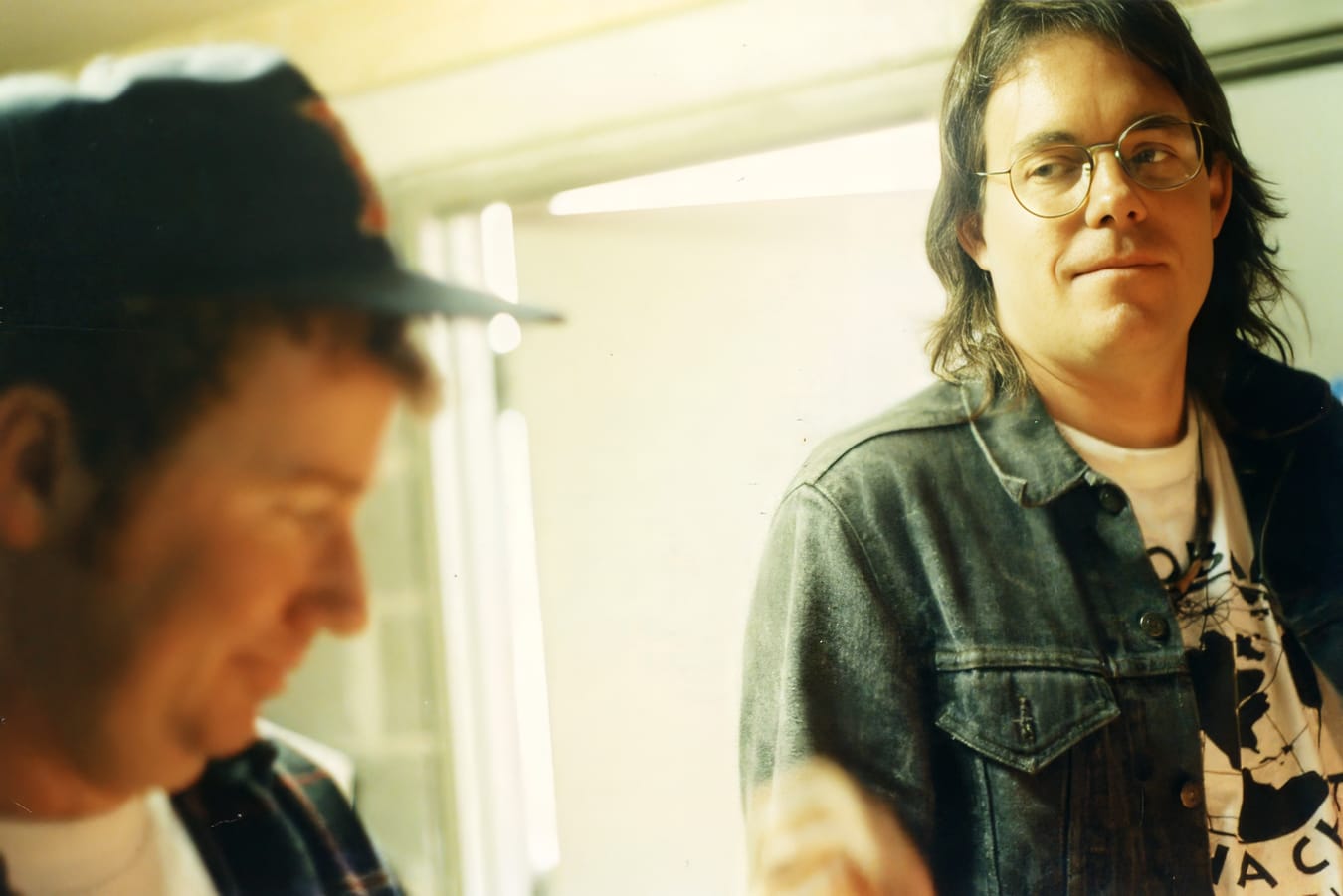
Kearney and Jim Manion were among those in on the open secret. Manion had preceded Kearney as president of BCR. They both knew to fiddle with their dials that evening, hoping to hear the voice and musical offerings of a fellow named Bruce Quinn.
Like Kearney and Manion, Quinn had dreamed of starting a radio station. He, too, had been frustrated by the FCC’s byzantine application process. Quinn, though, had decided to forego jumping through its hoops. Instead, he’d set up makeshift studios in his home or in friends’ and supporters’ living rooms, darting about from place to place, day to day. He’d rig a primitive antenna from which his broadcast signal radiated over Bloomington.
Quinn was breaking the law. He was a radio pirate. If his luck was wanting on any given evening he broadcast, he risked being arrested and prosecuted.
The BCR broke no laws. The group followed protocol and regulation in hopes of securing an FCC license and starting its station. Its members never risked prosecution. But in a decade of trying by the mid-’80s, they’d never once cranked up a transmitter and played a record.
Bruce Quinn had.
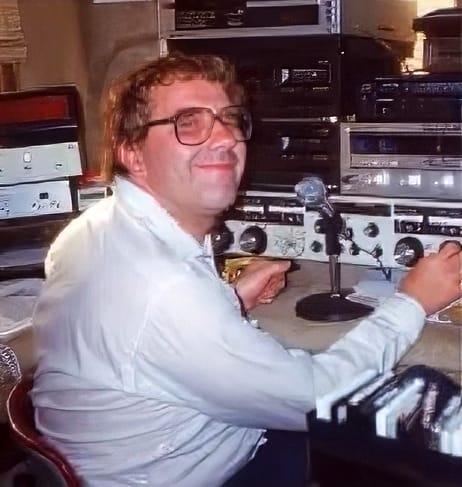
“My blood’s starting to boil when I think about that guy,” Jim Manion says. Manion had been the leader of BCR, seemingly eons ago, back before the group had gotten its first rejection letter from the FCC.
That was in the summer of 1981. The group — eager, ambitious, dedicated, and righteous in their desire to start a community radio station in Bloomington — almost collapsed after six years of trying when they got the bad news from the FCC. They’d fundraised, recruited volunteers, and taught themselves how to navigate the federal bureaucracy that regulated radio airwaves.
Manion and the rest of the BCR told themselves their dream wasn’t dead, that they really would start a new radio station one day. But, to a man (and, indeed, BCR was almost exclusively male), the members of the group went their separate ways. That is until Brian Kearney came along in the spring of 1983. Kearney re-kickstarted the BCR, and the group kept rolling.
Manion, Kearney, and the rest of BCR believed in their hearts it was they who possessed the right to start a new Bloomington radio station. They’d done the work. They’d followed the rules. They’d figured out technical things like Effective Radiated Power and the FCC’s Petition for Rulemaking that starts the application process.
If anybody else was interested in starting a new Bloomington radio station, well, they could join BCR.
For a hot minute, Bruce Quinn and the BCR considered joining forces. It was a short minute. Over the next couple of years, their nascent relationship would devolve into shouting, name calling, accusations, and lawyers on retainer. By the time their Bloomington radio war was over, BCR had spent so much money on the fight it was nearly broke.
Since the effort to start a community radio station in Bloomington began in the summer of 1975, the group pushing for it had adopted three different names. It started out as the Community Radio Project but its acronym, CRP, looked and sounded uncomfortably like the infamous CREEP — the Committee for the Re-Election of the President, Richard M. Nixon’s notorious Watergate scandal operation — so CRP became Clear Creek Sounds. Then, when Brian Kearney assumed leadership of the group, he successfully argued that a simpler, more direct name was best, and so the group became Bloomington Community Radio.
The BCR’s genesis story, the labyrinthine path it traveled before it finally got a station on the air, is confusing enough.
It starts, simply, in the loft apartment of a garage behind a bungalow on the then-outskirts of town, on 17th Street. The bungalow was owned by audio engineer and ace jazz drummer Jack Gilfoy, who’d converted the house into a professional recording studio.
Bloomington in the late 1960s and early ’70s was a Midwest music center. Singers, bluegrass bands, folkies, and songwriters specializing in what years later would become known as Americana converged on the town. A number of recording studios, including Gilfoy’s, popped up in and around town.
Along with musicians, audio geeks came to town from all over the Midwest. One of them was Mark Hood, a University of Michigan dropout who’d done audio engineering for Ann Arbor bands. He’d even worked in some studios in Detroit, one of the epicenters of the soul and R&B world. He knew his stuff.
Gilfoy tabbed Hood as his chief engineer in 1972, when Hood was just 20. When, a year later, Gilfoy built out his bungalow studio, Hood asked him if he could convert the garage into a living space. Gilfoy shrugged and said, “Sure.”
As Hood set up his new apartment, another guy who worked for Gilfoy, electrician and carpenter Jeffrey Morris, himself a college dropout from both the University of Michigan and Indiana University, asked if he could move in. Hood, too, shrugged and said, “Sure.”
Hood and Morris, now garagemates, loved radio. Both had operated short-wave radio kits as kids. Hood even had scored a gig as a fill-in engineer at clear-channel, NPR-affiliated WIAA in Interlochen, Michigan. He was 16 at the time.
In Bloomington, the two discovered Michael Bourne’s eclectic afternoon program on WFIU, the Indiana University-owned NPR affiliate. Bourne played a wide variety of music, including tracks from the Bar-B-Q Records stable of performers. Hood and avant-garde musician Mark Bingham co-produced such local bands as the Screaming Gypsy Bandits on their Bar-B-Q indie label.
Bourne’s freewheeling style hooked Hood and Morris, but his show was only on for a couple of hours on weekday afternoons. Bourne would eventually take off for New York City, where he became a legendary fixture for three-plus decades at jazz and blues radio WGBO.
Hood and Morris would scan their old-fashioned console AM/FM radio’s dial at night, looking for a station that would play something, anything, other than Top 40 pop or elevator music out of Indy. They hit upon the 50,000-watt powerhouse WWL, based in New Orleans, for one. WWL played a lot of old time country classics by the likes of Red Sovine and the Carter Family and was big with long-haul truckers.
The two loved that music and so much more. Their tastes in music were all over the map. They told each other it was a shame there wasn’t a local station that’d play an eclectic mix of music all day long.
One night, one said to the other — neither remembers who — “Let’s start our own radio station.”
Thus began a nearly two-decade long odyssey to get community radio WFHB on the air.
In 1973, Bruce Quinn, a young man from Delphi, Indiana, applied for and got an FCC operator’s license. Quinn was legally blind. His license came with a “blind endorsement,” meaning he could speak on the air but he was restricted from doing more technical jobs in a radio studio.
If Hood and Morris loved radio, Quinn was obsessed with it. Through his Coke-bottle glasses, he hunched over the surface of his work table and made intricate, delicate connections, soldering, wiring, and conjuring gadgets from scratch that would enable him to throw his voice over the airwaves.
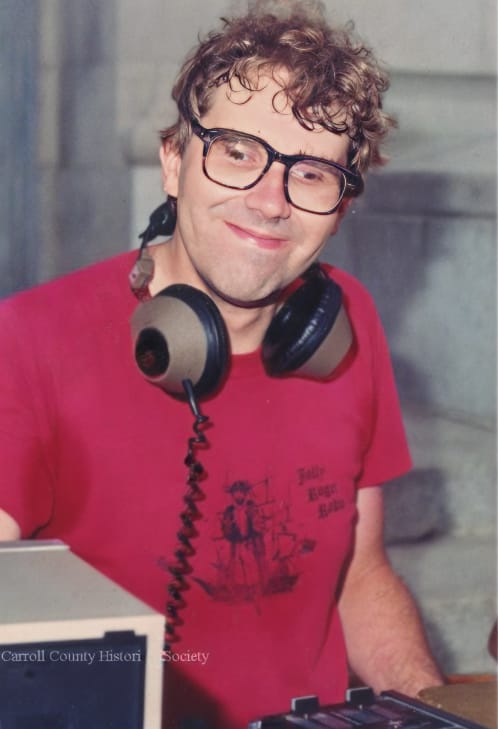
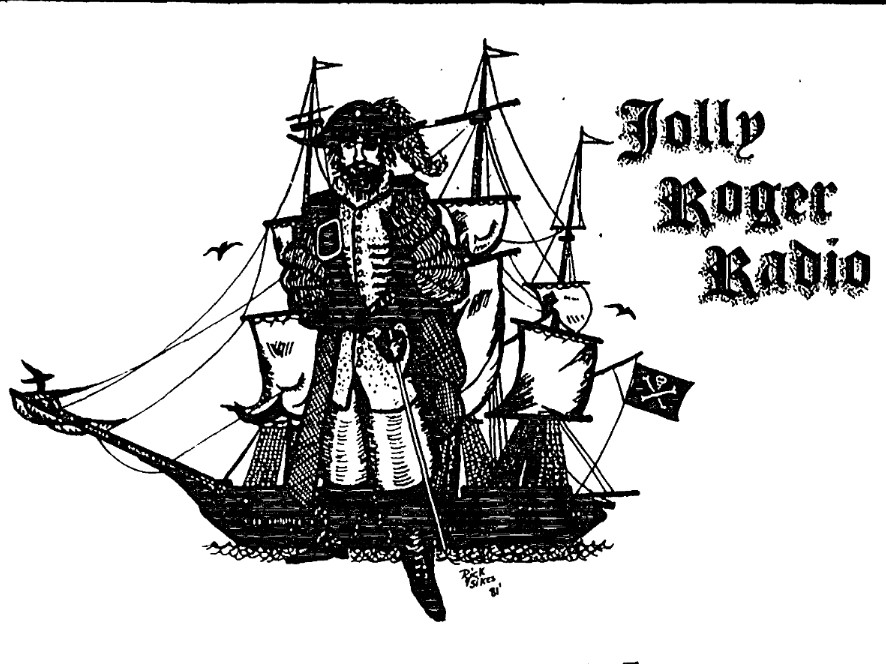
By 1980, after moving to Bloomington, Quinn had established himself as a pirate broadcaster, operating out of his home. Calling himself Jolly Roger or The Flying Dutchman and broadcasting on 90.7 FM as well as AM and short-wave frequencies, he played an idiosyncratic blend of music. A 1980 story about him in the Bloomington Herald-Telephone (now The Herald-Times) characterized his offerings as “an assortment of folk music, mostly of Irish origin, but also mixed in a little rock, punk, and humor.” Quinn played a number of songs by Marc Haggerty, a local ex-Marine who’d returned from Vietnam in the early 1970s and had gone on to become a leader of Indiana University’s antiwar protests. Haggerty and Quinn remain friendly to this day.
Quinn had gathered a stable of volunteers who helped him with his illicit operation. One of the hallmarks of his pirate station was his willingness to turn the mic over to members of the community. The Indianapolis Star reported in April 1980 that the FCC was hot on the heels of Quinn for operating without a station license. In response, some of his volunteers wrote a protest ditty called “The Pink Slip Song.” (The FCC’s violation notifications came on pink paper.)
Before dawn on Monday, November 10, 1980, an FCC gumshoe named George Sklom, using a short wave signal locator, had tracked down Quinn’s pirate broadcast to his apartment at 645B Marble Lane on Bloomington’s north side. Sklom dashed over to a nearby convenience store on 17th Street and called the Bloomington police on a public telephone. Together, Sklom and the cops banged on Quinn’s door and arrested Quinn and two helpers inside.
Quinn the next day told a Herald-Telephone reporter: “I personally feel we didn’t do anything wrong. And I would like to turn (the station) back on again as soon as possible.”
Quinn paid a fine and then did indeed turn the station back on, only now he took his pirate operation on the road, setting up in different Bloomington locations over the next few years. One of them was Marc Haggerty’s living room.
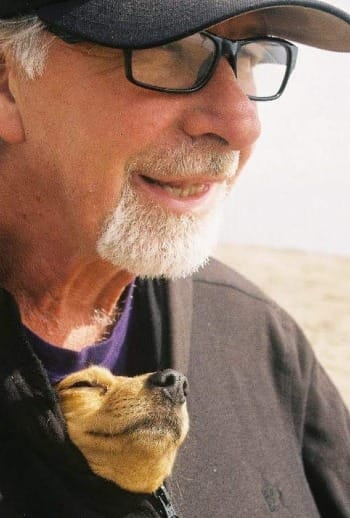
Haggerty lived in the Pigeon Hill neighborhood, the highest ground in town. An electrician, Haggerty helped Quinn set up shop at his North Summit Street home.
“Bruce was good people,” Haggerty says. “I wanted to help.”
Haggerty remembers Quinn starting each night’s broadcast with the Roger McGuinn song, “Jolly Roger.”
Then Quinn would announce: “This is pirate radio, Jolly Roger, broadcasting illegally for Bloomington, Indiana!” Quinn’s signal, Haggerty says, covered the entire city. Quinn himself claimed years later his pirate signal could be heard as far as Canada.
People’s memories of events that happened nearly half a century ago are hazy. The figures involved often tell contradicting stories. Both Jim Manion and Brian Kearney appeared, one time each, on a Quinn pirate broadcast. All parties agree on that. Manion did his shift from Quinn’s living room, before the 1980 bust. Kearney’s was at Haggerty’s house.
Manion had been a DJ for cable-radio WQAX since arriving as an Indiana University undergrad in the early 1970s. Soon after Mark Hood and Jeffrey Morris started on their pursuit of a FCC station license, Manion joined forces with them even as he continued to spin records on ’QAX.
Familiarly known as KWACKS, WQAX was a quirky little station. Listeners could only access it via the local cable TV carrier. The station’s listenership was meager. Manion longed to be heard by a broader audience. Quinn’s broadcasts could be heard all over town. “I was really intrigued by that,” Manion says.
Manion’s one-off show on Quinn’s station closely resembled his regular ’QAX shows. “Play 30-plus songs in two hours and hit at least 15 genres,” he says.
Later, when Kearney joined the BCR effort, Manion told him about Quinn. “We thought it was great,” Kearney says of Quinn’s pirate broadcasts. He, too, wanted to do a Jolly Roger shift.
“Bruce was set up at Marc Haggerty’s funky house,” Kearney says. “Quinn really was kind of like a pirate,” he says. “He was subversive. The FCC wanted to catch him and he reveled in it. He loved being an outlaw.”
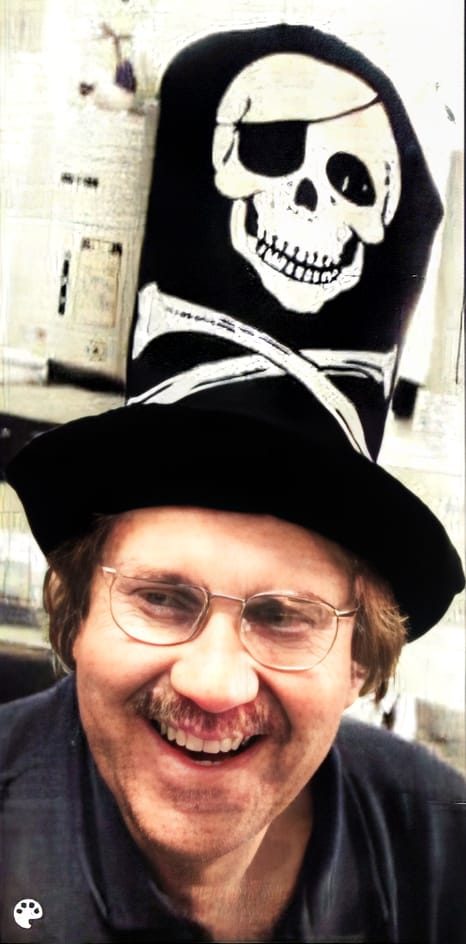
Kearney remembers both Quinn and Haggerty being in the room with him. “I can’t remember what music was being played but we smoked a joint on the pirate airwaves,” Kearney says, laughing. He mimics taking a deep toke close to an imaginary microphone so listeners could be in on the subversion. “That,” Kearney says, “was part of the mischief.”
Those two appearances on Quinn’s pirate station by key BCR players would come back to haunt them.
Brian Kearney came from suburban New York to study at Indiana University in 1979. Before he could earn his bachelor’s degree, he fell in love and followed the object of his desire up to Madison, Wisconsin. The relationship never panned out but, while on the campus of the University of Wisconsin, Kearney discovered WORT, a lively community radio station. WORT was a breeding ground for future NPR hosts and reporters, including Michael Feldman, who went on to host the long-time NPR mainstay, Whad’ya Know?
WORT got under Kearney’s skin. “When I went to Madison in 1982, that’s when I first heard an example of a true community radio station,” Kearney says. He loved what he heard and he brought that ardor with him when he returned to Bloomington to finish his degree. “When I came back I was a zealot. I was fired up,” he says.
Kearney had heard about BCR before he left for Madison. He’d even attended a meeting or two but never really committed to the effort. Upon his return to Bloomington, he was born again — a community radio evangelist. One spring evening in 1983, Kearney was in the Bluebird, one of Bloomington’s premier live music venues. “I was kind of inebriated,” he says. “Well, actually, I was definitely lit.”
Jim Manion was there that evening, too. Kearney marched up to Manion and demanded to know why the BCR community radio station wasn’t on the air yet. “We need a leader,” Manion said. At the time, Manion was concentrating on a video production career. That answer wasn’t good enough for Kearney.
Finally, Manion said to him, “Brian, you should be the leader.”
“It was just the right moment,” Kearney says. “Let’s do it!” he told Manion.
Kearney brought the precise qualities BCR needed, and had lacked, since its inception. He understood business. He knew how to organize and strategize. Perhaps most importantly, he knew where the money was. “That was Brian’s thing,” says Richard Fish, another BCR core group member.
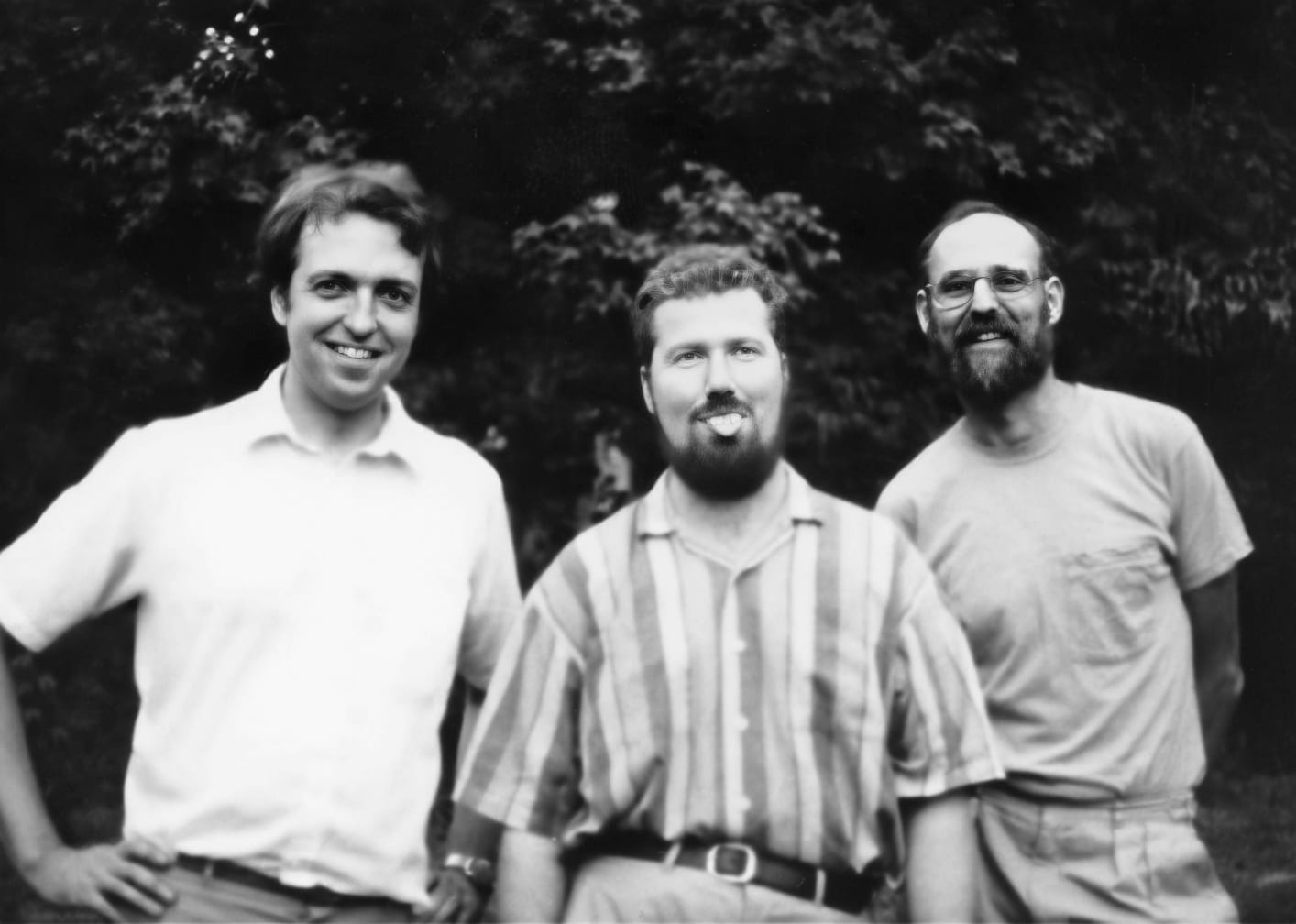
Prior to Kearney’s takeover of BCR, the group had grappled with the “Channel 6 problem.” Television stations on channel 6 broadcast their audio on the FM radio spectrum adjacent to the non-commercial band where a community radio station would be located. But being within 50 miles of Indianapolis, any potential BCR station would interfere with WRTV’s audio on local TV sets, so the FCC wouldn’t grant it a license.
Not only that, when BCR applied for FM frequency 90.5 in 1979, far enough away from WRTV’s channel 6 audio signal, the group was rejected because it would interfere with Louisville’s WUOL-FM on that same frequency. That was the 1981 rejection that nearly ended BCR’s quest.
The group was reinvigorated under Kearney and it continued to seek ways to get on the air. A whole series of fortunate occurrences over the next seven years enabled BCR to finally get its broadcasting license.
But first, it would have to weather one more unlucky blow.
Kearney and Manion were impressed with Bruce Quinn’s knowledge of the medium. He was a radio savant. “He knew a lot about signals and stuff,” Manion says. “He was a radio freak and Brian wanted to figure out what this guy was all about. So we invited him in.”
It was a summit of Bloomington radio wannabes.
Quinn by this time was again being pursued by the FCC. His old nemesis, George Sklom, had been quoted in a 1983 Louisville Courier-Journal article that he wanted to put Quinn and his fellow pirates in jail. That was enough for Quinn’s band of volunteer buccaneers. None wanted to go to jail so, one by one, they dropped out. Quinn, too, had had his fill of being an outlaw. “I got a little tired of running from the Feds,” he told a Herald-Telephone reporter in 1986. “That kind of situation just doesn’t let you sleep too well at night, even if you think it’s a noble cause.”
So, Quinn marched into an FCC branch office and found Sklom at his desk. “Okay, George,” Quinn said, “where do we go from here?”
Sklom helped Quinn go straight. The two even became friends. Now, Quinn entertained the notion that he and BCR could play nice and, together, they could get the FCC’s blessing.
That potential union never was consummated. He and BCR folks met just a few times, soon after Kearney became the group’s president. Neither he nor they cared much for each other. When the two parties still were on speaking terms, they batted around the idea of applying for the open 95.1 FM frequency. Quinn even suggested they call their proposed station WXJR. The X would pay homage to BCR’s contingent of WQAX alumni and the JR was for Quinn’s Jolly Roger.
Kearney and Manion viewed it as a bad sign. “We saw through that,” Kearney says. “That was just Bruce going ‘ex-Jolly Roger.’ He was trying to be clever.”
“It was way before we needed to be talking about call letters,” Manion says.
The more Kearney got to know Quinn, the less he thought of hitching BCR to Quinn’s wagon. “We came to the conclusion we weren’t going to be able to play well in the sandbox with Bruce,” Kearney says. Both Kearney and Manion believe Quinn wanted to wrest control of BCR. “He was too much to handle,” Manion says. “He wanted to take it over.”
“We felt that he was an untrustworthy figure and he didn’t trust us,” Kearney says.
Kearney made it clear to Quinn he was no longer welcome at BCR meetings. Quinn stewed. Several people who were BCR members at the time still refer to Quinn as “weird,” “odd,” and even “crazy.” Quinn picked up on that sentiment almost immediately. It rubbed him raw.
“I’ve had people thinking my visual handicap means I’m stupid for much of my life,” Quinn says. “The war was on”
Quinn made it clear he felt BCR had stolen his strategy of applying for the 95.1 FM frequency and getting an FCC waiver for noncommercial operation. Kearney says BCR was no gang of thieves. “We were working in parallel universes,” he says. Each party, independently, Kearney insists, had long wanted 95.1 for itself.
Both Quinn and BCR, separately, marshaled their resources in preparation to apply for the 95.1 FM frequency. “Bruce beat us to the punch,” Kearney says.
Quinn filed an FCC application for 95.1 in March of 1986. BCR wasn’t happy about it. “We decided we were going to battle him,” Kearney says. “We were reluctant warriors. It wasn’t like we were a litigious bunch whose first instinct was to fight.”
BCR filed a competing claim for 95.1 in July. What followed was a comedy of insults and threats. Quinn told a Herald-Telephone reporter he’d done all he could to reach an agreement with BCR. “People in Bloomington that want alternative radio just can’t get along,” he claimed. He complained to the reporter that the BCR was all talk and no action.
Quinn also groused to some BCR individuals. Manion says Quinn called him. “He said he would testify that I was on his pirate radio station and that would bring us down,” Manion says. “He was going to use that against us. I remember just telling him to go fuck himself.”
“They asked the FCC to not give a license to an idiot like me,” Quinn says. “They tried to make a big deal out of my pirating to squeeze me out.”
Kearney says: “He left a message on my answering machine and he said something like, ‘We were never gonna make it to the airwaves, we were never gonna be successful, because we were like a bowl of granola: nothing but nuts, fruits, and flakes.’”
One of the attributes Kearney had brought to the BCR table was his recognition of the need for expert consultation in the effort to start a radio station. The group had retained a Washington, D.C., law firm specializing in FCC affairs to help them. “The lawyers,” Kearney says, “didn’t once tell us that we didn’t have a chance.”
They didn’t.
“We played this game of chess and Quinn wound up winning,” Kearney says. Both Quinn and BCR claimed the 95.1 FM frequency would serve Bloomington. After BCR filed its challenge, Quinn adroitly shifted gears and modified his application, saying his station would now serve Brown County.
One of the FCC’s criteria for awarding a frequency was called “first service.” An area with no radio stations would get priority over one with existing operators. Bloomington had three stations in existence at the time; Brown County had none. BCR, through its lawyers, countered that Nashville, the town to be served in Quinn’s amended application, was too sparsely populated to merit a station.
Quinn also made good on his promise to accuse Kearney and Manion of being pirates because they’d appeared on his illegal station. “I outed to the FCC the names of those backstabbing, ratfink pirates,” he says.
“We had our petition with tons of letters of support,” Kearney says. “Then Quinn began making his case for the poor, radio-less people of Brown County.”
Based on years of precedent, it seems a foregone conclusion in retrospect. The FCC bought Quinn’s assertion that Nashville and Brown County deserved a station before Bloomington would be granted another one. On July 28, 1989, it denied the BCR challenge for 95.1 FM, giving it to Quinn.
The FCC’s second rejection of a BCR application might have come as a surprise to Kearney and company, but the group didn’t suffer the near debilitating letdown that followed the 1981 veto. BCR reached out to new allies — politicians and business owners, academics and community leaders — for support. It hired a new set of veteran FCC legal advisors as well as a renowned radio engineering wizard from New Orleans to help them find the right frequency and strategy to win FCC approval.
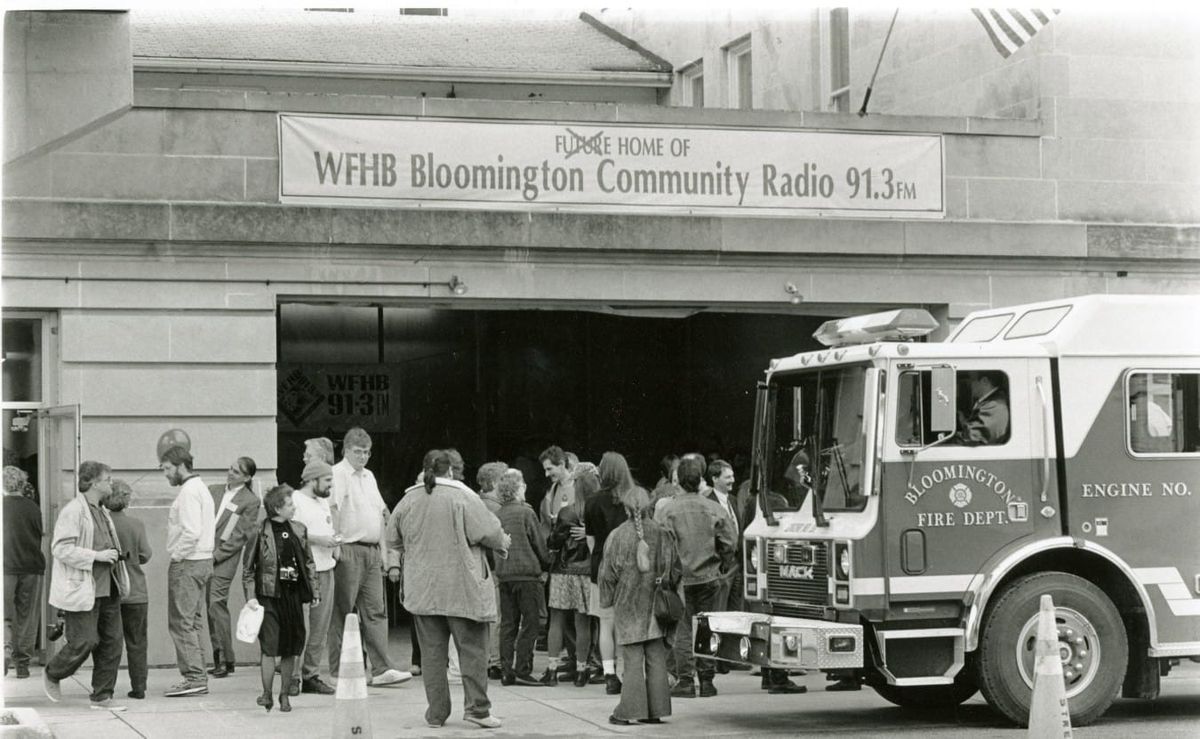
In the mid-’80s, Kearney had worked as an aide for Indiana University president and chancellor Herman B Wells while leading BCR. With Wells’s encouragement, he would negotiate a huge donation from wealthy widow Cecile Waldron that allowed BCR to purchase Bloomington’s old, unused central firehouse attached to the dilapidated, vacant city hall on Walnut Street for its home — ergo WFHB for Firehouse Broadcasting.
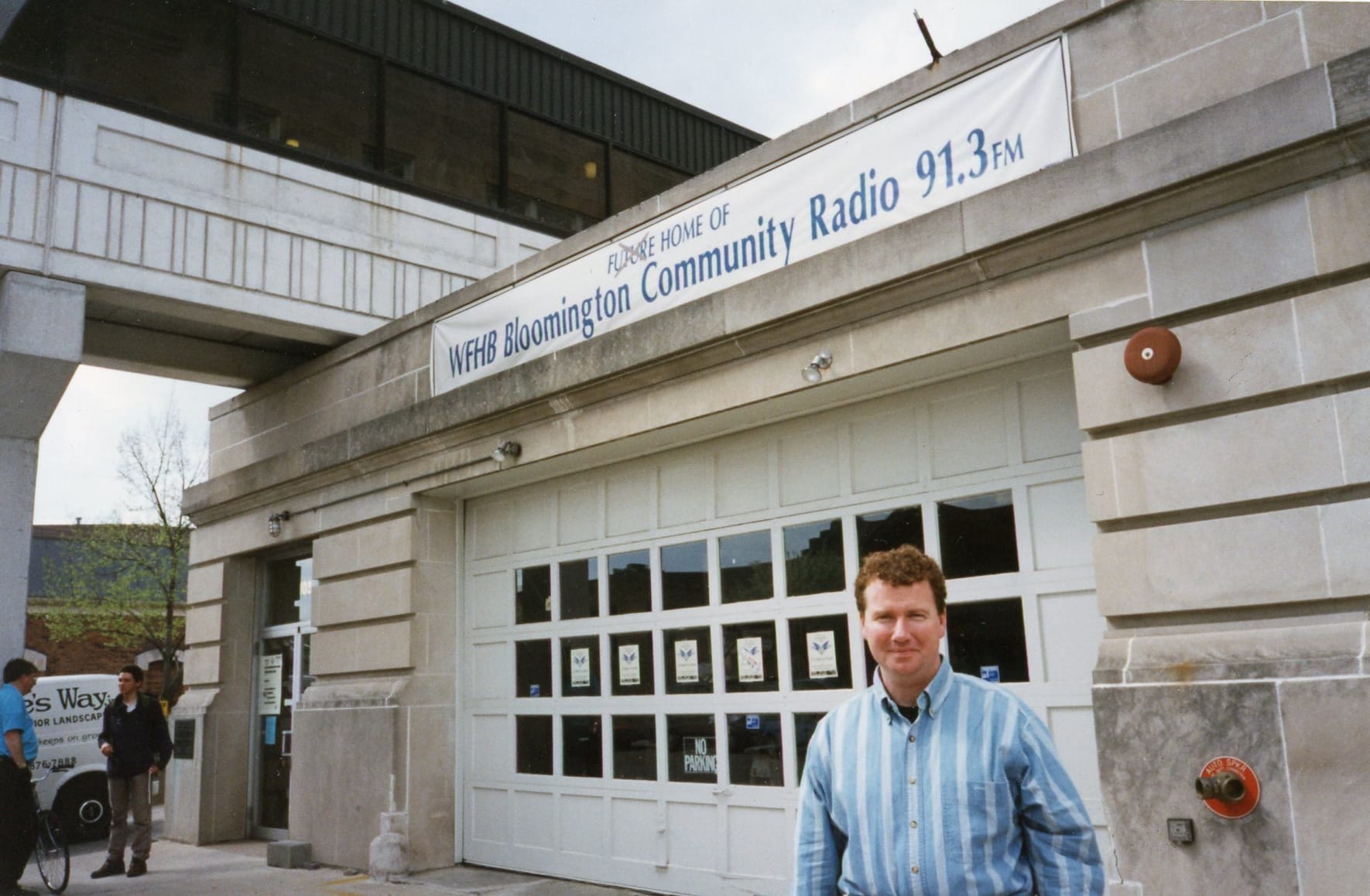
WFHB went on the air Monday, January 4, 1993. In July 2025 it celebrated 50 years since Mark Hood and Jeffrey Morris conceived of the idea for a community radio station in Bloomington. Hood now serves as BCR’s treasurer. Morris has been the station’s chief engineer and electronics tinkerer since its first day of existence.
Kearney served as WFHB’s first general manager until 1997. He then launched a new career as a fundraiser for arts and educational institutions. Today, he is the senior director of development at the Pace University Haub School of Law in White Plains, New York.
Manion was WFHB’s first and only music director from 1993 through 2021. He also doubled as program director for most of those years. The station’s musical offerings continue to reflect Manion’s philosophy.
Bruce Quinn never did set up shop in Nashville. He wound up selling 95.1 FM to a Christian broadcaster. Today, the Mid America Radio Group airs Spirit 95 on the frequency. It is based in Bloomington.
Over the years, Quinn and his wife, Mitzi, would own or operate numerous radio stations in Indiana. He became an advocate for Low Power FM, allowing operators to set up small stations in areas serving sparse populations, an exception the FCC codified in 2000. He started Low Power FM station WHUM, 98.5 in Columbus, Indiana, and 98.3 in Seymour, in 2004. A 2019 listener told The Republic, Columbus’s daily newspaper, that listening to the station was “like going to an antique mall and never knowing exactly what you will find.”
The Republic piece continued:
There never has been, nor ever will be, one radio station that suits everyone. So when a musical format such as WHUM’s follows up Doris Day’s 1944 “Sentimental Journey” with B.B. King’s “The Thrill Is Gone” from 1970, there’s bound to be some folks left scratching their heads.
Bruce and Mitzi Quinn also co-founded or ran WMRS 107.7 in Monticello, WQFE 101.9 (now WKLU) in Brownsburg, and WBQR 95.7 (now WYCM) in Lafayette.
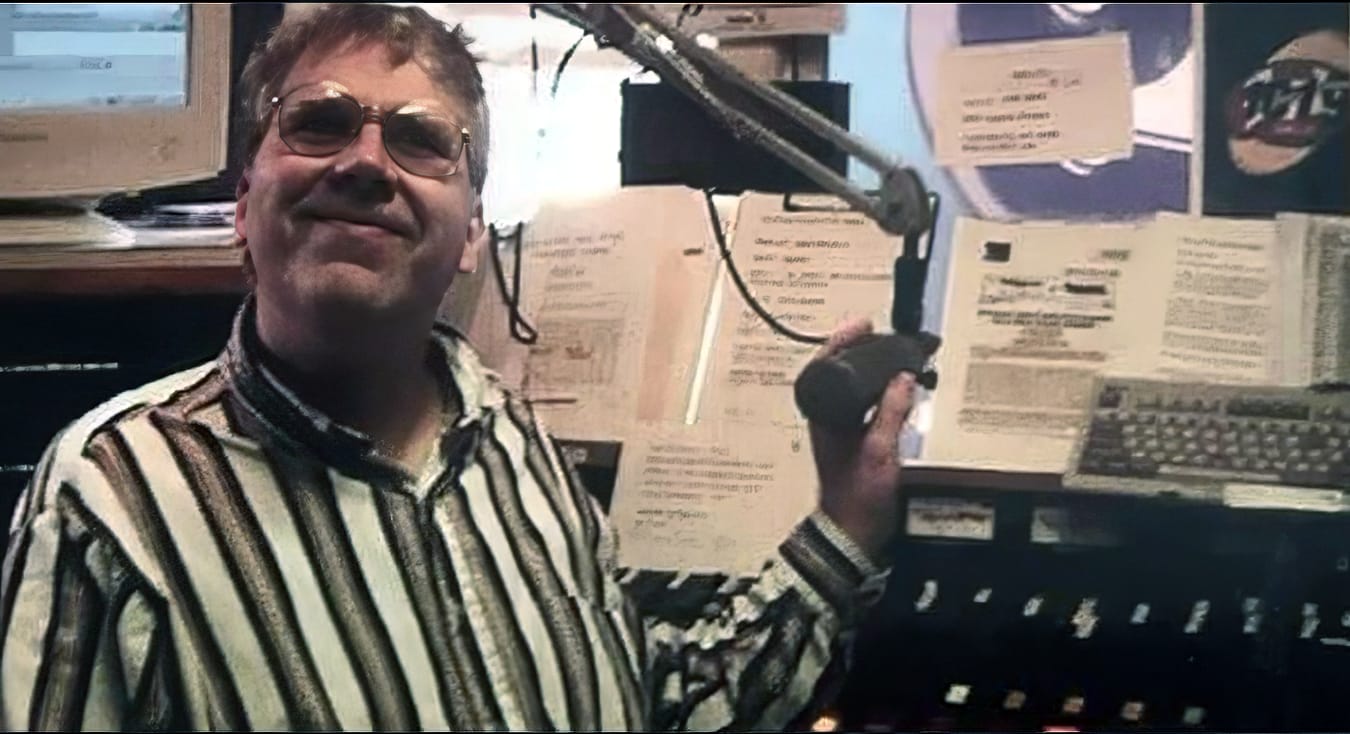
A WMRS social media post marking Quinn’s birthday in 2023 read, “Broadcasting has been his life’s dream.” The post went on: “Through his efforts, Bruce has made it possible for many people to achieve their dream of becoming a broadcaster.”
In a 2009 filing with the FCC related to Low Power FM regulations, Quinn described himself simply: “I am a community radio advocate.”
Quinn today holds no grudge against current WFHB management. “The staff that is there now have nothing to do with what happened way back then,” he says. “I wish them well.”
It’s a changing radio world. A local fellow who 40-plus years ago styled himself a brigand and thumbed his nose at bureaucratic regulation went on to create a miniature media empire. He and the group involved with getting WFHB on the air all hold important places in Bloomington’s radio history. More and more, though, radio itself is becoming history. Many industry researchers and observers assert that more people listen to radio programs on demand online than do over the FM or AM dials. Automobile manufacturers are eliminating traditional radios in their new models. And who owns a transistor radio anymore?
The pirate Bruce Quinn in the summer of 1983 was more a harbinger of the future than the law-abiding folks of Bloomington Community Radio. Podcasters and streaming audio content providers who do their thing without being bothered with applications and licenses can trace their DNA more to Quinn than to Kearney, Manion, and company.
WFHB and virtually every other radio station in existence are hustling to keep up with the latest trends in online streaming. The station has survived — even thrived — so far.
Quinn and BCR fought a war. They snarled at each other in the 1980s and continue to do so to this day. Yet, in the end, they both emerged victors.
Michael G. Glab
Michael G. Glab has been an independent writer since 1983. His in-depth personality profiles were a staple in the Chicago Reader for two decades. He hosts WFHB's Big Talk and writes The Electron Pencil blog.