Revisiting the Deam: An Ode to the Sierrans on the Axsom Branch Trail
Higgs spends an an “afternoon in the woods” with Hoosier Sierra Club members.

The ninth installment in a photojournalist’s yearlong return to the wilds.
“Revisiting the Deam” is a series of stories chronicling author and photographer Steven Higgs’s exploration of the Hoosier National Forest as he revisits wilderness areas with friends, colleagues, and experts in the environmental field.
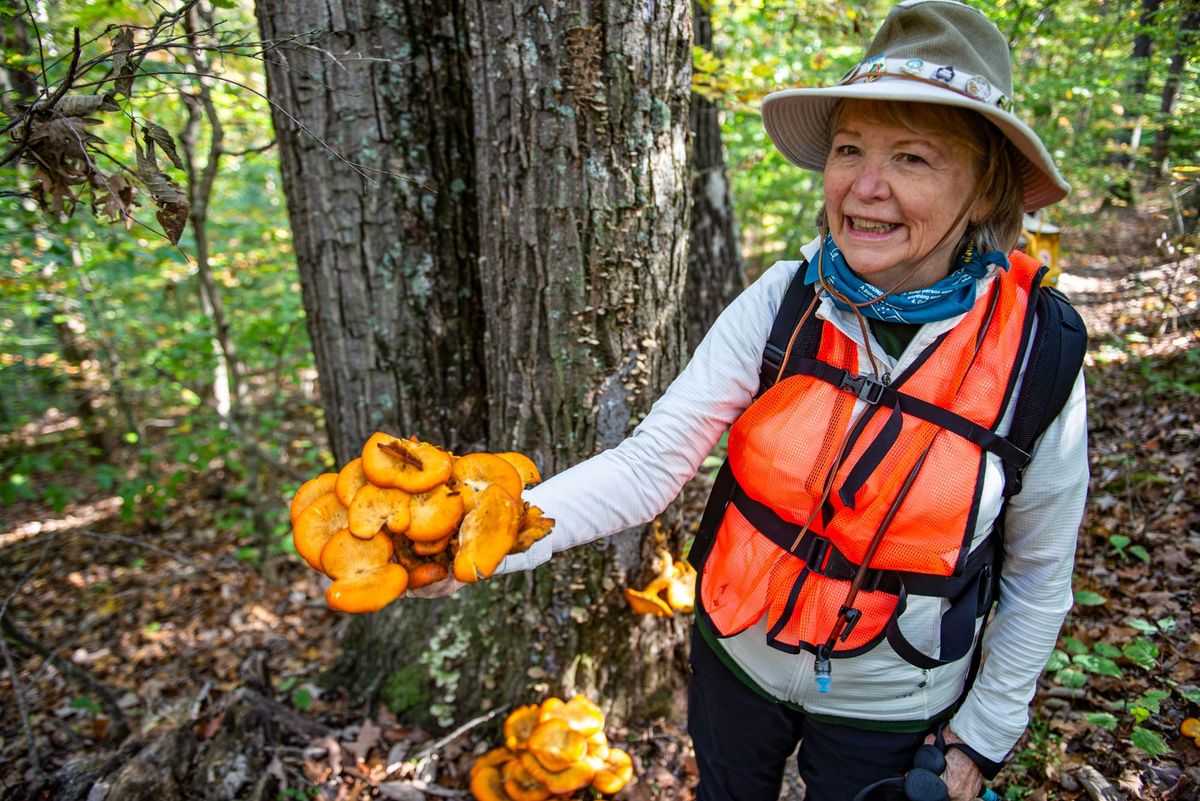
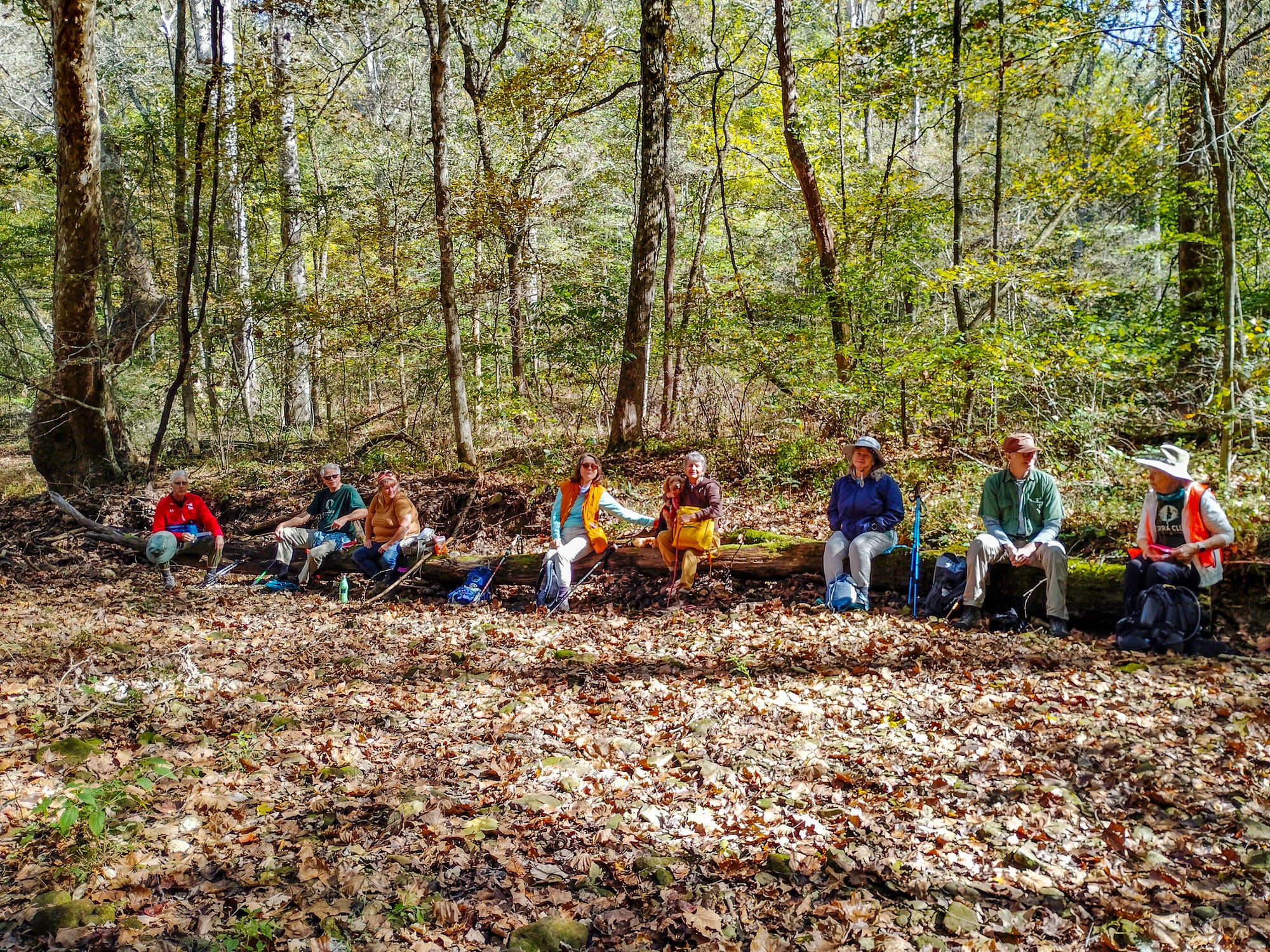
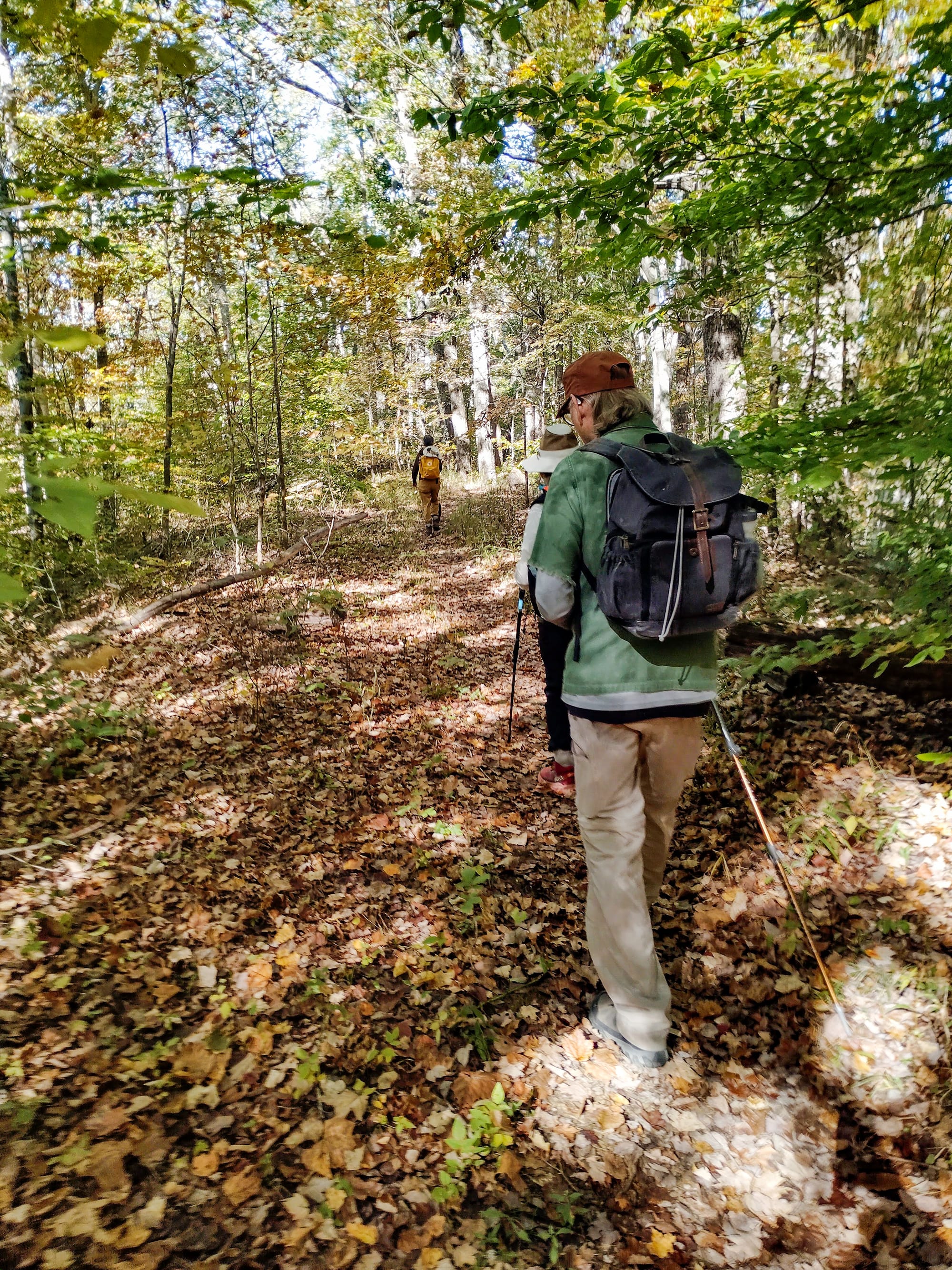
Hiking the Axsom Branch Trail on a magnificent late October day with Marilyn Bauchat and a band of Uplands Network Sierra Clubbers was more than a revisitation to the Charles C. Deam Wilderness. It was a homecoming.
Most importantly, it was an opportunity to spend an afternoon in the woods with environmental activists whose work I’ve followed and admired for years: Julia Lowe, Mary Reardon, Lora Kemp, and, along with four others, Gillian Field, whom I didn’t know but worked with at The Herald-Times in the late 1980s.
They are the sort of citizens who have made possible hikes on the Axsom Loop and on hundreds of miles of other trails throughout the ninety-square-mile Deam Wildlands. They are forest fighters in the traditions of the best: Mary Kay “Moody” Rothert and Tom Zeller, Andy Mahler and Linda Lee, Bob and Kathy KIawitter, Jeffrey St. Clair, Leah Garlotte, Tim Maloney, Bill Hayden, and Jeff Stant.
With one exception, every “Revisiting the Deam” piece I’ve written since last January has retraced the exact same footsteps on the exact same paths that I’ve trod for a half century. In that time, the forest has attained old-growth status. Flora has encroached upon the trails. Some old trails have closed. And storm damage is widespread. But the footpaths have essentially remained unchanged.
Such was the case with our Sierra hike along the 4.7-mile Axsom Trail Loop, whose dogwood blooms, old roadbeds, pine stands, and creek bottoms I first photographed in the spring of 1982.
This month’s revisit, however, added new layers of nostalgia, given my lifelong, entwined connections with the Sierra Club and the Charles C. Deam Wilderness — by design.
My first pre-graduate school experience as an environmental journalist involved both the Sierra Club and the Deam. I served as newsletter editor for the Uplands Group Sierra Club in 1981, when the seven-year Indiana wilderness struggle was still raging. At that time, forest preservationists were promoting a plan called the Salt Creek Wilderness Area. That plan became the foundation for the 12,953-acre compromise that is today’s Deam, which federal law mandates will remain wild in perpetuity. And when the Deam was dedicated on Frog Pond Ridge in December 1982, I drove Republican U.S. Senator Richard Lugar’s environmental aide to the ceremony.
The 1981 Uplands group met in the Indiana Memorial Union tower. Its push for a wilderness in the Hoosier National Forest was driven by a college kid named Jeff Stant, today’s executive director of the Indiana Forest Alliance, whose name repeatedly echoed throughout ridgetops, switchbacks, and creek beds on our hike along the Axsom Branch.
Board members included Indiana University professor of medical sciences Al Strickholm and future Indiana Division of Nature Preserves field biologist Hank Huffman.
From 2015-19, I led hikes and returned to the editor’s role for the Hoosier Chapter and its newsletter The Sierran, in which I also wrote a regular feature called the Hoosier National Awareness Project.
Like Bauchat, Lowe, Reardon, Kemp, David Waldemann, and Laurie Elliot on our Axsom hike, I was a certified Club Outings Leader. I organized hikes throughout the Hoosier’s northern half, including an annual outing with Hoosier Supervisor Mike Chaveas called “Hikes with Mike.” Bauchat joined one in 2018 on Fork Ridge in Jackson County. Stant and Chaveas met during one on Nebo Ridge in Brown County.
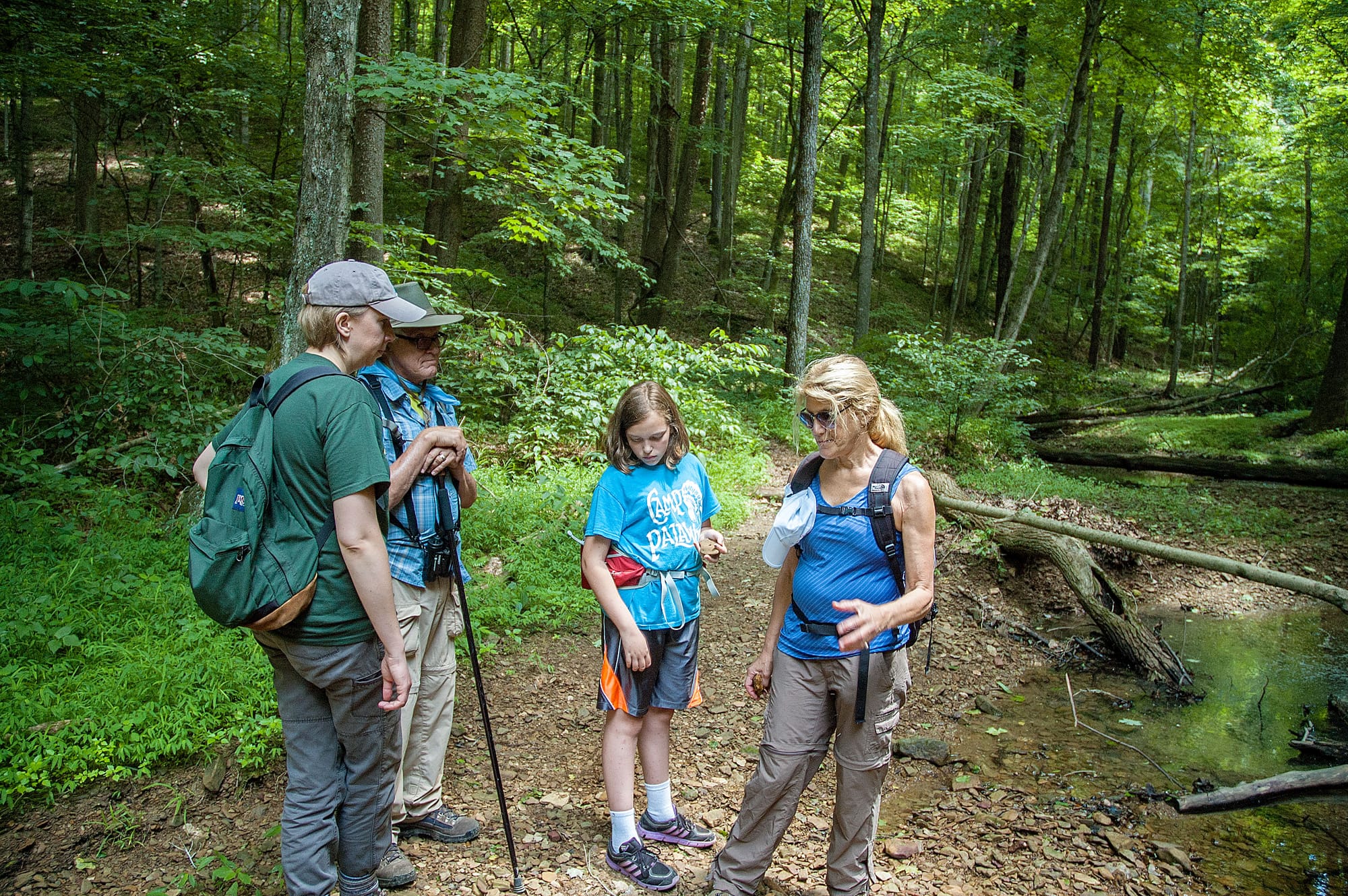
A little more than eleven years ago, I led a Hoosier Chapter Sierra Club hike on the Axsom Trail, when my now 21-year-old and living-in-the-Rockies granddaughter Raina had just turned 10.
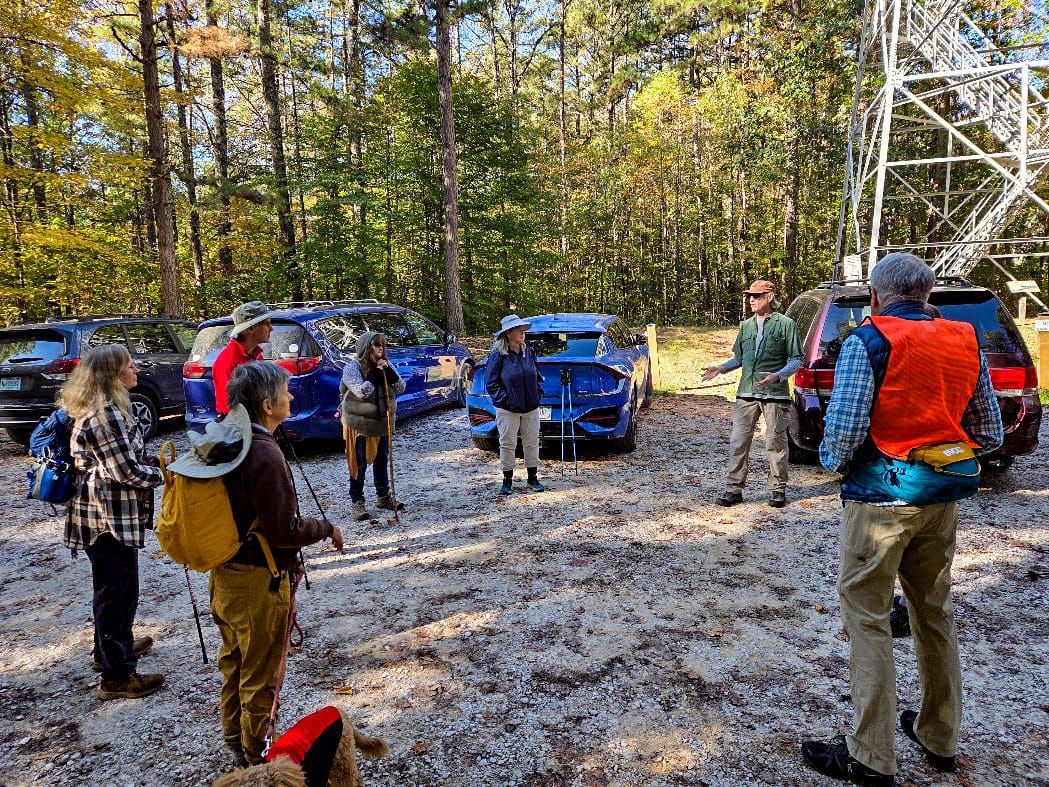
During introductions at the Hickory Ridge Lookout Tower parking lot, Bauchat cited the Sierra Club founder John Muir quote that opened my 1996 IU Press book, A Guide to Natural Areas of Southern Indiana.
“I never saw a discontented tree. They grip the ground as though they liked it, and though fast rooted, they travel about as far as we do. They go wandering forth in all directions with every wind, going and coming like ourselves, traveling with us around the sun two million miles a day, and through space heaven knows how fast and far!”
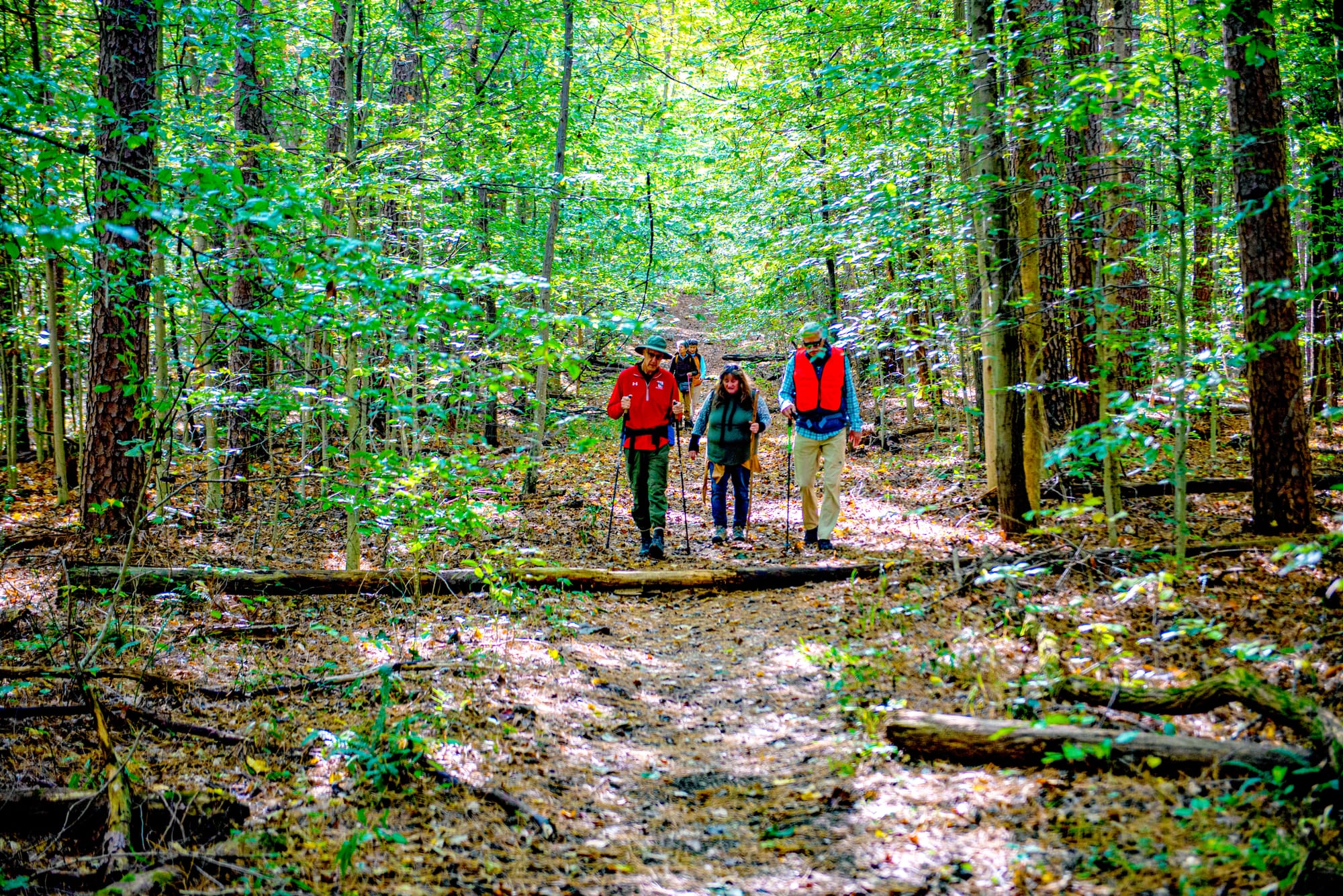
By leading us 550 feet up and down and through the Axsom Loop, Bauchat, the Uplands Chair and a Hoosier Chapter executive committee member, was emulating the path set by Muir and a group of fellow Californians who founded the hiking club in 1892. The Sierra Club’s original purpose was to sponsor wilderness outings in the mountain regions of the Pacific Coast.
Today, the Hoosier in Indianapolis is one of sixty-four local chapters, with eight thousand members statewide and four local groups and networks, including Bauchat’s Uplands Network in Bloomington and the Winding Waters Group in Columbus, where Lowe chairs the Executive Committee.
“We believe that access to the outdoors is a human right, and that we can build community by getting outside together,” the Hoosier chapter says on its website. “By getting outside we can bond with others and meet new people, and it is great for our physical and mental health. In these times, which are challenging in so many ways, we can find solace, strength, and belonging in nature.”
Muir, an activist as well as a naturalist, served as the Sierra Club’s first president from 1892 to 1914 and quickly led the club into the realm of conservation politics, once camping out with Theodore Roosevelt — yet another lead Bauchat and company are following.
Talking with my fellow travelers and overhearing their conversations reminded me, first, that the activist communities I’ve written about for decades are extended families. Sierra outings like Axsom are shared experiences, during which little goes unnoticed or unidentified: that’s Jack o’ Lantern mushroom, not the edible chantarelle; this is where the yellow lady’s slippers miraculously materialize each Spring; that’s definitely a wintergreen plant.
Second, our outing reminded me that it’s because of the grassroots activists who care enough to invest their blood and sweat that nature lovers have places where they can appreciate the Southern Indiana deep forest environment.
A mere century ago, the prevailing mentality had stripped every tree from the entire Deam and all but eighty-eight of the Hoosier National’s 204,000 acres, from Lake Monroe to the Ohio River. All gone.
I engaged in and eavesdropped on conversations about meetings: long meetings; public and private meetings; DNR meetings in large and small rooms around panels and tables, where emotions get aroused; meetings with the governor. Bauchat participated in three the day before our hike.
My hiking mates and their ilk in other groups engage the public and make the forest’s case one-on-one by tabling at events. They lobby, write letters to, call, and campaign for or against elected representatives at all levels of government.
When they went home after the Axsom hike, they submitted formal comments on a DNR plan to log and burn in the proposed Jordan Creek State Wild Area in the Owen-Putnam State Forest. Indeed, they are the reasons why the 1,332-acre proposal is on Gov. Mike Braun’s agenda. Named for the creek that runs along its northern edge fifteen miles south of Cloverdale, the deep core forest area is one of eighteen State Wild Areas that forest preservationists have proposed to Indiana’s forest-loving governor.
Last April, the Uplands Network and Winding Waters Group sponsored a forum in Bloomington to educate the public on the federal Roadless Rule rescission that would allow road building in areas of the Hoosier National Forest where it is now prohibited.
When they aren’t hiking, on their phones, on Zoom, or in meetings, they’re often in the Deam, on their knees, pulling that damned stiltgrass, multiflora rose, and other invasive plant species, by hand.
Thanks to their commitments, I still have this one of many such forested homes to come home to.
The one column that led me off my well-worn wilderness pathways was the June piece “Jeff Stant’s Old Growth Vision on Frog Pond Ridge,” when we bushwhacked off the Hayes Trail to some old-growth shagbark hickories.
Well, I am going to end my year revisiting the Deam by bushwhacking off familiar trails to places that should have been protected wilderness in 1982: Browning Mountain and Bad Hollow in Brown County. I’ve written about both for decades and have hiked Browning from three directions. But I’ve never been to Bad Hollow, which occupies a rather mystical, romanticized place in my mind and heart.
For the finale, Jeff and I will hike up Browning Mountain from Combs Creek and down into Bad Hollow, where two-hundred- and three-hundred-year-old hickory and oak trees prove the forest needs no human help for native species to survive and thrive.
Seems the perfect place to end.
Steven Higgs
Steven Higgs is a Bloomington journalist, photographer, and author. He's written three books for IU Press on environmental heroism and natural areas of Indiana and taught journalism at IU for 27 years. Read more on his website: StevenHiggs.com.