
School Matters: ILEARN Results Show Worrisome Gaps
Some MCCSC elementary schools have proficiency rates below the state average.


The 2026 Indiana’s Learning Evaluation and Assessment Readiness Network (ILEARN) results are out, and students in the Monroe County Community School Corp. scored well above average. That’s the good news. But there’s wide and worrisome variation in test scores among MCCSC schools and groups of students.
Just 9.4% of Black students in MCCSC schools were proficient in both math and English/language arts, the main components of the assessment. That compares with 14.2% of Black students who were proficient statewide.
In a couple of the district’s schools, nearly 70% of students were proficient in math and E/LA — more than double the state average. But half of MCCSC elementary schools had proficiency rates below the state average. Some were well below it.
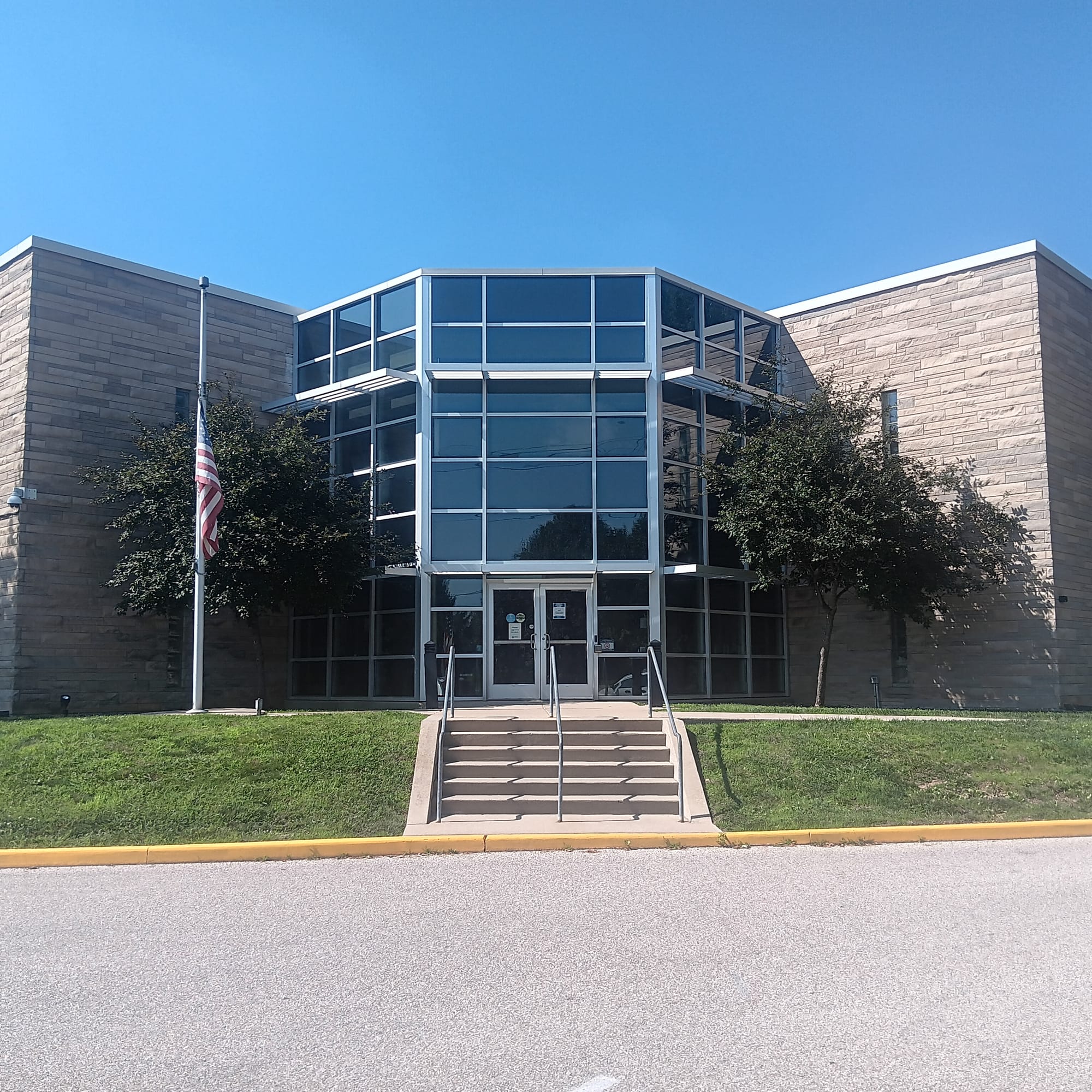
MCCSC proficiency rates also were below average for students who qualified for free and reduced-price school meals. District officials say they are taking the learning gaps seriously.
“We are not satisfied until every student has strong proficiency in both math and E/LA,” assistant superintendent Alexis Harmon said by email. “It matters to us immensely that we see continual educational advancement across all student groups, schools, and individual students.”
ILEARN assessments in math and English/language arts are given to all students in grades 3 through 8 each spring. In Richland-Bean Blossom schools, 2026 scores were above average for math and average for English/language arts. Monroe County’s two charter schools, the Bloomington Project School and Seven Oaks Academy, had above-average scores.
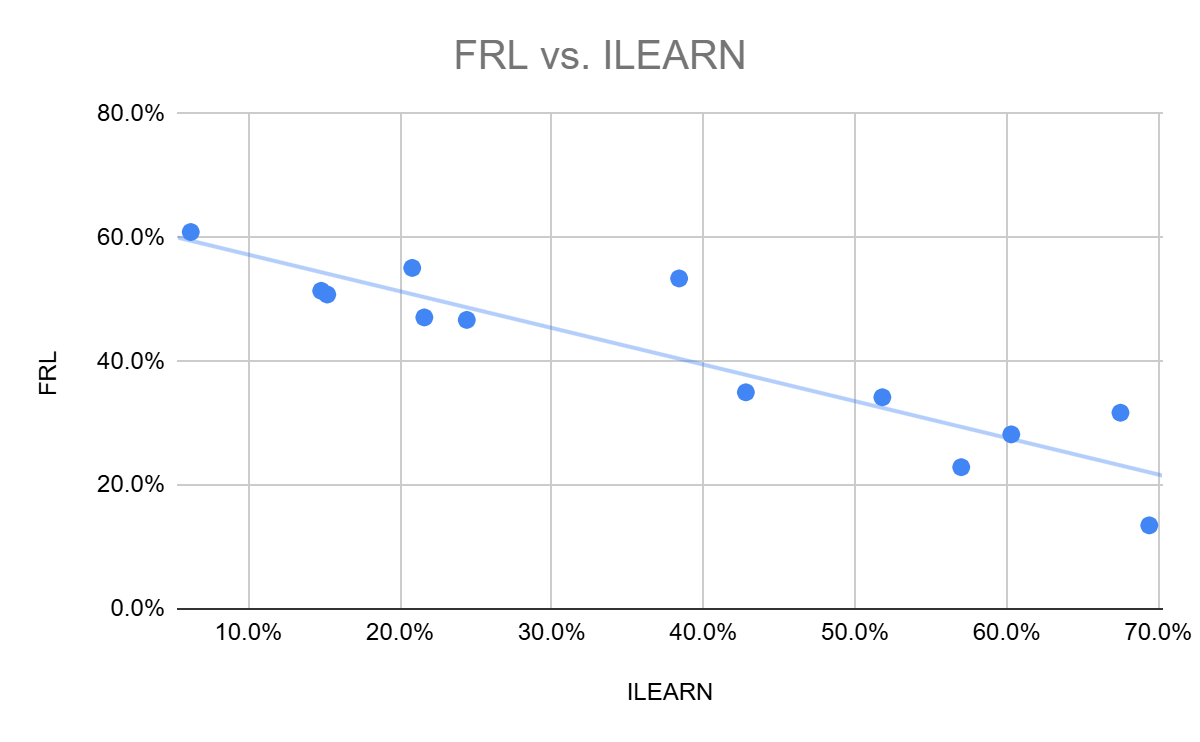
Not surprisingly, the MCCSC schools with low proficiency rates tend to be schools that serve the most low-income families. You can see it in the chart below, which plots MCCSC elementary schools’ math and E/LA proficiency on the X axis and students who qualify for free or reduced school lunches on the Y axis. (You can look up individual schools’ math and E/LA scores here.)
Standardized test scores are limited measures of what students learn and what they can do, of course. They often give a misleading picture of school quality. They may incentivize schools to emphasize tested subjects at the expense of others. We want schools to teach state standards, but we also want them to be safe, welcoming places where children thrive.
But test scores can highlight areas where schools can improve. We aren’t doing students a favor to ignore them entirely.
For MCCSC schools, a proficiency gap of more than 50 percentage points between schools deserves attention. If nothing else, it should lend urgency to the district’s effort to redraw school attendance boundaries in a way that balances socioeconomic status.

Harmon, the assistant superintendent for curriculum and instruction, described how MCCSC is addressing gaps. She said schools are using a multi-tiered support system that starts with a foundation of core instruction. The second tier is small-group instruction targeted to student needs. Tier three is intensive, long-term intervention, including one-on-one support.
Teachers use a variety of tools to identify students for extra help, Harmon said — not just state assessments like ILEARN but day-to-day observation and classroom work.
She said the district is investing in improvement in key areas, including early literacy and number sense. Here’s her presentation from a recent school board meeting on the district’s academic improvement efforts.
Closing learning gaps takes persistence, but it happens. For example, in 2025, only about half of MCCSC Black children were proficient on IREAD, the state literacy test given to second and third graders. In 2026, the figure rose to 74.6%. Success like that should be celebrated.
Steve Hinnefeld
Steve Hinnefeld is a journalist and former Herald-Times reporter, IU media relations specialist, and IU Media School instructor. He writes about education at inschoolmatters.wordpress.com and lives in Bloomington with his wife.