‘This Vast Enterprise’ Tells Rich, Human Story of Lewis and Clark Expedition
Steve Hinnefeld speaks with local author about new Lewis and Clark book.

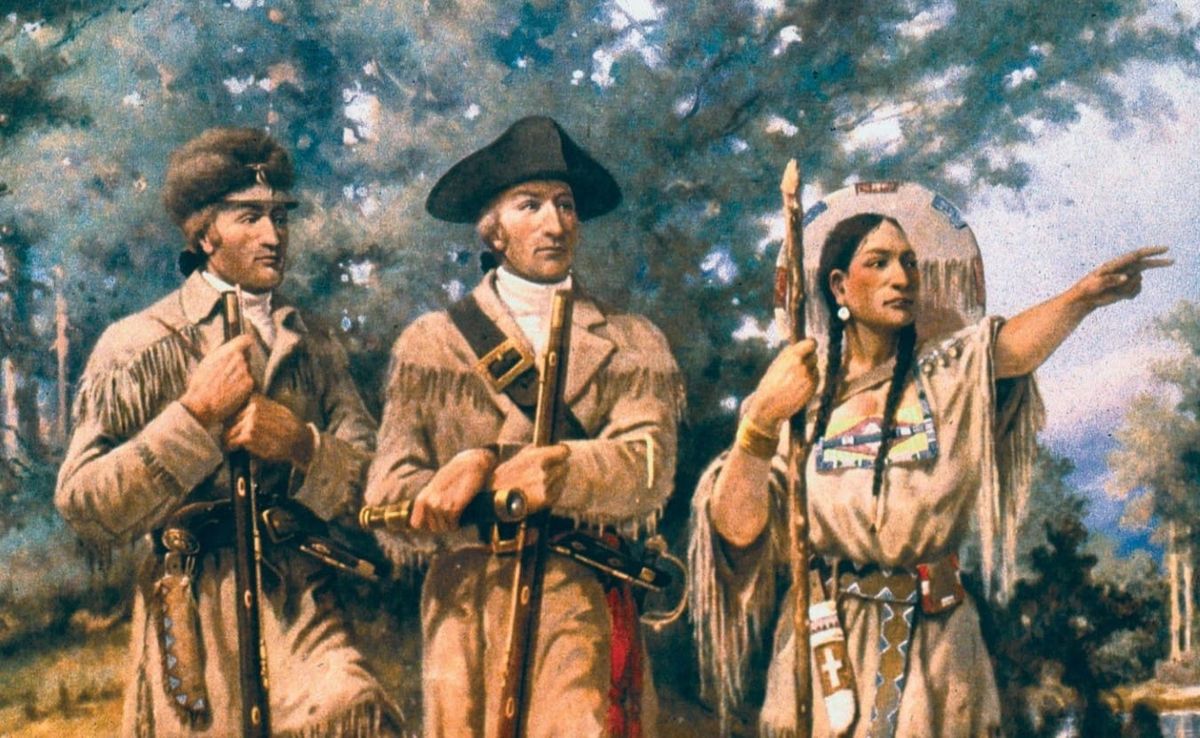
Americans know about Meriwether Lewis and William Clark, who led the 8,000-mile expedition in 1804–1806 that opened the West to settlement and trade. But what about Black Buffalo, the Lakota chief whose diplomacy created an alliance with the Americans?
Or York, Clark’s servant who earned the right to be treated as a man but returned to slavery when the journey ended? Or John Ordway, a New Hampshire farmer and first sergeant? Or even Sacajawea, whose knowledge of wild foods and mountain trails repeatedly saved the men?
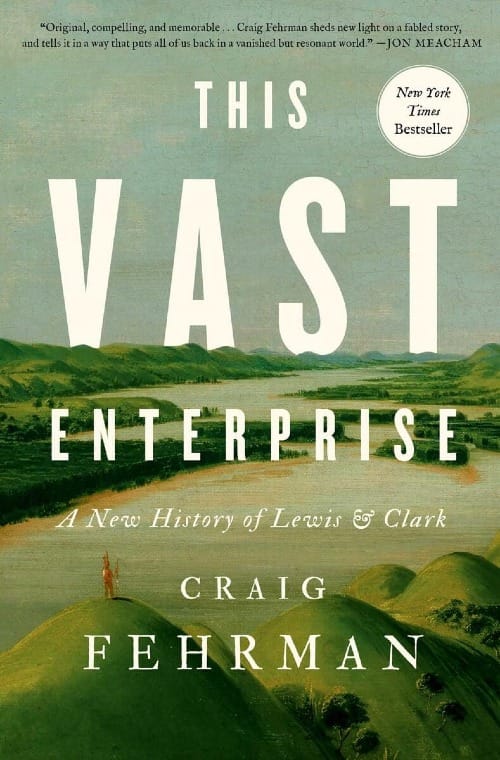
This Vast Enterprise, a new history of the expedition by Bloomington author Craig Fehrman, should open readers’ eyes to these unsung historical figures. First, it provides fresh insights into the explorers and those they encountered, relying on the more than one million words in their journals but also on recent academic studies and Fehrman’s interviews with researchers and Native sources.
Even more important, it tells the story from the perspectives of multiple figures: Lewis, Clark, and their crew members, but also those they encountered. Chapters alternate from one source to another. Of the 10 people whom the author centers, five are Native.
“I love Lewis and Clark,” Fehrman said in an interview, “but if we focus too much on them, we miss a lot of the story.” He said the book’s approach captures how Natives and the 30-member crew were “complicated human beings,” not just supporting characters.
Fehrman grew up in Dillsboro, a town of 1,300 people in southeastern Indiana. Sitting outdoors at a neighborhood coffee shop, wearing a T-shirt from Caveat Emptor, Bloomington’s used and antiquarian bookstore, he recalled that his parents encouraged his early interest in reading. A favorite memory is making family trips to the Cincinnati Public Library and filling a milk crate with books to take home and read.
He went to college at the University of Southern Indiana, where he met his wife, Candice, a fellow English major who is now a book editor. They moved to Bloomington in 2014 to be near their parents, who are in Indianapolis and Evansville, when starting a family. They have two children, ages 9 and 7.
Fehrman went to Yale for a Ph.D. but eventually decided to pursue writing. His first book, Author in Chief: The Untold Story of Our Presidents and the Books They Wrote, got good reviews but came out as the COVID pandemic hit, limiting its promotion.
Fehrman worked for five years on This Vast Enterprise, reading and re-reading the journals, studying documents in dozens of archives and interviewing over 100 sources. The result is a book that captures the drama and excitement of the Lewis and Clark adventure — dangerous river rapids, hunger and disease, potentially hostile Natives and aggressive grizzly bears — while focusing on its human aspects. Sixteen pages of illustrations, including maps, paintings, and documents, augment the story.

“This book showed me that human beings are the most interesting part of history,” Fehrman said. “I don’t ever want to write a book that doesn’t put human beings front and center.”
The book includes new details about the expedition’s leaders. Fehrman discovered, for example, that Clark, often seen as an unlettered Kentuckian, attended college. That provided insight into his appreciation for the natural world and his interest in Native cultures. Lewis, who suffered from depression and substance use disorder, wrote brilliantly about plants and animals. Fehrman describes how he also applied analysis to his own thoughts and emotions.
Some of Fehrman’s favorite chapters focus on York. As Clark’s “body servant,” York was responsible for dressing and feeding the captain and making him comfortable. At a time when most white Americans thought of Black people as property, York also made himself indispensable with his skill as a hunter, swimmer, marksman, and oarsman.
Sacajawea, Fehrman said, is often portrayed as a “friendly tour guide.” The reality is darker. Born to the Shoshone people, she was captured as a girl by the Hidatsa, then sold to Toussaint Charbonneau, a trader and interpreter. Her son, Jean Baptistie Charbonneau, whom she called Pahmpi, was born in the party’s winter camp. She acted strategically to protect herself and her child while part of the expedition.
“I don’t think of Sacajawea as the wife of Charbonneau, I think of her as the slave of Charbonneau,” Fehrman said. “He owned her, he abused her, he impregnated her, all while she had been taken hundreds of miles from her people, while she is 13, 14, 15 years old.”
Fehrman also centers the experience of Coboway, a Clatsop chief who helped the crew survive their second winter. And Piahito, an Arikara leader who traveled to Washington to meet with President Jefferson. And Wolf Calf, a young Blackfoot warrior who, decades later, would provide a crucial oral history of his encounter with the expedition. While York and the Natives didn’t keep written accounts, Fehrman can infer their motivations and emotions from the extensive descriptions in the Lewis and Clark journals and from Native oral traditions.
This Vast Enterprise has sold briskly and met with glowing reviews, including in The New Yorker and The New York Times, whose reviewer called it “a page-turner and a fantastic achievement.” Fehrman said he feels “incredibly grateful, because I spent five years working on this, and I had no idea if anybody would like it or even if anybody would care.”
Beyond the critical response and sales, he said, the best thing about completing the book is knowing that “maybe when people think about Lewis and Clark, they’ll think about John Ordway, the working-class soldier who I wrote so much about. Or they’ll think about York.”
If they read this book, they will think about all these people. Again and again.
Steve Hinnefeld
Steve Hinnefeld is a journalist and former Herald-Times reporter, IU media relations specialist, and IU Media School instructor. He writes about education at inschoolmatters.wordpress.com and lives in Bloomington with his wife.