Vincennes, Where the Past has a Future
Aaron Cohen visits Vincennes ahead of America’s 250th birthday.

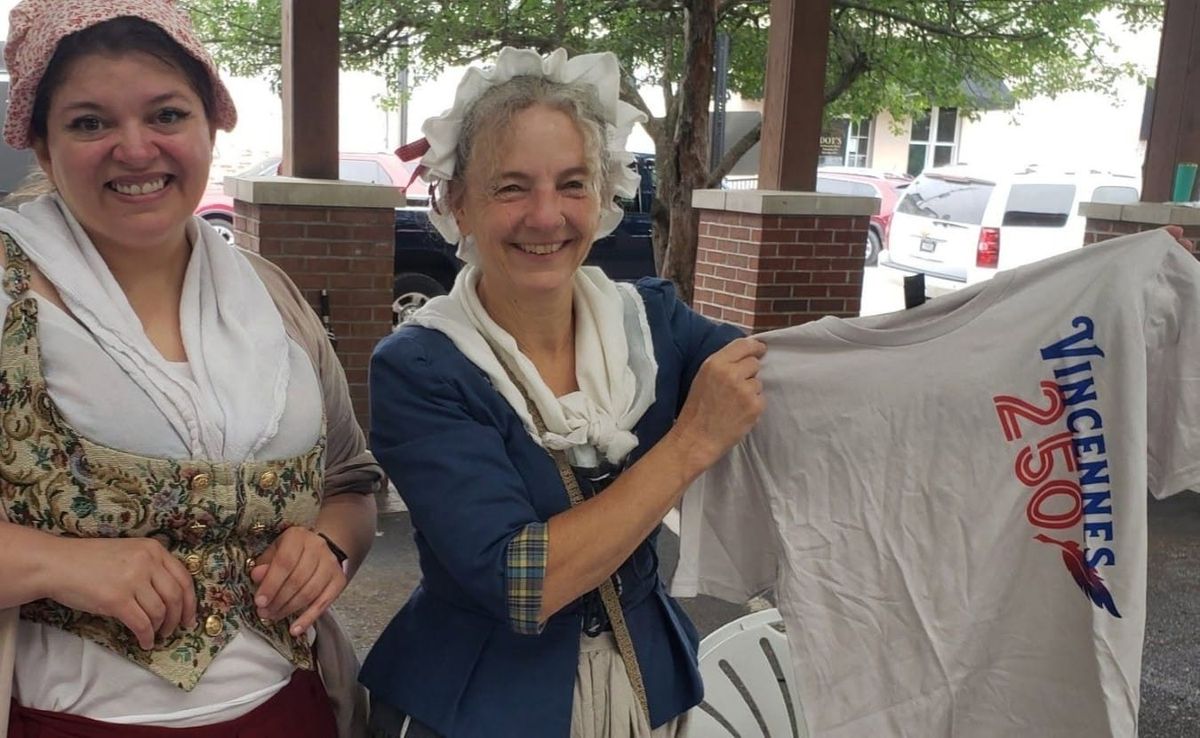
History has given Vincennes, Indiana, a rich legacy, which residents honor, share, and bring to life with passion, purpose, and pride.
At first blush, the town, with a population of 17,000, is just a small hub in the Midwestern agricultural heartland. Scratch the surface, and you’ll find a treasure trove of Native American, French, British, and United States history.
I attempted to cover 294 years of Vincennes history over the course of a two-day visit. It wasn’t nearly enough time; Vincennes is that special.
Historical context
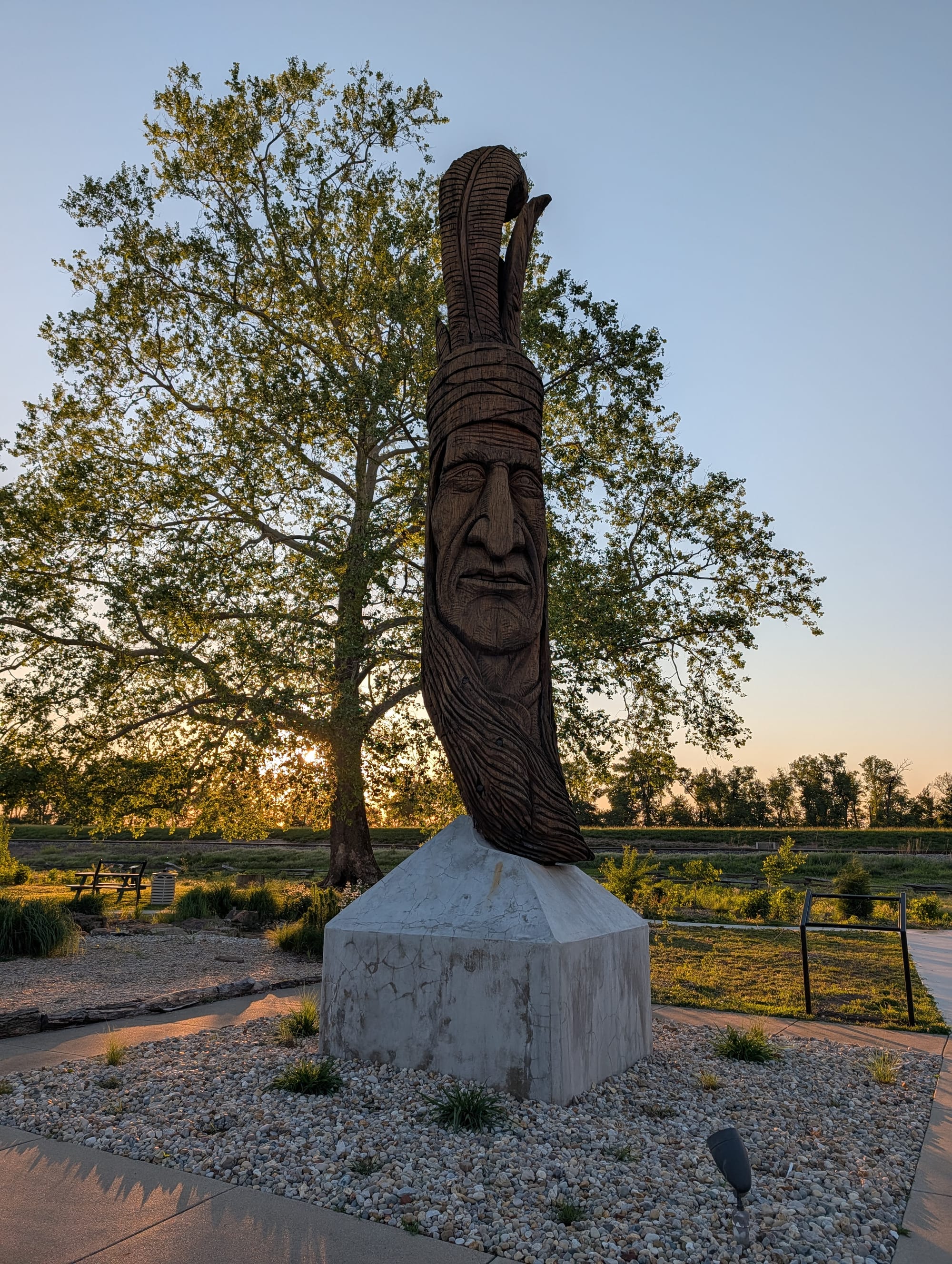
Geography is the initial key to why the place became so storied. At the intersection of the Wabash River and the Buffalo Trace (a well-established bison migratory route in pre-colonial America), successive tribes of Indigenous Peoples, including the Shawnee, Wabash, and Miami tribes, had inhabited the area for millennia.
The arrival of Europeans in the late 17th century accelerated the pace of change. The following is a condensed timeline of main events:
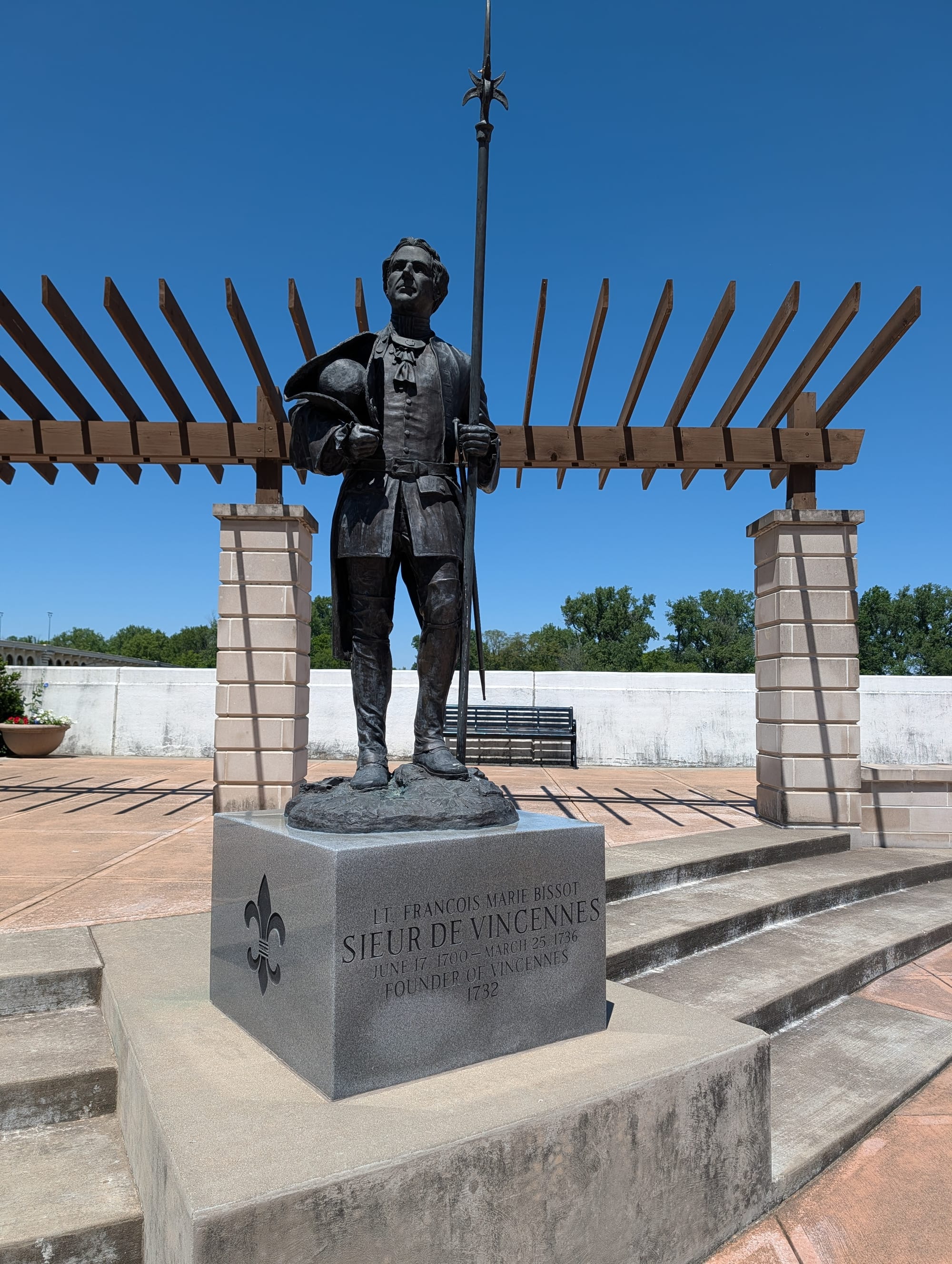
1732: French explorer François-Marie Bissot, Sieur de Vincennes, founds a fur trading post, the first European settlement in what eventually became the Indiana Territory.
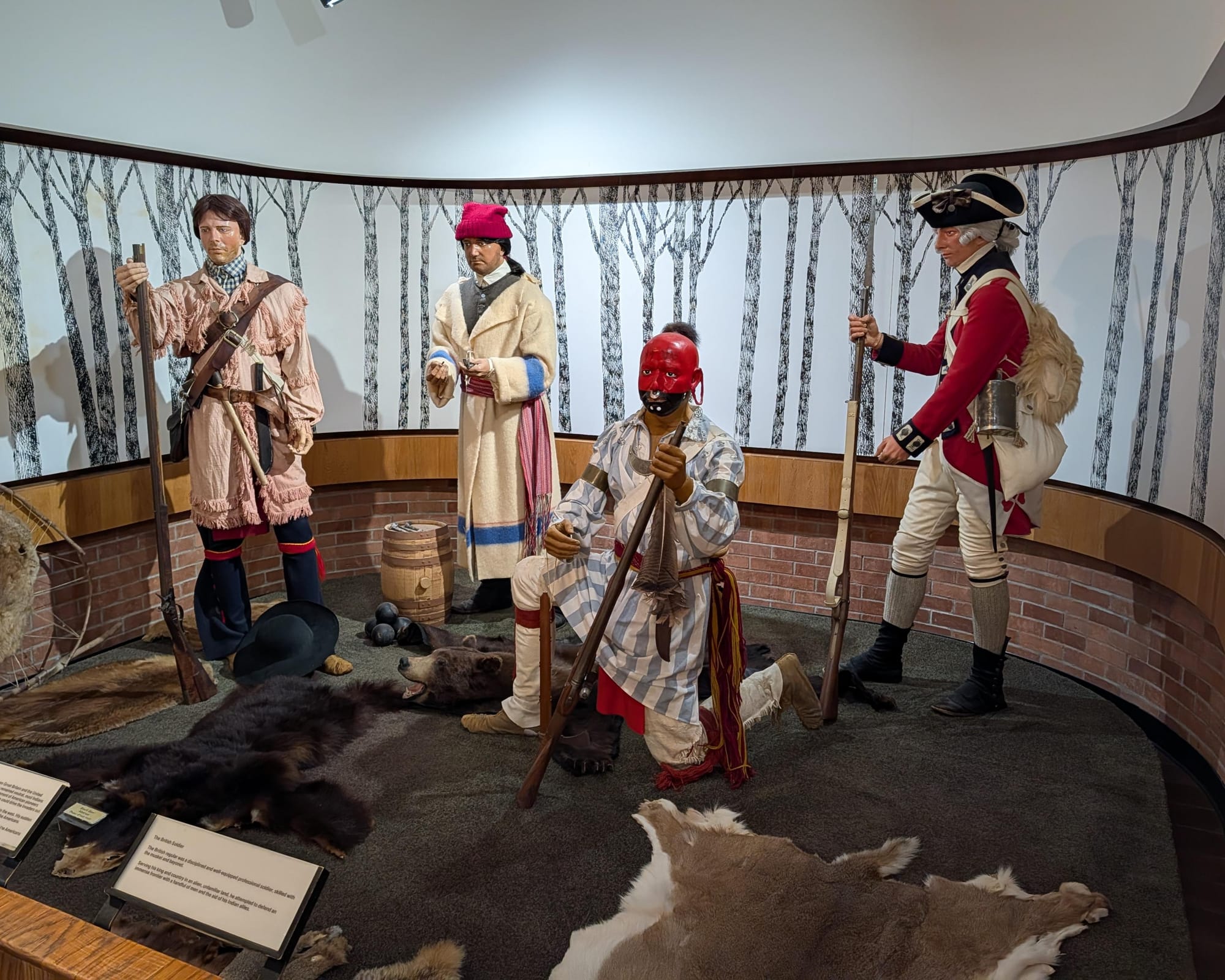
1754-1763: The British wrest control of New France during the French and Indian War and establish their presence at Vincennes with Fort Sackville.
1778: The British recapture the garrison, which they had abandoned earlier, to try to stem the American advance.
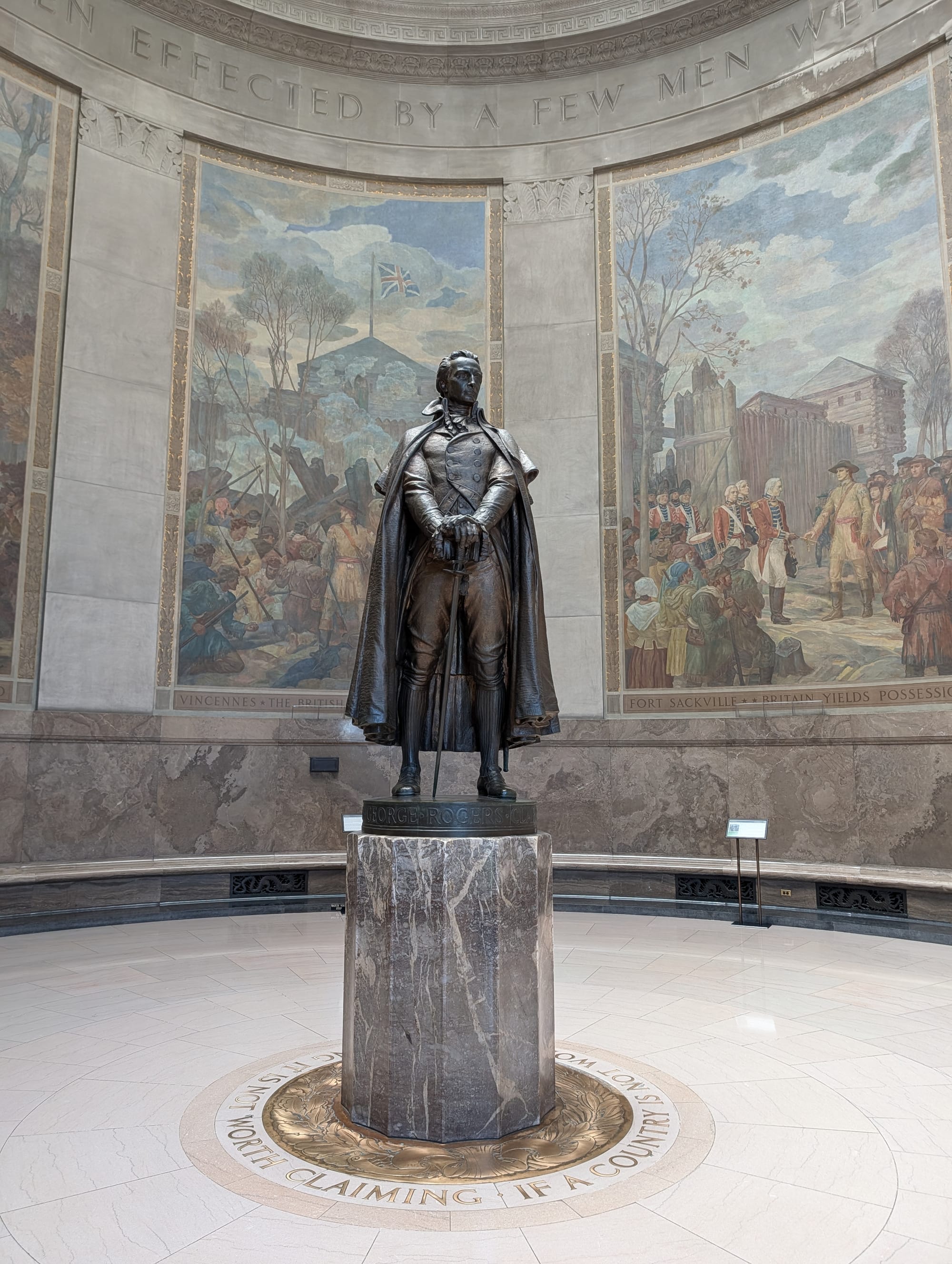
1779: Virginian George Rogers Clark, an American military officer, surveyor, and controversial figure, captures Vincennes, ending British influence in the Northwest Territory.
1801: William Henry Harrison, a central figure in the displacement of Indigenous Peoples, is named governor of the Indiana Territory, with its capital at Vincennes. A pro-slavery Virginian, hero of the War of 1812, and major American political figure, he’s the last of the Indiana Territory’s larger-than-life pre-statehood figures. Harrison founded Vincennes University in 1806, and in 1841 became the ninth president of the United States, dying in office just one month into his term.
1810: Tecumseh, renowned Shawnee chief and warrior who promoted resistance to the expansion of the United States onto Native American lands, meets with Harrison at Vincennes in a legendary standoff.
Much to see and do
Driving into town from the north on Highway 67, my head spinning with visions of Native Americans, French fur trappers, and colonial settlers, I passed fast food restaurants, chain stores, gas stations, and other landmarks of modern American sprawl. When, I wondered, would I see history come to life?
I didn’t have to wait long. After I parked on Main Street, lined with boutiques and restaurants, the George Rogers Clark Memorial and National Historical Park came into view.
Like a beacon on the banks of the Wabash, the Roman-style monument, with its 16 Doric columns, looks like it was plucked from the National Mall in Washington, D.C. In a sense, it was: Commissioned by President Coolidge in 1928 and dedicated in 1936 by President Roosevelt, it occupies what is believed to be the site of Fort Sackville.
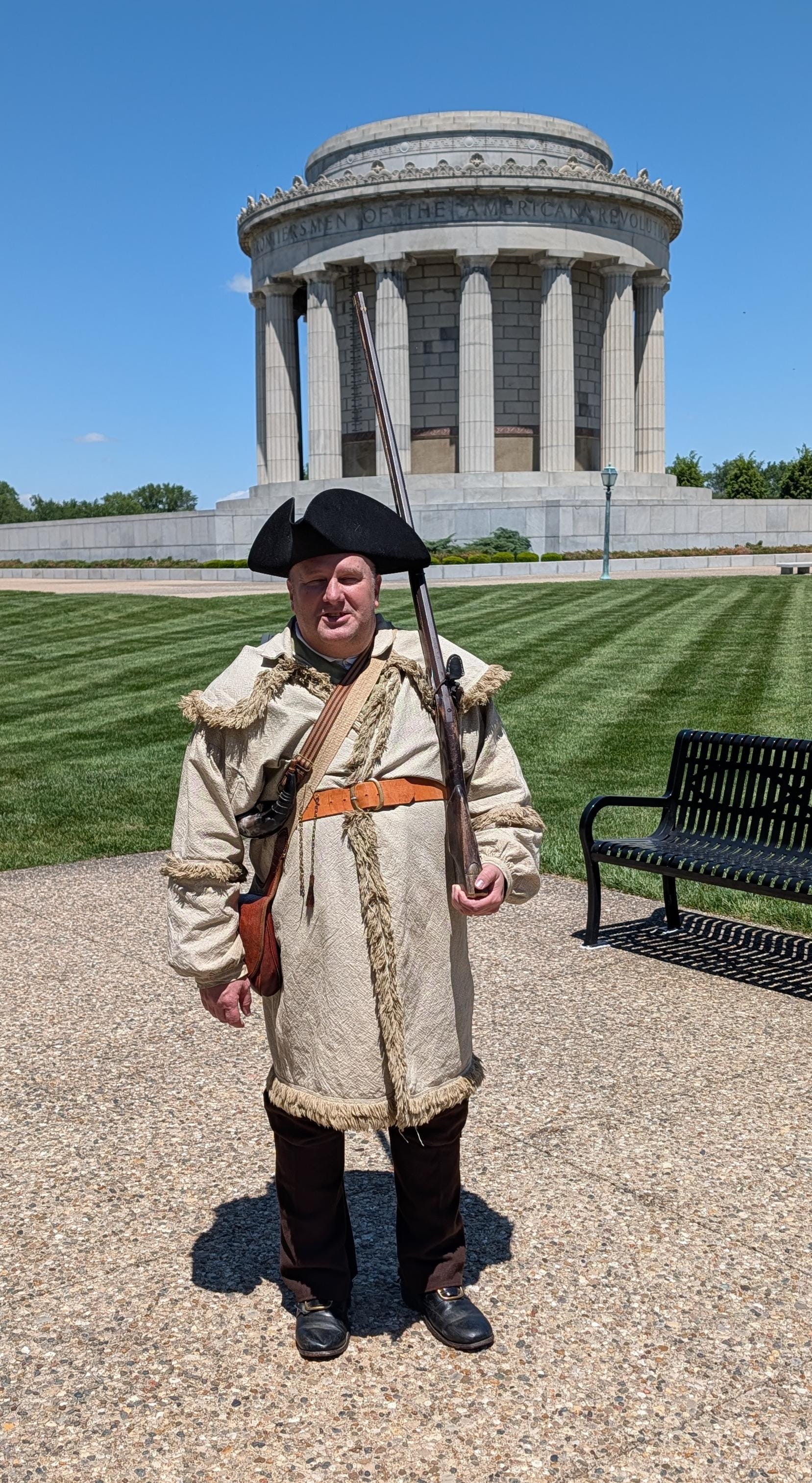
The monument's rotunda features a 7.5-foot bronze statue of Clark and seven murals portraying his exploits. Above the lintel is the inscription: “The Conquest of the West - George Rogers Clark and The Frontiersmen of the American Revolution.”
After checking into the Reily Home Bed and Breakfast, a beautifully restored Victorian mansion near downtown, I strolled over to meet with Janice Barniak, executive director of the Vincennes/Knox County Visitors and Tourism Bureau.
“This has been a tourist town since 1776,” she proclaimed, sensing my newfound wonder at what to locals is old hat. She described the plethora of festivals, military reenactments, and educational events that celebrate the city’s legacy, drawing tens of thousands of visitors a year. In May, a record 12,000 people attended the Spirit of Vincennes Rendezvous, an annual Revolutionary War reenactment. A full roster of events celebrating America’s 250th Anniversary will continue throughout the year.
“Early spring and late fall are the sweet spots for tourism,” Barniak explained. “We’re working to make this a place for people with a wide variety of interests, and to broaden the experiences available to them.” For example, hands-on events focusing on “endangered” crafts, like rope making, are planned for next year.
“As it becomes more expensive to go overseas, we’re becoming a destination for the new road trip revolution,” she said.
I was glad I didn’t need my car to reach most of the town’s historical bounty, which is concentrated in an eminently walkable area.
A few minutes stroll from downtown are the Vincennes State Historic Sites, where I met Jo Taylor, who became site manager last year. With a Ph.D. in history and sociology, 25 years in higher education, and experience with the National Trust in England, Taylor is an affable walking encyclopedia of local culture and history.
“The buildings here are a springboard for understanding the story of Vincennes,” she noted, as we began our tour. First up was the “Red House,” the original territorial capitol and the oldest major government building in the Midwest. Next was the Jefferson Academy, the first school of higher learning in Indiana and the predecessor of Vincennes University.
For me the pièce de résistance was the French House, an original Creole-style home circa 1809. Taylor scrupulously detailed the life and times of French fur trader Michel Brouillet, who built the house. She noted the enduring influence of such people and their descendants — many still living in Vincennes.
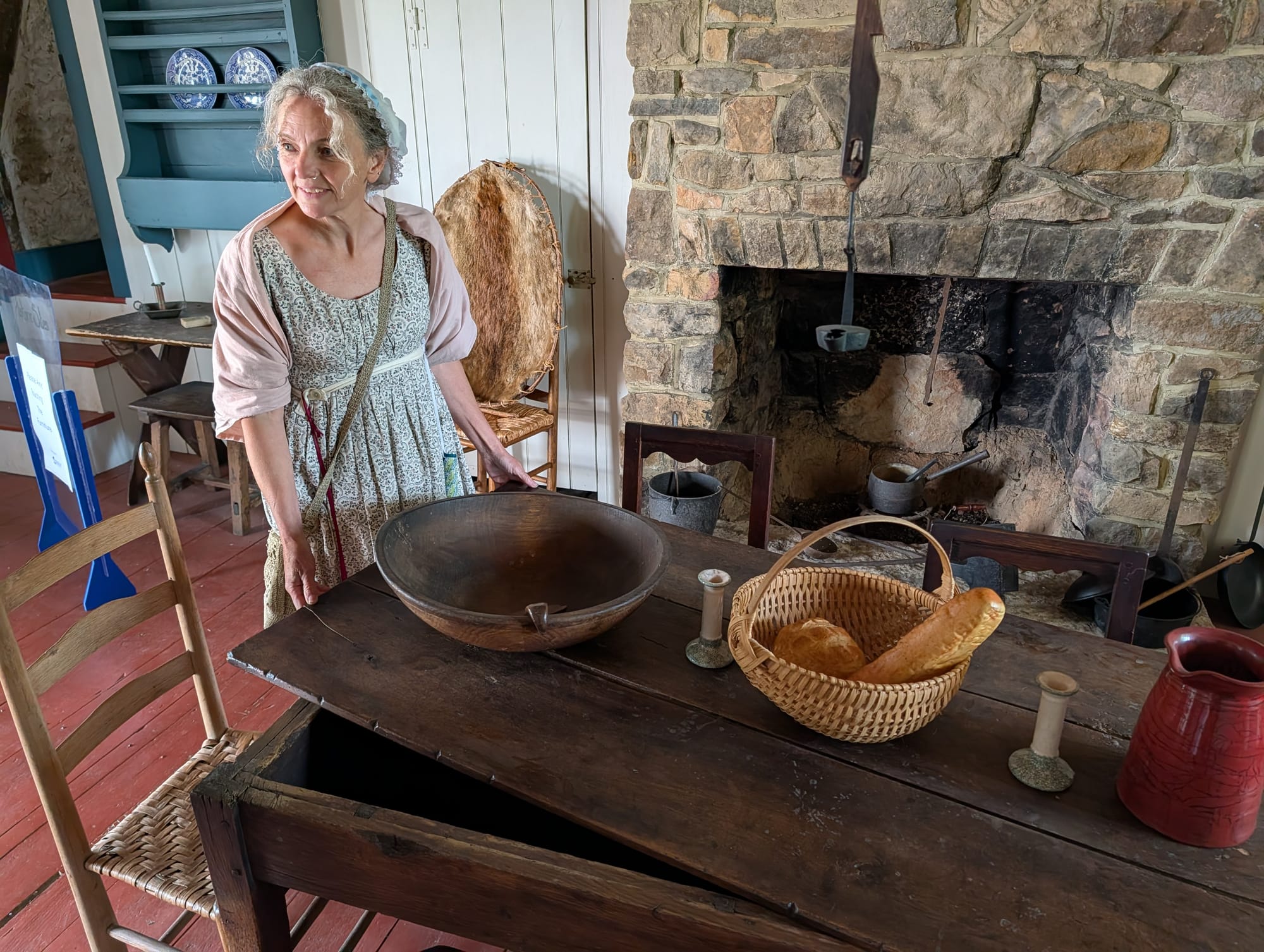
“We’re going to have a massive street celebration on June 26, and on July 5, a dedication to the French residents who all signed an oath of allegiance to the Americans,” she said. A monument will be unveiled in the Basilica of St. Francis Xavier (the Old French Cathedral), with the names of the original French signatories and a ceremony honoring their descendants who contributed to the memorial.
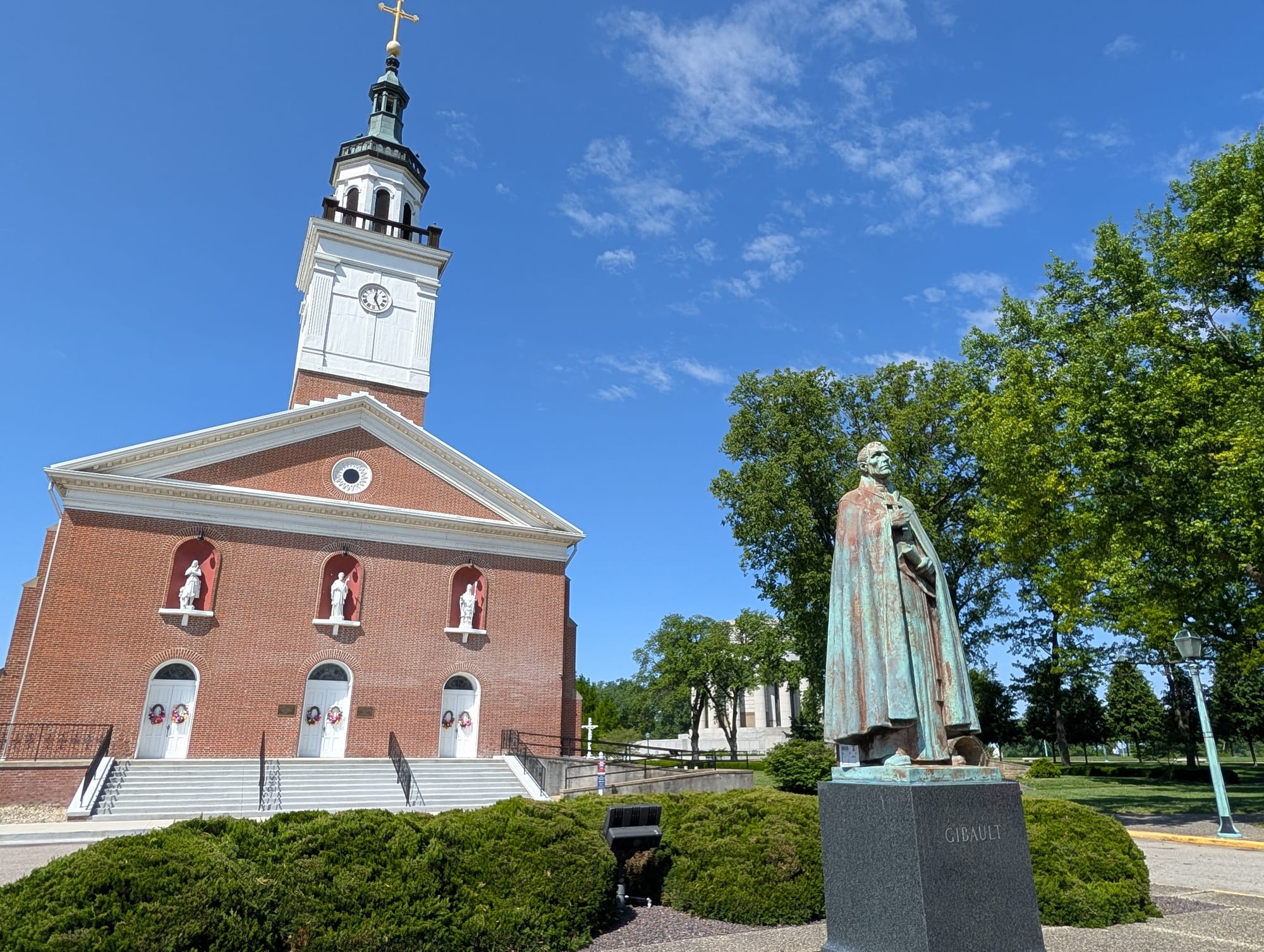
The Greek Revival-style cathedral contains exquisite stained glass and murals; an adjacent library, the oldest in Indiana, houses over 10,000 rare volumes.
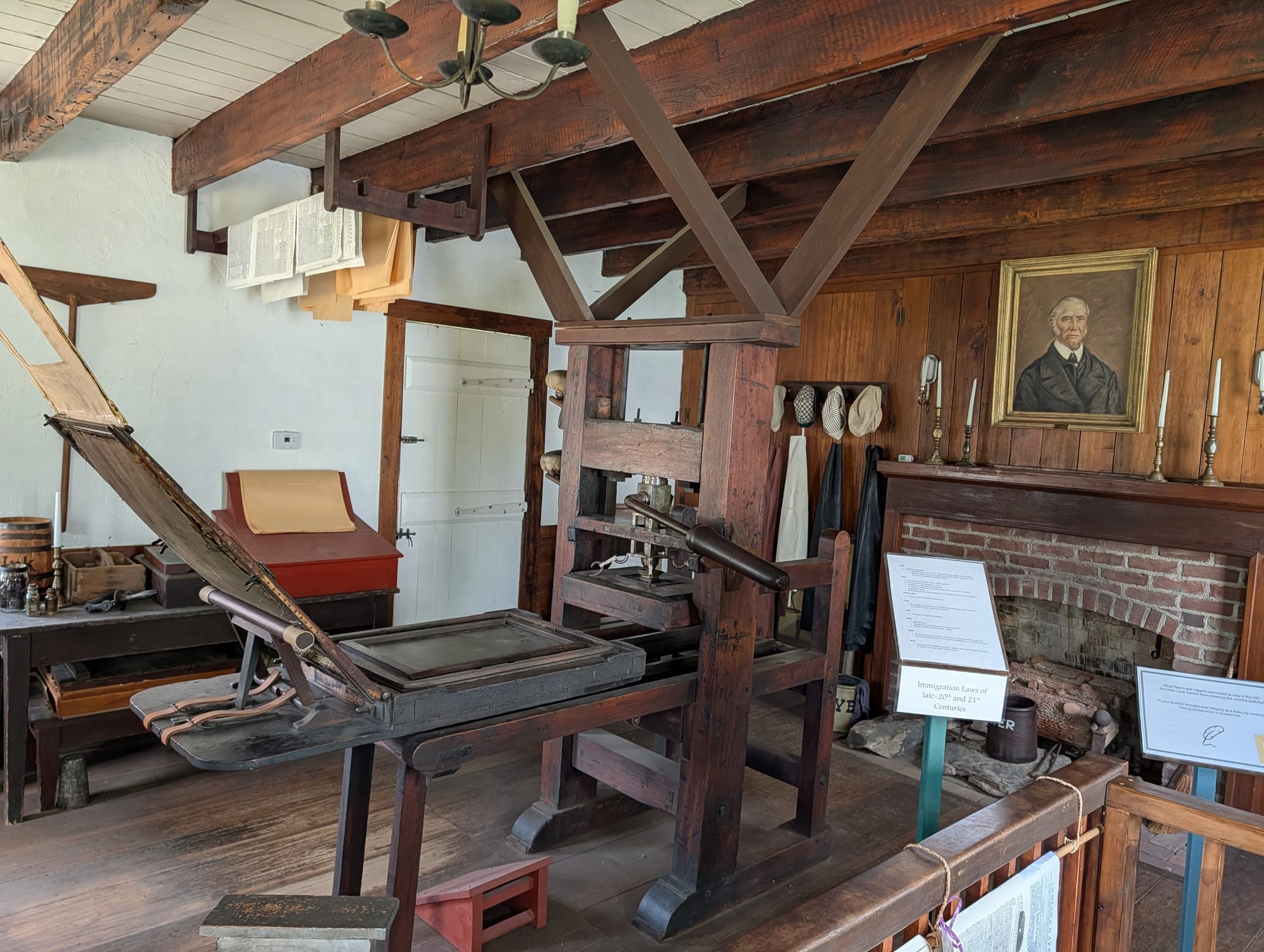
Close to my heart as a journalist was our last State Historic Site: Elihu Stout’s Print Shop, where the Indiana Gazette, Indiana’s first newspaper, began publication in July 1804. I picked up a copy of the second edition, from Tuesday, August 7 of that year, which includes Stout’s editorial note: “[My] object shall be to collect and publish such information as will give a correct account of the productions and natural advantages of the Territory.” I hope that 222 years on, I do the same.
After bidding adieu to the indefatigable Jo Taylor, I walked a few steps over to Grouseland, Harrison’s spectacular mansion, completed in 1804. Owned and maintained as a National Historic Landmark by the Francis Vigo Daughters of the American Revolution, the museum features a vast collection of art, furniture, and memorabilia, including three original portraits of Harrison, family pieces, and military and campaign memorabilia, including the State Rifle of Indiana.
If the Clark memorial made me think of Washington, visiting Grouseland, with its Federal-style architecture, was like stepping into Colonial Williamsburg. I felt so far removed from rural Indiana that it was almost a shock to amble through the streets of a small Hoosier town to enjoy a pizza at Bobe’s on Main Street.
An exceptional surprise
A good night’s sleep was in order, because the next day I would become a kid in a candy store thanks to Jim Osborne, creator and director of the Indiana Military Museum. The man — his passion, the scope of his vision, and his creation — is simply astounding.
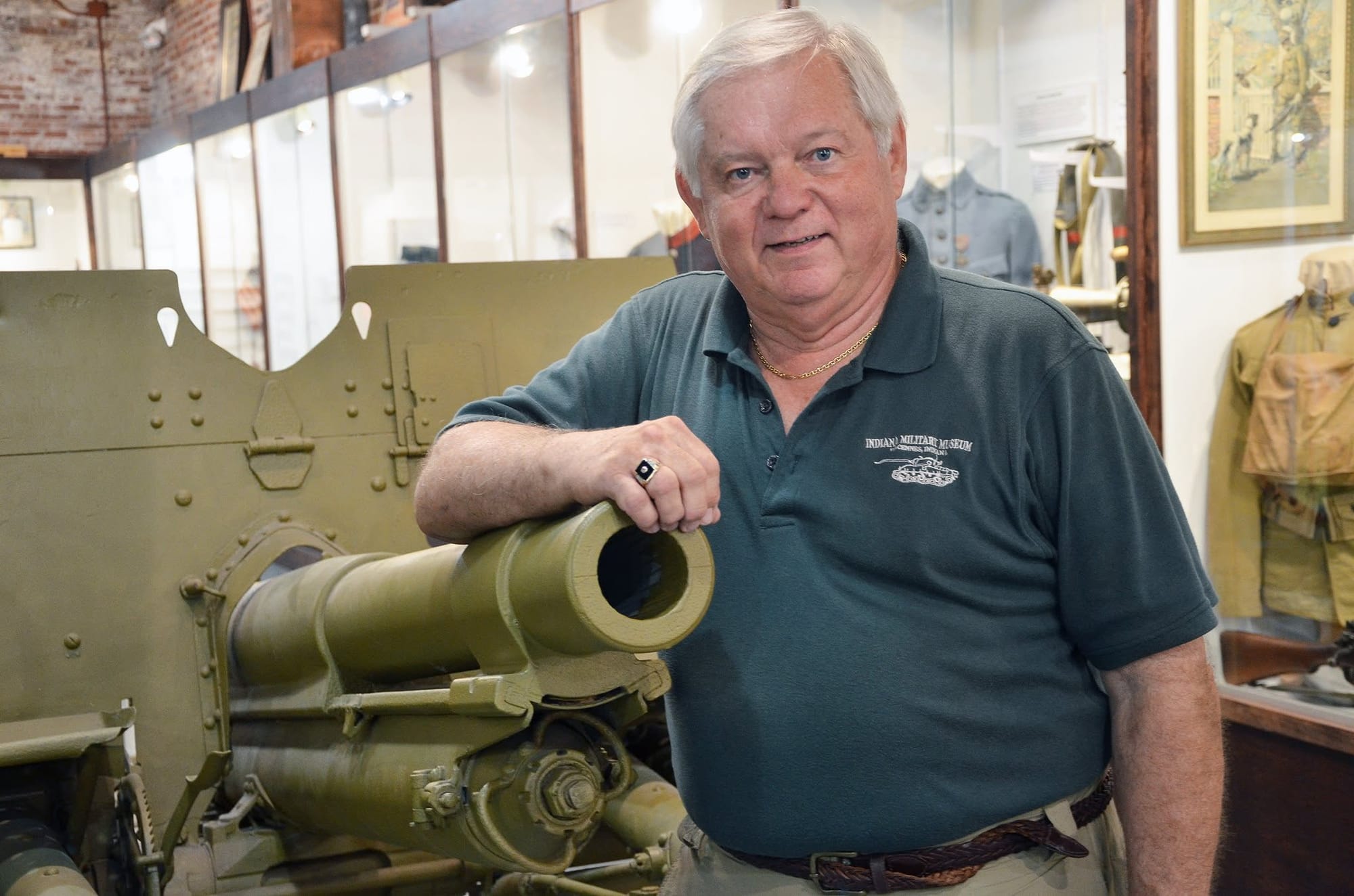
The museum is “Dedicated to fostering the memory, understanding, and appreciation of U.S. military history [...] by maintaining, preserving, and displaying artifacts which represent the strength and freedom of our American heritage.” For such a lofty mission the place is uncannily intimate and personal, scrupulously detailed, and of mind-boggling breadth and depth.
Military museums in general are emotional places. As the son and son-in-law of World War II veterans, I grew up seeing war as a necessary evil. At the same time, as with many of my Boomer generation, I became fascinated by how military hardware was developed and deployed, and by the tragic and heroic stories of people thrown into conflicts that determined the fates of individuals and the destinies of nations.
Again, I thought of Washington, D.C. and the Smithsonian’s National Air and Space Museum, and of the National WWII Museum in New Orleans. To my sensibility, those two enormous institutions don’t hold a candle to what Osborne has created in a field near downtown Vincennes.
Whereas the major national museums cordon off their artifacts and multimedia displays behind glass, well outside the reach of a hand, Osborne has built an immersive space. Visitors can come practically nose to nose and hand on steel with rare and legendary relics from the Revolutionary War to the present day.
“Eighty percent of our vehicles run,” Osborne said, as I ran my hand over WWII vintage American, Japanese, German, and Russian tanks, jeeps, trucks, and artillery. Aircraft parked outside the museum, and hanging from indoor ceilings, include WWI biplanes to Vietnam-era jets. Static displays of uniforms and personal effects of famous Generals — Eisenhower, Patton, Rommel, Powell, and many others — attest to their individual reality. Full-size dioramas give a haunting sense of what it was like to be in a WWI trench, or a WWII operation center, or on the homefront.
“I started collecting when I was real young, and it just got out of hand. Luckily my parents didn’t object when I started filling the basement,” quips Osborne, a mild-mannered man who was a judge for 39 years before devoting himself to the museum full-time.
His first artifacts were a German helmet, belt, flag, and canteen that a neighbor was going to throw away, and a Civil War musket he got from his dad. “To put your mitts on something like that was like touching the Holy Grail. Wow! That’s the real thing! And I was just hooked,” recalls Osborne, now 80.
He says the museum, which is an all-volunteer operation, draws up to 30,000 visitors a year from around the world. Thousands attend special events, like the annual World War I Remembrance Days held in spring, and the Salute to World War II Veterans held every spring and fall. (The next two-day event will take place on Labor Day weekend, September 5-6, and will include reenactments and demonstrations.)
While the past continues to live on at the museum, Osborne says new sources of operational and financial support are “desperately needed” to assure its future. “Old Jim won’t be here forever,” he muses.
History for the next generation
Does the past have a future, I wondered throughout my visit to Vincennes. Will tourists continue to discover the city’s treasures?
Mayor Joe Yochum, now serving his fourth term, is optimistic. He pins his expectations on the community of people who are proud of who they are and where they live.
“2032 will be our 300th anniversary, and we already have a tricentennial committee put together,” he said. “Everybody here works together great and understands that tourism is a big part of our community. We have a very good Main Street, which is an indicator of a town’s health. We’re adding restaurants and shops and working to develop market-rate apartments downtown.”
Jo Taylor sees hope in the thousands of schoolkids who visit the state historic sites.
“The kids really get it when they experience a visceral connection to history,” she said. “Although they aren’t taught much real history in school, paradoxically, thanks to video games like Age of Empires, kids are getting involved in history again.”
Vincennes is banking on that trend, according to Berniak. Last year the Visitors and Tourism Bureau nearly doubled its budget.
That money will be well spent from the vantage point of this tourist. I plan to return to Vincennes to see major sights, like the Red Skelton Museum, that I couldn’t squeeze into my two-day visit. And I already warned Jim Osborne that I plan to return to the Indiana Military Museum with a carload of friends and maybe donate my old military radio receiver.
It’s that special.
Aaron B. Cohen
Aaron B. Cohen is a writer, editor, and retired communications exec who is inspired and sustained by Bloomington’s spirit, music, and outdoor adventures.