Revisiting the Deam: A Photographic Journey Through the Deam Wilderness — Redux
Steven Higgs revisits photos of the Deam through the decades.
The sixth installment in a photojournalist’s yearlong return to the wilds.
“Revisiting the Deam” is a series of stories chronicling author and photographer Steven Higgs’s exploration of the Hoosier National Forest as he revisits wilderness areas with friends, colleagues, and experts in the environmental field.
Dog-days heat and my closest friend Michael’s harrowing experience with Lyme Disease kept me a comfortable distance from the woods this past month.
But, as I wrapped up a months-long process of cataloguing and boxing 51,000 photographic images for preservation at the IU Archives, my 50-year accumulation of Charles C. Deam Wilderness images had assumed top-of-mind status. Aside from the 204,000-acre Hoosier National Forest at large, the Deam is my most photographed subject.
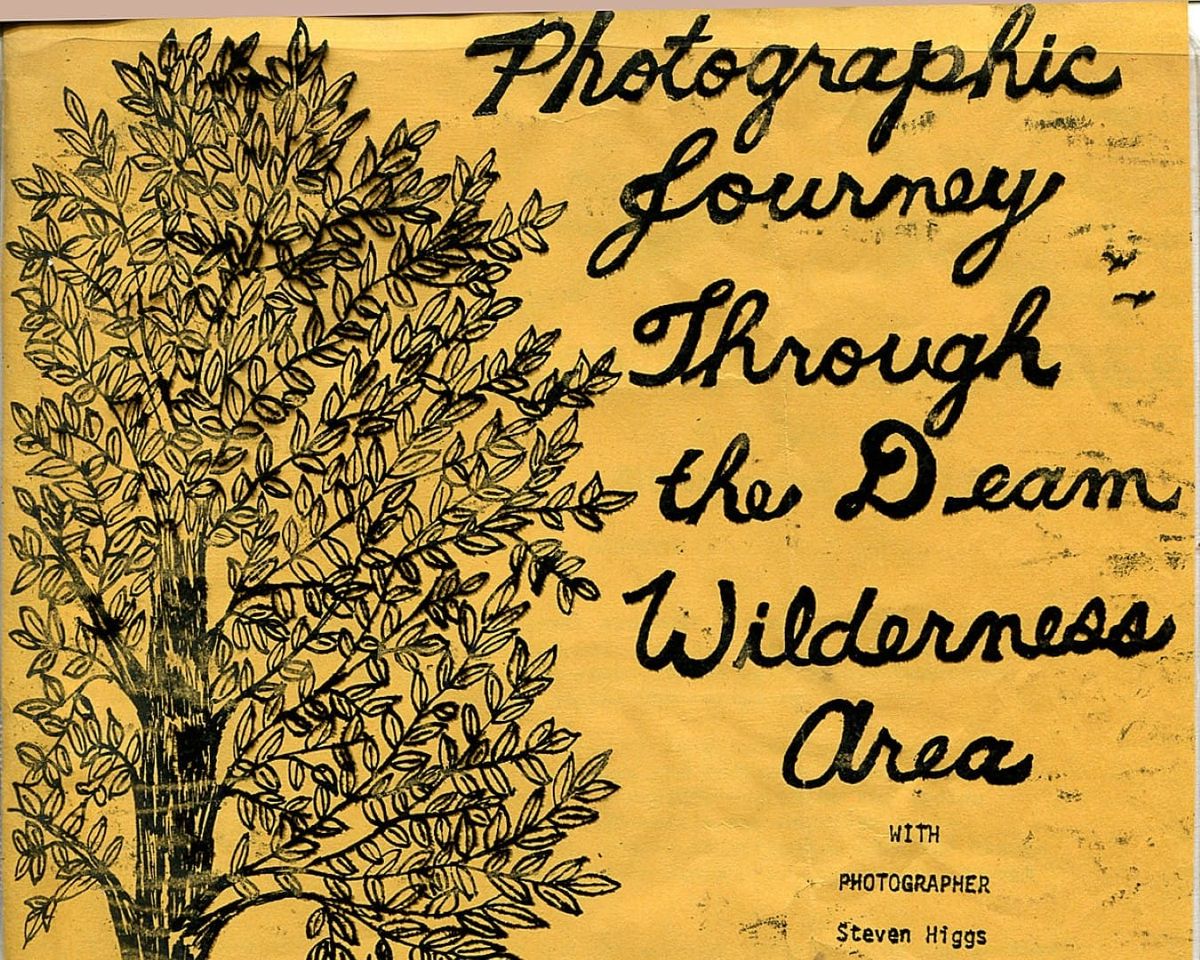
So, I decided my “Revisiting” piece this month would be called “A Photographic Journey Through the Deam Wilderness,” a photo essay that begins with and itself is a redux of my first public slideshow with the same name 44 years ago.
The Deam wasn’t an officially protected wilderness when they fired up the projector in the Monroe County Public Library Auditorium that late-summer evening in 1982. It wouldn’t be officially designated until that coming December.
But, by my photographic coming-out party that August, the decision had been made to permanently protect the 12,953 acres of Hoosier National Forestland on the southeast shore of Lake Monroe as the Charles C. Deam Wilderness. And, I had hiked the entirety of what was then called the Hickory Ridge Hiking Trail, which transected today’s Deam on trails with familiar names: Sycamore Branch, Patton Cave, Grubb Ridge, Terrill Ridge, Cope Hollow.
My first journalistic experience was a stint as newsletter editor for the Uplands Group Sierra Club toward the end of the seven-year political slugfest that was the Indiana wilderness fight. In my role as a Sierran, I drove U.S. Senator Richard Lugar’s environmental aide Jeff Burnham to the dedication and photographed U.S. Congressman-elect Frank McCloskey and other dignitaries.
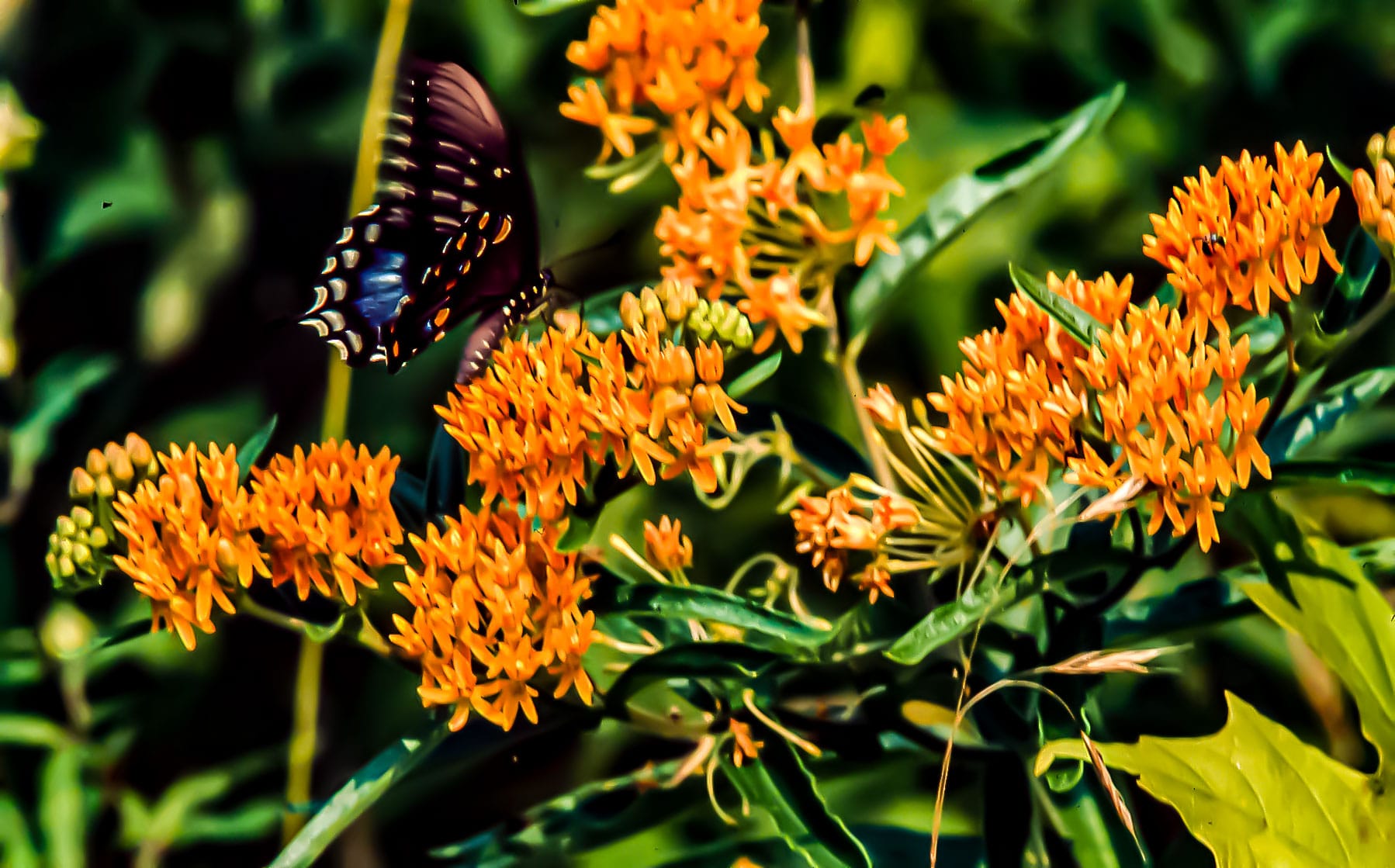
Along the way, I shot 17 rolls of color slide film for the library show. And my insecurities aside, the event produced an everlasting memory at a slide change, when a guy in the audience exclaimed: “A butterfly on butterfly weed!”
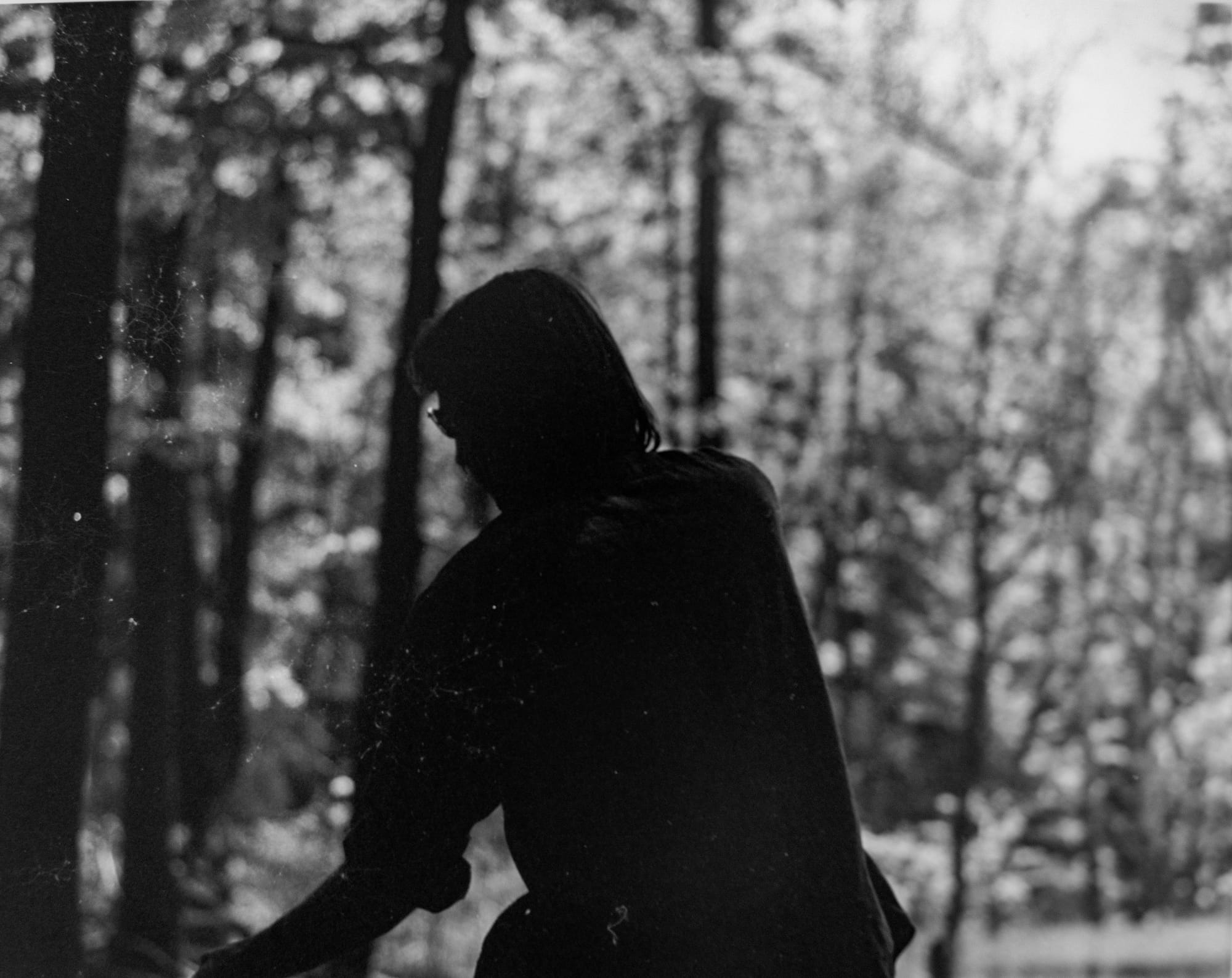
Unaware of the historical context, I launched my Deam Wilderness photo journey in May 1975, the year the Eastern Wilderness Act mandated national forests east of the Mississippi be evaluated for wilderness qualities.
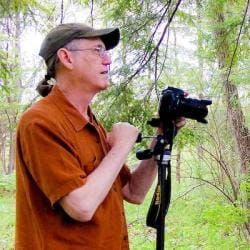
The year before, I had moved three miles up the road from the future Deam to a Thoreauvian-style shack on a ridgetop with a panoramic, kitchen-table view of Lake Monroe and the Salt Creek Valley in Brown County. Armed with my first darkroom and a Pentax 35mm Spotmatic, I was determined to, under the laser-like gaze of my artist wife Judy, follow Edward Weston’s footsteps toward the status of photo artist — a moniker the master firmly rejected but I secretly coveted.
In May 1975, my old Eagle Scout college buddy Tim Hoffman floated my Spotmatic and me on a fishing boat up a flooded Saddle Creek, where I shot my first images of the Deam.
That November, Tim and I joined another guy he knew on a road trip as deep as I’d ever been in Brown County, or in the woods, for that matter. Our afternoon guide told us about the Nebo Ridge Wilderness Area, a proposal from the Indiana Public Interest Research Group that had countered a U.S. Forest Service 15,000-acre proposal.
The 32,000-acre InPIRG plan incited an emotional, seven-year debate between landowners, preservationists, and government officials about the role backcountry should play in the Southern Indiana Upland Forests. I researched it for the 1982 slideshow and have referenced it in articles, books, and talks ever since.
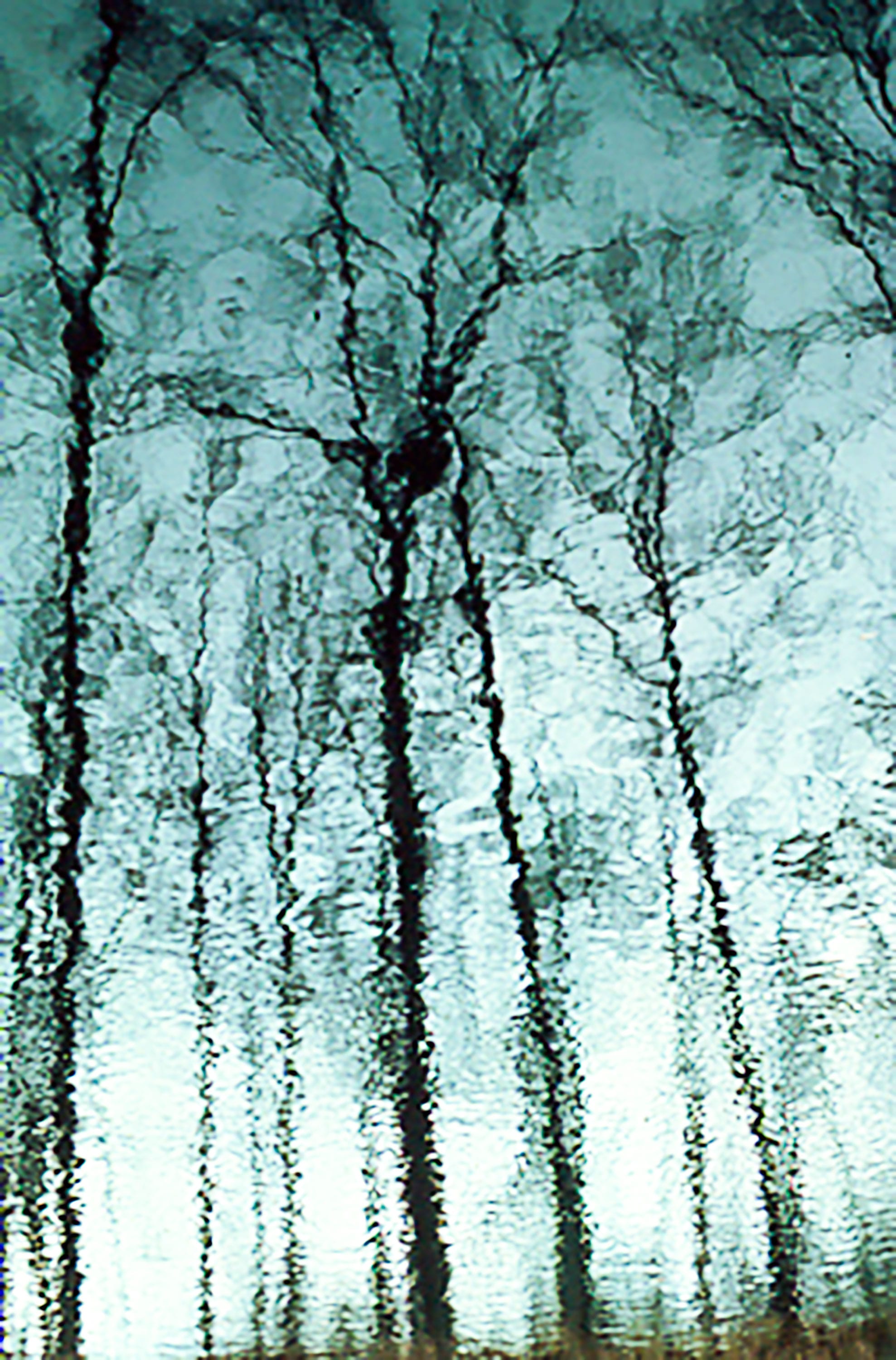
That afternoon with Tim on Nebo Ridge, I shot my first reflection — early winter trees on a wildlife pond — an image that was, of course, projected at the library show seven years later when the Deam backcountry’s role had been decided.
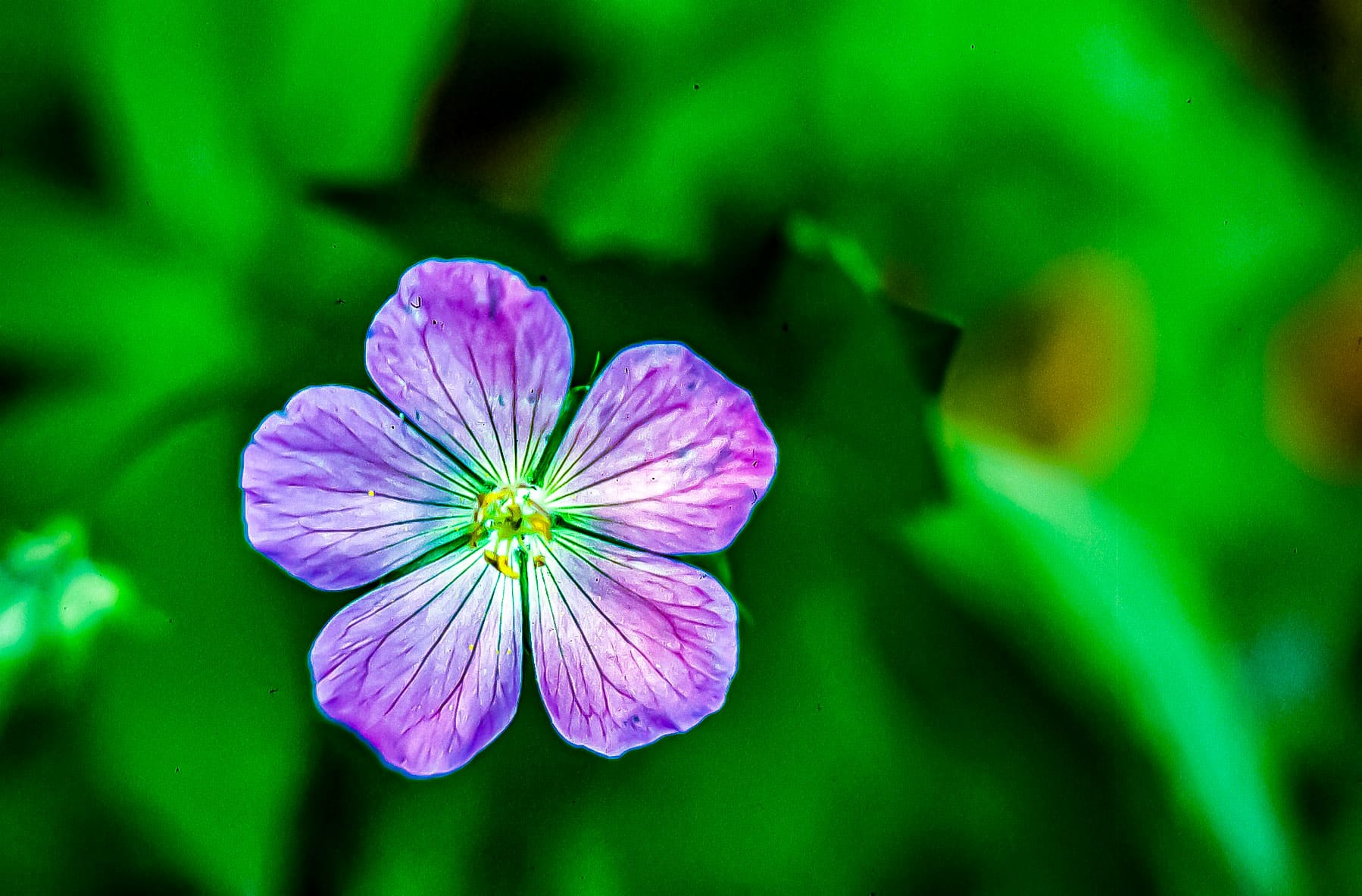
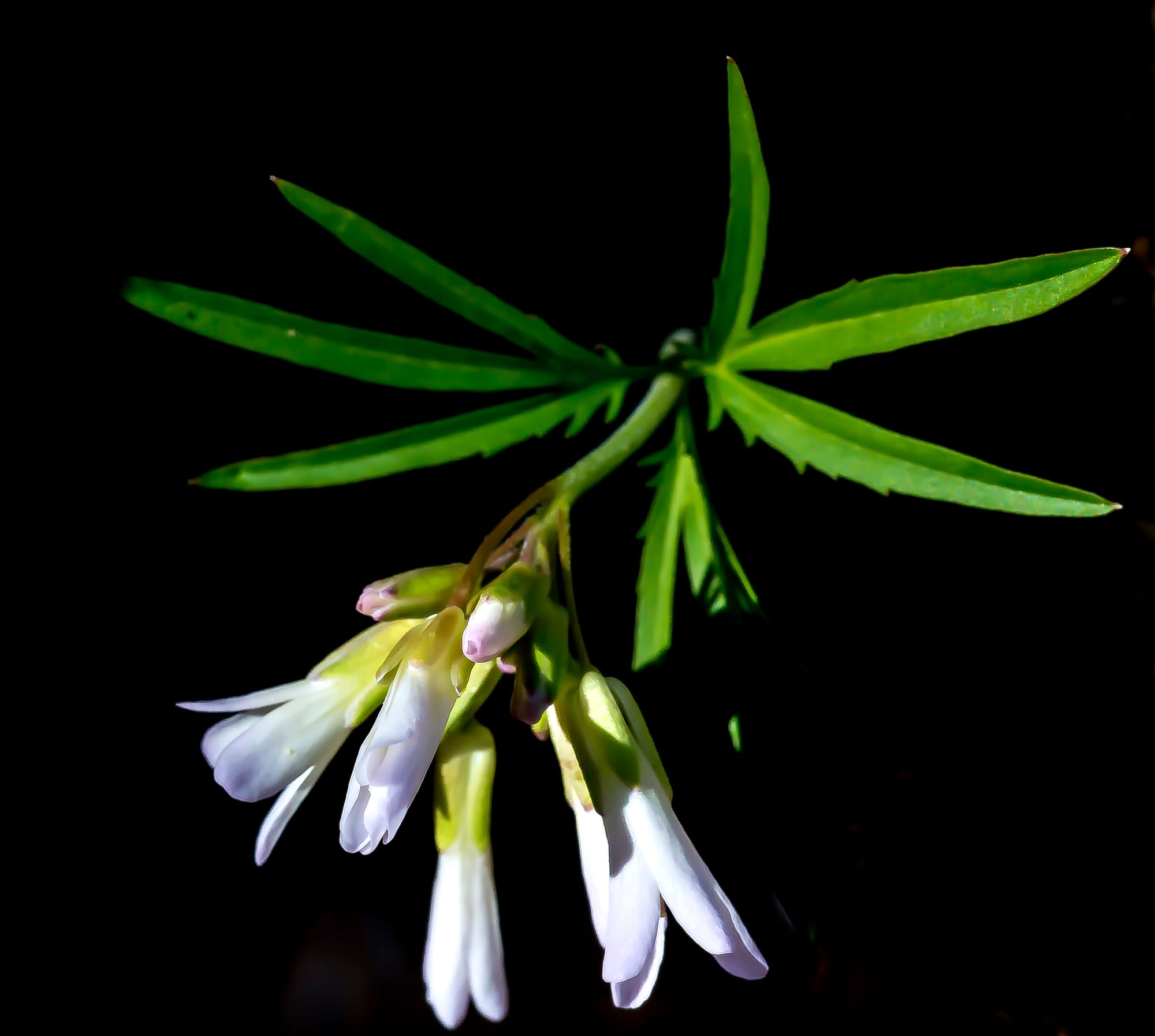
Taking a cue from another early photo master Eliot Porter and his 1979 book Intimate Landscapes, I learned the art of macro photography and turned my viewfinder to the forest floor in search of color, form, and light on those Hickory Ridge Trail treks.
Closeup images of wildflowers — wild geraniums, spring beauties, fire pinks — miniature seasonal waterfalls, mushrooms, turtles, snakes, butterflies, etc., laid the foundation that spring for a career’s worth of intimate photo satisfaction.
Intimate Landscapes and Porter’s In Wildness is the Preservation of the World occupy space on my coffee table to this day.
The Deam was the destination that in 2013 unwittingly ushered in my resurrection as an author. For 17 years I had assumed my book, Eternal Vigilance: Nine Tales of Environmental Heroism in Indiana, IU Press, 1996, would be my only.
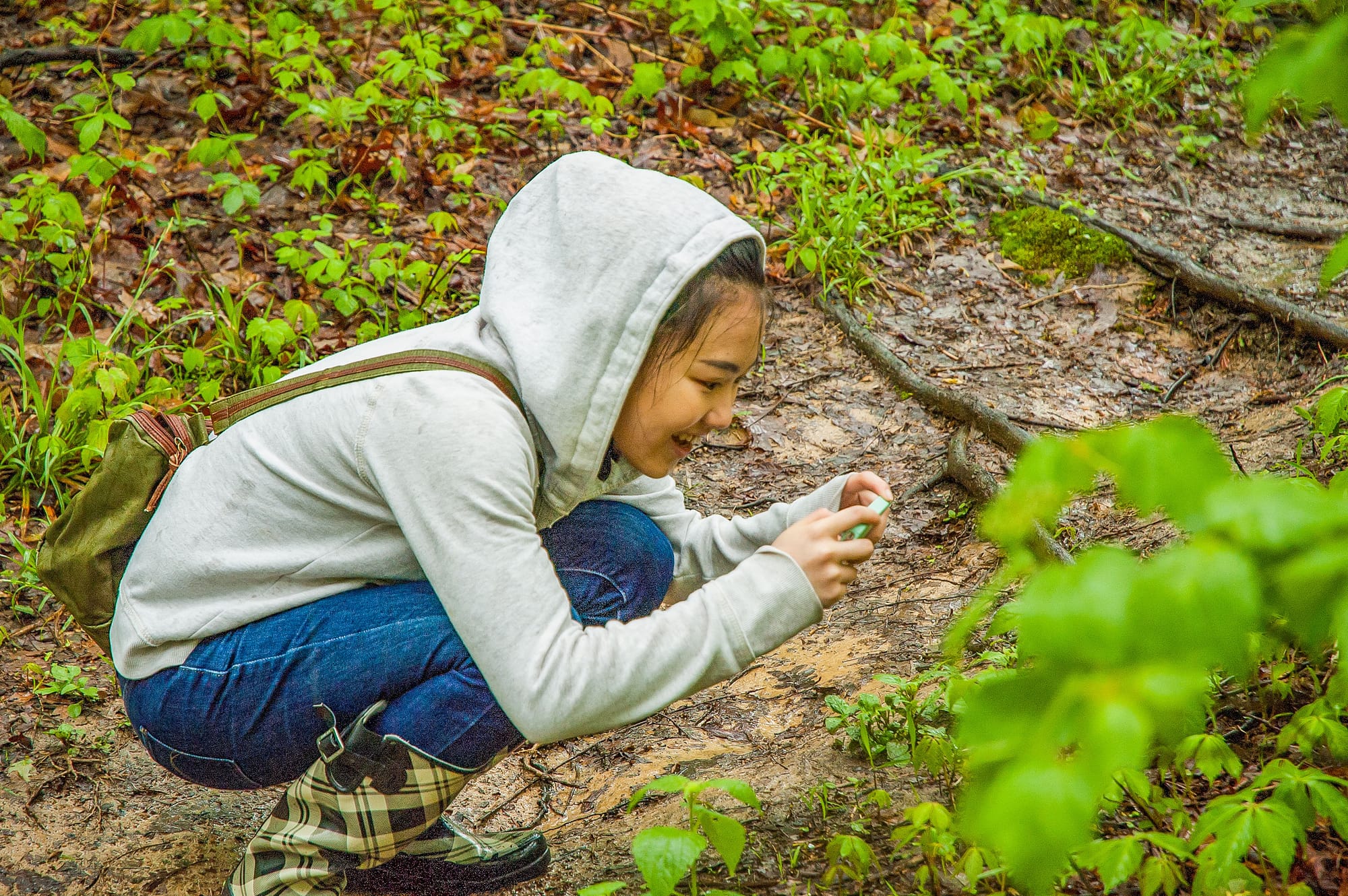
A bit restless there in the early 2010s, I created Natural Bloomington Ecotours & More following a midterm conference with my School of Journalism student Jingy Jane Zhang. After her midterm conference, Jingy and I talked for about an hour, during which time she said her favorite childhood memories were going to the mountains in China with her photographer grandpa.
Well, as soon as the semester ended, photographer Grandpa Steve led Jingy and her friend Mengwei to the top of the Hickory Ridge Lookout Tower and along a short hike on the Deam’s Terrill Ridge Trail.
Over the next two years, several dozen nature lovers joined me on Natural Bloomington ecotours through the Hoosier and a variety of natural areas in and around the city — until IU Press called.
In response to Natural Bloomington, IU Press editor Linda Oblack reached out about writing a guidebook, which turned into five years researching and photographing 244 natural areas for A Guide to Natural Areas of Southern Indiana in 2016 and A Guide to Natural Areas of Northern Indiana in 2019.
The Southern Indiana book reconnected me with the Deam, as it and the Hoosier National writ large were its largest chapter by far. In 2020 I produced an as-yet-unpublished full-color coffee table book under contract with IU Press called Rewilding Southern Indiana: The Hoosier National Forest.
I kept the Rewilding advance and repurposed the work into a foundational core of my self-published 2025 coffee table book, Andy Mahler and the Hoosier National: The Folk Hero and the Forest He Loves. It also brought me back home to the Hoosier after five years spent traveling the backroads in every recess in the state.
From there, the journey seamlessly led back to the Deam Wilderness, 20 minutes from my back door, revisiting the wooded hills and hollows where it began a half century ago and counting.
Steven Higgs
Steven Higgs is a Bloomington journalist, photographer, and author. He's written three books for IU Press on environmental heroism and natural areas of Indiana and taught journalism at IU for 27 years. Read more on his website: StevenHiggs.com.