
Companies Seek to Hide Indiana Data Center Details with NDAs
Hoosiers are in the dark concerning data centers.


by Zoe Benson, tanka dhakal, Jon Eckert, Edith Morales, and Ethan Roberts
Two dozen years ago, Gina and Darin Madsen bought a house in Monrovia, a small community in Morgan County, planning to stay there through retirement. But their peace and quiet has been disrupted by the construction of a massive data center virtually on their doorstep — something they didn’t want and didn’t even know about until it was too late.
“We really didn’t have a lot of time to even react to it,” Gina Madsen said. “Even if we had reacted, which some people did ... voices were not heard.”
Like other Monrovia residents, the Madsens received little notice about the 400-acre data center plans before the deal was signed and sealed. And it would be months before they discovered that the builder was Google, one of the wealthiest and most powerful companies in the world.
That’s because of a non-disclosure agreement signed by the Morgan County Board of Commissioners, promising to keep the owner’s name private until the transaction was complete. Research by the Arnolt Center for Investigative Journalism and the Limestone Post found such agreements are not unusual.

The Arnolt Center and the Limestone Post researched 46 AI data centers identified by the Indiana Citizens Action Coalition as existing, proposed, or withdrawn, and found seven projects where an NDA was used. The center then filed records requests with 26 communities either with active data sites or ones under development and found:
- Officials in New Carlisle in northwest Indiana and in Morgan County signed NDAs
- 12 communities denied having any responsive records
- 12 communities never responded to records requests
New proposals continue to proliferate across the state as Indiana’s business-friendly environment has made it a magnet for data centers. As of February 2026, the state has 38 operational data centers and 54 planned data centers, according to the Pew Research Center.
Opposition to the centers spans the political spectrum, as residents worry about the environmental impact on their communities and the relatively small number of permanent jobs planned for such large-scale projects. Some communities, including Indianapolis, are weighing regulations to block data center projects.
“Signing an agreement that prevents them from disclosing to the very public they serve [is] really important information, right? I find that hugely problematic,” said Pat Garofalo, director of state and local policy at the American Economic Liberties Project. “I think, in terms of just democracy and our understanding of how American democracy is supposed to function, it simply should not be allowed for a public official to sign away their right to communicate with their constituents, to a private corporation.”
‘Already set in stone’: Monrovia development moves forward
The Madsens received a letter from the Morgan County Economic Development Corporation on January 24, 2025, informing them of a community meeting February 10 about a potential data center development in Morgan County. Gina Madsen said the meeting was informational and people could speak up and ask questions.
At that meeting, the Morgan County Plan Commission announced plans for “Project Louie,” a large data center project on West Keller Hill Road in Monroe Township, close to Monrovia. The Morgan County Economic Development Corporation had made a rezoning request for the 391-acre site on behalf of an unnamed company.
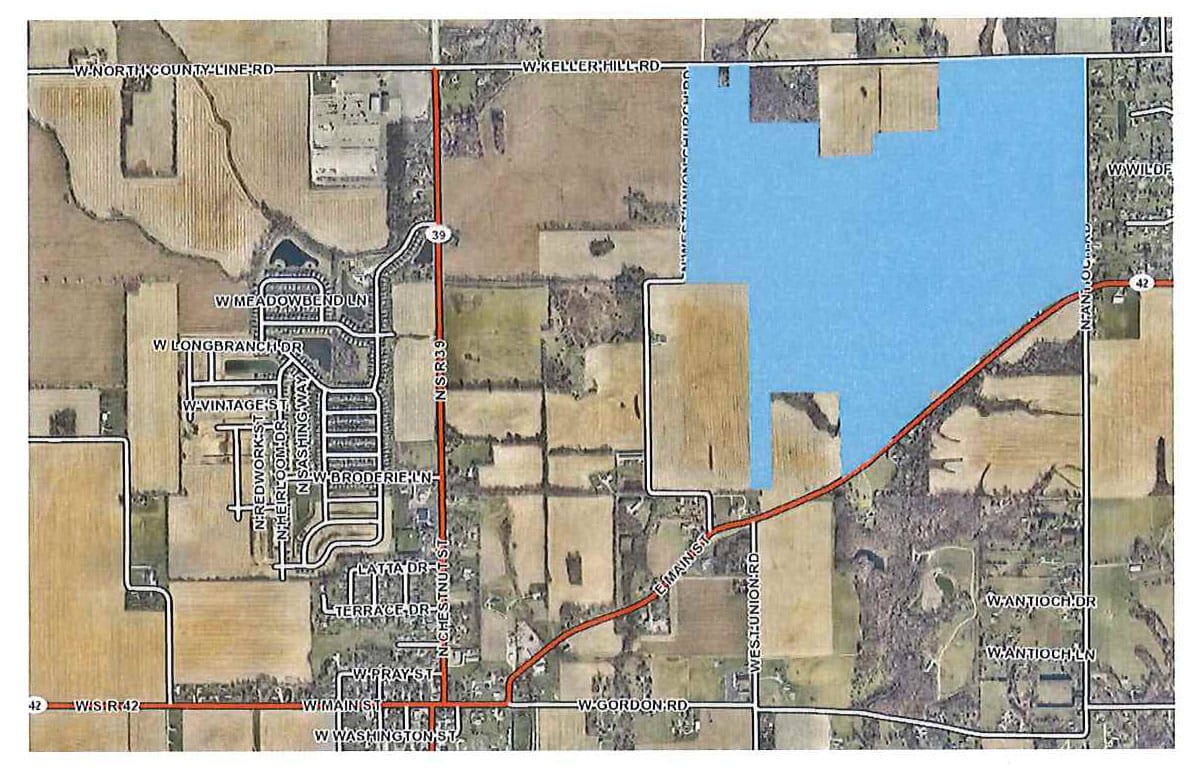
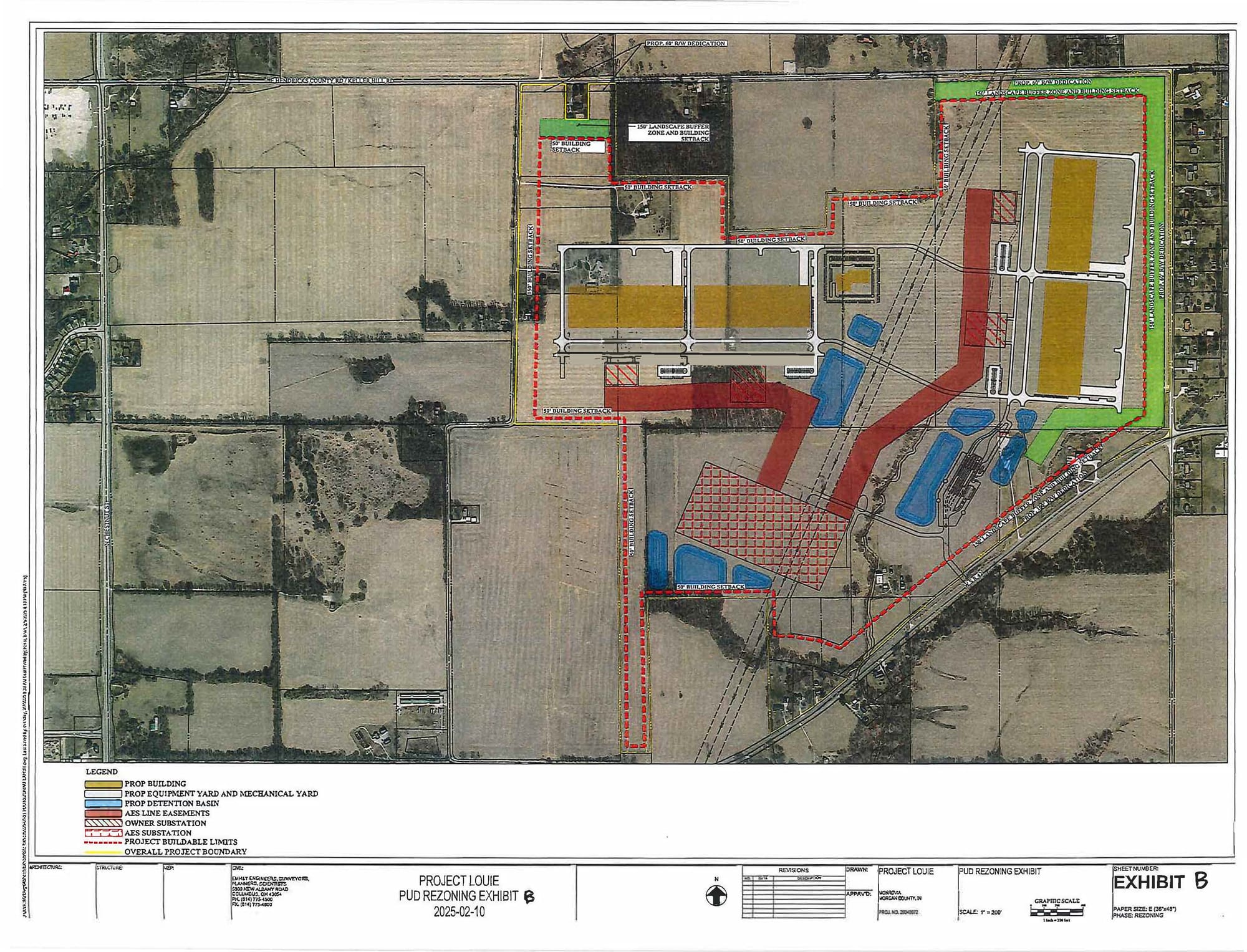
Despite opposition from community members, on February 18, the Morgan County Board of Commissioners unanimously approved a rezoning request for the site from agricultural to a planned unit development, laying the groundwork for the construction of the data center.
“It was already set in stone. Man, went from day one, it’s a done deal,” Darin Madsen said.
In October 2025, Google issued a written statement announcing it was the previously unnamed developer of the data center. That same month, the Morgan County Commissioners voted to approve the rezoning of an additional 158 acres, bringing the total for the site to 549 acres. As of April 2026, the town of Monrovia initiated proceedings to annex land to the east, including the entire site data center site, allowing the town to receive additional tax revenue.
Emails leaked to the Morgan County Correspondent said that Google offered Monrovia $12 million in wastewater treatment plant upgrades if the Town Council dropped its bid to annex the land that includes the data center.
The Morgan County Commissioners in June proposed a tax increment financing district that would include the Project Louie site. The Morgan County Redevelopment Commission voted unanimously in favor of the TIF at a July 15 meeting.
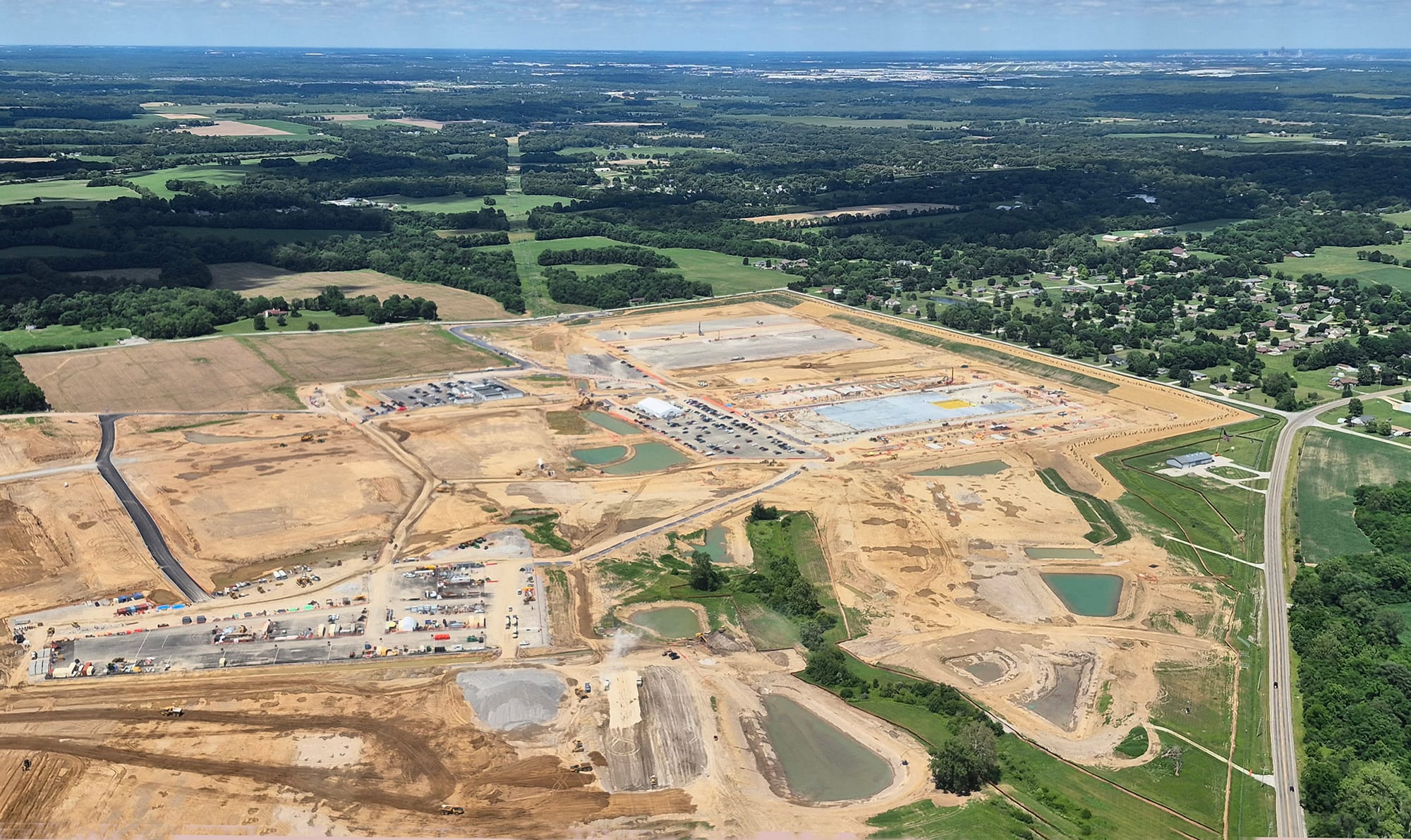
The Madsens are devastated about the sudden disruption to their retirement plans.
“We were looking out over a nice field and a nice sunset for 23 years,” Gina said. “We have a front porch we love to sit out on and have that view, and that’s gone, that will never be back.”
NDAs keep key details, developers shielded
Indiana is attracting a large number of data centers, according to the available data from the Data Center Map. Nationwide, Virginia and Texas lead with 685 and 466 data centers [operational or planned] respectively.
Indiana State Representative Matt Pierce, a senior lecturer in The Media School at Indiana University, said it is difficult for the public to get information about data centers when public officials sign non-disclosure agreements.
“The problem is when the public comes to the public hearing, or they’re discussing whether or not to approve the data center, the local officials can’t have a complete discussion,” he said. “They can’t really inform the public about all the impacts of data centers that they’ve signed a non-disclosure agreement that says they can’t tell the public about the information they have.”
As the number of data centers grows, concerns about NDAs are also increasing.
“I’m just regularly hearing from, literally, from people from Arizona, Louisiana, New York, I mean, just all over the country are concerned about NDAs,” said Eric Bonds, a sociology professor at the University of Mary Washington who researches the socioenvironmental impacts of data centers.
But getting information about NDAs is difficult. Most of the local government officials the Center reached out to either denied our request to provide NDAs they had signed with data center companies or said they didn’t have the documents requested. Beth Copeland, Boone County’s attorney, responded to a records request saying, “I do not believe we have any documents responsive to your request.”
Bonds is skeptical when a public official says that “we don’t have an NDA with a major data center company,” because it is regarded as a standard operating procedure.
Bonds’s research in Virginia found that 25 out of 31 local communities with proposed or existing data centers have NDAs. He said use of broad language in the NDAs is concerning.
“So just that broadness, the NDAs call on local governments to share as little as possible,” he said. “Which is worrisome for that particular project, but also worrisome about the health of our government and our democracy in general.”
In Indiana, the Indiana Economic Development Corporation used NDAs during the development of the Limitless Exploration/Advanced Pace Innovation and Research District in Boone County, which includes a $10 billion Meta data center campus.
And members of the New Carlisle Town Council signed NDAs with Amazon representatives for a proposed $11 billion data center campus northwest of South Bend, according to records obtained by the Arnolt Center. The NDAs prevent town officials from disclosing “nonpublic information relating to Amazon” to the general public, shielding the public from any details related to the largest capital investment project in state history.
Rebecca TeKolste, climate and energy director at the Hoosier Environmental Council, said projects are hiding behind NDAs and are even using code names, making transparency surrounding these projects impossible.

“They’re not even disclosing who the company is that is going to be seeking the rezone or project permit,” TeKolste said. “When this happens, communities are left to approve projects that they do not fully understand.”
Scott Shackelford, the associate vice president and vice chancellor for research at the Indiana University Kelley School of Business, has been researching non-disclosure agreements within data centers and the conflict between trade secrets in companies and transparency to communities.
“There can be NDAs that are either suggested politely or required for different folks to sign before they can move processes along, and that can be, you know, problematic just from the perspective of [the] public, having a transparent right to know about what’s happening in our backyards and in our communities and otherwise,” he said.

After growing public pushback nationally against data center development without transparency, some data center developers have changed their approaches in working with local governments.
Microsoft has two planned data center projects in Indiana, the most notable one in LaPorte County where, according to Arnolt Center public records requests, local officials did not sign NDAs with Microsoft.
Despite previously pursuing NDAs with local governments for some of their development projects, Microsoft announced in a March 18 press release it was discontinuing the practice.
“We’re committed to sharing information about our data center plans as openly as possible as we continue to build trust with the communities around the world in which we operate,” the company said in the release.
Weighing the value of data center developments
The governor and the leaders of the Indiana General Assembly are big proponents of data centers, according to Matt Pierce.
“They want Indiana to be the king of data centers,” Pierce said.

The General Assembly saw six bills focused on data centers in the 2026 session, but none of those proposals passed. Proposed legislation sought to open any agricultural land to data center developments without local review and even aimed to study the impact on the state’s electrical infrastructure.
The Indiana Economic Development Corporation has provided at least $655 million in state tax exemptions for data center projects.
But it’s the state’s 2025 budget bill, SEA 1, that is forcing municipalities to consider large data center developments. The bill included major revisions to the state’s property and local income tax systems, leading to a significant loss of tax revenue for local governments and school systems.
“They basically say, ‘Hey, instead of coming up here and beating us up for trying to get your property taxes under control, you should be growing your communities, and you have an opportunity to have a multi-billion dollars of assessed value put in your community, and that will provide you enough property tax revenue. You could probably lower all the property taxes through residential ratepayers and just live off the $7 billion dollar Amazon data center. And so that’s what you ought to be doing,’” Pierce said, speaking to the Bloomington Press Club in March.

Senator Shelli Yoder, D-Bloomington, said SEA 1 created a dynamic where to replace lost local tax revenue, communities are forced to attract data centers and large developments.
“These local communities will have to say, ‘Well what more can we do? We need the data center because we can’t afford to pay our law enforcement, our public safety services. We can’t afford to have our libraries or our schools struggling. So, we have to say ‘yes,’” Yoder said, speaking to the Bloomington Press Club.
Still, many of those communities are pushing back against the state’s drive to bring in more data centers.
“They know that they’ve got a problem because the opposition to data centers, I think, runs the entire political spectrum. Both the left and the right hate them,” Pierce said.
“And it started out as, ‘We just don’t want these things that are going to take all our water and pollute and just ruin our quality of life just from being in our backyard,’” he said. “It went from that to, I think now, data centers are a symbol for what is seen as the privilege of the billionaire tech class that seems to have access to power and gets whatever they want.”
Community prepares for next steps with Monrovia development
The community in Morgan County has banded together to try and fight the data center. It created a Facebook page, Protect Morgan County, to help assemble the community together in one place.
Christopher Lamberson, one of the leaders of the Facebook group, said the Monrovia Town Council was formed not too long ago and that Google came in and started “calling the shots.”
“There needs to be oversight, and there needs to be clear benefits for the local population,” Lamberson said. “We’re just not seeing that, and so that’s really what I think needs to happen is the state needs to step up and get serious about these data centers, because it’s not. We’re going to see some political consequences if not.”
Darin Madsen said the data center isn’t just affecting his and Gina’s lives; it’s also affecting the property value of their home, contrary to what they were originally told.
“We got an assessment in the mail and it dropped our property value $40,000, but our taxes went up,” Darin said. “If we put our house up for sale today, I can’t imagine anybody considering looking at it.”
This story was written by journalists at the Arnolt Center for Investigative Journalism at Indiana University in partnership with the Limestone Post.
Arnolt Center for Investigative Journalism
The nonprofit, nonpartisan Michael I. Arnolt Center for Investigative Journalism at IU conducts multimedia investigative reporting on issues important to Indiana residents. Kathleen M. Johnston is director.